Take Advantage of the Federal Battery Rebate & Maximise Your Savings Today
Take Advantage of the Federal Battery Rebate & Maximise Your Savings Today
Posted 21 Dec
Want the latest in energy, solar, and savings?Subscribe to our newsletter – we don’t spam!
An aspect often not spoken about enough in the world of solar and battery storage are terms called ‘load shifting’ and ‘peak shaving’ which are both contributors in determining your savings and return-on-investment calculations.
Whilst they sound like technical terms, they’re actually very simple to grasp. Let’s go through what peak shaving and load shifting is and how it affects your solar and battery system, and its savings.
So, what does load shifting mean in electrical terms? Load shifting simply refers to moving the time you use your electricity to a better time like when solar is more available or electricity prices are cheaper.
By practicing load shifting, you generally move your higher-consuming appliances like washing machines or pool pumps to the middle of the day when there is surplus solar that can offset your usage, as opposed to consuming peak period electricity later in the evening.
Can you load shift with solar? As more households invest in solar, the average FiT rates decrease. For households wanting to maximise their solar investment, it used to be all about the FiT rates and feeding as much into the grid, but these days it’s generally better to shift your consumption to when your solar is generating.
Do you need a battery to load shift? Depending on the solar system size, even households with battery storage can benefit from load shifting to ensure that any and all excess solar energy powers your appliances, leaving excess energy capacity for general usage.
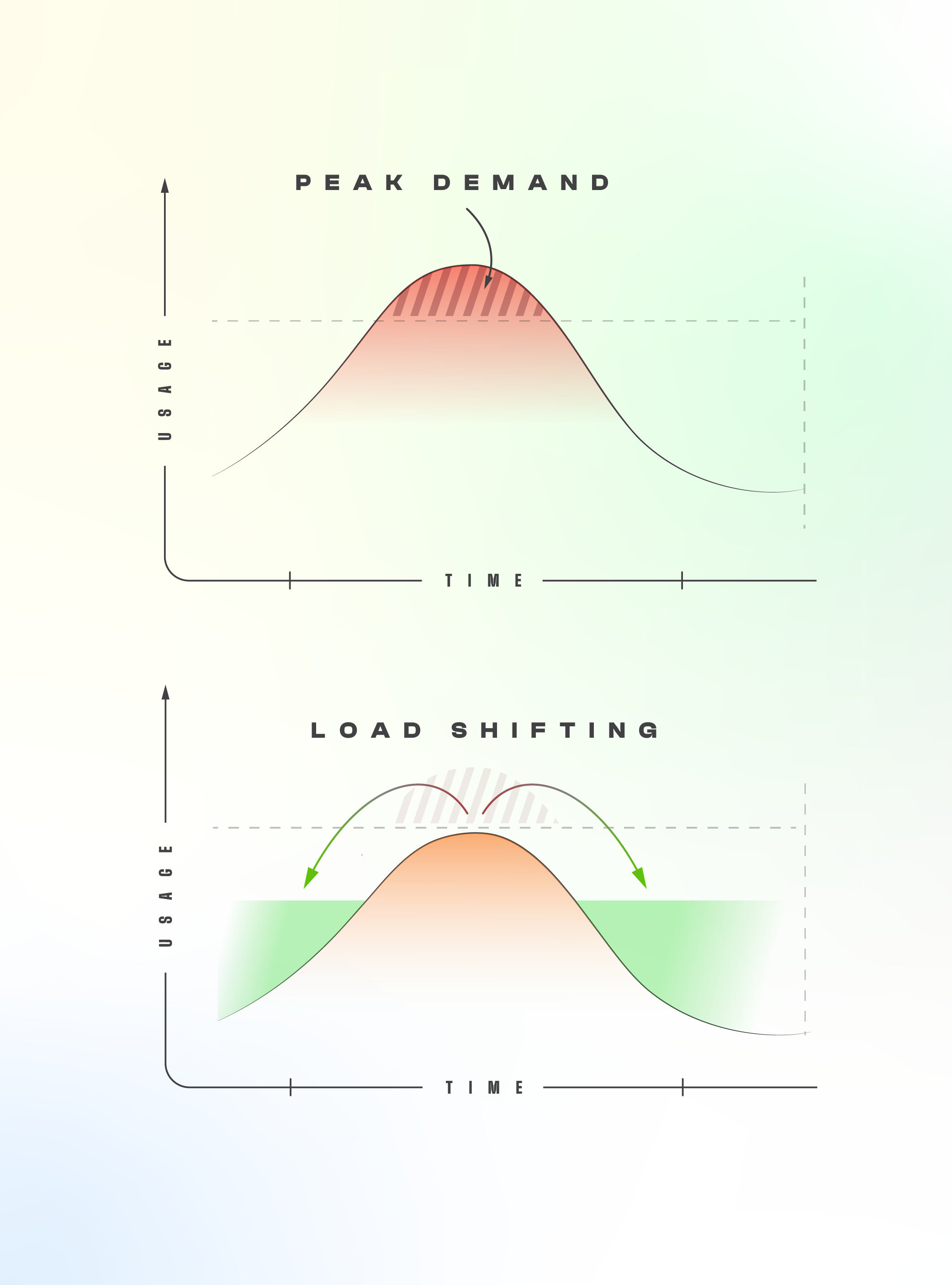
Peak Demand & Load Shifting Diagrams - Elite Power Group
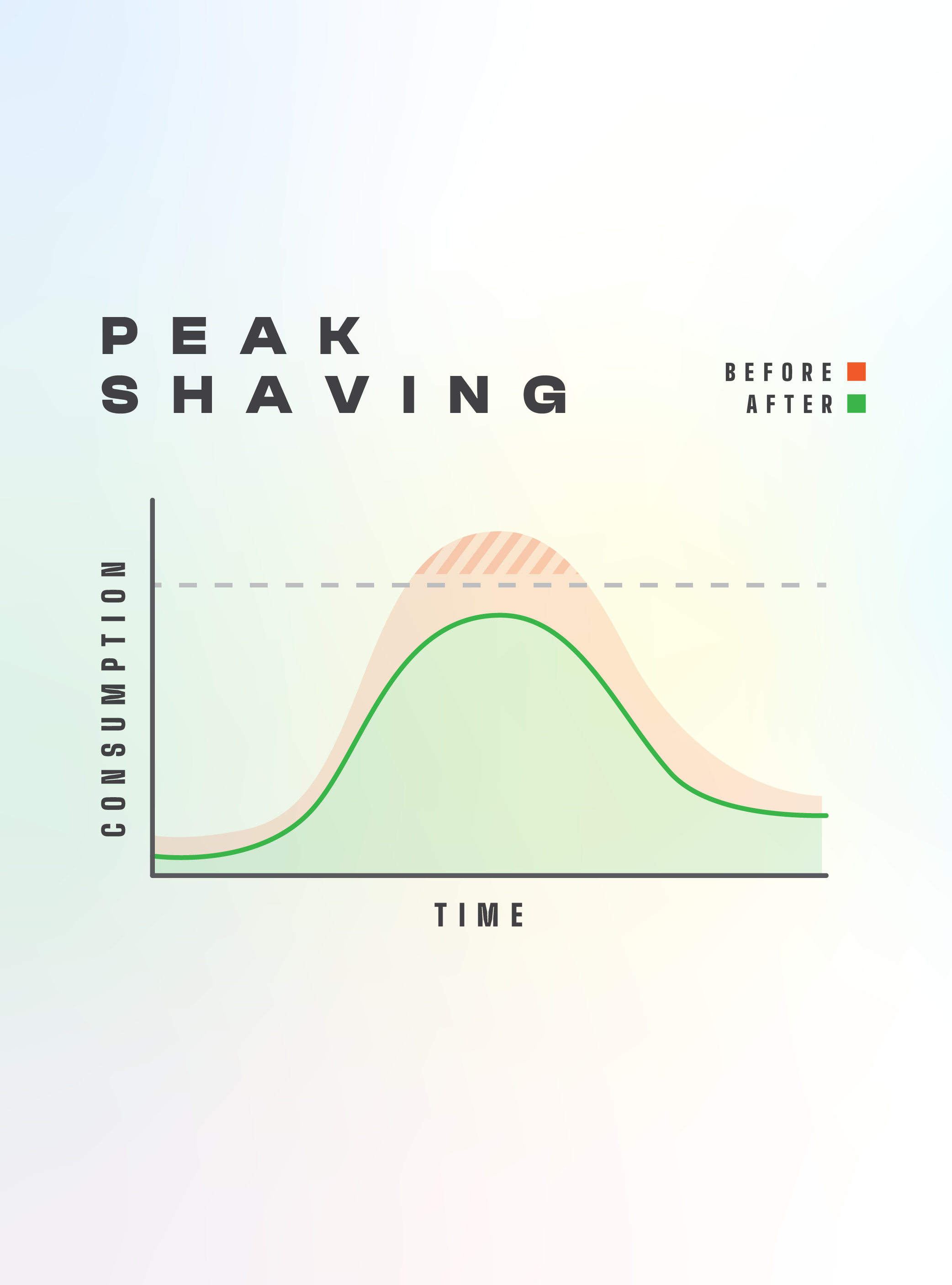
As opposed to load shifting which refers to when electricity is used, peak shaving refers to how much electricity is used at one time at its peak.
On a summers evening, everyone has their air-conditioner pumping as they prepare for dinner. This causes a spike in the grid which could be managed by an orchestrated system that would help defer the spikes to when more energy is available.
To help manage the short bursts of high demand, battery storage is used to help reduce the impact, which supplements the grid with stored solar energy.
In addition to participating in a Virtual Power Plants (VPPs) which also help grid balance, modern batteries can have integrated peak shaving control modes that are designed to maximise self-consumption and reduce grid reliance during high-demand periods.
Whilst often confused, peak shaving and load shifting are not the same. Peak shaving is about reducing the level of demand peaks, and peak shifting moves when those peaks happen.
Load shifting is a behavioural change in lifestyle to shift when electricity is used, which is technically considered peak shaving, but true peak shaving can automatically occur in modern batteries and also matters more for businesses and high-consumption sites.
Both peak shaving and shifting are combined in a lot of solar and battery systems which work to reducing overall grid reliance and helps smooth out demand spikes that can increase your electricity bills.
For the large majority of Australian households, load shifting is the more practical element to focus on from a day-to-day perspective. By moving high-consuming appliances to when your solar is generating or during off-peak tariff periods, you can directly reduce your electricity bill, which can be greatly beneficial and worth it for households.
Why is my electricity bill still high with solar? We often see recent solar owners wonder why their electricity bill is still high even though they have solar power for their home. This is often because the homeowner hasn’t adjusted their electricity consumption and lifestyle to best-take advantage of the solar generation happening throughout the day.
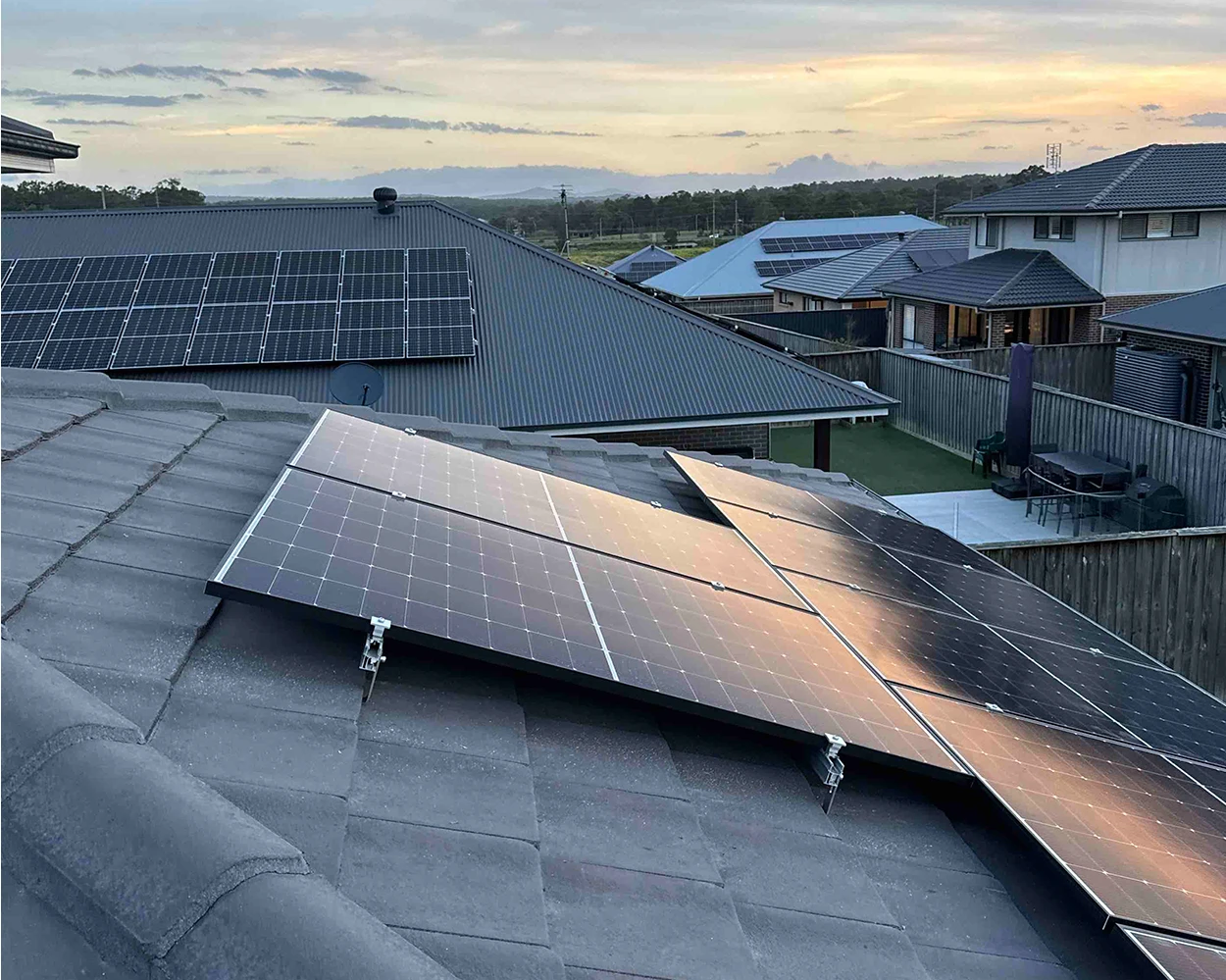
Solar Power Installation Newcastle
Because every appliance has its own unique consumption, not every appliance is equally suited for load shifting. For those wanting to practice load shifting for their home, shifting household loads to the middle of the day helps reduce grid dependence and reduces peak period consumption.
Load shifting works by offsetting higher-consuming appliances to a time when energy is cheaper and more readily available. This can be done with timers (commonly seen with appliances like pool pumps), or a simple change in lifestyle to accommodate it. But what appliances are best for load shifting?
Below is a list of appliances that are best-suited for load shifting in Australia:
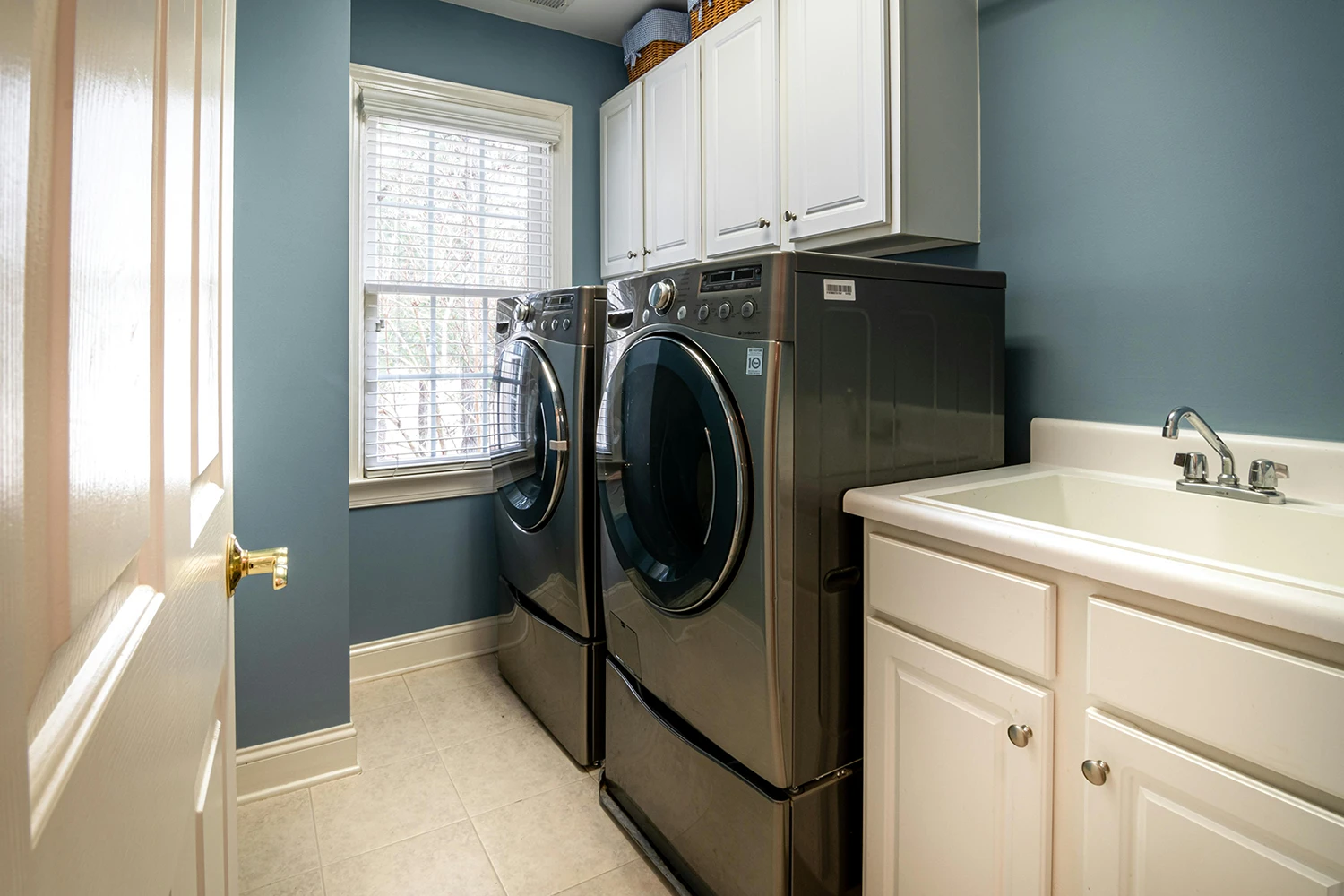
Courtesy of Curtis Adams on Pexels.
Load shifting is only effective on Time-of-Use (TOU) tariffs, where electricity is more expensive during peak periods and cheaper during off-peak periods.
Having a dynamic throughout the day TOU tariffs creates an opportunity for load shifting most valuable as compared to flat-rate tariffs which remain stable throughout the entire day.
Is Time-of-Use Tariff better for Load Shifting? Depending on your lifestyle, we highly recommend revisiting your tariff configuration and understanding what may be best for you. If you're someone who works all day and only returns during the evening, load shifting may not work for you and a flat-rate tariff may be more beneficial.
Staying in the world of reducing household energy usage, Demand Control compliments peak shaving and load shifting by managing how much electricity your home draws at any given moment.
With smart energy systems, demand control temporarily reduces your home’s load during high-demand periods and avoids sudden spikes. Demand response, like load management, is designed to help flatten out spikes to ensure financial benefits and avoid demand charges.
What’s the difference between demand response and load management? Load management is about managing how electricity is used within your home, focusing on reducing or shifting demand based on your overall consumption. Demand Control is for limiting your home’s peak power usage at any moment.

Courtesy of AS Photography on Pexels.
Taking demand control a step further, Demand response (DR) refers to when customers voluntarily reduce or shift their electricity consumption to help grid balance and stability.
On a hot summer’s afternoon, everyone cooking dinner, and appliances running like the pool pump can stress the grid. In order to prevent outages and reduce peak demand, electricity providers may ask participants to temporarily reduce electricity usage or shift consumption to a later time.
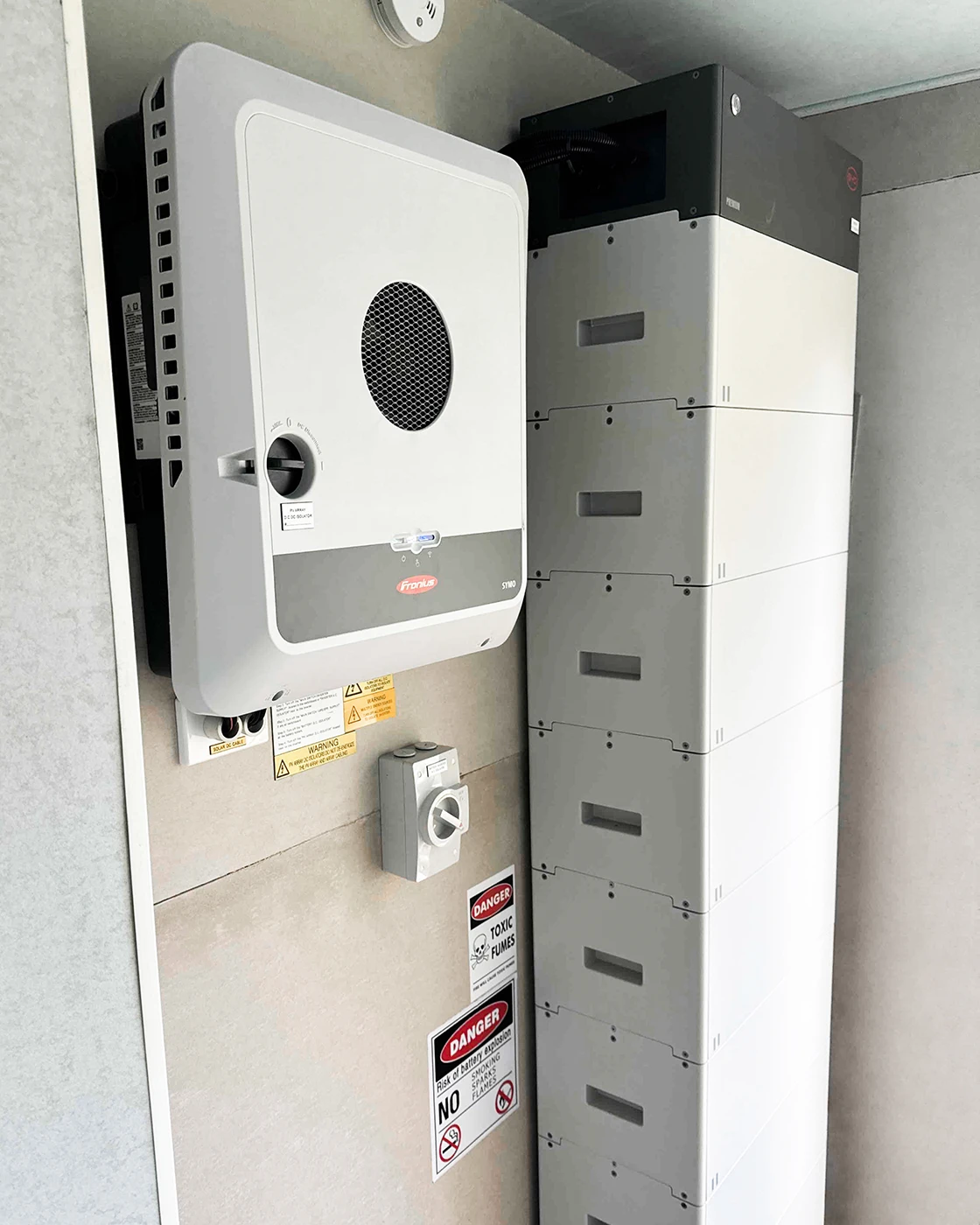
BYD Battery-Box and Fronius GEN24 Inverter
On rare occasions, electricity supply will exceed demand, and a negative price event will occur where electricity providers pay people to use electricity rather than reduce it. Oversupply can happen on sunny and windy days when demand doesn’t hit expected values.
Solar and battery owners have a great opportunity during negative price events to charge their battery storage as much as possible and get paid for it. Unlike other energy retailers, Amber actually enable automatic trading on the wholesale market and discharge energy storage when grid prices are high, and charge it back up when it’s low.
Of all the terms – peak shaving, load shifting, demand control and response, and negative price events all share the same goal of using energy more efficiently. For most households, the biggest savings and most practical strategy is load shifting and self-consumption with solar.
Overall, as we strive for a renewable and energy efficient future, Australia’s infrastructure and household technology will continue to improve.
Learn about the May 1st Federal battery rebate changes in Australia and what they mean for home battery costs, solar savings, and discounts.
Read moreCompare Tesla Powerwall 3, Sungrow SBR & SBH, GoodWe ESA, Fronius Reserva, and BYD Battery-Box to find the best home battery for Australia.
Read moreExplore how Australia’s Q4 2025 solar and battery data highlights a major milestone: majority renewable contribution to daytime electricity demand.
Read moreRenewable News Articles
We've invested in becoming fully-licenced and qualified installers to ensure Newcastle homes and businesses
get the best systems and installations possible. We want to assist Newcastle's renewable energy revolution with quality systems.
Certified solar system installers near you.
Get CEC-Approved Battery Installations.
Fully-licenced electricians in Newcastle.
Convenient EV charging stations for properties.
Leave a Comment