Home Battery Rebate Drop - Not too late: Book your January Install

Home Battery Rebate Drop - Not too late: Book your January Install
The federal Cheaper Home Batteries Program gives an upfront discount on a home battery from 5kWh to 100kWh, until 31 December 2030. A
13.5kWh battery installed by 31 December 2026 gets about $3,185 off. It is officially a discount rather than a rebate, but most people
search for the rebate, so you will see both words here. Enter your battery size and installation date below to see your estimate.
Federal battery REBATE CALCULATOR
Pick your battery size and when it will be installed. The estimate updates as you go.
Enter a capacity between 5 and 100 kWh to be eligible.
Estimated upfront discount
$3,185
About 91 STCs at 6.8 per kWh
Installed in Jan to Jun 2027 instead: about $2,660, which is $525 less.
Or call (02) 4966 2756, Mon to Thu, 8am to 3pm
Estimate only. The federal Cheaper Home Batteries Program is technically a discount off the installed price, paid through small scale technology certificates (STCs). Figures use about $35 per STC and the rates in effect from 1 May 2026. STC prices vary, so your quote may differ. Batteries from 5kWh to 100kWh qualify, and the discount counts capacity up to 50kWh.
The discount is paid as small scale technology certificates (STCs). Your number of STCs is your battery's usable capacity, counted in tiers, multiplied by the STC factor for your installation date, then rounded down to a whole number. At about $35 per STC, that is your estimate.
The first 14kWh counts at 100%, 14kWh to 28kWh at 60%, and 28kWh to 50kWh at 15%. Nothing above 50kWh counts.
Example: a 13.5kWh Tesla Powerwall 3 installed before 31 December 2026 earns 91 STCs (13.5 x 6.8), about $3,185 off.
The rate follows your installation date, not the day you sign. It only steps down on 1 January and 1 July, and the program runs to 31 December 2030. Be wary of any other deadline.

On 1 January the federal battery discount steps down about 16%. It does not disappear, and the rate is the same for every installation from 1 January to 30 June 2027. A 13.5kWh battery still gets about $2,660 off.
Book your January or February install, and we will work out your exact number for your home.
| Battery | To 31 Dec 2026 | From 1 Jan 2027 |
|---|---|---|
| 13.5kWh | $3,185 | $2,660 |
| 20kWh | $4,165 | $3,500 |
| 40kWh | $5,740 | $4,795 |
About 16% less on every size, and the rate holds until 30 June 2027.
Fill in the quote form with your suburb, your power bill and the battery size you are thinking about.
We calculate your exact discount for your home and battery, using the rate for your installation date.
Choose a January or February slot and we confirm the date and the rate that applies.
Based in the Hunter, Newcastle or Port Stephens? Book your install with the button above. Anywhere else in Australia? The calculator works for your battery too.
Estimates based on Clean Energy Regulator factors and $35 per certificate. Depends on usable capacity and installation date.
The federal battery discount follows the date your battery is installed, not the date you sign. The Clean Energy Regulator confirms the rate is set by the installation date, not when a contract is signed.
That matters if you hear "sign before 31 December to lock in this year's rebate" and your install is booked for 2027. A 2027 install gets the 2027 rate. A quote that shows this year's discount for a 2027 install is showing money the system will not receive, so either the gap turns up later as an extra charge, or the price before the discount has been raised to cover it. Not every quote has this problem, but it is easy to check.
Example only: a 13.5kWh battery installed in February 2027.
| Quote A | Quote B | |
|---|---|---|
| Price before discount | $10,000 | $10,525 |
| Certificates assumed | 76 | 91 |
| Discount at $35 each | $2,660 | $3,185 |
| You pay | $7,340 | $7,340 |
| Rate used | 2027 (5.7) | 2026 (6.8) |
Both quotes end at the same price to pay, but only Quote A uses the rate that applies to a 2027 install. Quote B shows a bigger discount because its price before the discount is higher.

The installation date sets the rate. Ask for it in writing and check the year.
For a 13.5kWh battery it is 76 from January to June 2027 and 91 in 2026. Ask which rate the quote uses.
Compare that figure across quotes, not only the price to pay. A raised price is easy to hide in the total.
The regulator also tells customers to confirm the quoted price will be honoured. Already have a quote? Send it through the form and we will check the numbers with you.
Example only, not a real quote. Estimates based on Clean Energy Regulator factors and $35 per certificate. Depends on usable capacity and installation date.
Most households and small businesses with solar qualify, as long as the battery and the installer meet the program rules. These are the eight requirements, checked against the Clean Energy Regulator.
We confirm your battery is on the approved list before you sign, so you do not need to check it yourself.
| Requirement | What it means |
|---|---|
| Size | 5kWh to 100kWh nominal capacity. The discount counts the first 50kWh of usable capacity. |
| A new battery | Made within 12 months of installation and never installed or claimed before. It stays at the property until the end of 2030 or the end of its warranty, whichever is later. |
| Solar | Installed with a new or existing solar system (up to 1MW). |
| CEC approved | The battery is on the Clean Energy Council approved list. An existing inverter it connects to must be VPP capable. |
| VPP capable | Able to join a virtual power plant. It does not have to be connected to one. |
| Accredited installer | Installed by a Solar Accreditation Australia (SAA) accredited installer with a battery endorsement. |
| One per property | One battery per property, or per electricity meter for grid connected homes. |
| Off grid homes | Must be a lived in home. Sheds and bore pumps do not qualify. Within 1km of the grid the battery must be VPP capable. |
Source: Clean Energy Regulator, updated 29 October 2026.
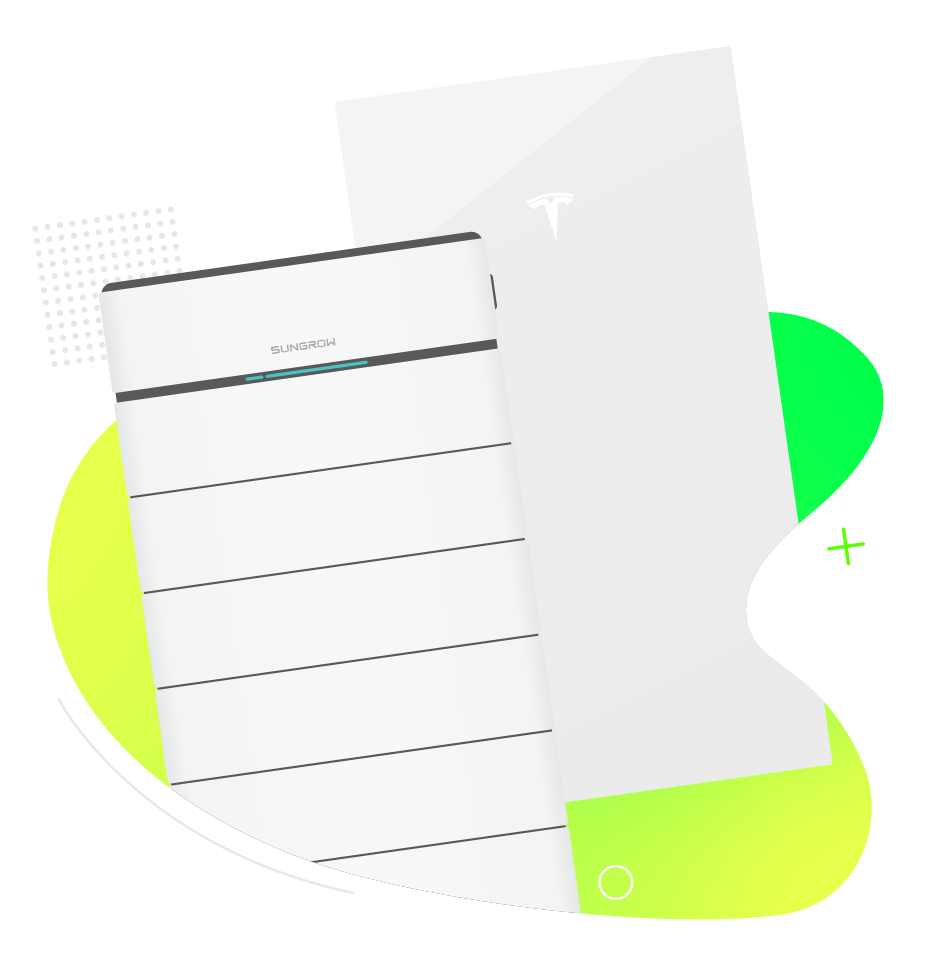
These batteries meet the program requirements. We install the Tesla Powerwall 3, Sungrow SBH and SBR, and GoodWe ESA. Always check the exact model against the Clean Energy Council approved list.
| Battery | Size range | To 31 Dec 2026 | From 1 Jan 2027 |
|---|---|---|---|
| Tesla Powerwall 3 | 13.5kWh | $3,185 | $2,660 |
| Sungrow SBH | 20kWh to 40kWh | $4,165 to $5,740 | $3,500 to $4,795 |
| Sungrow SBR | 6.4kWh to 25.6kWh | $1,505 to $4,970 | $1,260 to $4,165 |
| GoodWe ESA | 8kWh to 48kWh | $1,890 to $6,020 | $1,575 to $5,040 |
| Fronius Reserva | 6.3kWh to 15.8kWh | $1,470 to $3,570 | $1,225 to $2,975 |
| BYD Battery-Box HVM | 8.3kWh to 22kWh | $1,960 to $4,445 | $1,645 to $3,745 |
Estimates use usable capacity and about $35 per STC. Capacity from 14kWh to 28kWh counts at 60% and from 28kWh to 50kWh at 15%, so bigger batteries get a smaller extra discount per kWh. Your figure depends on the exact model and your installation date.
13.5kWh with a built-in solar inverter. A neat fit for new solar and battery installs.
Modular and scalable for larger homes and small businesses.
From 6.4kWh to 25.6kWh. A cost-effective way to add storage.
Stackable modules up to 48kWh with a 10-year warranty.
VPP capable, not VPP connected. The program requires your battery to be able to join a virtual power plant. You do not have to connect to one to get the discount.
Capacity ranges are listed sizes. Always confirm the model on the CEC list.
Yes. If you already have a battery that has not claimed the discount, you can claim on the extra capacity you add. Only the new modules count.
Modular batteries such as the Sungrow SBH and GoodWe ESA are built for this, so you can start smaller and add capacity later. The discount is worked out at the STC factor for the date you install the new modules.
| Rule | What it means |
|---|---|
| Not claimed before | The existing battery has not already claimed the discount. |
| At least 5kWh | The capacity you add is 5kWh or more. |
| Under 100kWh in total | Your total nominal capacity, including the existing battery, does not exceed 100kWh. |
| New modules only | You claim on the new modules, not the whole system. Claiming the full expanded capacity can be treated as fraud. |
| One battery per property | The program allows one battery per property, or per electricity meter for grid connected homes. |
Source: Clean Energy Regulator, updated 29 October 2026.
The right battery depends on how you use power, not on the biggest discount. Here are six things to work
through with your installer.
If most of your power use is after the sun goes down, a battery lets you use your own solar in the evening instead of buying from the grid.
The bigger your solar system, the more spare energy there is to store. Your installer can size the solar and battery together.
Keeping the lights on in an outage needs spare capacity. Decide which circuits you want running and for how long.
Check the average daily kWh on your latest bill. It is the best guide to how much of your evening and overnight use a battery can cover.
Modular batteries let you add capacity later, and you can claim the discount on the new modules.
Capacity from 14kWh to 28kWh counts at 60% and from 28kWh to 50kWh at 15%, so each extra kWh adds less discount. Size for your needs first.
The federal Cheaper Home Batteries Program applies in every state, including NSW. NSW also runs the Peak Demand Reduction Scheme (PDRS), and its home battery incentives have changed more than once since the federal program started, including updates on 1 July 2026.
Whether you can add a NSW incentive on top of the federal discount depends on your battery, your install date and the NSW activity that applies. We confirm what is available for your home before you sign, so you only count on money you can actually get.
See our guide to solar and battery rebates in NSW for the detail.
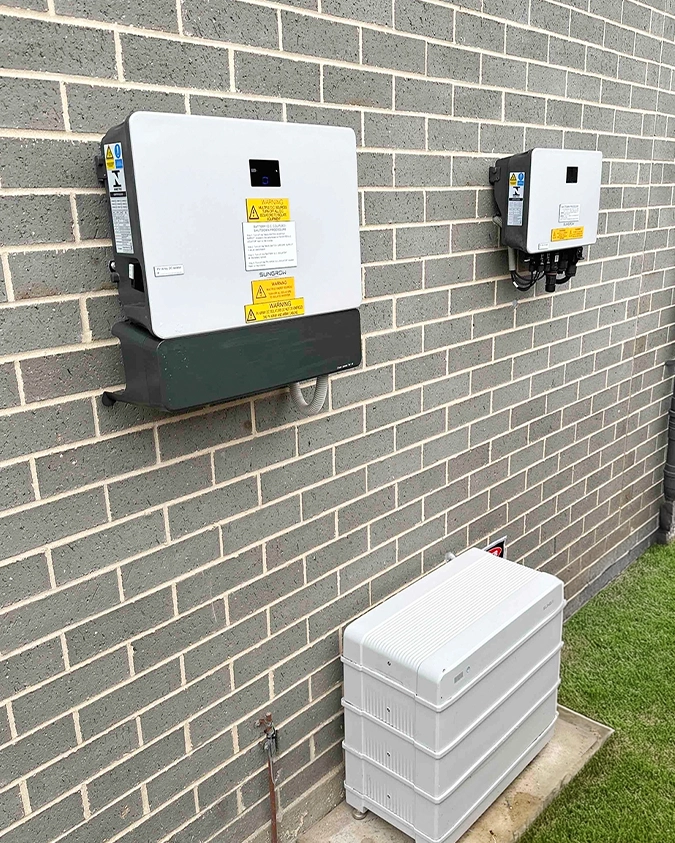
Applying for the Australian battery incentive is no different to getting a traditional quote from your local installer. By getting a quote
from your local SAA-accredited battery installer, they'll choose from a list of CEC-approved eligible batteries, and if they're like us, they'll
give you the upfront discount in
your supply and installation quote.
Get a free quote by a SAA-accredited solar and battery installer, on eligible battery unit and expansion options.
You can claim the federal battery incentive by accepting a battery quote that includes the upfront discount.
Once installed, start reaping the benefits from day one like 24/7 backup energy and more sustainability.
Federal Government Battery Subsidy
Fill out this form for a free battery quote with your federal discount worked out for your home. We also offer free quoting, consultation, and proposals on solar, battery, EV charging, and electrical in the Newcastle, Maitland, and Hunter region.
I don't see any prices?
We're an installer who provides custom, tailor-made systems for
every customer. This means that we don't sell standard 'one-size-fits-all' systems, as each property will have unique requirements
which will vary in price.
Why Choose Elite Power Group?
We're Newcastle's choice for battery storage systems, and can help you claim the battery rebate and maximise your savings and performance.
Answers on the Cheaper Home Batteries Program, updated November 2026.
What the Clean Energy Council's January to June 2026 report found on rooftop solar, home batteries, forecasts and complaints, and how to read the figures.
Read moreNot all batteries provide blackout backup by default. Learn what happens, what your battery is backing up, and how to stop your battery draining too fast.
Read moreNot sure which battery matches your solar system? Compare solar & battery size combinations, from 6.6kW to 13.3kW+, & find the right fit in Newcastle.
Read more