Hunter Valley's Leading Residential & Commercial Solar Installers
Hunter Valley's Leading Residential & Commercial Solar Installers
For newcomers, the topic of solar power, panels, and photovoltaics can be a little daunting to understand. We wanted to create a simple way to explain how solar works and the basics of solar PV energy in Australia - in a simple way.
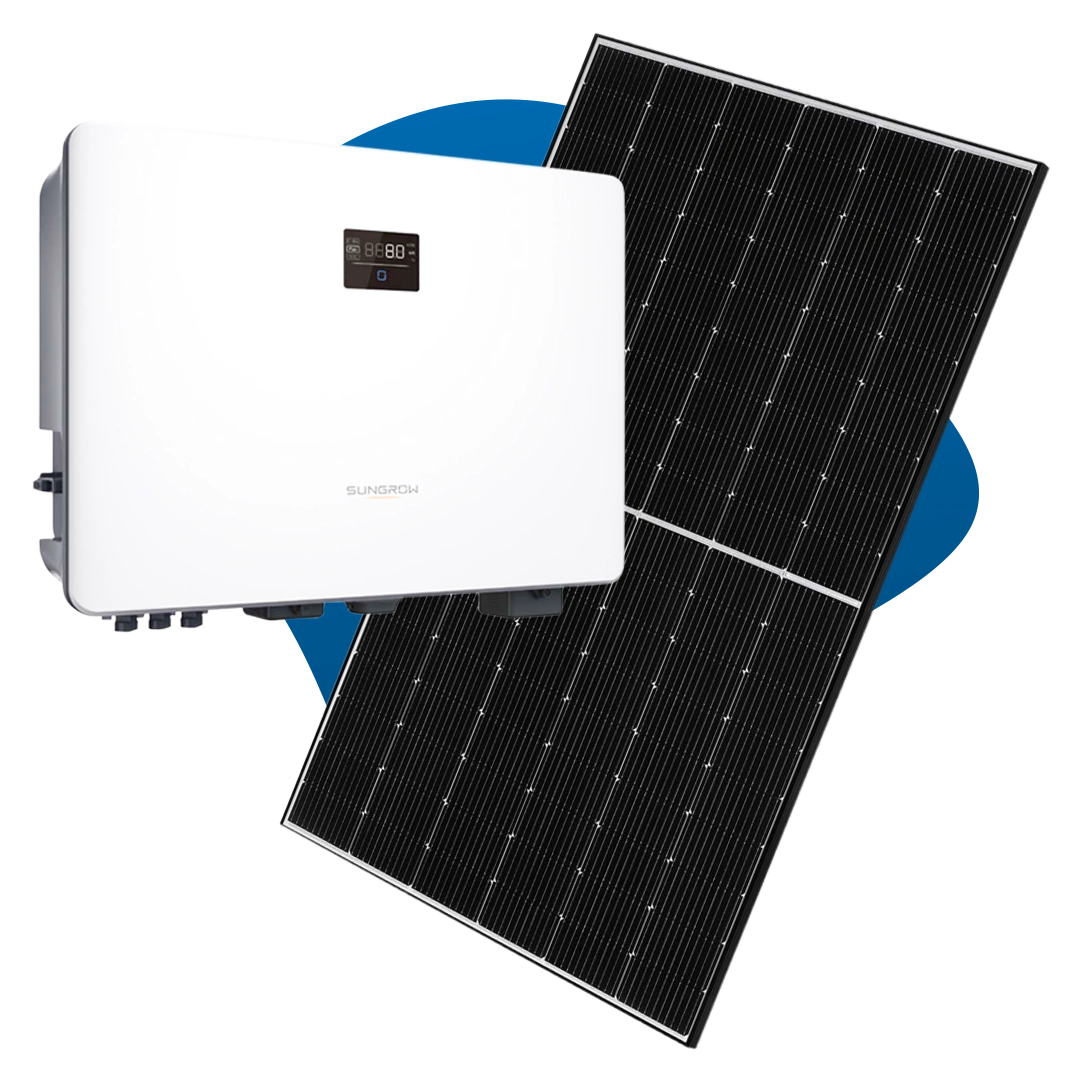
Solar is a great option for homes and businesses to generate their own electricity and offset their grid electricity reliance for greater independence.
With most systems facing North, electricity is generated when sunlight hits the solar cells or photovoltaic (PV) cells, which convert that sunlight into an electrical current.
For homes that use most of their energy in the daytime, solar is a great option to consume renewable power, but if you use most of your electricity at night, then a battery may be needed.
A battery is an additional item to a solar system that stores any excess power from your solar that wasn't used. This stored energy can be used later when the sun is down, helping you get the most out of your system.
The key to maximising your energy is when you use it. Every state in Australia will have varying time-of-use periods where it will determine how much you pay for your electricity. Below are some easy diagram to show how solar and battery benefit home electricity usage.
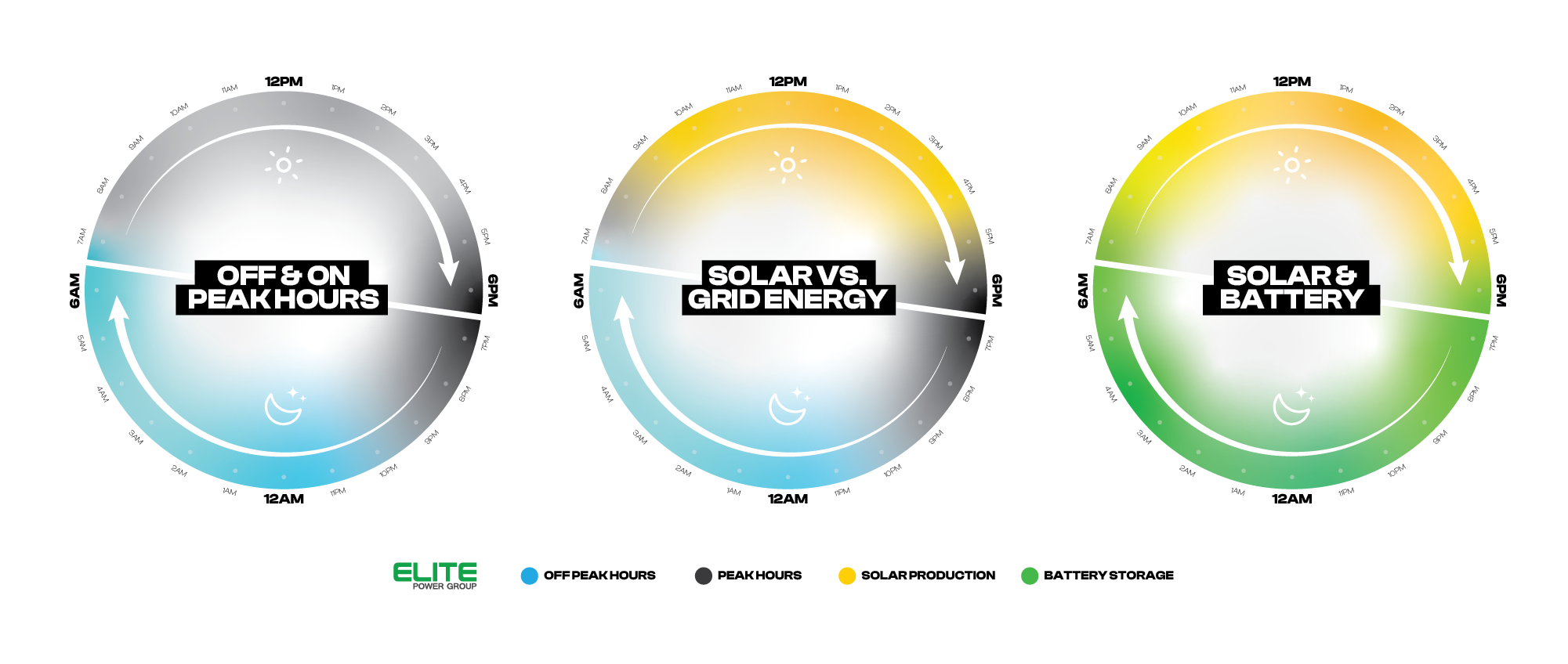
If you don't already own solar, using your energy throughout them during the 10pm-7am period ensures you use cheaper off-peak electricity.
For those with solar, your panels will begin to generate when the sun rises (usually around 7-8am) and approaches maximum power output between 12-1pm.
For those with the right sized solar and a battery system, you would be best using your appliances throughout the day when solar is generating which will also recharge the battery for later usage.
This method enables you to avoid using both off and peak electricity costs.
What's the difference between Peak & Off-Peak periods: A peak period is when the electricity demand is much higher, generally when everyone is making dinner and are doing home activities. Off-peak periods are when demand is lower and electricity is cheaper. Shoulder times are in between both on and off-peak periods.
In the world of solar power, there are abbreviations in almost every aspect of a solar system installation. Explore common solar abbreviations below:
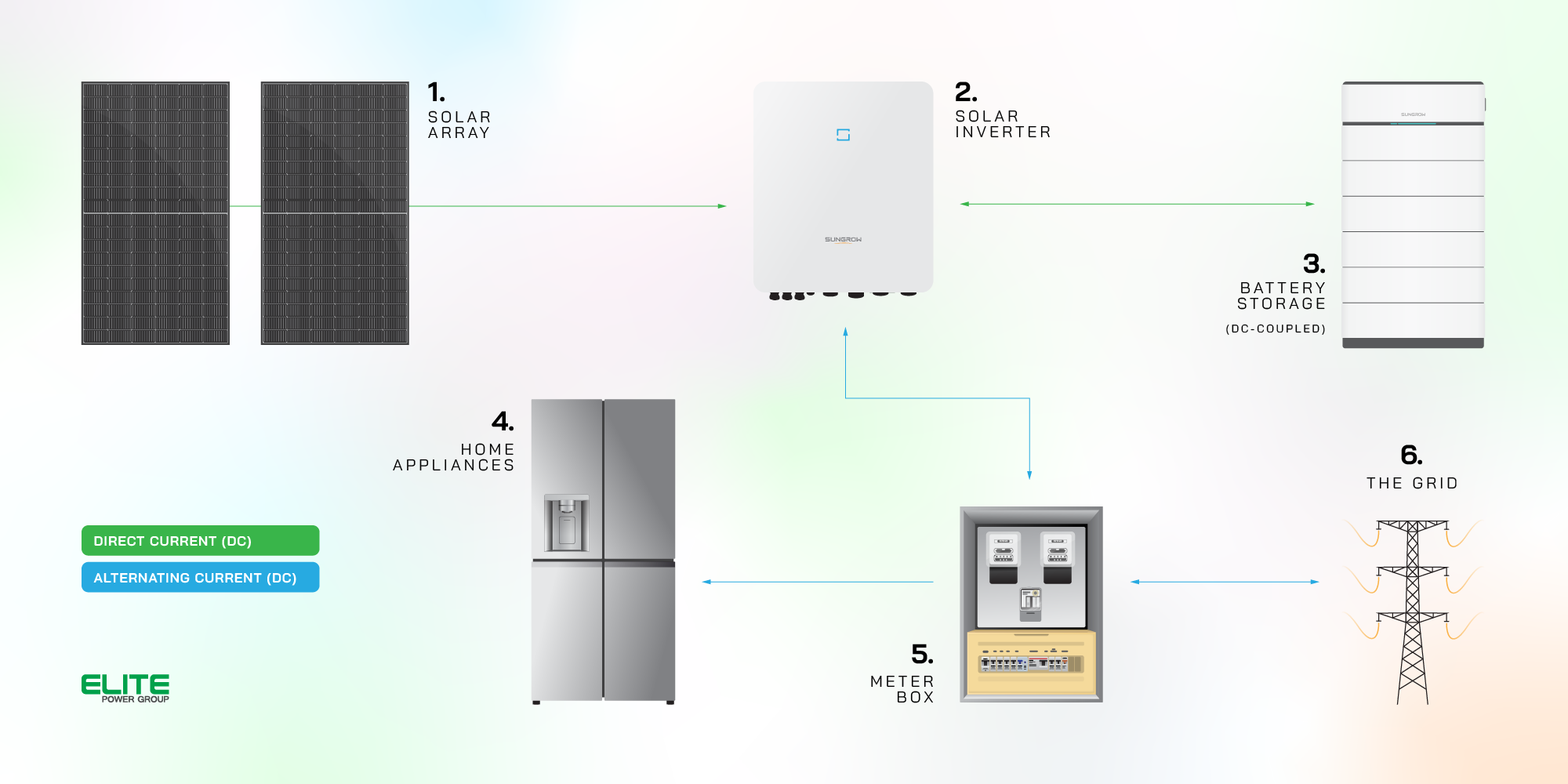
1. PHOTOVOLTAIC (PV) PANELSPhotovoltaic (PV) cells are the individual units on a solar panel that generate electricity when sunlight hits them, converting it directly into an electrical current, a process known as the photovoltaic effect. |
2. SOLAR INVERTER
A grid-tied inverter is just responsible for converting solar's DC to the home which is alternating current
(DC). Hybrid inverters on the other hand also look after the battery as shown in the diagram.
|
3. BATTERY STORAGE (BESS)
Whilst solar batteries are an optional addition to solar, they help maximise solar's benefits. Batteries are
measured in Kilowatt-hours (kWh) / energy, and can be customised to your goals.
|
4. HOME APPLIANCESAppliances like fridges, washing machines, and pool pumps all run on alternating current (AC) which is why electricity needs to be converted. These appliances are best used throughout sunny days to maximise solar generation. |
5. METER BOX/SWITCHBOARDYour meter box or switchboard is where your electrical distribution happens, connecting your production to your consumption. This is also where you can see if your property is single or three-phase. |
6. GRID SUPPLYBeing the primary source of electricity for most homes, the grid transmits power to your property, and pricing can fluctuate depending on what tariff you're on. Matching your solar with the right tariff can be the difference between small and large savings. |
In addition to the basic solar panel and inverter components, solar systems actually have quite a few hidden components that you may not know about that help a system stay operational. Here are a few solar components that you'll find in Australian homes:
A very important part of a solar system is the mounting and what holds the panels on the roof.
Without good quality racking and mounting, your system could fly off the roof, causing real headaches.
A smart meter or current transformer (CT) measure how much electricity your household is consuming vs. how much your solar system is producing.
Isolators and switches are some of the most important safety features of a solar system. Without it, the solar system wouldn't be able to be isolated in the case of an emergency or maintenance and plays a big role in keeping everyone safe.
Probably the most obvious but most overlooked component is the solar cabling.
Good quality solar cabling ensures long-term performance and safety for all solar components.
Before we get into the details around how solar power works with diagrams, let's understand the benefits of solar, and why it's worth getting solar in the first place. Solar is a simple way to harness the sun's light to generate free electricity.
With reliable installations and components, turning sunlight into electricity is renewable and doesn't run out. Here are 3 benefits solar brings to the table.
Because sunlight can generate free electricity, this can power your daytime appliances and offset your usage, in return, reducing electricity bills.
With higher reliance on renewable energy, homes and businesses can increase their sustainability as we transition into an eco-friendly future with solar and battery.
Solar energy (especially when paired with a battery) can help properties across Australia reduce their overall grid reliance and increase their independence.
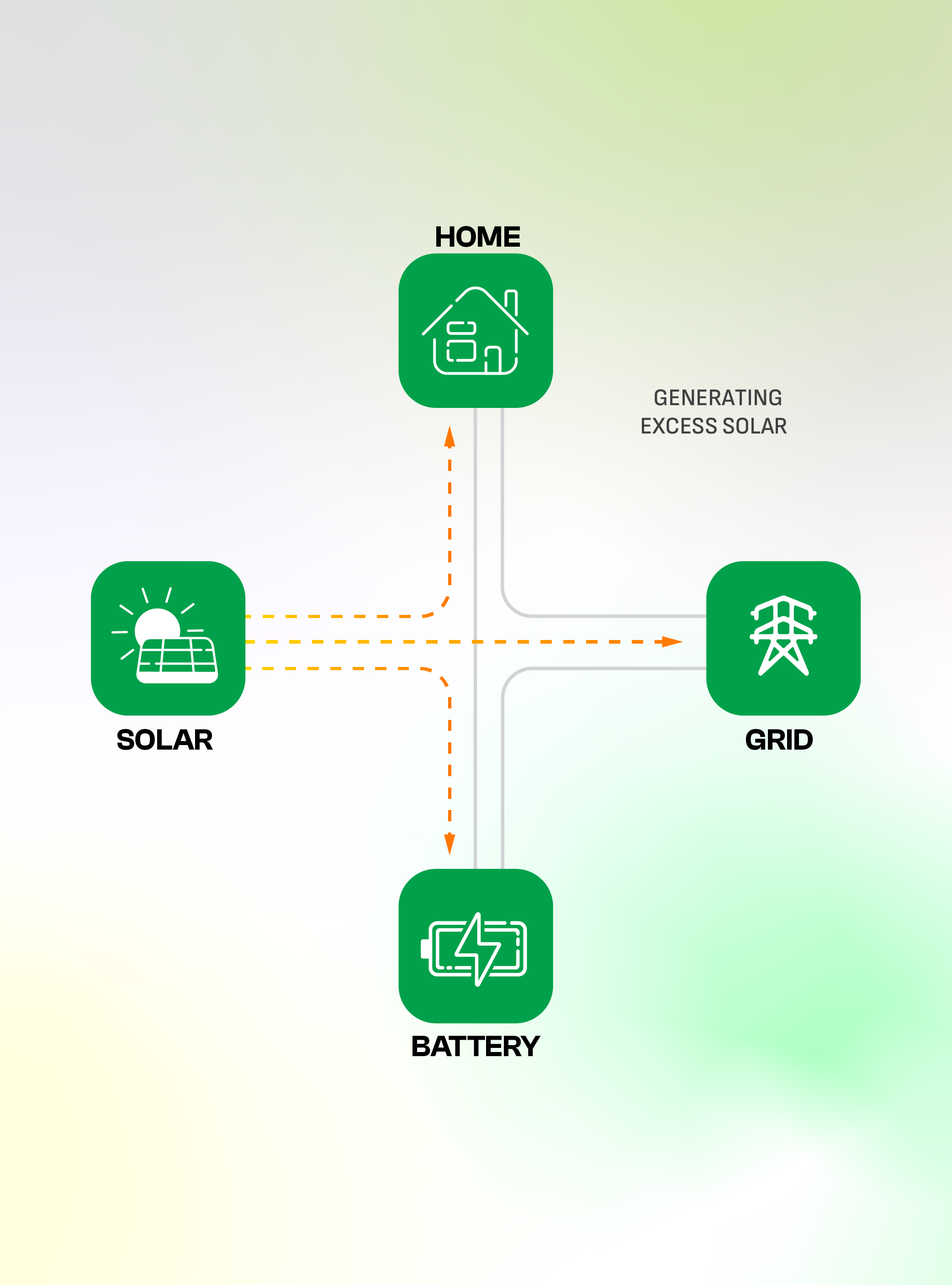
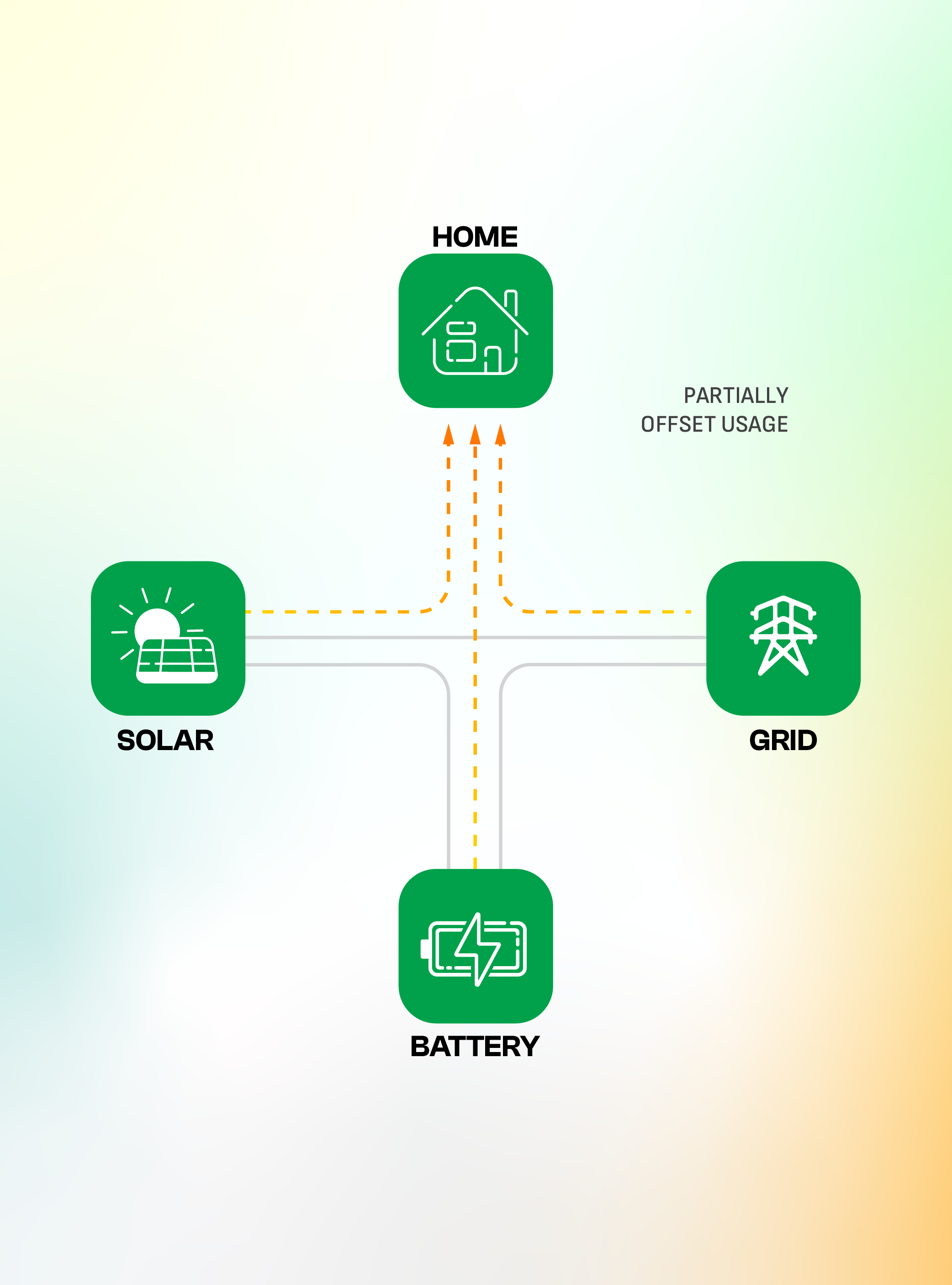
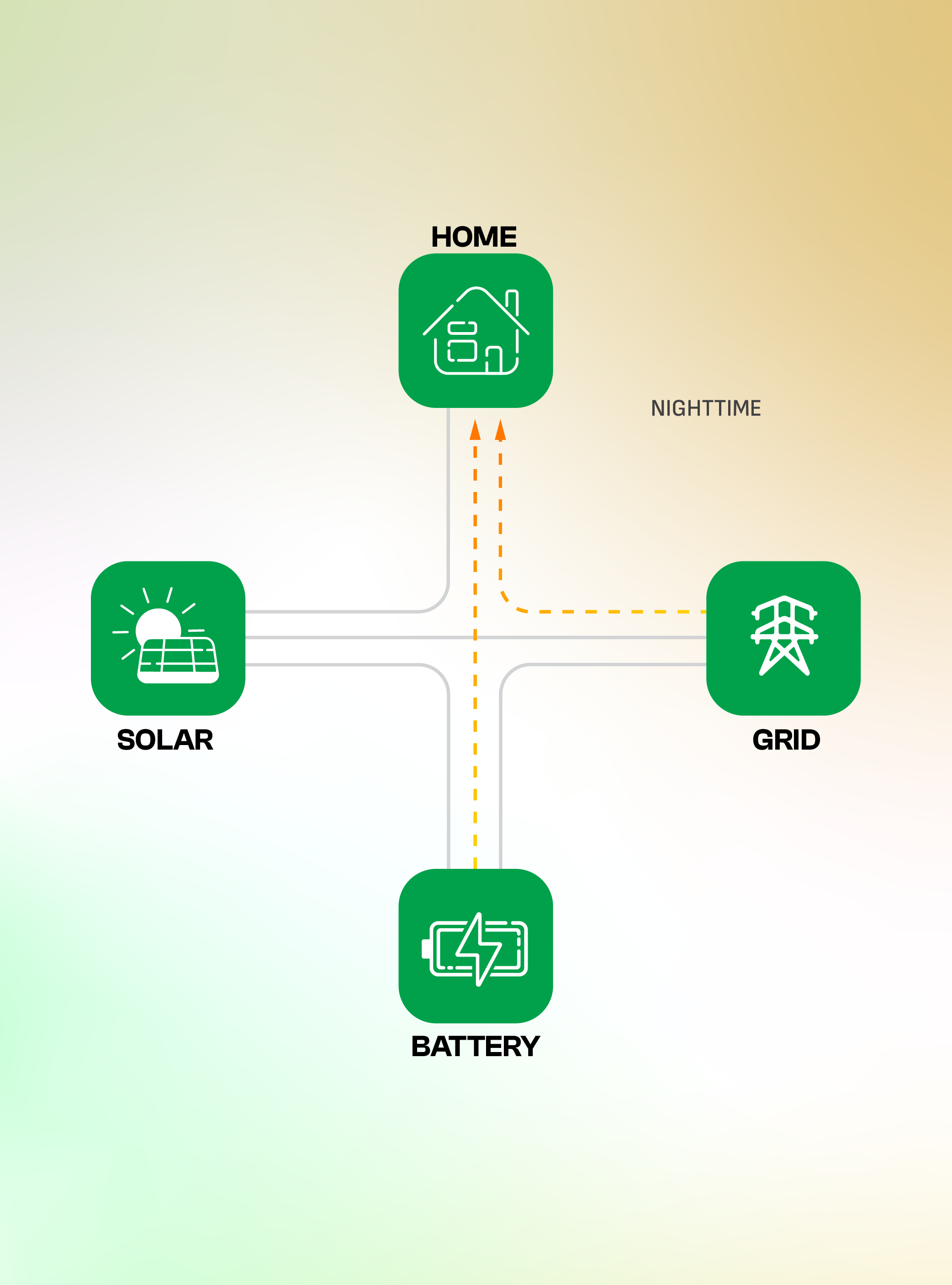
Solar Diagrams Explained
How does generating excess solar work? When there is enough solar power generation to not only charge the battery, but also continue to power your home and export to the grid, depending on your consumption and configuration.
What does Partial Solar Offset Mean? When solar is only generating so much power, the grid has to step in and help provide power to your loads. This is usually the case when it is cloudy etc.
Does Solar Produce at Night? No, because there is no direct sunlight, solar power does not produce during the night. At night, loads are powered directly from grid energy with no full or partial offset of grid energy, unless you have a battery.
Because most homes have a limit of 5kW of inverter capacity per-phase (most homes are single-phase), installers opt for 33% more solar power than the inverter is rated for.
With the 33% solar rule, you can add up to 6.6kW of solar panels to a 5kW inverter, which doesn't break any rules or affect solar rebate eligibility. A 6.6kW solar system consists of 15x 440W panels to the 5kW inverter which helps provide more solar output during the morning and afternoon.
The 5kW limit is dependent on the energy provider you are with.
Both residential and commercial solar systems are measured in Kilowatts
(kW),
which is the power a system can produce. You'll see system sizes like 6.6kW, 10kW, and 13kW systems, but what does this mean, and how are solar
system sizes
determined?
Firstly, the amount of kW a solar system depends on the conditions. Depending on sun exposure and other
ideal environments, a system can produce the amount of power that the system is designed for. A 6.6kW solar system will peak at 6.6kW
(6,600W) of power with ideal conditions, and it is one of the most popular system sizes in Australia (at least in NSW).
Determining the right solar system size will depend on your unique electricity consumption. Installers are best to talk to, to get an idea of ideal sizes, however reviewing your energy bill can help you identify your overall daily grid consumption.
Most Australian solar systems are designed to balance energy requirements, affordability, and efficiency, using the installation requirements mentioned above including roof suitability, real estate, and sun exposure.
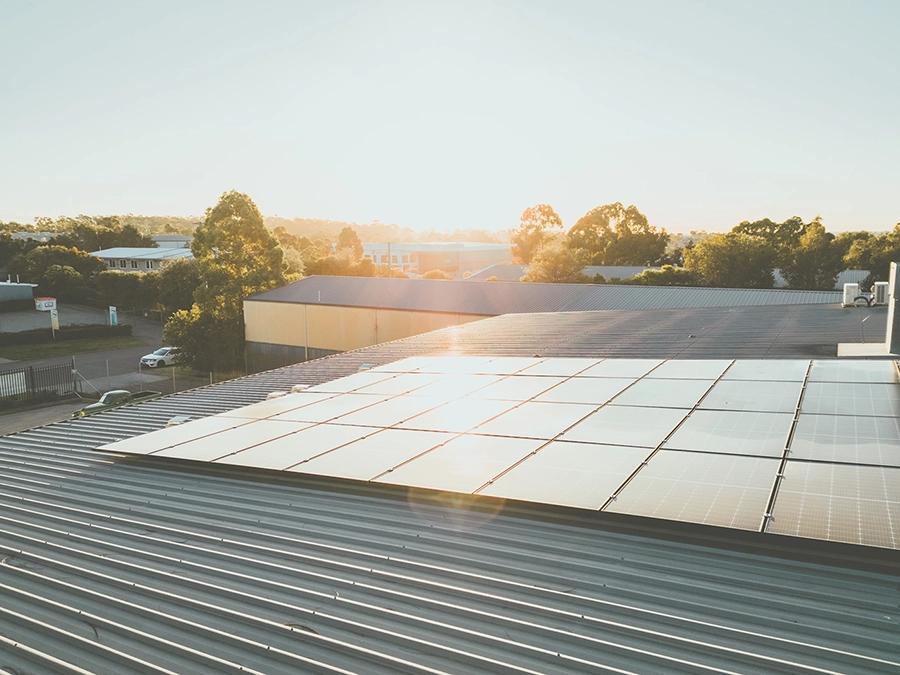
Most homes and businesses are solar-ready with suitable roofs and buildings for small to large-scale solar systems. If you are looking to see if your property is suitable for solar, here are 3 elements to keep in mind.
Depending on your homes age, most homes are pretty-suitable for solar installations of most sizes, ranging from small 3.3kW systems to larger 20kW systems.
Older homes may need additional work to ensure structural integrity with the additional weight of the solar system.
Every household rooftop will vary in sizes and shapes with different facing roof faces.
For those who want a larger system, you'll need to get your solar designer/installer to check if you can fit the required solar system size, or have variations with higher-powered panels.
As mentioned, every house will have varying roof faces which can affect your solar system's generation capacity.
Solar systems are typically installed on the North facing roof to ensure maximum coverage, with some spreading to the east and west faces.
Whether you're weighing up solar, battery storage, or just trying to make sense of your power bill, our articles break it down in plain English - written by our own SAA-accredited team, not stock content.
We've invested in becoming fully-licensed and qualified installers to ensure Newcastle homes and businesses
get the best solar, battery, and electrical systems available. We want to assist Newcastle's renewable energy revolution with quality
installations for maximum customer satisfaction.
Certified solar system installers near you.
Get CEC-Approved Battery Installations.
Fully-licensed electricians in Newcastle.
Convenient EV charging stations for properties.