Battery rebate drop: the federal discount falls about 16% on 1 January 2027. Check your rebate before it drops
Battery rebate drop: the federal discount falls about 16% on 1 January 2027. Check your rebate before it drops
Solar and battery rebates in NSW come from the federal government, the NSW Government and your energy provider, and the rules change every few months. This page puts them in one place, shows what you can claim right now and links to the full detail on each one.
Last reviewed 4 November 2026. The federal battery discount drops about 16% on 1 January 2027.
| Incentive | What you get | Status |
|---|---|---|
| Cheaper Home Batteries Program (federal) | An upfront discount on a new home battery from 5kWh to 100kWh, or on an expansion |
Available Falls every six months until 2030 |
| Small-scale Renewable Energy Scheme (SRES) | STCs that reduce the price of eligible rooftop solar up to 100kW |
Available Falls each 1 January until 2030 |
| NSW Home Energy Saver Loan | 0% interest, no fee finance from $2,000 to $15,000 over up to 10 years |
Available For eligible NSW households |
| NSW VPP incentive (Peak Demand Reduction Scheme) | A payment when your battery joins a Virtual Power Plant |
Available Rules changed on 1 July 2026 |
| NSW incentive for new home batteries (BESS1) | Replaced by the federal discount |
Paused Since 30 June 2025 |
| Solar Swap and low income household rebate | Free or discounted solar for eligible households |
Closed To new applicants |
The Cheaper Home Batteries Program takes up to 30% off the cost of a home battery from 5kWh to 100kWh. It is officially a discount rather than a rebate, but most people search for the rebate, so you will see both words here. The discount counts battery capacity up to 50kWh and is paid as small scale technology certificates (STCs).
The number of STCs is worked out as tiered kWh multiplied by the STC factor. The first 14kWh counts at 100%, 14kWh to 28kWh counts at 60% and 28kWh to 50kWh counts at 15%. STCs are rounded down to a whole number and valued at about $35 each, so every figure on this page is an estimate.
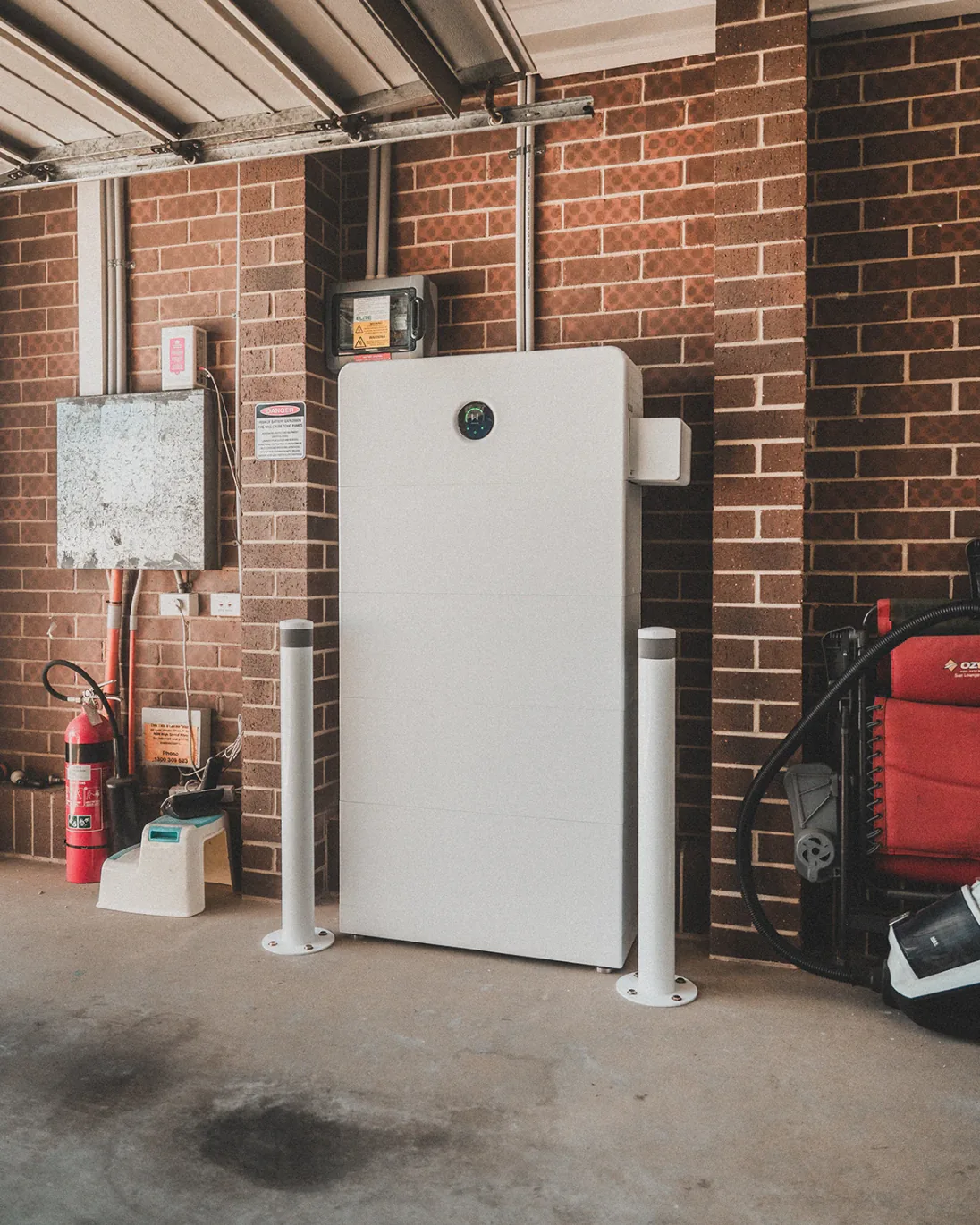
The STC factor falls every six months until the scheme ends in 2030. A 13.5kWh Tesla Powerwall 3 installed between 1 May and 31 December 2026 earns about 91 STCs, or about $3,185 off the installed price.
1 May to 31 Dec 2026
STC factor 6.8 (now)
Jan to Jun 2027
STC factor 5.7
Jul to Dec 2027
STC factor 5.2
Jan to Jun 2028
STC factor 4.6
Tesla Powerwall 3 (13.5kWh) estimate by installation period. Installing in January to June 2027 instead of before the end of 2026 means about $525 less on a Powerwall 3. For other battery sizes and later dates, use our federal battery rebate calculator. STC prices vary, so your quote may differ.
Expansions can claim too, as long as the expansion adds at least 5kWh, the total stays under 100kWh and the battery has not been claimed before.
You do not lodge a separate application. You get a quote from an SAA accredited installer, who chooses an eligible battery and takes the discount off your supply and installation quote.
Eligible batteries we install:
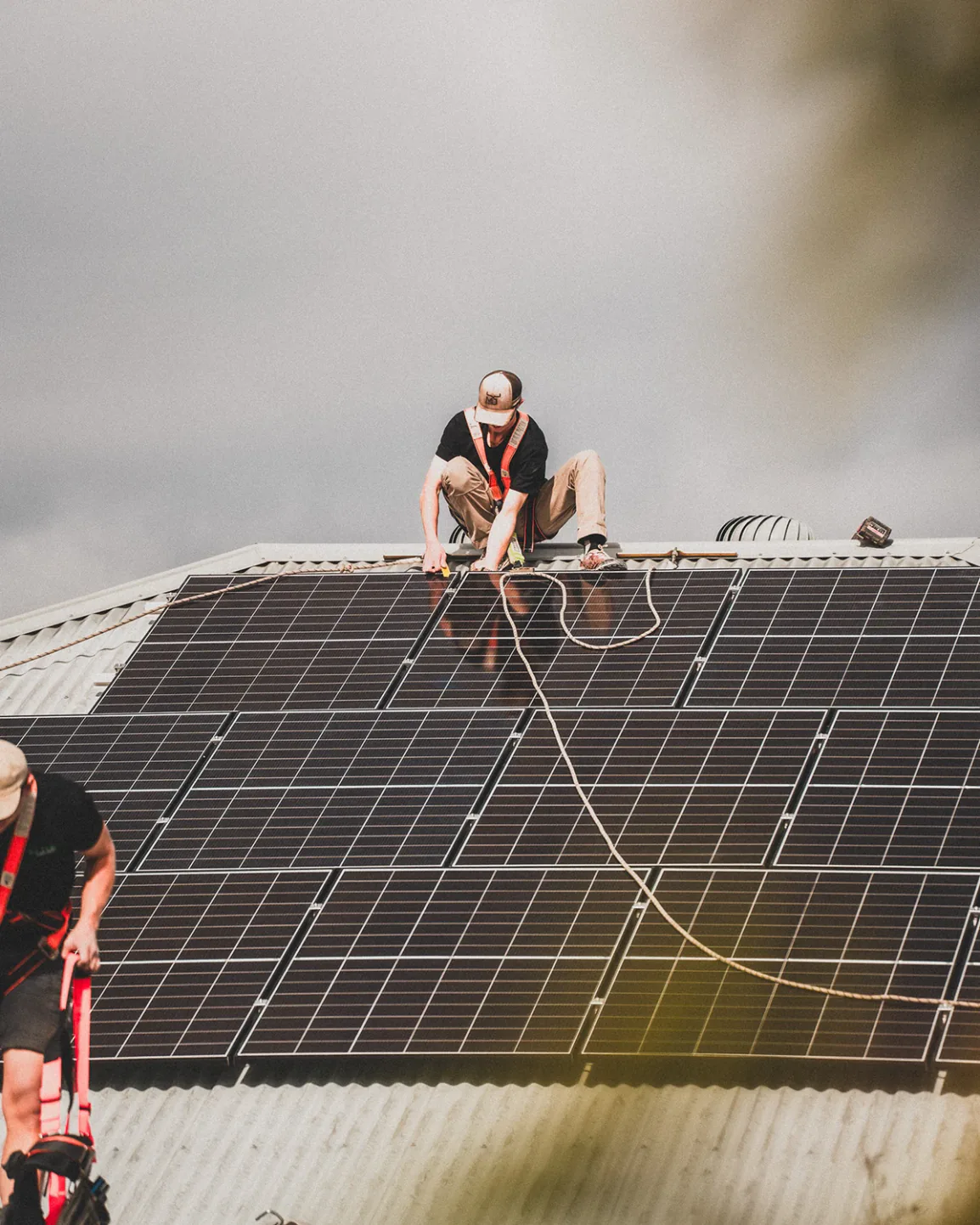
The Small-scale Renewable Energy Scheme (SRES) gives STCs for eligible rooftop solar systems up to 100kW, which your installer takes off the price of your system. The amount falls each 1 January and the scheme runs to 2030. The system must be designed and installed by a CEC accredited designer and installer, and the STCs must be created within 12 months of installation.
system size covered
the scheme runs to 2030, falling each 1 January
to create the STCs after installation
A feed-in tariff is the reward your energy provider pays you for sending excess solar energy back to the grid.
IPART benchmarks for 2026 to 27 put the flat, all day feed-in tariff between 3.4 and 6.5 cents per kWh, as more rooftop solar pushes daytime wholesale prices lower. The benchmarks are a voluntary guide, so your retailer's actual rate may differ.
Time of use plans now pay far more for evening exports. A battery that lets you shift your export to the evening peak, or a VPP that is paid to discharge at those times, is increasingly where the real value is.
| Benchmark | Cents per kWh |
|---|---|
| Flat all day benchmark, 2026 to 27 | 3.4 to 6.5 |
| Flat all day benchmark, 2025 to 26 | 4.8 to 7.3 |
| Evening peak, Ausgrid (4pm to 9pm) | 17.2 to 18.7 |
| Evening peak, Endeavour Energy (4pm to 8pm) | 16.9 to 19.9 |
| Evening peak, Essential Energy (5pm to 8pm) | 26.6 to 33.3 |
The NSW Home Energy Saver Loan is delivered through Plenti for eligible NSW households. It can help pay for solar, batteries, EV charging and other upgrades. It is finance rather than a rebate, so using it does not reduce what you can claim.
interest, with no fees
you can borrow
to pay it back, at most
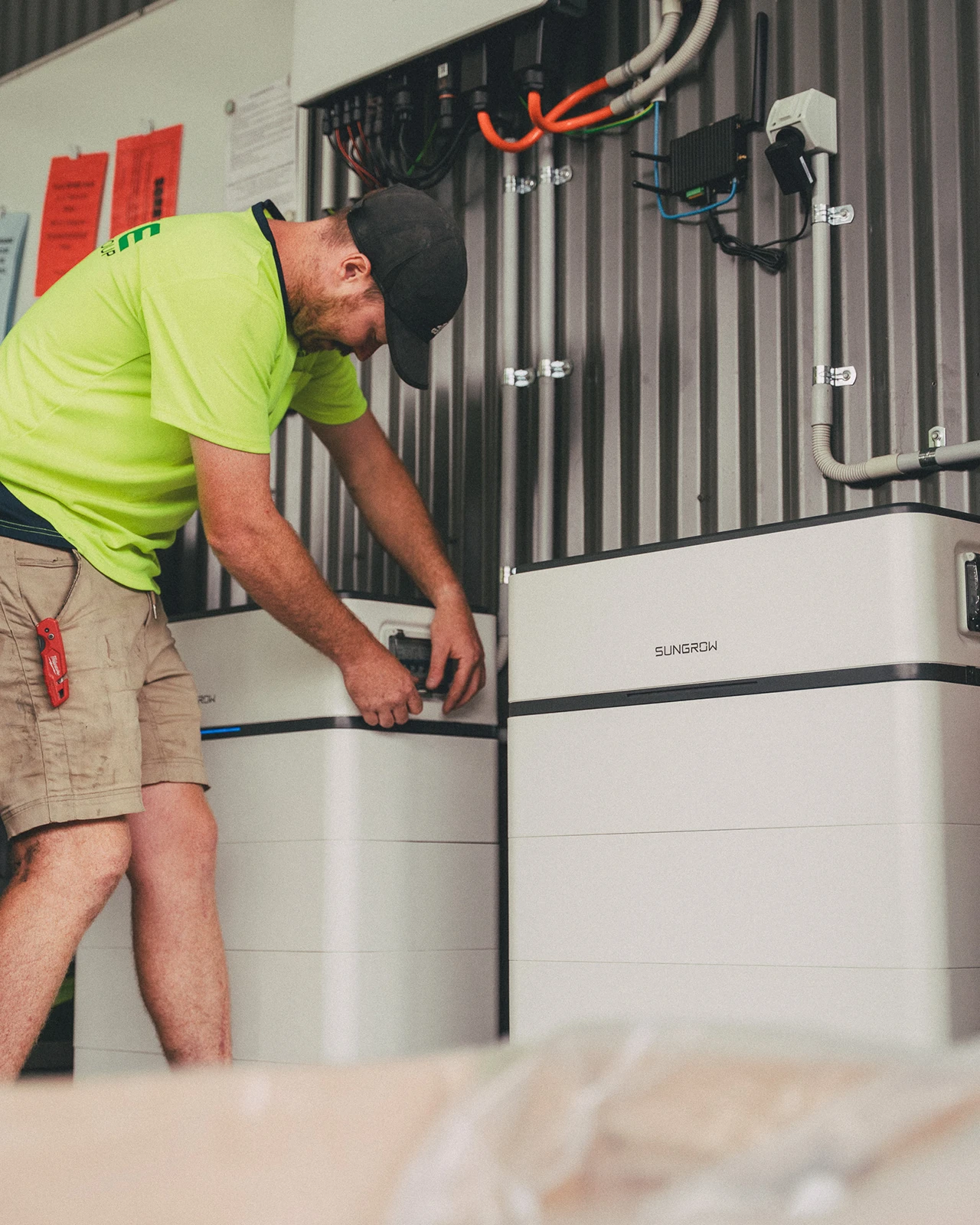
A Virtual Power Plant (VPP) links many home batteries so they can support the grid when demand is high. NSW pays an incentive when a battery joins one. From 1 July 2026, the rules changed:
batteries can join
to qualify
to sign the paperwork
Payment is calculated on the first 28kWh. The amount depends on your provider and contract, so compare offers and check the current rules before you sign.
The federal discount only needs your battery to be VPP compatible. You do not have to join a VPP to claim it.
The NSW Peak Demand Reduction Scheme has separate incentives for larger batteries in apartment buildings, businesses and commercial and industrial sites. These started on 1 September 2026, and the rates and rules change, so we confirm the current position when we quote.
| Incentive | Who it is for | Battery size | New solar | Good to know |
|---|---|---|---|---|
| Apartments and strata (BESS3) | Apartment buildings with four or more dwellings | 20 to 200kWh | Higher rate if paired with new solar within a set window | A minimum customer payment applies per project |
| Small and medium business (BESS4) | Small and medium business sites | 20 to 200kWh | Required | Must connect to a demand response aggregator. Claimed once per site |
| Commercial and industrial (BESS5) | Larger commercial and industrial sites | 200kWh to 30MWh | Required | Incentive calculated on the first 10MWh |
Managing or developing a multi dwelling building in the Hunter? Get in touch and we can walk you through whether it stacks up for your building. If you run a site with meaningful energy demand, it is worth a proper conversation with our commercial team, since the numbers change a lot with scale.
The federal solar rebate (SRES) and the federal battery discount can be claimed together, because they cover different equipment.
The federal battery discount and the NSW VPP incentive are separate. Ask your VPP provider how they apply to the same battery.
The NSW Home Energy Saver Loan is finance, so it does not reduce your eligibility for any rebate.
The NSW incentive for new home batteries has been paused since 30 June 2025, when the federal Cheaper Home Batteries Program took over.
The Solar Swap and low income household rebates are closed to new applicants.
Elite Power Group is a local installer based in Thornton, and our quotes include the rebates you are eligible for so you see the real price. Our installers are SAA accredited and our installation work carries a 10 year workmanship warranty.
Tell us about your home and we will come back with a tailored quote that shows the discount already applied.