Hunter Valley's Leading Residential & Commercial Solar Installers

Hunter Valley's Leading Residential & Commercial Solar Installers
Posted 21 Dec
Want the latest in energy, solar, and savings?Subscribe to our newsletter – we don’t spam!
Peak shaving, load shifting and demand response are three of the most talked-about strategies in Australian energy management — and they're often confused with each other.
Quick Answer: Peak shaving reduces how much power you draw during expensive peak periods, load shifting moves your consumption to cheaper times, and demand response is a paid grid program that automates load reduction during network stress events.
All three can lower your electricity bill, but they work differently, cost different amounts to set up, and suit different households. This guide breaks down what each one means, how they compare, and how modern hybrid inverters and battery systems automate them in Australian homes and businesses.
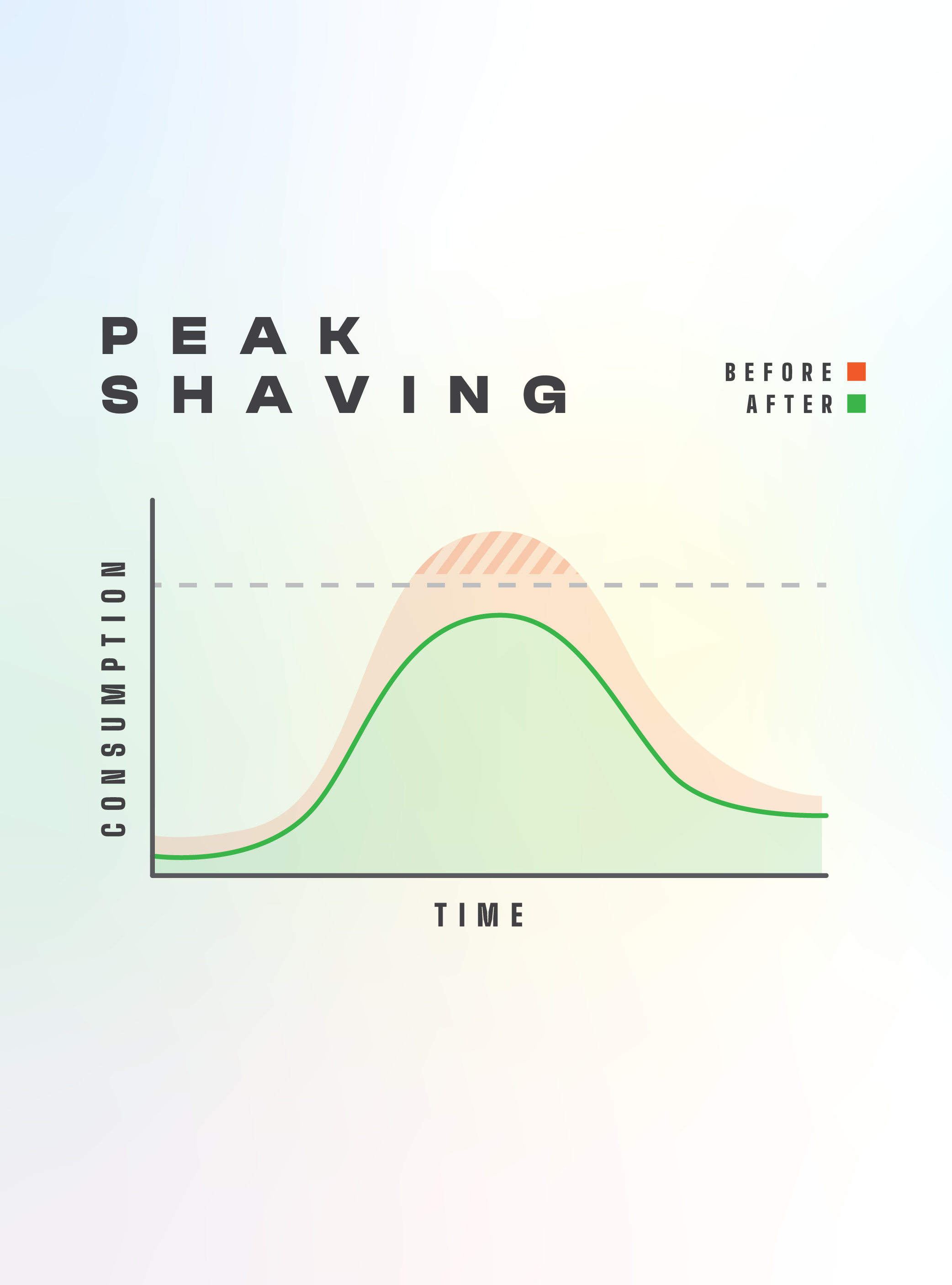
Peak shaving (otherwise called peak clipping or load shedding) is an energy management strategy that reduces the amount of electricity a household or business draws from the grid during periods of high demand.
Instead of pulling expensive grid power during those peaks between 5-9pm (often 50–70c per kWh), a peak shaving system covers the spike using stored energy from a battery, on-site generation like rooftop solar, or automated load control. This effectively "shaves off" the top of the demand curve, giving the strategy its name.
Peak shaving falls under the broader umbrella of demand-side management (DSM) - the industry term for any strategy that reduces or reshapes electricity consumption on the customer side of the meter. Solar and battery-equipped homes typically automate peak shaving using their hybrid inverter's peak shaving mode, so the strategy runs in the background without anyone having to think about it.
The goal of peak shaving is to lower the highest spikes in your electricity usage - reducing demand charges, cutting the amount you pay at peak rates, and taking some load off the grid at exactly the times it's most stressed.
Load shifting (also called peak shifting or demand shifting) is an energy management strategy that moves electricity consumption from expensive peak-price periods to cheaper off-peak, shoulder or solar periods, without necessarily reducing total consumption. Where peak shaving reduces how much power you draw during peaks, load shifting reschedules when that power gets drawn in the first place.
A simple Australian example: instead of running your dishwasher at 7pm (peak, 55c/kWh), you set it to run at 11:30am during the Solar Sharer free window (0c/kWh) or at 11pm off-peak (25c/kWh). Same appliance, same energy used, dramatically different bill. Households with and without solar can use load shifting - you don't need panels, though solar makes the maths even better because you're consuming your own free generation instead of exporting it for a low feed-in tariff.
Load shifting is the lowest-cost energy management strategy available.
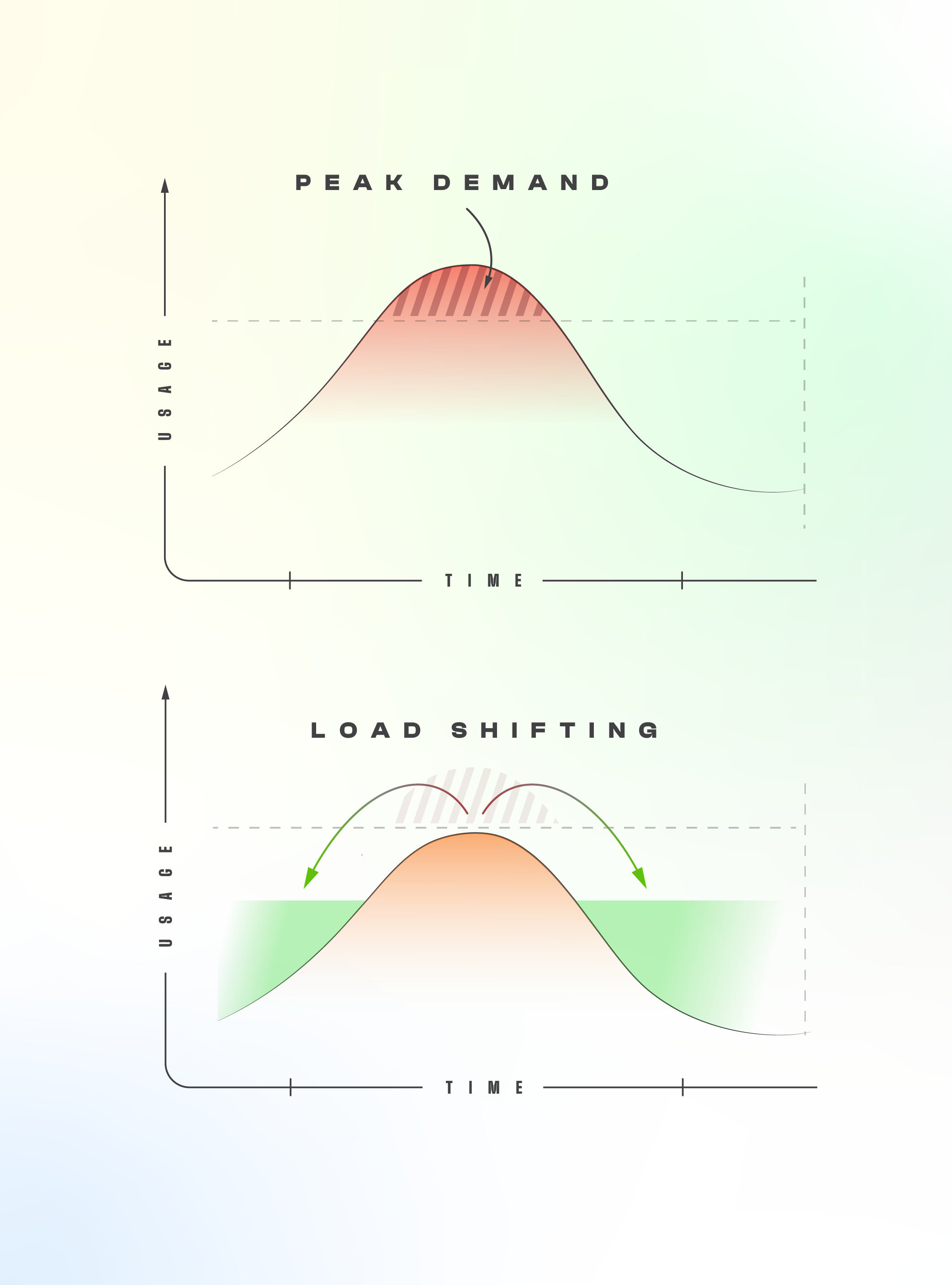
Peak Demand & Load Shifting Diagrams - Elite Power Group
Energy management uses a lot of overlapping terms. Here's the plain-English breakdown of the terms most often confused with peak shaving and load shifting:
FEATURE |
PEAK SHAVING |
LOAD SHIFTING |
| What it does | Reduces the size of demand spikes | Moves demand to a different time |
| Total energy used | Same or slightly less |
Same |
| Primary Goal | Cut peak demand charges (kW), and peak-rate consumption |
Cut peak-rate energy charges (kWh) |
| Equipment Needed | Battery, hybrid inverter with peak shaving mode, or onsite generation | Timers, smart appliances, scheduling apps |
| Result |
Help reduce overall grid demand | Avoid using expensive grid electricity |
| Benefits |
Reduce your overall electricity bill |
Rely on cheaper energy, reducing your bill |
| Grid impact |
You help reduce grid stress | Helping balance demand with supply |
| Also called |
Peak clipping, load shedding |
Peak shifting, demand shifting |
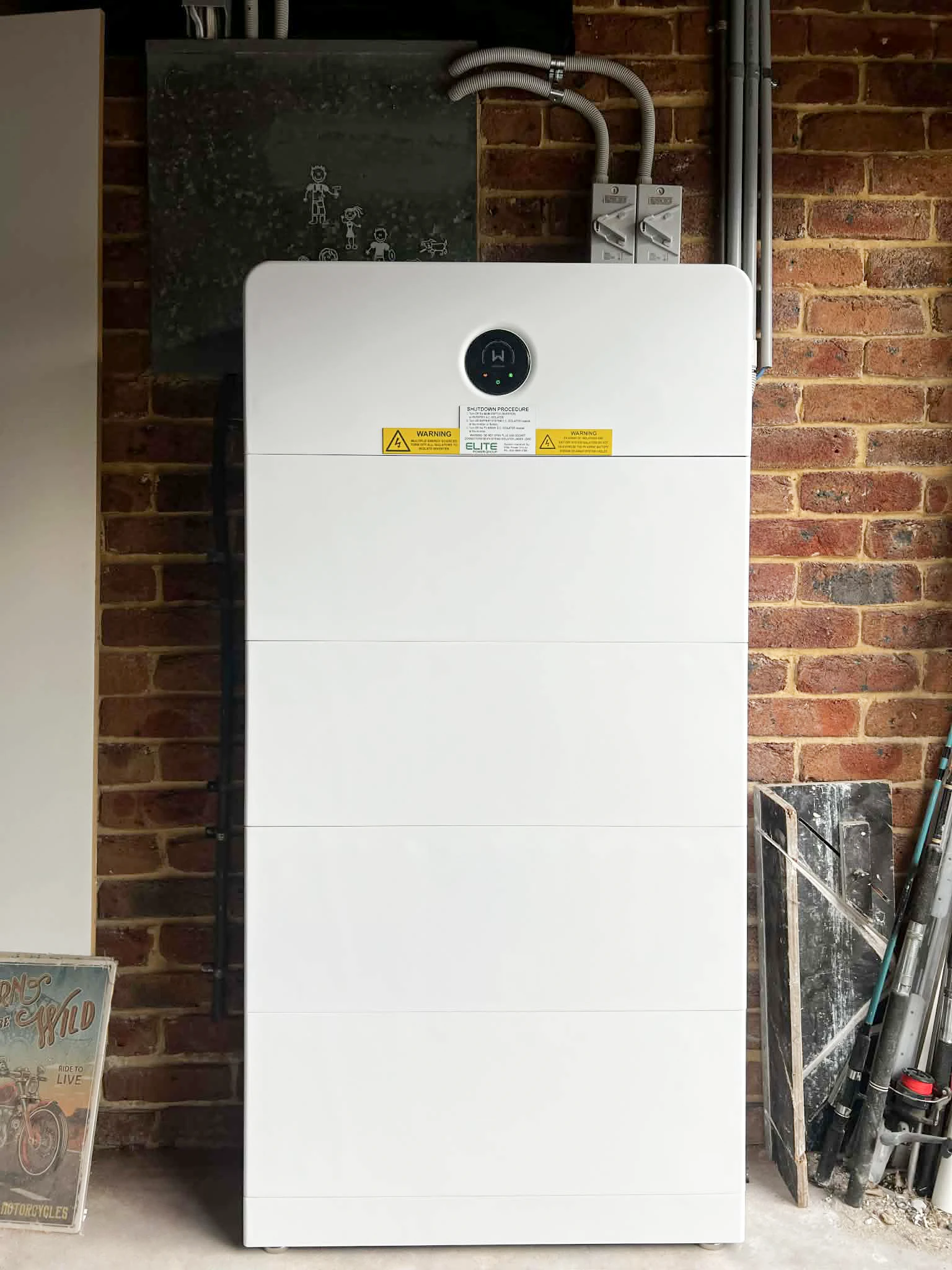
With solar and a home battery, peak shaving becomes fully automated. The system charges the battery during low-demand periods, either from rooftop solar during the day, or from cheap off-peak grid electricity overnight - and discharges it during expensive peak periods so you draw as little as possible from the grid when rates are highest.
By using stored solar energy (or cheap overnight energy) during peak windows, peak shaving eliminates the biggest single contributor to
high time-of-use bills.
On a typical Sydney TOU tariff at 55c/kWh peak, offsetting just 4 hours of evening consumption with a battery saves around
$1,600 per year.
Before you even factor in load shifting the rest of the day.
Most modern hybrid inverters and battery systems sold in Australia include a dedicated peak shaving control mode that automates the strategy at the equipment level. You set an import power limit (the maximum kW you want to draw from the grid), and the system covers everything above that from the battery.
GoodWe Peak Shaving
On GoodWe systems, peak shaving mode is configured through the SEMS Portal rather than on the inverter itself. You set a grid import
power limit in kW, and once household demand crosses that line, the battery covers the difference instead of the grid. It's a
straightforward set-and-forget setting once the limit is dialled in correctly for the property.
Sungrow Peak Shaving
Sungrow's SBR and SBH battery systems handle peak shaving through the iSolarCloud app, under Load Management. Rather than a single
toggle, it works alongside the battery's other scheduling settings, so it's worth reviewing the whole Load Management setup together
rather than switching peak shaving on in isolation.
Fronius Peak Shaving
Fronius Gen24 and Symo Hybrid systems manage peak shaving through Battery Control in Solar.web, Fronius's own monitoring platform.
Because it's tied into Solar.web rather than a standalone app, that's also where you'd check the setting is actually behaving as
expected once it's configured.
Tesla Powerwall Peak Shaving
Tesla Powerwall doesn't use the term "peak shaving" directly — the closest equivalent is Time-Based Control mode in the Tesla app, which
automates battery discharge during peak tariff periods and charging during off-peak windows on a time-of-use plan. Same idea as peak
shaving, just branded and configured differently.
For solar-only households (without a battery), load shifting is the difference between getting real value from your system and merely breaking even. Australian feed-in tariffs have collapsed to around 3–8c/kWh in most states, while grid electricity costs 30–70c/kWh depending on the tariff and time of day. That means every kWh you self-consume is worth up to 10x more than every kWh you export.
The single biggest mistake we see new solar owners make is failing to shift appliance use into daylight hours. If your dishwasher runs at 7pm and your solar is exporting to the grid at 12pm, you're effectively selling power for 5c and buying it back for 55c - a losing trade. Load shift the dishwasher to midday and that same cycle becomes free.
For solar owners on a Solar Sharer plan, this gets even better - the 3-hour free window (11am–2pm NSW/QLD, 12pm–3pm SA) stacks on top of your existing solar. Between free grid power and your own generation, midday appliance use often costs literally nothing.
Combining solar with load shifting is the fastest way to accelerate your system's payback. Combining solar with load shifting and a peak-shaving battery is how you maximise the return on your entire energy investment.

These are the appliances that offer the best return on load shifting effort - either because they use a lot of energy in a single cycle, run for extended periods, or can be easily scheduled without disrupting your day.
But what appliances are best for load shifting? Below is a list of appliances that are best-suited for load shifting in Australia:
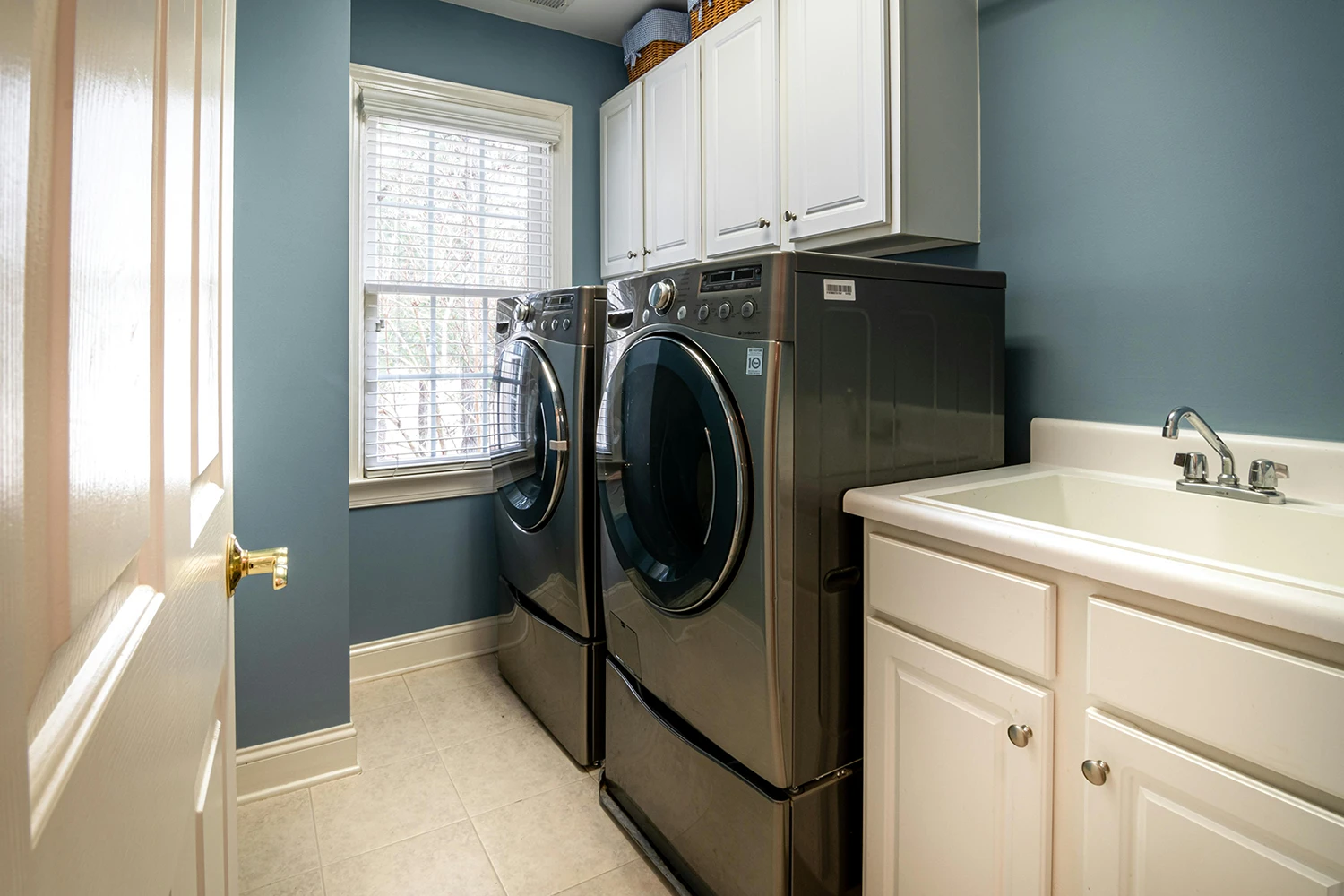
Courtesy of Curtis Adams on Pexels.
Load shifting only works if your electricity plan actually charges different rates at different times. That means you need one of these tariff structures:
What about flat-rate (single-rate) tariffs? Load shifting doesn't save you money on a pure flat-rate tariff because the rate is the same all day. However, if you have solar, load shifting is still worth doing - moving usage into solar hours means you self-consume your own generation instead of exporting it for a low feed-in tariff. That's true regardless of tariff structure.
Demand response is a grid-triggered energy reduction program, you (or your battery) get paid by your retailer or grid operator to reduce consumption during declared events. Demand control is the broader industry umbrella term that covers any automatic management of household or business electricity to prevent demand spikes. Peak shaving sits inside demand control as one specific technique.
The best way to understand the three is by what triggers them:

Courtesy of AS Photography on Pexels.
AEMO's Reliability and Emergency Reserve Trader (RERT): commercial-scale demand response used to prevent blackouts during extreme heat events.
Amber Electric's SmartShift: automates residential battery discharge when wholesale prices spike, effectively enrolling customers into market-based demand response.
Virtual Power Plants (VPPs): aggregated home batteries dispatched during grid events, run by retailers like AGL, Origin, Tesla Energy Plan and others. VPP participants receive payments per event.
Retailer peak-event programs: some retailers offer bill credits for reducing consumption during declared "peak events" (typically a few hours per year).
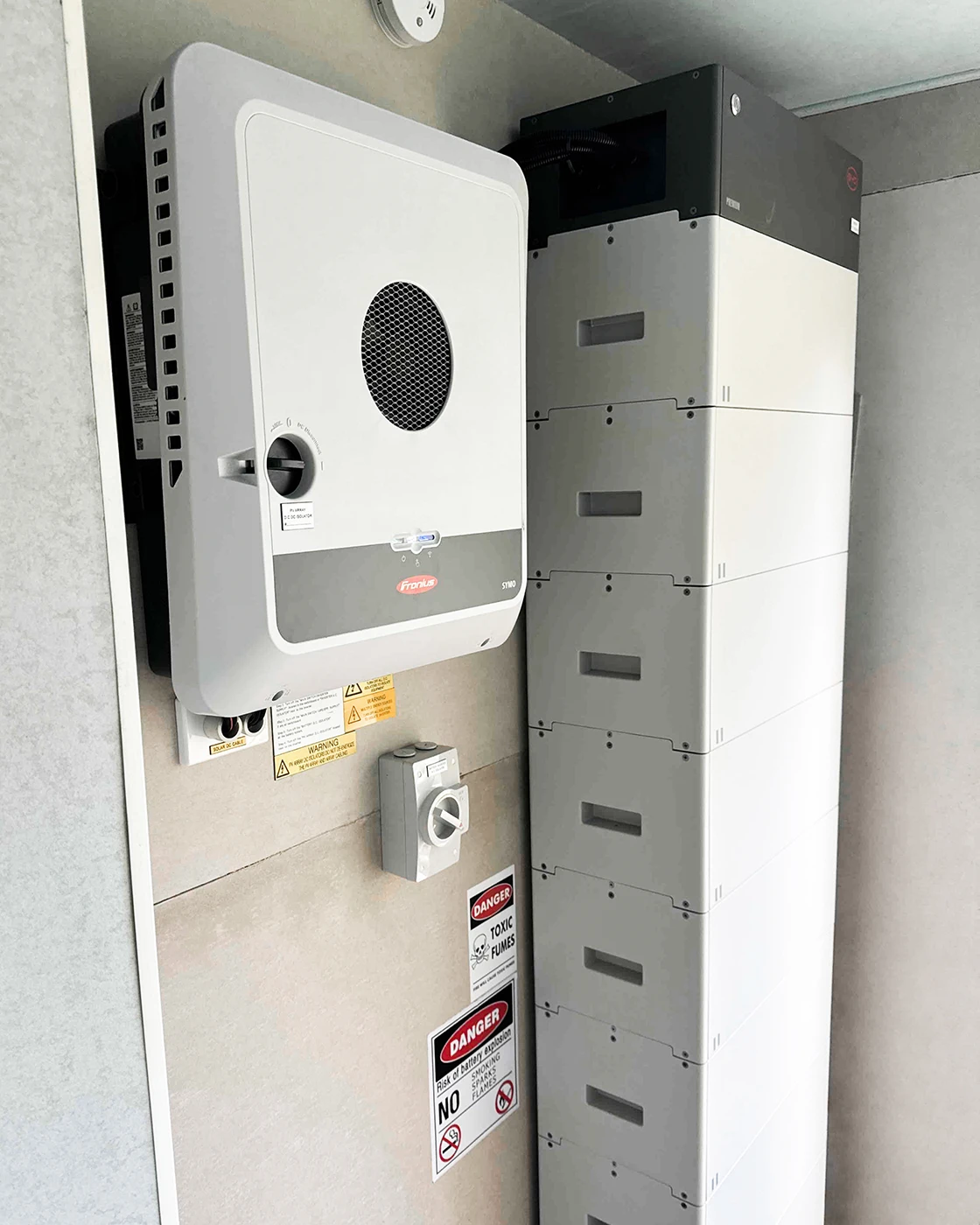
BYD Battery-Box and Fronius GEN24 Inverter
A negative price event happens when electricity supply exceeds demand and wholesale prices go below zero - meaning generators are effectively paying the grid to take their power. In Australia, negative events typically happen on sunny, windy weekends or public holidays when solar and wind generation flood the grid while household demand is low.
On a standard TOU or Solar Sharer plan, negative pricing doesn't affect your bill directly, you just don't get charged for that period. But customers on wholesale-passthrough plans like Amber Electric can actively benefit: their app pays them to consume during negative events, so charging a battery, running an EV charger or heating a hot water tank during those windows literally puts money in your account.
For solar and battery owners, negative price events are the mirror image of peak shaving, instead of avoiding the grid during expensive peaks, you're maximising grid consumption during free (or paid) troughs. Both strategies together let you exploit the full range of Australia's increasingly volatile electricity market.
Of all the terms – peak shaving, load shifting, demand control and response, and negative price events all share the same goal of using energy more efficiently. For most households, the biggest savings and most practical strategy is load shifting and self-consumption with solar.
Overall, as we strive for a renewable and energy efficient future, Australia’s infrastructure and household technology will continue to improve.
What the Clean Energy Council's January to June 2026 report found on rooftop solar, home batteries, forecasts and complaints, and how to read the figures.
Read moreNot all batteries provide blackout backup by default. Learn what happens, what your battery is backing up, and how to stop your battery draining too fast.
Read moreFind available rebates & subsidies for solar systems, battery storage, and VPPs in NSW. Explore eligibility and maximise live incentives today.
Read moreRenewable News Articles
Sign up for new article updates - we don't spam.
We've invested in becoming fully-licensed and qualified installers to ensure homes and businesses get
the best solar, battery, and electrical systems available.
Certified solar system installers near you.
Get SAA-Approved Battery Installations.
Fully-licensed electricians Near You.
Convenient EV charging stations for properties.
Leave a Comment