Newcastle's Leading Residential & Commercial Solar Installers

Newcastle's Leading Residential & Commercial Solar Installers
Posted 14 Apr
Want the latest in energy, solar, and savings?Subscribe to our newsletter – we don’t spam!
Most homeowners don’t really consider the amount of electrical engineering that happens throughout a home, keeping appliances powered. Flick a switch, and boom, power.
What if we told you that there are a few components that are doing the heavy lifting of keeping your home electrified with components like
circuit breakers and RCDs – but what do they actually do?
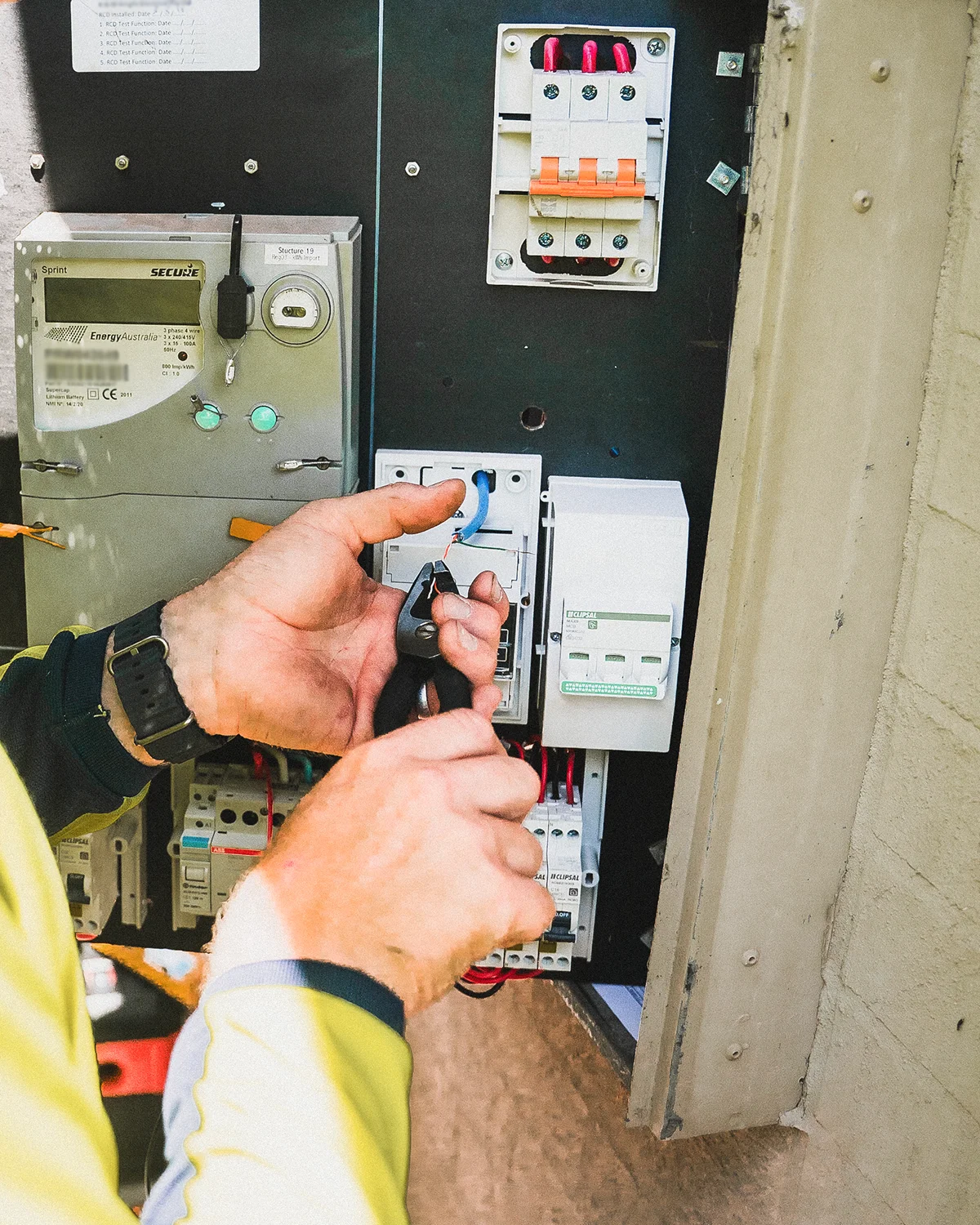
We all know what a circuit is like something out of Mario Kart, but what does it actually mean electrically? In its simplest form, a circuit is the path electricity takes from A to B, whether that be your switchboard to an appliance, or your phone’s battery to its camera.
Electrical circuits come in all sizes, but in a home can be split up into different circuits that can be dedicated to powering loads like lighting, or a circuit for one or more power points, or a dedicated circuit for appliances like EV chargers or air conditioners.
Why do homes have different electrical circuits? Having electrical circuits that power different loads can help with troubleshooting and helps spread the electrical load. If one circuit goes down, it won’t necessarily mean your entire house loses power.
So, you have an electrical circuit that connects your switchboard to the load, but how do you stop the circuit from flowing without damaging it? This is where circuit breakers come in.
Difference between Fuses & Circuit Breakers? Older-style homes generally use fuses which are single use and need to be replaced every time they are blown, but circuit breakers are now used where a circuit is tripped, can be flicked back on without needing replacement.
What makes a circuit breaker trip? A circuit breaker trips when it overloads and there are too many things running on the same circuit. It’s also designed to trip when there’s short-circuits or other faults that could pose risks.
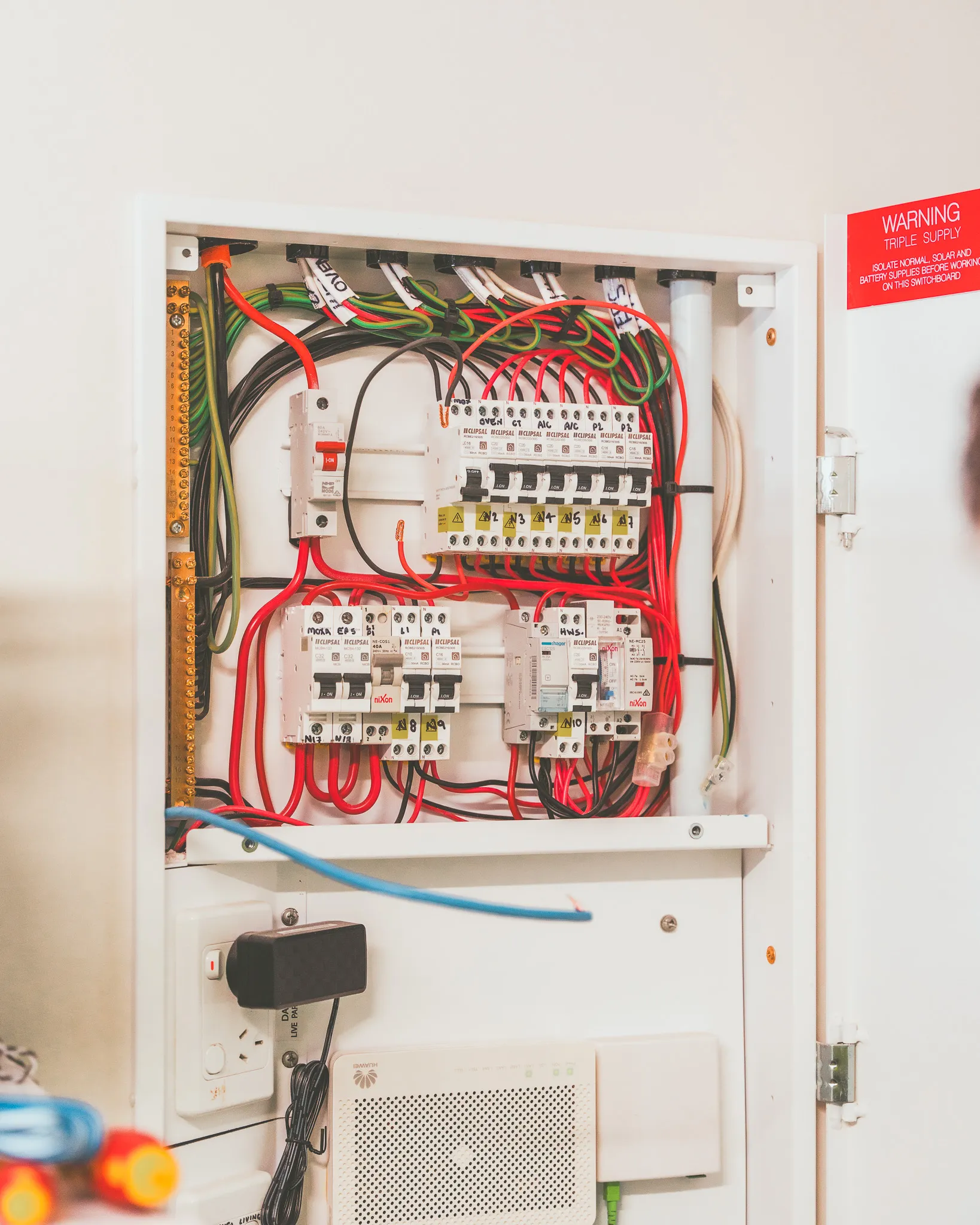
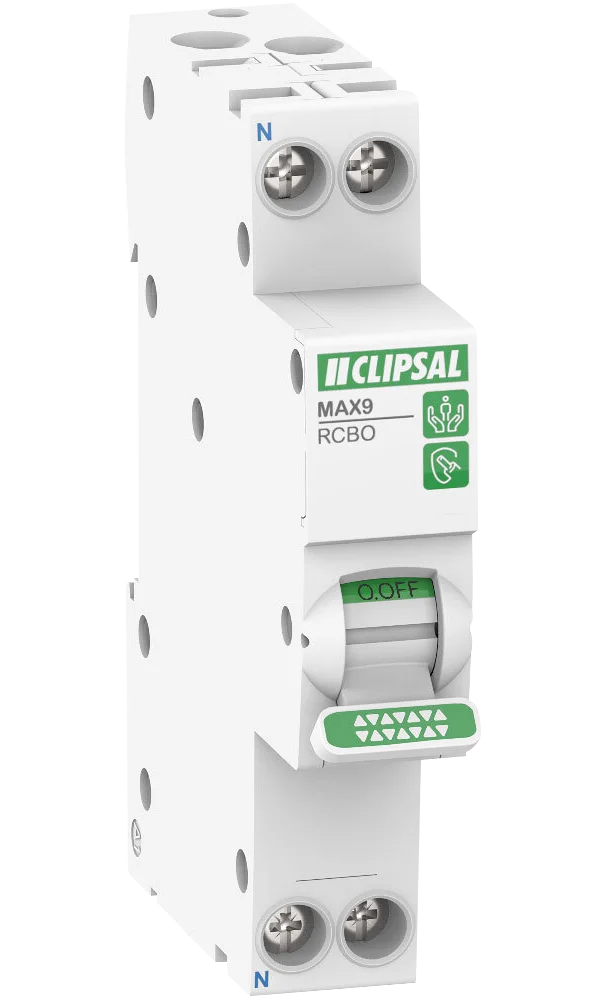
An RCD or Residual Current Device, otherwise known as a safety switch, is designed to detect leaking where electricity shouldn't go like through a person.
Difference between RCDs & Circuit Breakers? Whilst circuit breakers are designed to protect against overloading and short circuiting, RCDs focus more on preventing electrical shocks and user safety. RCBOs take this to the next level.
What’s an RCBO? An Residual Current Circuit Breaker with Overcurrent protection (RCBO) is a compact unit that integrates
both an RCD (protecting against leakages), and against overcurrent faults as a circuit breaker. This simplifies wiring and provides
protection for the two safety requirements in the single unit.
CIRCUIT BREAKER - designed to protect your wiring and appliances.
RCD - for detecting imbalances and protecting you.
RCBO - does the job of both in a single unit for simplicity.
Like circuit breakers, fuses are the old-school style that protect against overloading. Instead of a switch, a fuse has a little wire that is designed to handle a certain amount of current (amps), and if overloaded will actually melt the wire and stop the flow of electricity.
Fuses aren’t really used anymore for newer homes as we have better options available. Every time a fuse ‘trips’, the blown fuse needs to be replaced and can’t be reset like a breaker.
Older homes will still have fuses in older switchboards and can also be found in certain appliances.
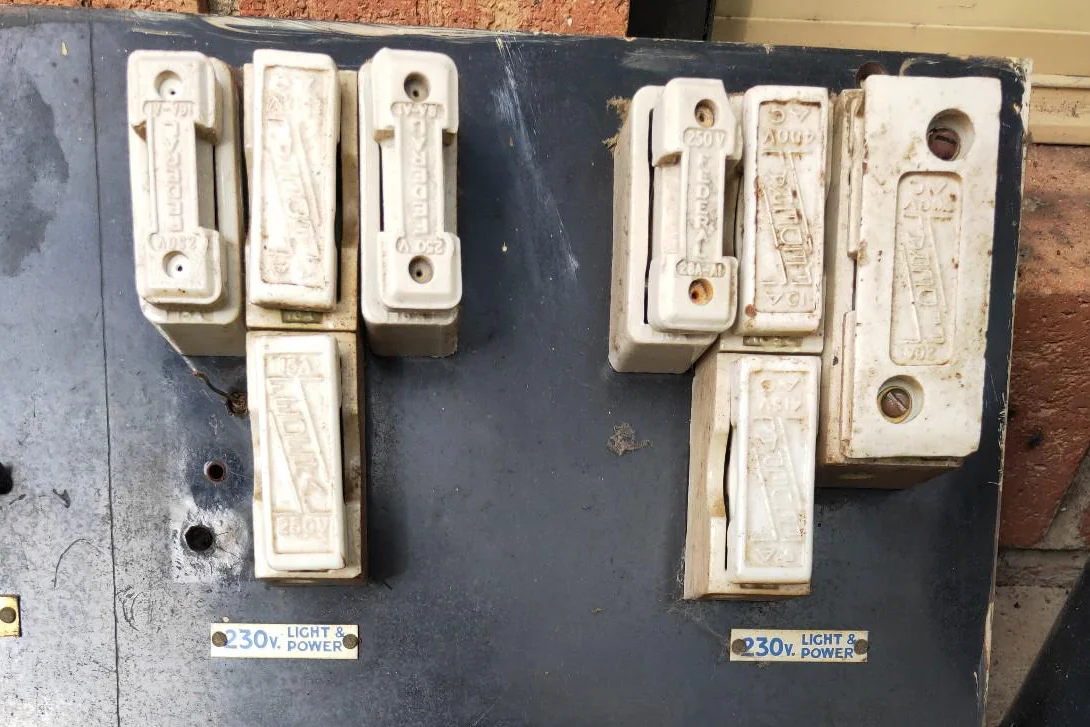
Courtesy of Kamal on gumtree
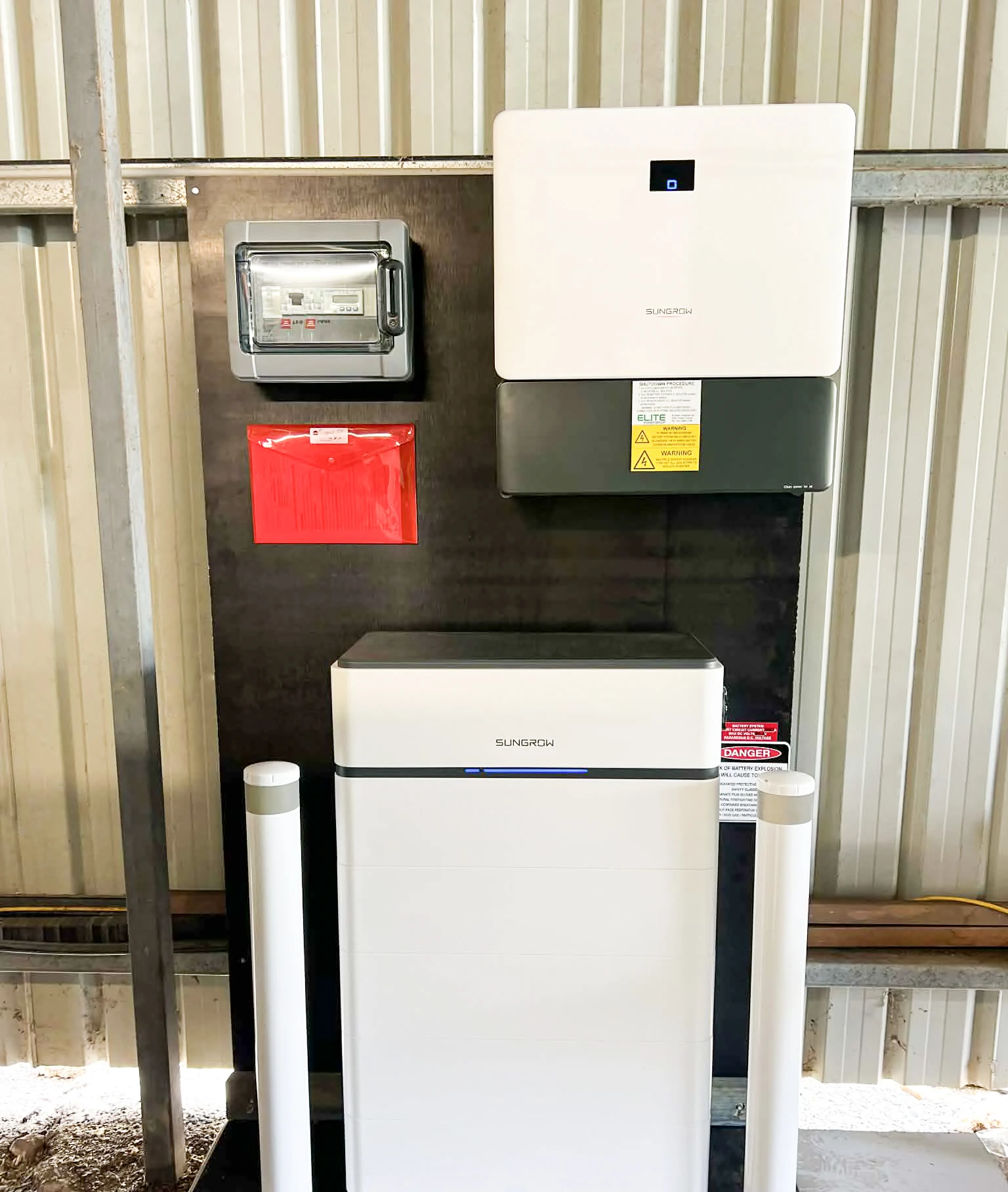
When a solar battery is installed with backup capability, it won’t automatically power your entire home during a blackout. Generally, batteries are installed to backup specific circuits to continue powering the home’s more essential loads like the fridge etc. but can be extended to cover your entire home.
Your battery installer will generally give you 2 options, a dedicated circuit backup where essential loads like the fridge, internet, and lights stay powered on, and a whole home backup where everything can stay powered. These are dependent mostly on the requirements of the customer, as well as their budget as partial backup is generally more cost-effective.
Acting as the control centre for your electricity, your switchboard is essential for any home and its electricity distribution.
As time continues and properties get older, homes begin to be due for a switchboard upgrade as they struggle to keep up with modern electrical demand.
What are the signs a switchboard needs replacing? A switchboard may need replacing when things like older fuses are still installed, there’s not enough space for new circuits, you’re adding additional components like solar and battery, or your breakers are tripping frequently.
As homes use more power than they used to, older homes may struggle to keep up with the requirements of modern appliances.
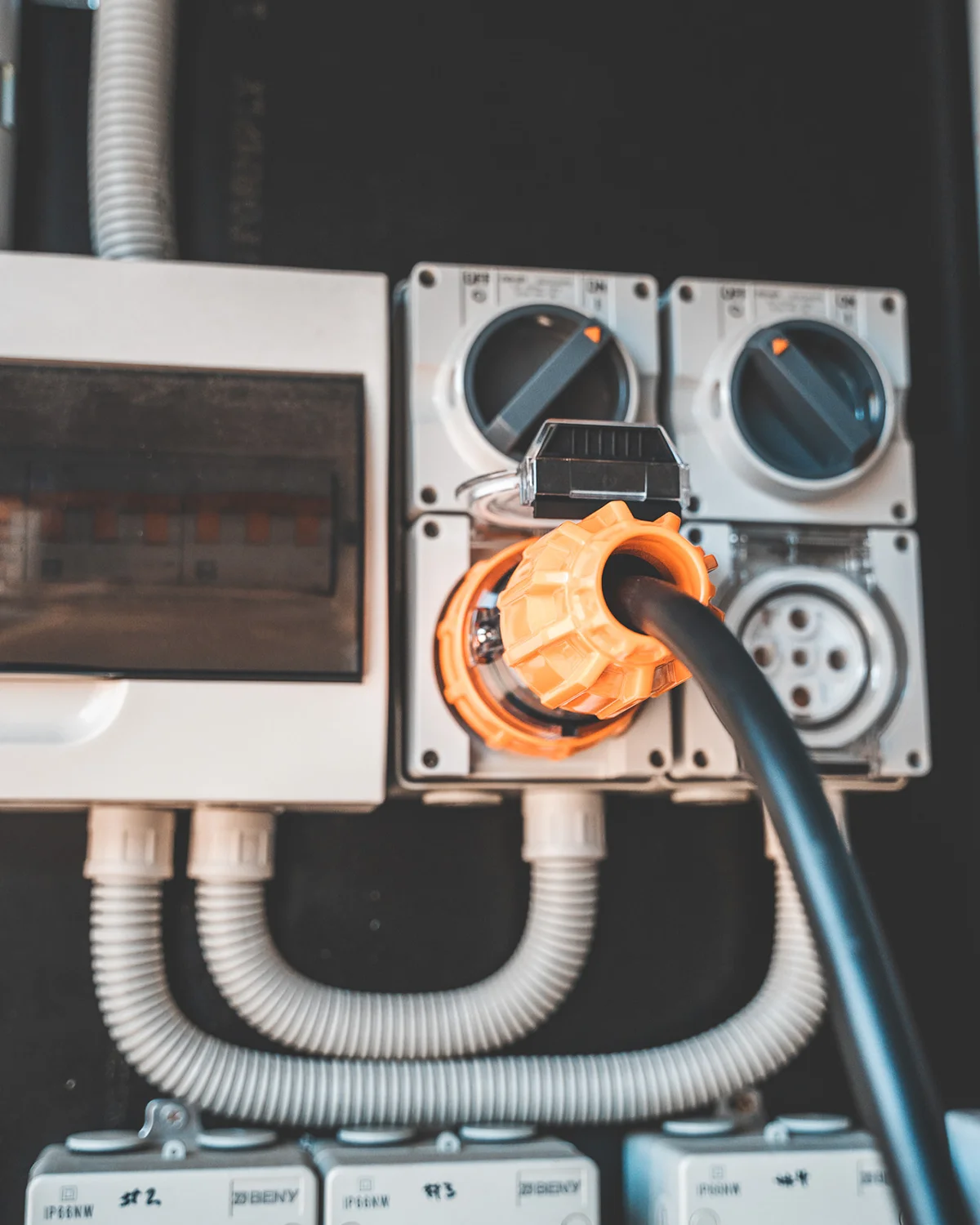
When installing high-power appliances like an electric vehicle charger, a dedicated circuit is required to ensure there is no overloading or tripping. A new circuit runs directly from the switchboard which is also protected by its own breaker and RCD.
If an EV charger shared a circuit with the air-conditioner, it would use much more power than that circuit could handle which would result in constant tripping.
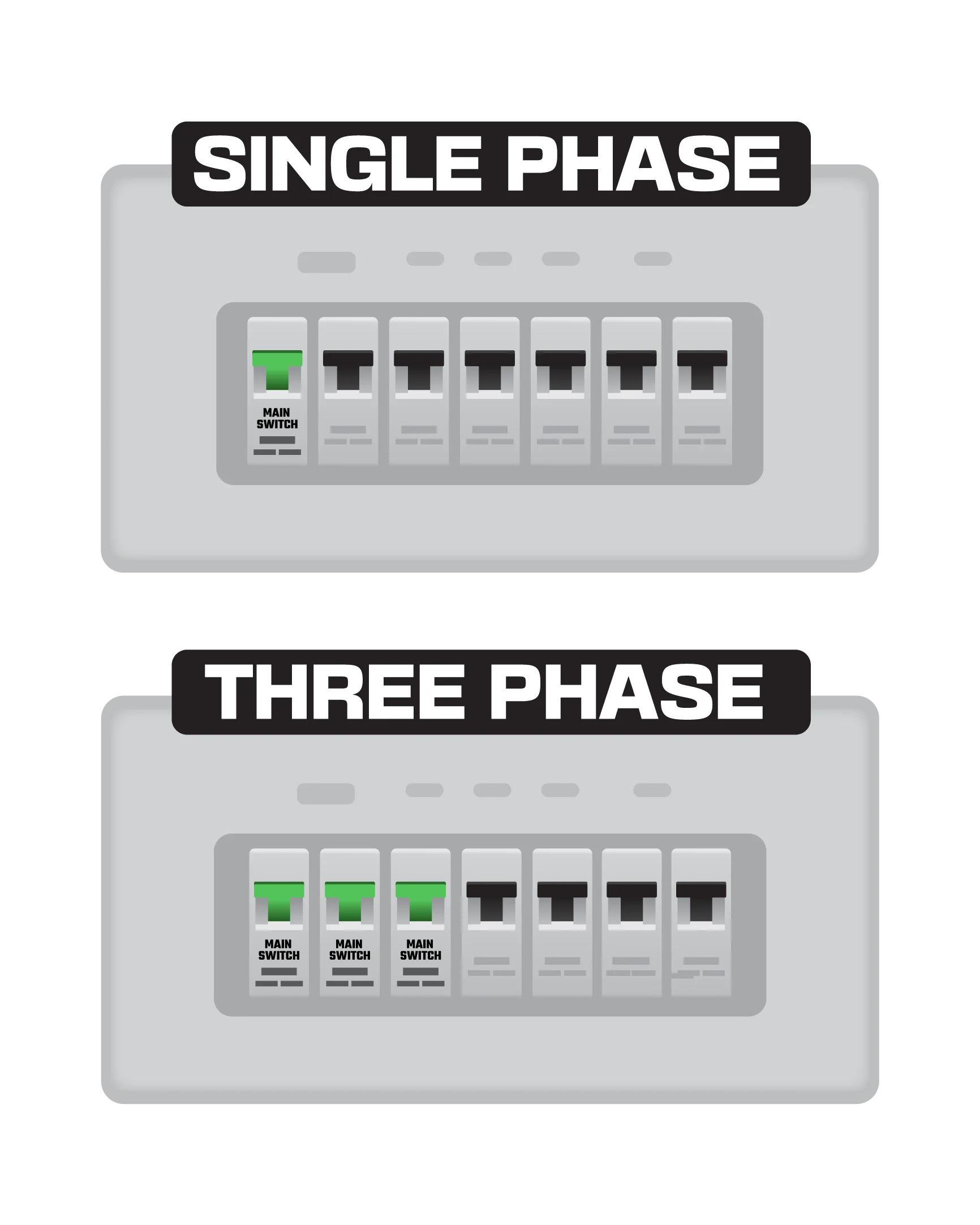
The primary difference between single and 3-phase in its simplest way is how power is delivered to your property. A single-phase property only has one ‘line’ or ‘pathway’, where a three-phase has 3 that can deliver more power for more power-hungry properties like businesses.
To find out if your home is single or three-phase, there are a few methods you can try. Firstly, you can check your switchboard’s smart meter or see how many switches there are under the ‘main switch grid supply’. More info on how to tell if a home is 1 or 3-phase here.
Do I need to upgrade my house to three-phase? Not every home needs the capability of three-phase power. Most homes run on single-phase power with no issues, so determining whether to upgrade to three-phase power will depend on what you’re trying to power.
For example, if you have an electric vehicle and want to charge it quickly, the maximum rate of charge on single phase is 7kW. For a three-phase property, it is up to 22kW which greatly reduces the time it takes for a full EV recharge.
One thing that people assume is that solar continues to power a home during a blackout. Unfortunately, this isn’t the case as solar systems shut down during grid outages even if the sun is shining. This is primarily designed to protect the grid from solar exports as network crews work on power lines.
If your property consists of a backup capable solar battery, the system will engage as soon as it detects a grid outage. Depending on your battery’s configuration, it will either provide backup power to dedicated circuits or the whole home.
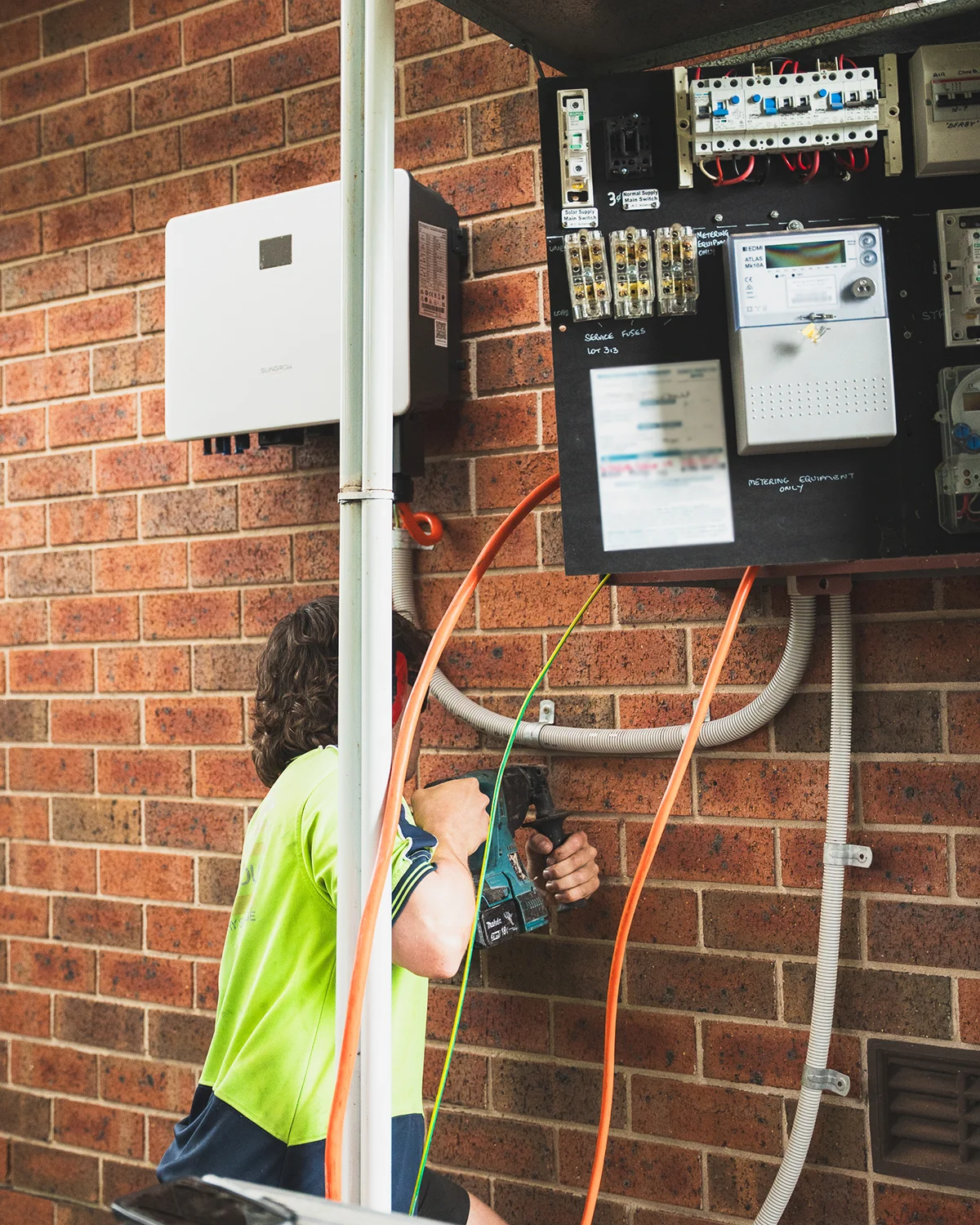
If you’re either having issues with your electrical system and are due for an upgrade, or you’re trying to futureproof your electricity to make room for elements like solar and battery, ensuring your electricity has a strong foundation is step one.
Making sure all your circuits, switchboard, and components are set up properly will save you from future headaches and ensure everything runs properly and safely.
Explore whether rooftop or ground mounted solar systems are better for homes, farms, and remote properties needing solar PV power in Australia.
Read moreThe journey of bidirectional charging in Australia has hit a milestone with the recent approval of the new standard for vehicle-to-grid (V2G) charging for 2025.
Read moreFor cabins, homes, and sheds with limited or no access to grid energy, getting an off grid solar and battery storage system may be worth it in NSW in 2025.
Read moreEveryone has seen a solar installation a normal roof like tin or tiled roofs, but have you ever seen a solar installation a roof made of Brass? Well we did one...
Read moreWith the release of the new Clean Energy Council (CEC) H1 2024 report on solar and battery storage, it gives an idea of the upward path of Australia’s renewable energy adoption.
Read moreAmber & ARENA have started trials for Vehicle-to-grid technology in NSW, Australia to help develop standards and framework in V2G and Bidirectional charging.
Read moreCompare Tesla Powerwall 2 vs Powerwall 3 in Australia. See differences in capacity, power output, dimensions, specifications, pricing & solar compatibility.
Read moreExplore solar battery fire risks, hazards, and statistics, and if solar batteries are safe to install for homes in NSW, Australia. (Spoiler alert.. they are!)
Read moreThough bidirectional charging isn't available, vehicle-to-grid is already turning heads in Australia with its potential to change energy consumption and distribution.
Read moreExplore how Australia's energy is evolving with t like Microgrids, DER's, Virtual Power Plants, & Demand Response, for solar and battery systems.
Read moreLearn alternating and direct current, and the differences between AC vs. DC with real-life examples and diagrams of power flow and voltage in Australia.
Read moreEverything NSW businesses need to know about commercial battery storage - costs, benefits, peak shaving, backup power, and how to choose a system.
Read moreIn the new 2024 CEC report, they found that renewable contribution in the overall supply of energy in Australia, produced 40% of Australia’s total electrical supply.
Read moreSo you've invested in solar to reduce your electricity bills, but since then your bills are still high? Explore why your energy bills are still high even after solar.
Read moreLearn electricity tariffs like single-rate, controlled loads, and time-of-use tariffs where on and off peak pricing occurs through retailers like energy australia.
Read moreExplore the differences between single phase vs. three phase power, and how 1 phase and 3 phase electricity works with real-life examples in Australia.
Read moreIf your solar panels are dirty, explore easy ways to DIY clean your solar panels, or when to get your system cleaned by a professional solar cleaner in Australia.
Read moreBatteries store energy as chemical potential energy, released as electrical current once connected to a circuit. Learn how batteries store & release energy.
Read moreNow is the best time to invest in solar panels.. here are 4 reasons why Australians should invest in solar energy before it's time runs out for 2024.
Read moreExplore the National Electricity Market (the NEM), and how it interconnected 5 states with electricity distribution to balance demand and supply in Australia.
Read moreDiscover how agrivoltaics can benefit farms by combining agriculture and solar energy to increase sustainability and agricultural production in NSW.
Read moreThe energy required to heat hot water is quite high and for most Australian households. Here are some strategies on how to save on your hot water heating bill.
Read moreWhat's the best Solar EV Charger? Zappi or the Wattpilot? We have put together a side-by-side comparison, including the pro’s and con’s for both EV chargers.
Read moreWith booming solar adoption, Newcastle is quickly becoming a sustainable region with homes and businesses adoption the technology. What's happening?
Read moreDifferences between bidirectional Vehicle-to-Grid (V2G), Vehicle-to-Home (V2H), Vehicle-to-Load (V2L), and compatible chargers and EVs in Australia.
Read moreOur team attended the Electric Vehicle open day in Lake Macquarie hosted by Lake Macquarie City Council, and what a day! From all the fun events, to the informative aspects, everyone definitely got something out of the day.
Read moreRenewable News Articles
Sign up for new article updates - we don't spam.
We've invested in becoming fully-licenced and qualified installers to ensure Newcastle homes and businesses
get the best solar, battery, and electrical systems available. We want to assist Newcastle's renewable energy revolution with quality
installations for maximum customer satisfaction.
Certified solar system installers near you.
Get CEC-Approved Battery Installations.
Fully-licenced electricians in Newcastle.
Convenient EV charging stations for properties.
Leave a Comment