Hunter Valley's Leading Residential & Commercial Solar Installers

Hunter Valley's Leading Residential & Commercial Solar Installers
Posted 11 Mar
Want the latest in energy, solar, and savings?Subscribe to our newsletter – we don’t spam!
With the rapid uptake of solar in recent years, 2026 seems to be another great year for those looking into solar to finally get it. Combining advancements in solar technology, price reductions, and ever-growing benefits for households, more homes and businesses are considering investing in solar power - but is solar still worth it?
Quick answer: Yes. For most Australian homeowners, solar is still one of the best investments available in 2026. A standard 6.6kW system costs between $4,000 and $8,000 installed after federal rebates. For a typical NSW household, that pays back in 3 to 5 years and then generates effectively free electricity for another 20 years. The reasons solar is worth it have shifted from a few years ago - feed-in tariffs are low, but the Solar Sharer Offer and rising grid prices have changed the economics in solar's favour again.
The honest answer: it depends on your roof, your usage, and your electricity bill. This page gives you the real numbers so you can make that call yourself.
A standard 6.6kW solar system - the most common size for Australian homes, costs between $9,000 and $11,000 installed before rebates, and $6,000 to $8,000 after the federal Small-scale Technology Certificate (STC) rebate is applied at point of sale. The rebate is applied automatically by your installer, so you pay the after-rebate price upfront.
These figures reflect standard residential installations in the Newcastle and Hunter region. Prices vary depending on roof complexity, panel and inverter brand, and site-specific requirements.
If you are adding battery storage at the same time, a 20kWh battery (Sungrow SBH200) adds approximately $12,600 after the Federal Battery Rebate. The Battery Rebate currently provides around $320-$370 per kWh installed, making the combined solar-plus-battery investment more accessible than it has been at any point previously.
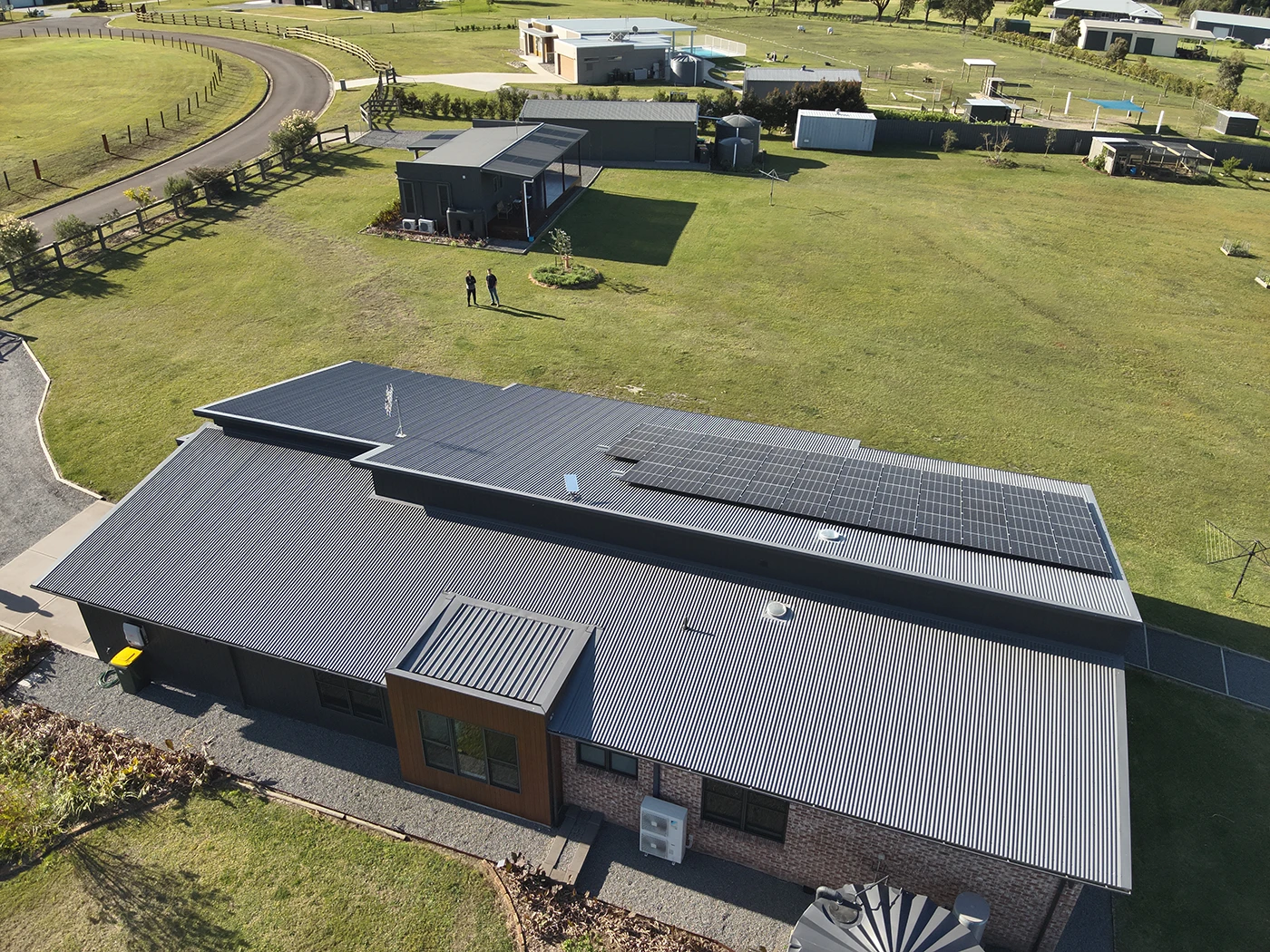
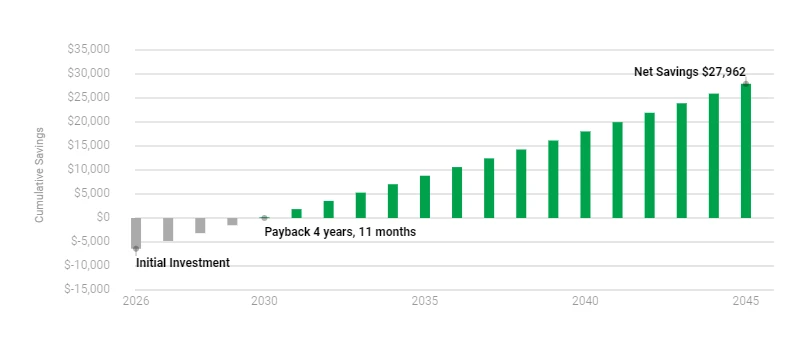
For a typical NSW household on a time-of-use tariff, payback on a 6.6kW solar system runs between 3 and 5 years. Here is what drives that:
|
Annual savings for a typical 6.6kW system in NSW: $1,200-$2,000 per year depending on how much of the generation you self-consume during the day. |
Self-consumption value: every kWh you generate and use yourself saves you what you would have paid for grid electricity - currently 30-70c/kWh depending on the time of day and your tariff. |
Feed-in tariff: any surplus you export earns you 3-8c/kWh from most NSW retailers. This is significantly lower than it was in the early years of solar, which is why self-consumption matters more than export now. |
As an example, at approx. $1,900/year average savings and a $8,000 installed cost, payback is around 4 year & 11 months. After
that, the electricity is effectively free.
Payback improves significantly if you can shift more consumption into solar hours - running the dishwasher, washing machine, and pool pump during the day rather than evenings. Even more so if you are on the Solar Sharer plan (see below).
The Solar Sharer Offer launched on 1 July 2026 and is directly relevant to whether solar is worth it in 2026 - both for households with solar and without it. Under the Solar Sharer Offer, eligible households in NSW, SA and QLD can access three hours of completely free electricity every day.
The question this raises is obvious: if you can get free electricity for three hours a day anyway, is solar still worth investing in? The answer is yes, and here is why.
The Solar Sharer Offer gives you free electricity for 3 hours. Solar generates free electricity for 6-10 hours a day, depending on season and conditions. Outside the Solar Sharer window, you are back on grid rates, whereas solar can cover those hours too - particularly with a battery.
Feed-in tariffs during the Solar Sharer window drop to zero on SSO plans, which makes self-consuming your solar generation even more valuable. A battery stores what you generate and releases it in the evening peak, capturing the full value of your solar output rather than exporting it for nothing.
For households already on solar, the Solar Sharer Offer is mostly irrelevant - your panels are already generating during that midday window, and the free hours don't change your bill meaningfully. For households considering solar for the first time, the SSO is useful context: it confirms the midday solar window has value, and a solar system extends that window far beyond 11am-2pm.
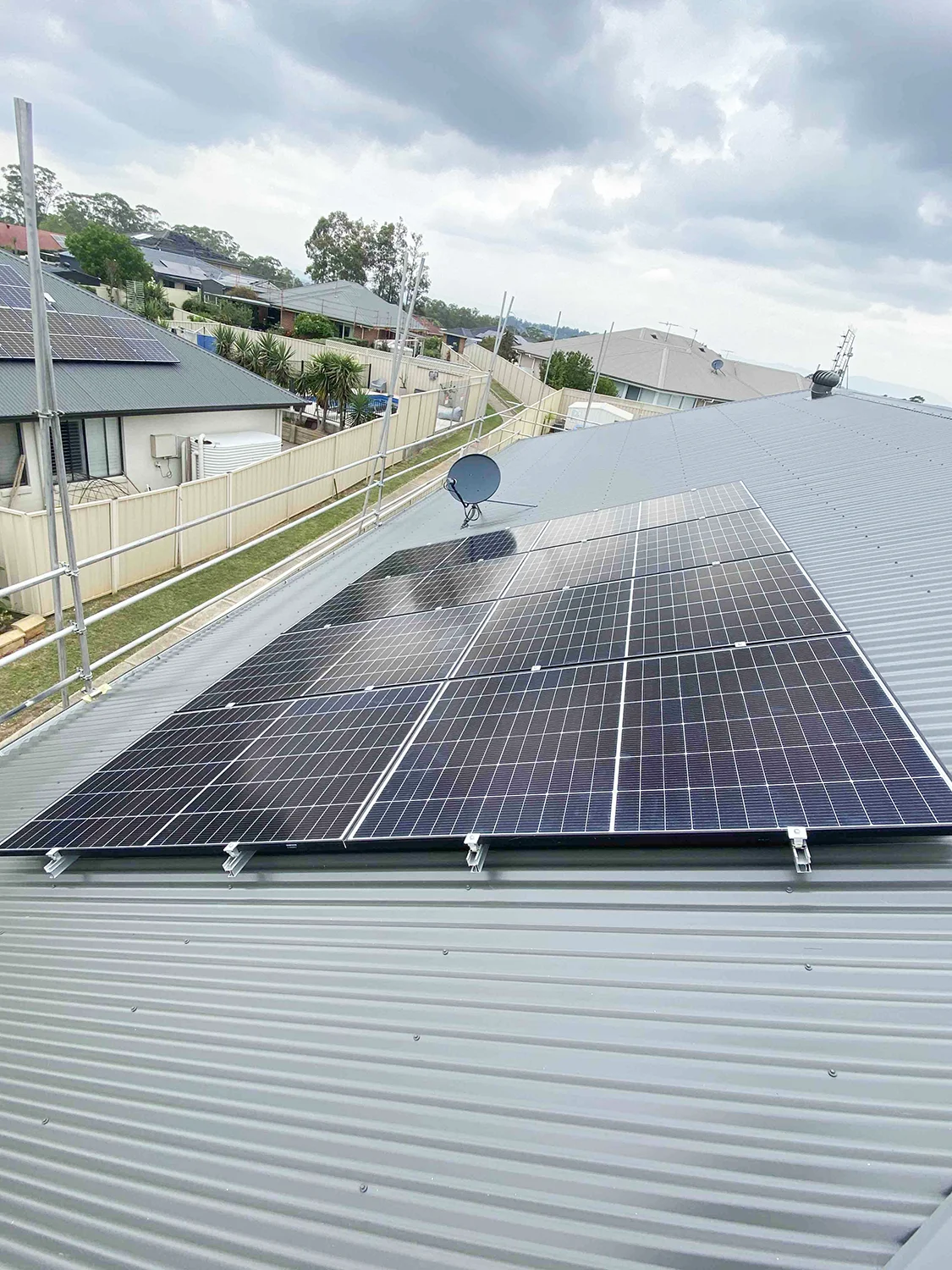
It used to be that you'd get a solar system so you can earn money when you export your solar energy to the grid - however, this has changed as more Australians flood the grid with excess solar energy.
This begs the question - with low feed-in tariffs, is solar still worth it? The short answer is yes, and it can actually work better than they used to for homeowners who understand how to use their system.
Back when solar was new, households could earn up to 40-60c/kWh of generous feed-in tariff rewards making it a great reason to invest in a solar system. Today, most NSW homes only get around 3-8c/kWh for their exports, and solar generation economics have shifted more to self-consumption where you use it instead of selling it.
During shoulder hours when the sun is shining, consuming your own energy instead of using grid energy, saves you from paying around 30c for every kWh used. That's around 5-6x more valuable than exporting it.
To take full advantage of your solar generation, households need to move their consumption to during sunlight hours. Otherwise known as Load Shifting, moving your appliance usage to use solar increases your self-consumption.
Being honest about the cases where solar may not make financial sense:
Your electricity bill is very low. If you are already spending under $300 per quarter, the payback period on a solar system extends considerably. Solar makes the most financial sense for households spending $500+ per quarter on electricity.
Your roof faces the wrong direction. Solar panels facing north-west or north produce 15-20% more than those facing east or west, and panels on a south-facing roof in NSW can produce 30-40% less than ideal. A shaded roof with significant tree or building coverage compounds the problem.
You are renting and plan to move frequently. While solar adds value to a property, if you are a tenant with no ownership stake in the outcome, the economics don't apply to you directly.
You cannot afford the upfront cost and interest rates are high. Zero-interest loan programs through the NSW Government and some retailers can bridge this, but if your budget is tight and financing costs are significant, the payback period shifts.

In 2025, there was a major boom in solar battery storage adoption with the announcement of the Federal battery subsidy. This incentive was designed to make energy storage more affordable for more Australians, but is battery storage still worth it?
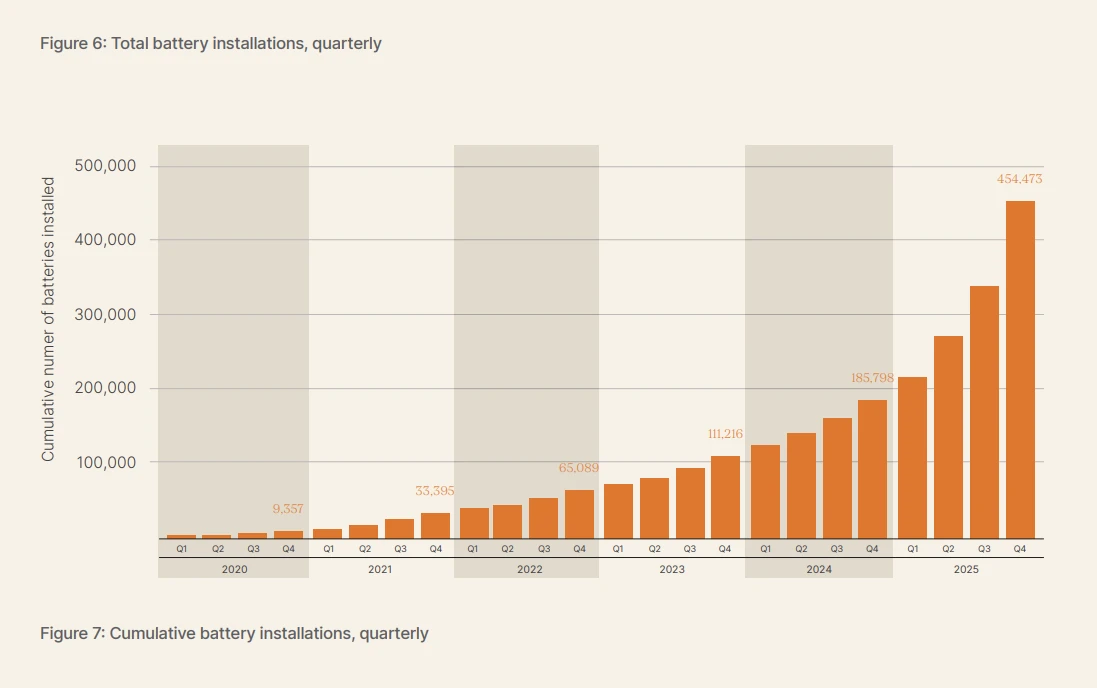
Courtesy of the Clean Energy Council's Rooftop Solar and Storage Biannual Report - July-December 2025
With a battery rebate currently available, it helps more Aussies jump into the pool of energy security. For Australian homes and businesses looking to find further energy independence, battery storage has become an extremely popular option due to its immediate and long-term benefits.
Yes, solar battery storage is definitely worth it if you generate excess solar energy and use most of your energy in the evenings when the sun is down. Energy storage stores the excess solar energy and offsets your usage, helping you avoid those expensive grid electricity prices during peak periods.
So overall, is Solar worth getting in 2026? The short answer is yes, solar is definitely worth it in 2026.
However, we understand that the initial investment may be unrealistic or hard to achieve for some property owners. Now is a great time to consider investing as both solar and battery incentives will drop over time.
In 2026, we have seen a massive boom in energy investments from solar, to battery, to electric vehicles which is great to see. With these investments, households and businesses are becoming more energy independent, producing, storing, and consuming their own energy.
Overall, it's not too late to invest in solar. In fact, 2026 is actually a perfect time to consider getting solar and battery with available incentives, current costs, and available options for you and your consumption habits.
What the Clean Energy Council's January to June 2026 report found on rooftop solar, home batteries, forecasts and complaints, and how to read the figures.
Read moreFind available rebates & subsidies for solar systems, battery storage, and VPPs in NSW. Explore eligibility and maximise live incentives today.
Read moreNot sure which battery matches your solar system? Compare solar & battery size combinations, from 6.6kW to 13.3kW+, & find the right fit in Newcastle.
Read moreRenewable News Articles
Sign up for new article updates - we don't spam.
We've invested in becoming fully-licensed and qualified installers to ensure homes and businesses get
the best solar, battery, and electrical systems available.
Certified solar system installers near you.
Get SAA-Approved Battery Installations.
Fully-licensed electricians Near You.
Convenient EV charging stations for properties.
Leave a Comment