Newcastle's Leading Residential & Commercial Solar Installers

Newcastle's Leading Residential & Commercial Solar Installers
Posted 23 Oct
Want the latest in energy, solar, and savings?Subscribe to our newsletter – we don’t spam!
When talking about anything electrical, from your classic lightbulb to solar systems and electric vehicle charging, elements like amps, volts, ohms, and watts are often thrown around, but do they mean, and what’s the difference between them?
Quick answer: Amps (A), volts (V) and watts (W) are the three main measurements used to describe electricity. Volts measure the electrical pressure pushing electricity through a circuit, amps measure the amount of electrical current flowing, and watts measure the total electrical power being used or produced. These measurements are connected by a simple formula: Watts = Volts x Amps (W = V x A).
Volts, amps, and watts are the 3 core measurements of electricity. Water flowing through a pipe is the easiest way to picture this.
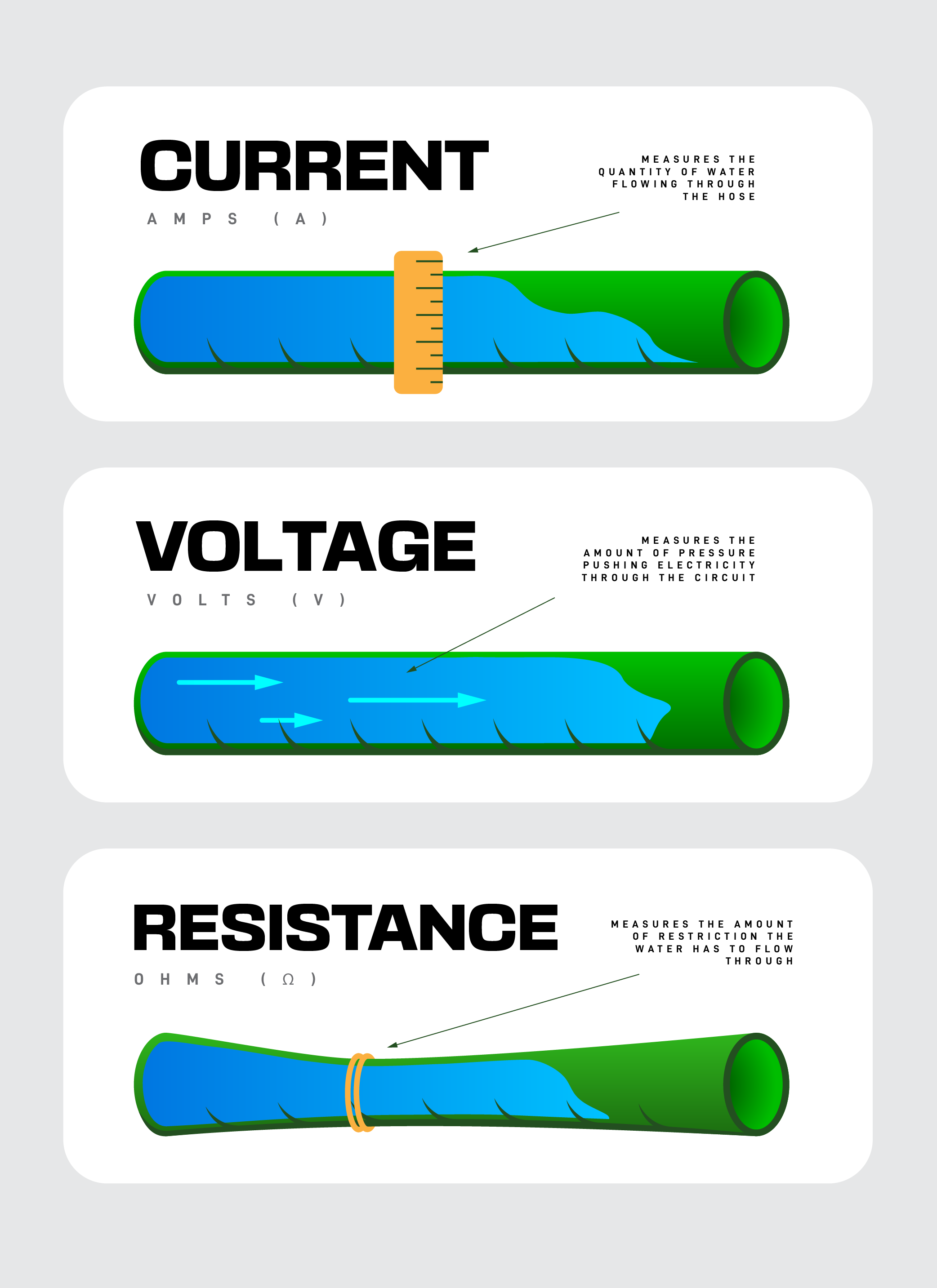
Voltage is the pressure pushing the water along, amps are how much water is actually flowing past a point each second, and watts are the total energy that pressure and flow add up to. Turn up either one and you get more power out the other end, that's really all watts describe, how much electrical work volts and amps are doing together.
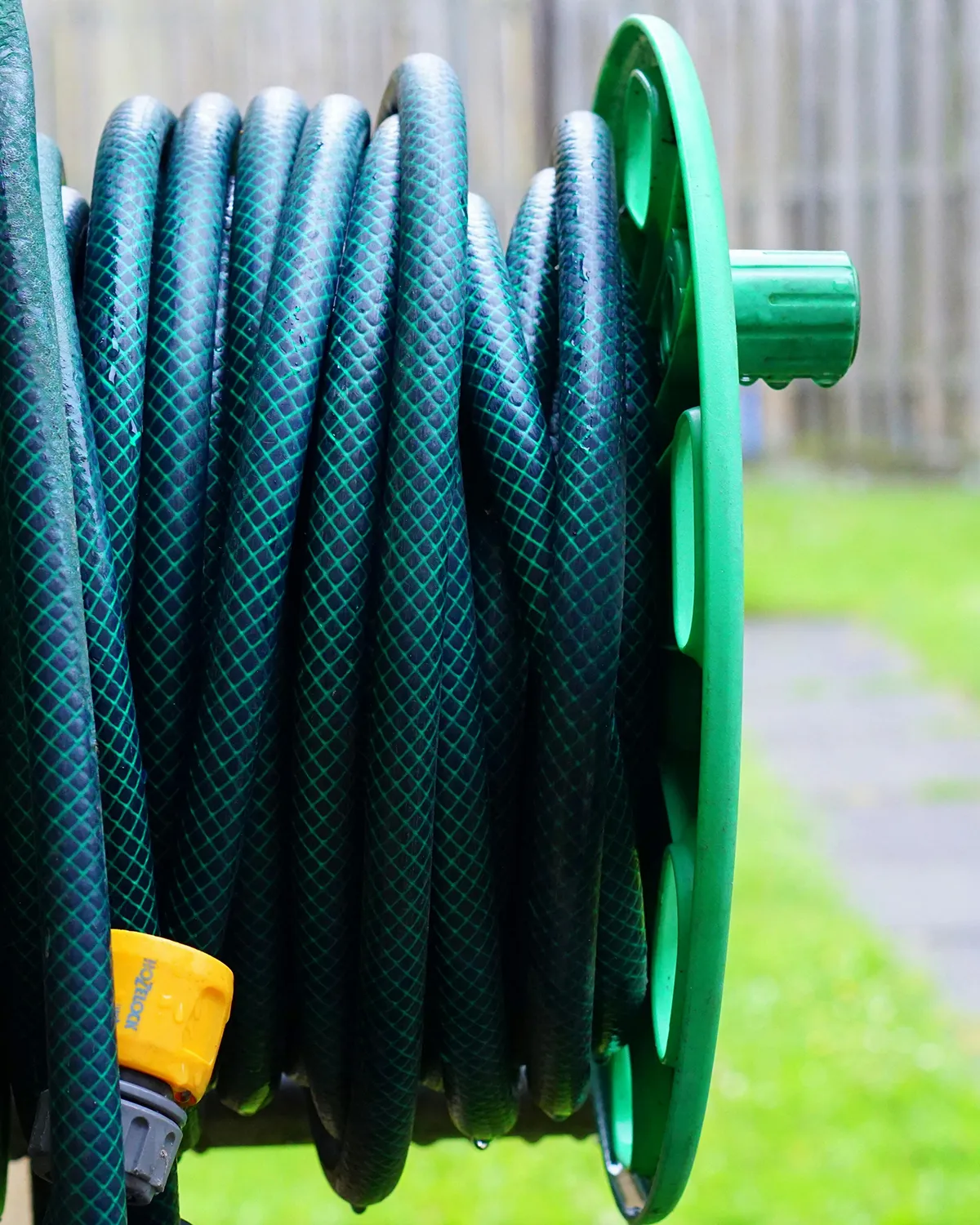
Using a hose analogy helps visually explain the difference between volts, amps, and watts:
Courtesy of Сергей Рокантен on Pexels
Voltage, measured in volts (V), is the electrical pressure pushing current through a circuit. More voltage means more force behind the electricity moving from one point to another, similar to higher pressure in a water pipe. Standard Australian household power runs at 230 to 240 volts, which is why that number shows up on appliance labels and circuit diagrams throughout this guide.
What is the Voltage formula? Voltage can be calculated by dividing the amount of power by the current. (watts ÷ amps = volts).
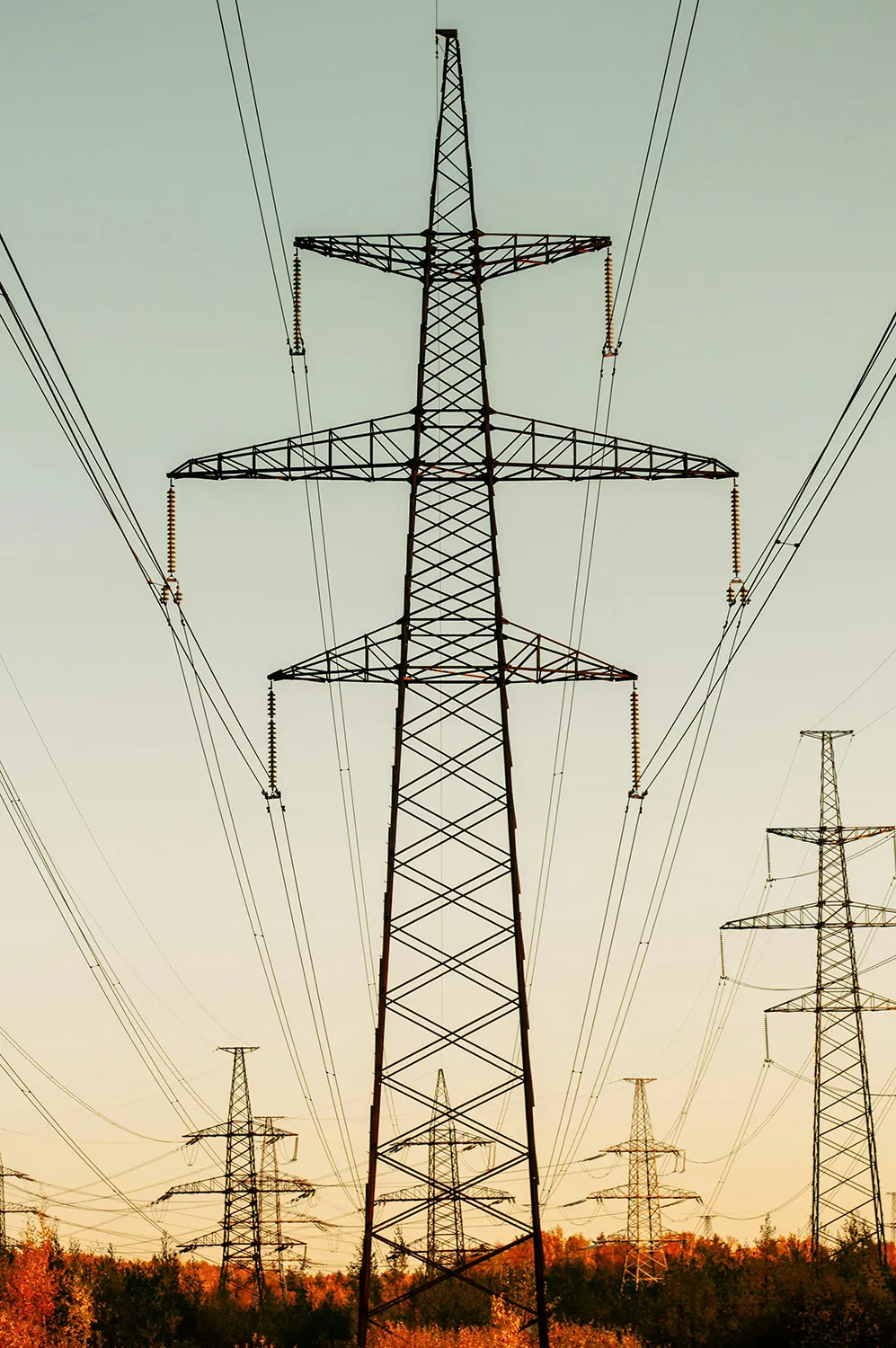
What Voltage do Transmission Lines Run at? Long-distance transmission networks can run up to 220 kilovolts (kV) or 220,000 Volts (V), which are designed to run at high-voltage and lower current to reduce power losses.
Amps, short for amperes and written with the symbol A, measure the actual flow of current, how much electricity is moving past a point each second.
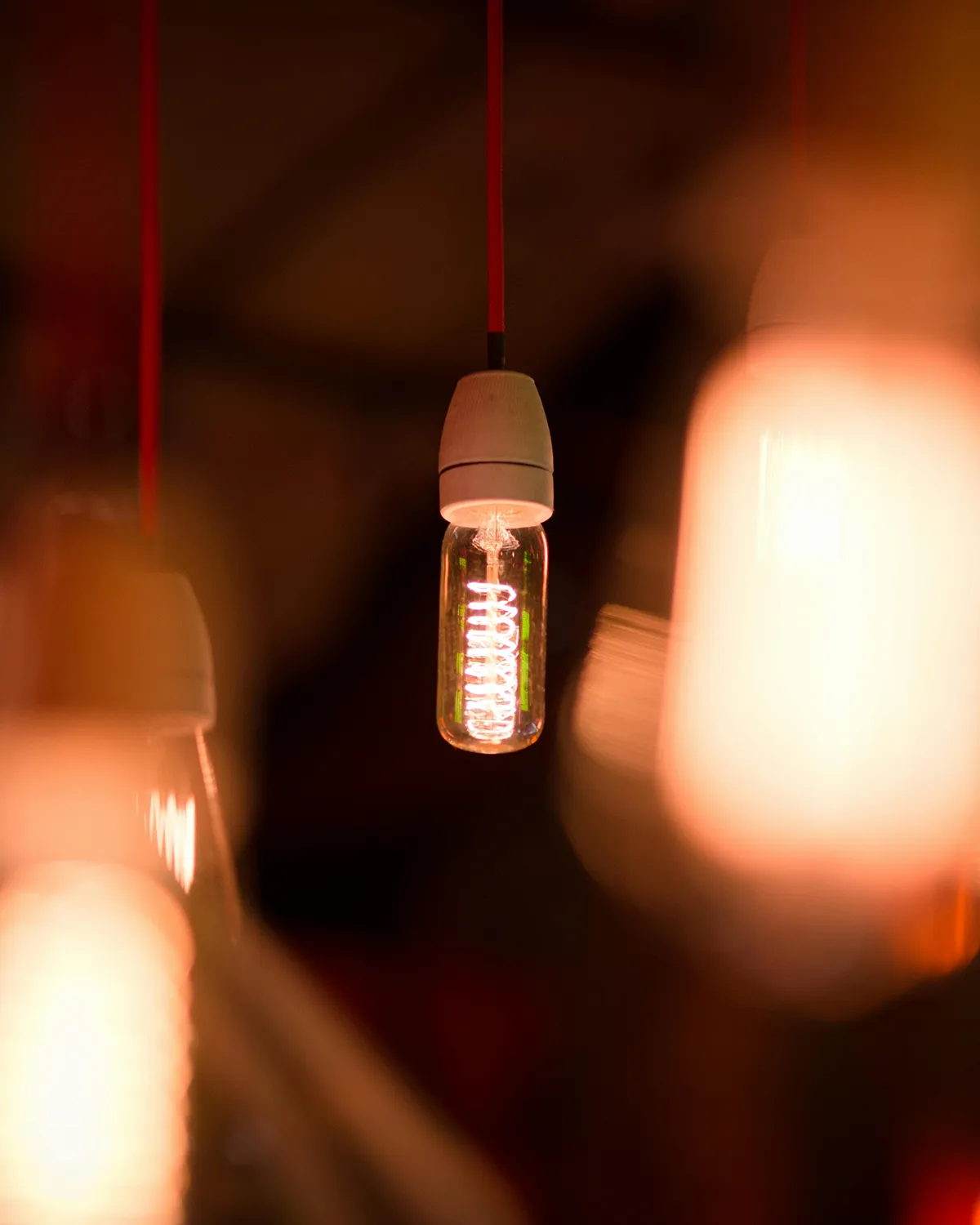
A small LED bulb draws a fraction of an amp, while something like an EV charger or an oven can pull well over 10 amps at once. Amperage is also what circuit breakers are rated for, a 16A breaker trips once the current running through it goes above 16 amps, regardless of the voltage behind it.
How to calculate current: Amps can be calculated by dividing watts by voltage. (Watts ÷ volts = amps).

Courtesy of Huy Phan on Pexels

Courtesy of Julia Sakelli on Pexels
Watts measure total electrical power, the actual rate of energy being used or delivered. Since power depends on both pressure and flow, watts are worked out by multiplying volts by amps.
It's the number you'll usually see on an appliance's label, because it tells you how much energy something draws rather than just how it draws it.
What's an Example of Watts? Using our hose example, power also applies to water where the amount of power is determined by the combined flow and pressure. Imagine your thumb over the hose nozzle, when the high flow is pressurised, it jets out a powerful flow; this is what electrical power is like.
What's the difference between W and kW? Watts and Kilowatts are both measurements of power. 1000W (watt) is equal to 1kW (kilowatt), which measures the amount of power being used or produced.
| TERM |
FORMULA |
EXAMPLE |
COMMON CONVERSIONS |
| Watts (W) | V × A = W | 32A x 230V = 7360 W (7.36kW) | 1 amp at 230V = around 230 watts |
| Volts (V) | W ÷ A = V | 1840 W ÷ 8 A = 230 V | 3 amps at 230V = around 690 watts |
| Amps (A) | W ÷ V = A | 2000 W ÷ 230 V = 8.7 A | 10A circuit at 230V = around 2,300 watts |
| Voltage (with resistance) | A × Ω = V | 2 A × 115 Ω = 230 V | 15A circuit at 230V around 3,450 watts |
| Current (with resistance) | V ÷ Ω = A | 230 V ÷ 460 Ω = 0.5 A | 20A at 230V = 4,600 watts |
| Resistance | V ÷ A = Ω | 230 V ÷ 10 A = 23 Ω | 32A circuit at 230V = 7,360 watts |
| Power with current | A² × Ω = W | 3² × 25 Ω = 225 W | 2,400W at 230V = 10A |
| Power with voltage | V² ÷ Ω = W | 230² ÷ 115 Ω = 460 W |
Volts vs amps vs watts explained
Volts to Watts, Watts to Amps, Volts to Amps Calculator
Fill in at least two fields to calculate the remaining values. Calculated values appear as placeholders.
All values are nominal real power. Current and wattage do not account for minor power losses in wiring or appliances.
|
Appliance |
Current (A) |
Voltage (V) |
Power (W) |
| Fridge |
1-3 A |
230-240 V |
200-400 W |
| Kettle |
9 A |
230-240 V | 2 kW |
| LED Lightbulb |
0.039 A |
230-240 V | 9 W |
| EV Charger |
32 A |
230-240 V | 7000 W (7kW) |
What are Ohms? Ohms, also symbolised as ‘Ω’, represent the resistance in an electrical circuit, measuring how much that it resists flow (amps).
What's an example of Ohms? Using our water pipe analogy, think of Ohms like a narrower pipe that further restricts the amount of water flow there is. Higher resistance in a cable means that less current will flow and energy loss will occur.
Does electrical resistance generate heat? Another aspect to note is energy loss that resistance creates. This could be represented by a small hole in the hose where water (or electricity) escapes before its destination and causes lost energy to be lost. In the electrical case, it’s lost as heat.
Because every cable or wire has at least some resistance (ohms), energy is lost which generates heat. The higher the current, the more heat that is generated, so for higher capacity, thicker cabling is used to reduce the resistance and heat buildup.
Higher voltage with less current enables the same power delivery which reduces heat loss and improves overall efficiency.
Courtesy of Mike Bird on Pexels
Courtesy of Novkov Visuals on Pexels
What does frequency (Hz) mean? Every home runs on alternating current at 50-60Hz. The frequency (Hz) is the number of times the alternating current switches direction per second.
What Voltage does Australia run at? Most Australian homes are generally single-phase, which runs at 230-240V per phase, with three-phase properties reaching 400V for more power. Voltage optimisation factsheet.
What is an electrical phase? A phase ( Φ)
is simply a method of delivering power to your property. The more phases, the more power can be delivered to homes and businesses that
require a higher power output to use appliances like EV chargers or industrial equipment.
Φ)
is simply a method of delivering power to your property. The more phases, the more power can be delivered to homes and businesses that
require a higher power output to use appliances like EV chargers or industrial equipment.
Using the water analogy to determine what a phase is, think of it like a single or three water pipes supplying your house. A solo pipe can only provide so much flow at a given time, and with some needing more than what that one pipe can supply, they can opt for more and upgrade to three-phase.
Understanding amps, volts, and watts shouldn’t just be limited to the academics, but be something in the back of your mind to help you know how your appliances operate.
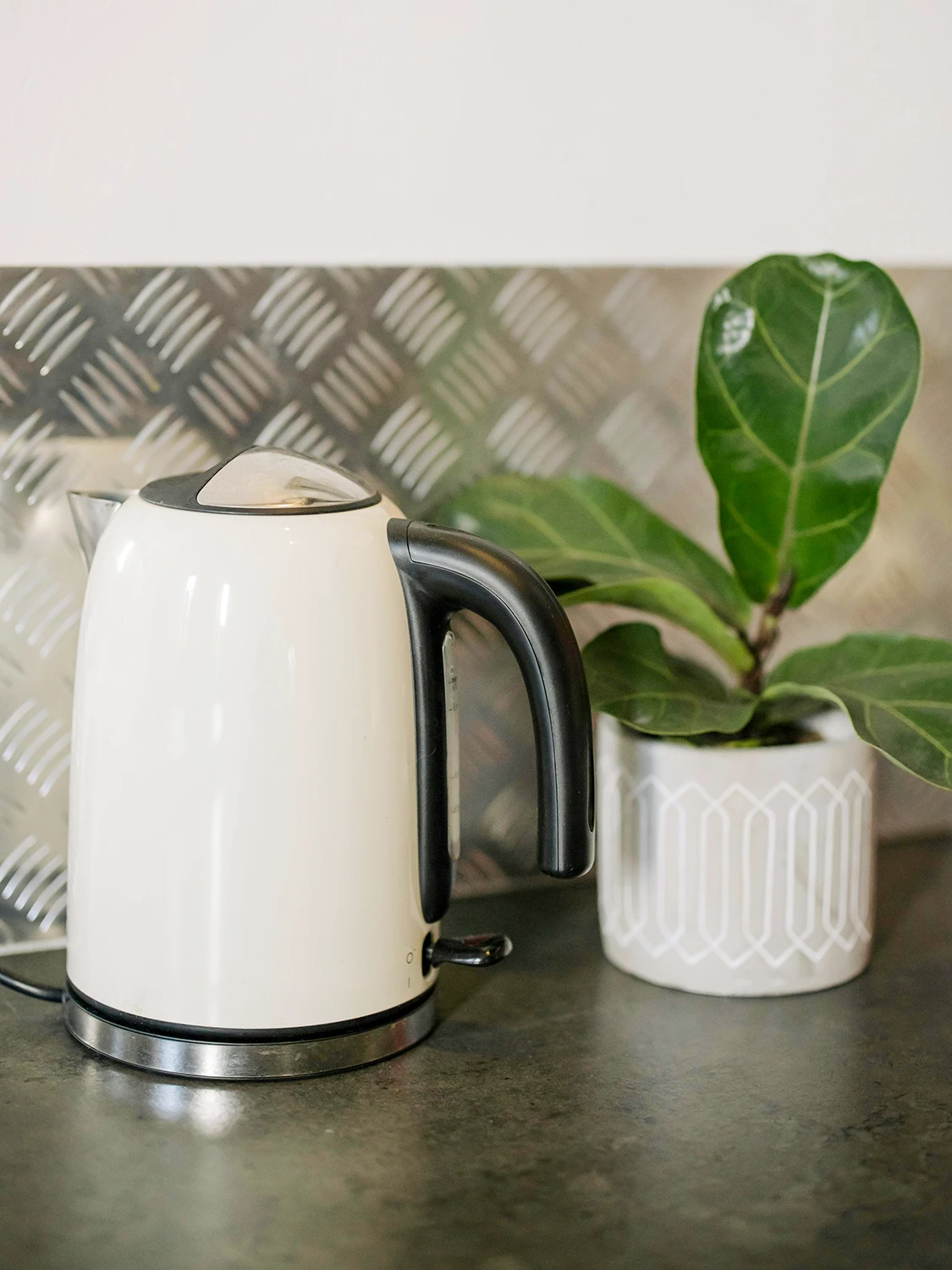
Appliances like EV chargers and kettles require a higher amount of power for their operation, which when used all at the same time, can trip circuit breakers which are designed to stop electricity flowing and protect your appliances from too much current.
Yes, you guessed it, let’s refer to our water analogy. Circuit breakers and fuses both stop the flow of water when too much water is going through the hose which is a safety guard for protecting your home.
The difference between a fuse and circuit breaker comes down to a fuse being the last resort and requires replacement when broken and a circuit breaker being resettable.
Courtesy of Cottonbro Studio on Pexels
Courtesy of Transgrid
Because voltage is the pressure pushing the electricity through your circuits, it is vulnerable to get too high or too low. When voltage gets too high, appliances are damaged, and too low means that it won’t work properly. Both not ideal.
As mentioned before, transmitting electricity long-distance requires high voltage over hundreds of thousands of volts... but how is this made suitable for homes?
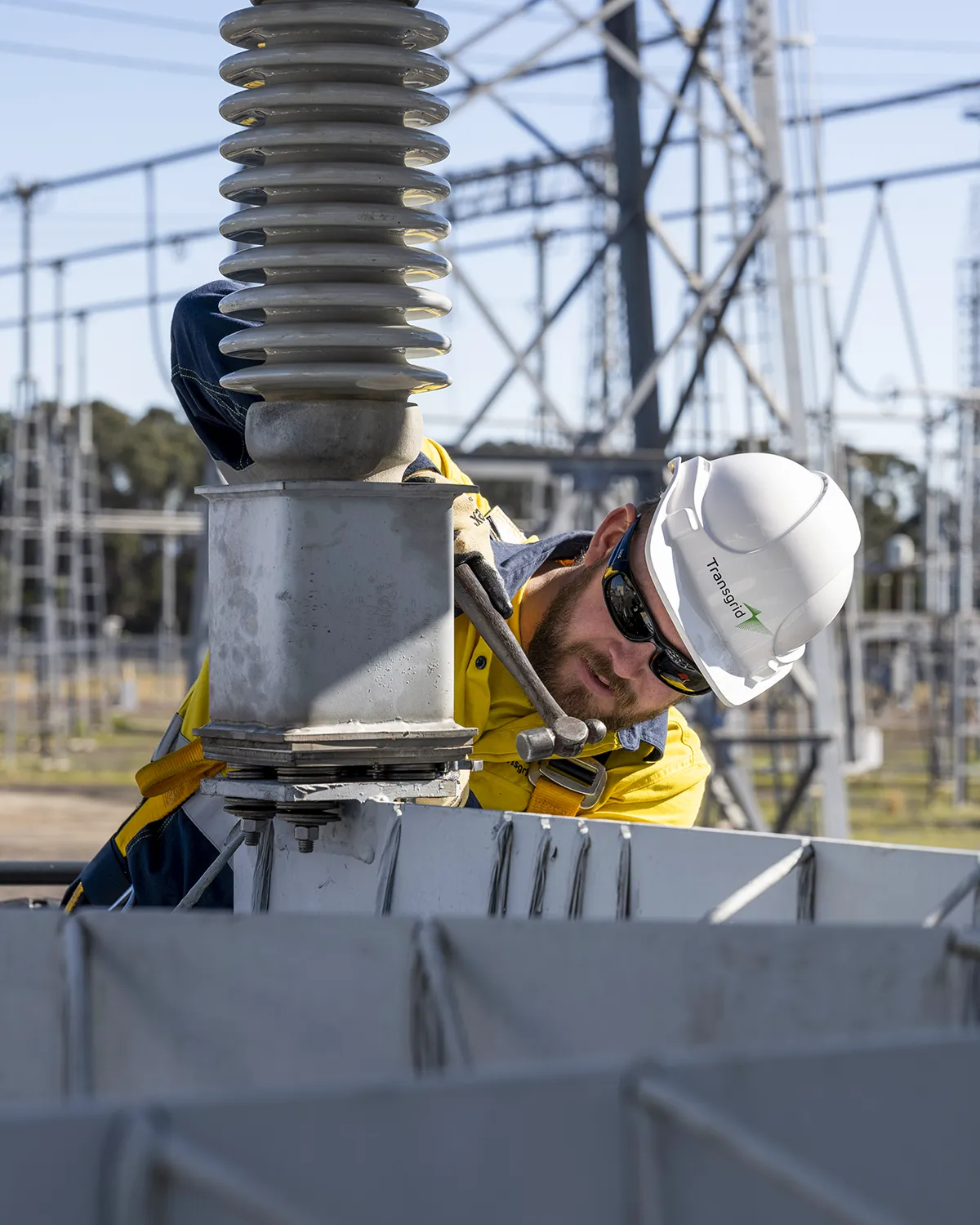
What are electrical transformers? A very important part of the electrical system called the Transformer, is designed to step up or down the voltage to the required value. When reaching the end of the transmission line, transformers gradually step down the electricity’s voltage as it approaches your neighbourhood and house to the suitable amount.
Once you've got volts, amps and watts sorted, a lot of the numbers on your switchboard, appliance labels and solar system spec sheets start making a lot more sense. It's also exactly what determines how something like an EV charger, a battery inverter or a new circuit gets sized, since undersizing any of these for the amps involved is how breakers trip and cables overheat.
Explore whether rooftop or ground mounted solar systems are better for homes, farms, and remote properties needing solar PV power in Australia.
Read moreThe journey of bidirectional charging in Australia has hit a milestone with the recent approval of the new standard for vehicle-to-grid (V2G) charging for 2025.
Read moreFor cabins, homes, and sheds with limited or no access to grid energy, getting an off grid solar and battery storage system may be worth it in NSW in 2025.
Read moreEveryone has seen a solar installation a normal roof like tin or tiled roofs, but have you ever seen a solar installation a roof made of Brass? Well we did one...
Read moreWith the release of the new Clean Energy Council (CEC) H1 2024 report on solar and battery storage, it gives an idea of the upward path of Australia’s renewable energy adoption.
Read moreAmber & ARENA have started trials for Vehicle-to-grid technology in NSW, Australia to help develop standards and framework in V2G and Bidirectional charging.
Read moreCompare Tesla Powerwall 2 vs Powerwall 3 in Australia. See differences in capacity, power output, dimensions, specifications, pricing & solar compatibility.
Read moreExplore solar battery fire risks, hazards, and statistics, and if solar batteries are safe to install for homes in NSW, Australia. (Spoiler alert.. they are!)
Read moreThough bidirectional charging isn't available, vehicle-to-grid is already turning heads in Australia with its potential to change energy consumption and distribution.
Read moreExplore how Australia's energy is evolving with t like Microgrids, DER's, Virtual Power Plants, & Demand Response, for solar and battery systems.
Read moreLearn alternating and direct current, and the differences between AC vs. DC with real-life examples and diagrams of power flow and voltage in Australia.
Read moreEverything NSW businesses need to know about commercial battery storage - costs, benefits, peak shaving, backup power, and how to choose a system.
Read moreIn the new 2024 CEC report, they found that renewable contribution in the overall supply of energy in Australia, produced 40% of Australia’s total electrical supply.
Read moreSo you've invested in solar to reduce your electricity bills, but since then your bills are still high? Explore why your energy bills are still high even after solar.
Read moreLearn electricity tariffs like single-rate, controlled loads, and time-of-use tariffs where on and off peak pricing occurs through retailers like energy australia.
Read moreExplore the differences between single phase vs. three phase power, and how 1 phase and 3 phase electricity works with real-life examples in Australia.
Read moreIf your solar panels are dirty, explore easy ways to DIY clean your solar panels, or when to get your system cleaned by a professional solar cleaner in Australia.
Read moreBatteries store energy as chemical potential energy, released as electrical current once connected to a circuit. Learn how batteries store & release energy.
Read moreNow is the best time to invest in solar panels.. here are 4 reasons why Australians should invest in solar energy before it's time runs out for 2024.
Read moreExplore the National Electricity Market (the NEM), and how it interconnected 5 states with electricity distribution to balance demand and supply in Australia.
Read moreDiscover how agrivoltaics can benefit farms by combining agriculture and solar energy to increase sustainability and agricultural production in NSW.
Read moreThe energy required to heat hot water is quite high and for most Australian households. Here are some strategies on how to save on your hot water heating bill.
Read moreWhat's the best Solar EV Charger? Zappi or the Wattpilot? We have put together a side-by-side comparison, including the pro’s and con’s for both EV chargers.
Read moreWith booming solar adoption, Newcastle is quickly becoming a sustainable region with homes and businesses adoption the technology. What's happening?
Read moreDifferences between bidirectional Vehicle-to-Grid (V2G), Vehicle-to-Home (V2H), Vehicle-to-Load (V2L), and compatible chargers and EVs in Australia.
Read moreOur team attended the Electric Vehicle open day in Lake Macquarie hosted by Lake Macquarie City Council, and what a day! From all the fun events, to the informative aspects, everyone definitely got something out of the day.
Read moreRenewable News Articles
Sign up for new article updates - we don't spam.
We've invested in becoming fully-licenced and qualified installers to ensure Newcastle homes and businesses
get the best solar, battery, and electrical systems available. We want to assist Newcastle's renewable energy revolution with quality
installations for maximum customer satisfaction.
Certified solar system installers near you.
Get CEC-Approved Battery Installations.
Fully-licenced electricians in Newcastle.
Convenient EV charging stations for properties.
Leave a Comment