Newcastle's Leading Residential & Commercial Solar Installers

Newcastle's Leading Residential & Commercial Solar Installers
Posted 29 Apr
Want the latest in energy, solar, and savings?Subscribe to our newsletter – we don’t spam!
Finding reliable information on solar and home insurance is harder than it should be — insurer PDS documents are often vague, and most articles either oversimplify or leave out the specifics that actually matter. This guide is based on direct contact with insurers, product disclosure statement research, and the questions we hear most often from homeowners before and after installation.
The short answers: Yes, solar panels and battery storage are generally covered under home building insurance in Australia as permanent fixtures. Yes, your premium will usually increase slightly - but only because your home is worth more, not because solar is considered high-risk. And yes, you should notify your insurer when you install, or you risk being underinsured on a claim.
Below: which insurers cover what, how much premiums change, what to tell your insurer, and what your installer's own insurance requirements are.
Generally yes, but the reason matters, and it's not what most people assume.
Home insurance premiums are based on what your home would cost to rebuild if it were completely destroyed. When you add solar panels and a battery system, you're adding genuine replacement value to that equation. A 10kW solar system with a quality battery can add $15,000 to $25,000 in replacement cost to your home. If your policy's sum insured hasn't been updated to reflect that, you're underinsured, and your premium needs to increase to cover the new figure properly.
What the increase is not: a risk loading. Insurers aren't charging more because they consider solar panels or home batteries dangerous additions. For a system installed by a CEC-accredited installer to Australian standards, the risk profile of the home doesn't meaningfully change from an underwriter's perspective. The premium goes up because you own more.
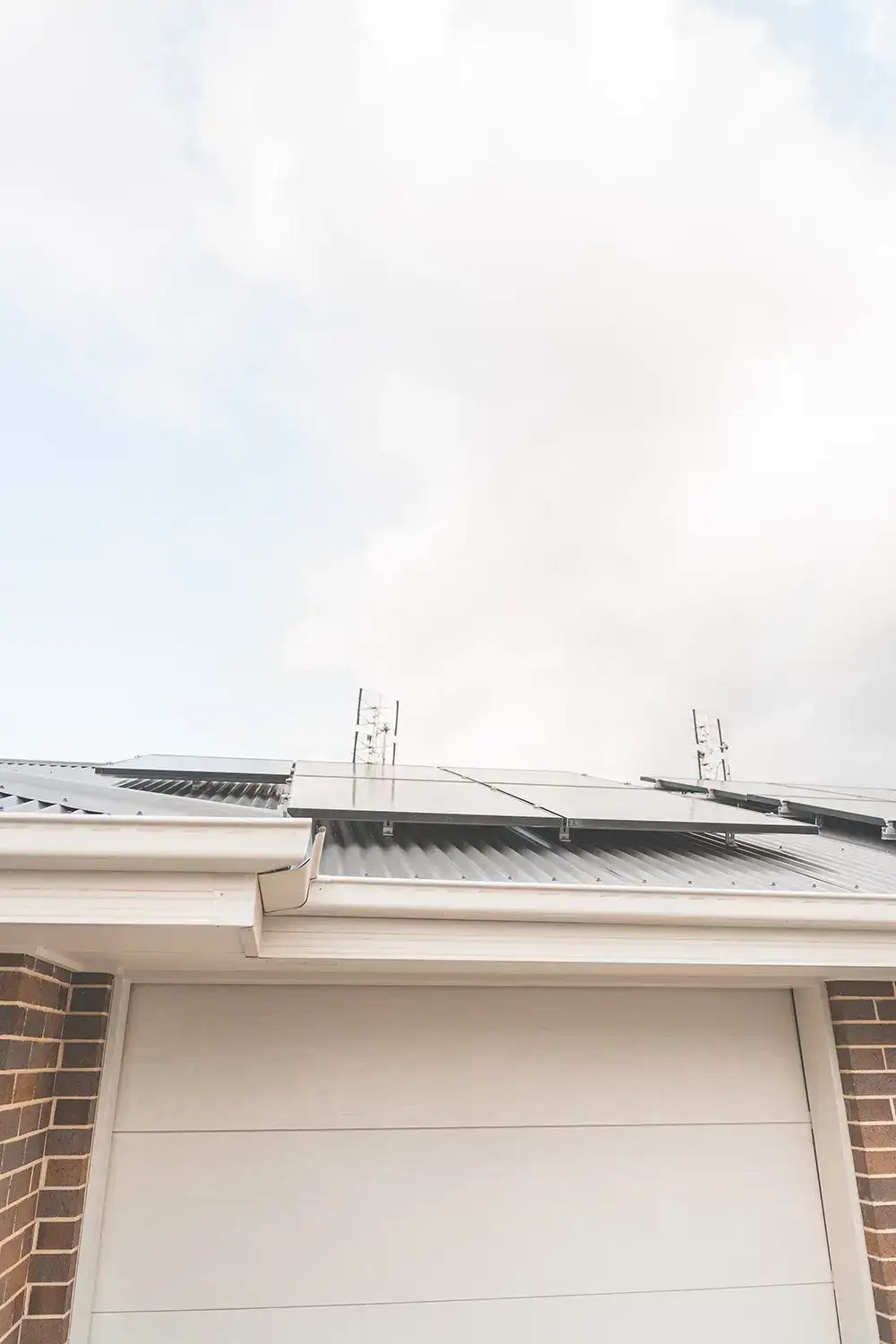
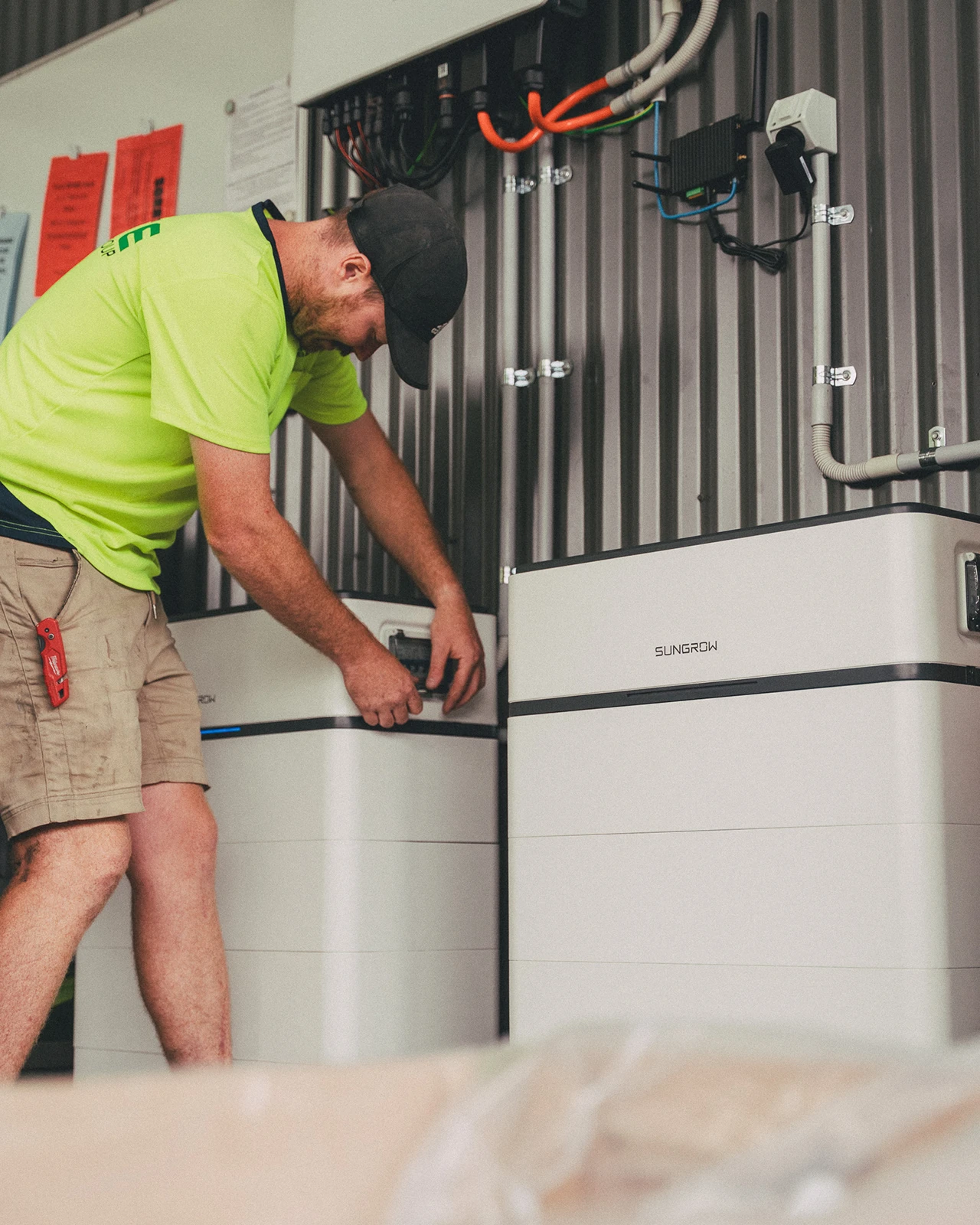
Solar panels, inverters and battery storage systems are generally treated as permanent fixtures of the home, which puts them under home building insurance rather than contents insurance. The distinction matters: if you tried to claim for storm damage to your panels under contents insurance, you'd be in the wrong category.
Most major Australian insurers do cover solar and battery systems as part of the building, but that coverage only pays out properly if your sum insured is set at the right figure. A policy that was set up before you installed solar, and never updated, is working from an outdated rebuild cost.
We contacted Budget Direct to ask directly: "Solar panels and accessories are covered under home building insurance. All you need to do is make sure that the home build sum insured amount is enough to cover the solar panels. You can add the solar panels value to your building cover amount if you happen to install them after you have secured your policy."
That's how most insurers approach it. The coverage is generally there, the gap is usually in the sum insured figure, not in whether the product is covered at all.
Yes, it's best to tell your insurer about a new solar and battery installation sooner rather than later.
Notifying your insurer isn't about asking permission. It's about making sure your policy reflects your home's current rebuild value from the day the system goes on. Most insurers treat solar as a material change to the property, which means you're required to disclose it under standard policy terms.
If your home is insured for $600,000 and you add a $20,000 solar and battery system without updating your policy, your insurer is holding the wrong rebuild figure. In a major claim, a total loss from fire, for example - insurers can apply proportional underinsurance reduction across the entire payout. The $20,000 omission can end up costing significantly more than $20,000 in the final settlement.
Based on current product disclosure statements, here is a comparison table of some home insurers and their coverage of solar and battery storage.
| Insurer | Solar Panels Covered | Battery Storage Covered | Notes |
|
Coles Home & Contents Insurance Policy
(PDS) |
Yes |
Yes |
Only covers breakage through entire panel thickness - not surface cracks. Specifically mentions energy storage. |
| Budget Direct (PDS) | Yes |
Yes |
Only covers breakage through entire panel thickness - not surface cracks. Specifically mentions energy storage. |
|
AAMI Home Building Insurance (PDS) |
Yes | Not specified |
AAMI's PDS lists solar as part of the buiding, however it is excluded from AAMI's excess-free glass benefit. |
| QBE Home Insurance (PDS) | Yes |
Not specified | 'Solar panels & equipment' are considered fixtures. |
| Youi Home Insurance (PDS) | Yes |
Not specified | Youi covers panels under home contents as an 'attached fixture that belongs to you'. |
| Suncorp Home & Contents Insurance (PDS) | Yes |
Not specified | Suncorp cover solar power under the 'what you've told us' section. Doesn't specify energy storage. |
|
Westpac Home & Contents Insurance (PDS) |
Yes |
Not specified |
Considers solar as a fixture and covers it. |
This table is a general guide based on publicly available information at time of publication. Individual policies, plan types and circumstances vary. Always read your Product Disclosure Statement and speak directly with your insurer to confirm coverage for your specific installation before proceeding.
Solar battery energy storage systems (BESS) are generally considered to be a fixed part of the home, meaning that they are typically covered under home building insurance policies. However this can vary depending on the insurer.
For example, Budget Direct defines ‘energy storage systems’ to be:
‘Any permanent device or system, such as batteries, cabinets, control systems, and their parts, that is both:
This does not include dams or other non-battery storage systems.’
In short, solar battery storage is not considered high-risk to insurers, as CEC-approved batteries undergo strict and thorough testing and compliance.
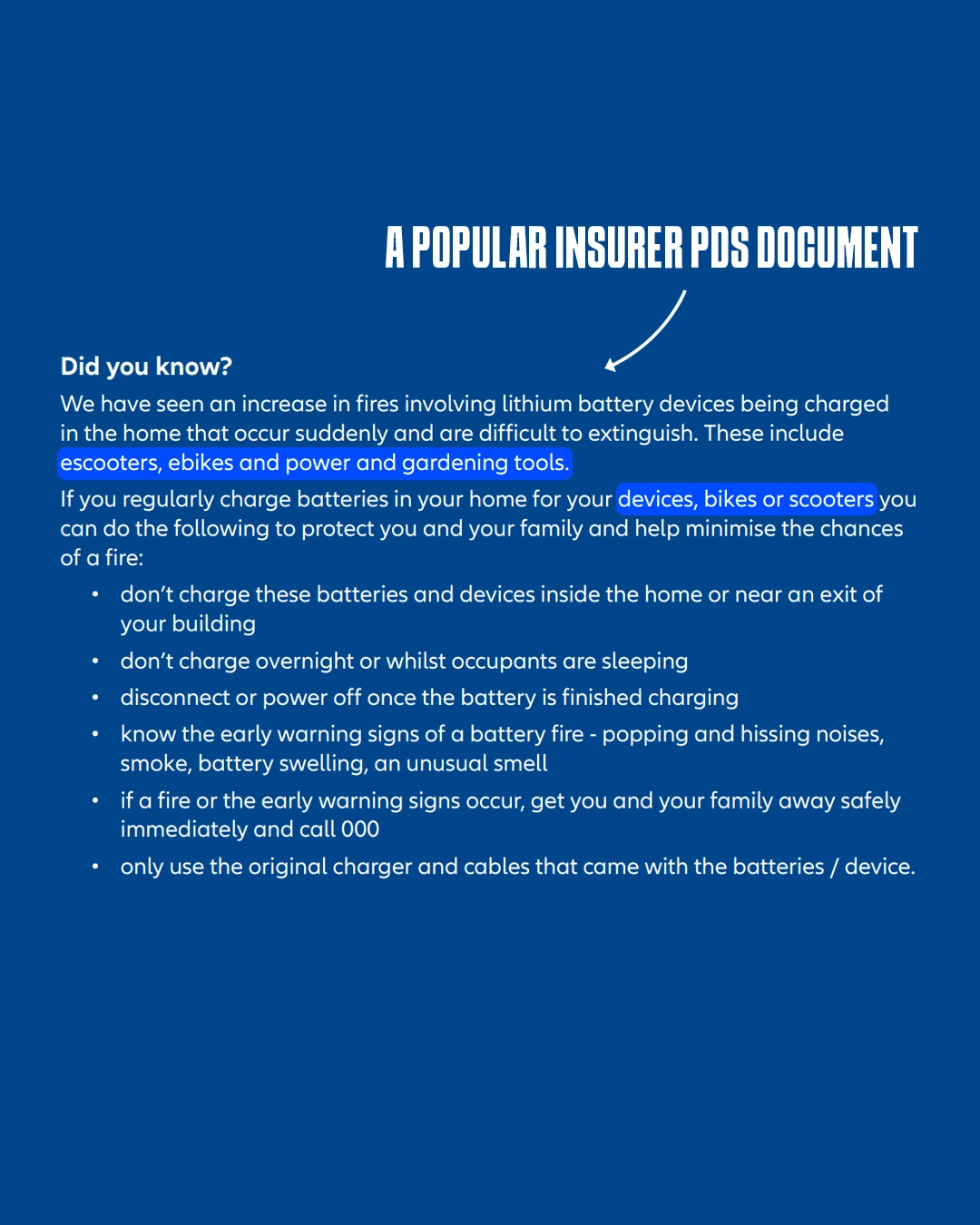
The confusion around this comes from insurer PDS documents that flag lithium batteries as a risk category. Some do, and the language can sound alarming. But when you look at what those references actually cover, they're almost always about small portable lithium devices like e-bikes, e-scooters, power tools, laptop batteries - not home battery energy storage systems.
Home BESS like the Tesla Powerwall, Sungrow SBR or BYD Battery-Box are designed from the ground up for permanent residential installation. They're manufactured to Australian standards (AS/NZS IEC 62619), include sophisticated Battery Management Systems that monitor cell temperature, state of charge and performance continuously, and sit behind multiple protection layers at both the hardware and software level. Fire & Rescue NSW recorded only 3 fires from residential battery systems across 57,000+ installed units in 2023 - an ignition rate of around 0.005%. That's not the risk profile of a dangerous home addition.
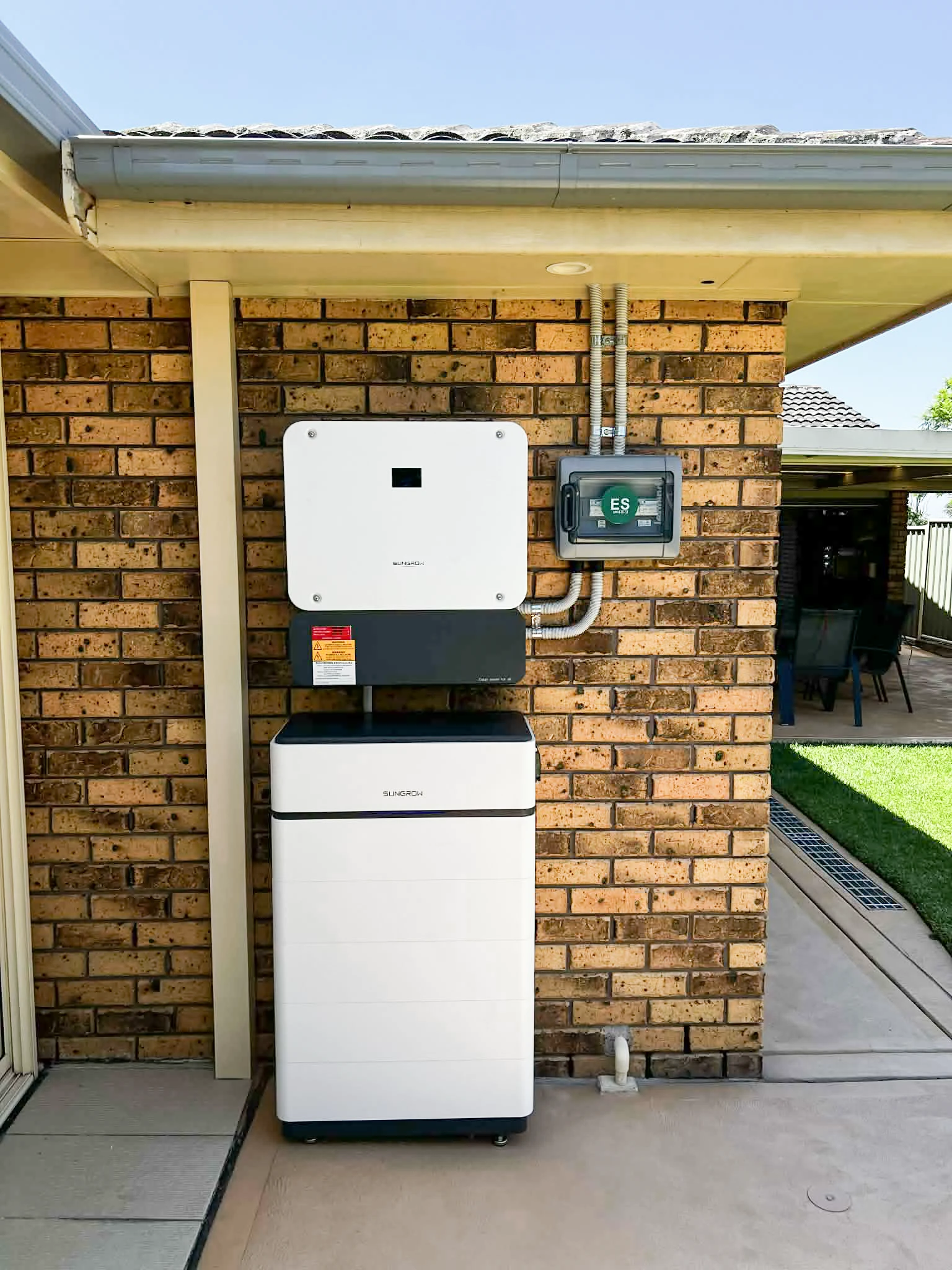
For most insurers, no. Both solar panels and battery storage are treated as permanent fixtures and fall under building insurance in the same way. The process for both is identical: notify your insurer, update your sum insured to include the replacement value, confirm coverage in writing.
The area where a distinction sometimes comes up is between batteries that are integrated as part of the solar inverter system and those installed as standalone units - particularly if the standalone unit is in a detached garage or outbuilding rather than attached to the main home structure. Coverage for outbuildings varies significantly between policies. If your battery is in a shed, garden structure, or detached garage, confirm explicitly with your insurer that it's covered under your policy rather than assuming it's included.
Battery degradation is another question that comes up. Home insurance doesn't cover gradual degradation in battery capacity which is a manufacturer warranty question, not an insurance one. Insurance covers sudden damage events: fire, storm, theft, accidental damage. If your battery loses capacity over time through normal use, that's covered by your product warranty (typically 10 years) rather than your home policy.
We conducted a sample quote to see how insurers determine the solar and battery value thinking that they may ask a few questions on home addition values, but they only referred to the ‘home rebuild cost’ and ‘contents replacement cost’.
Depending on the insurer and policy, your solar panels, inverter, and other components like energy storage should be included in the total home value to ensure it covered in the total insured sum amount.
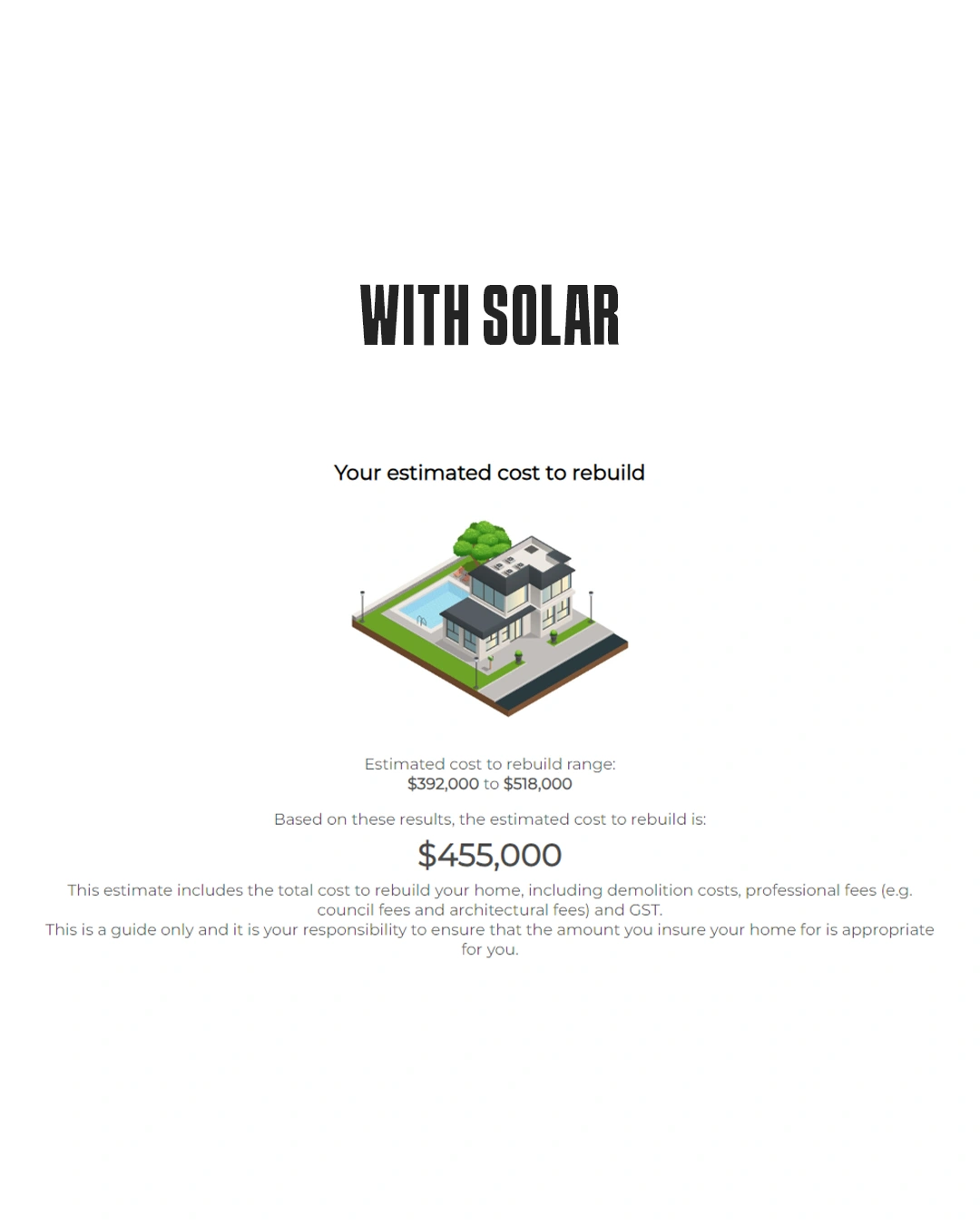
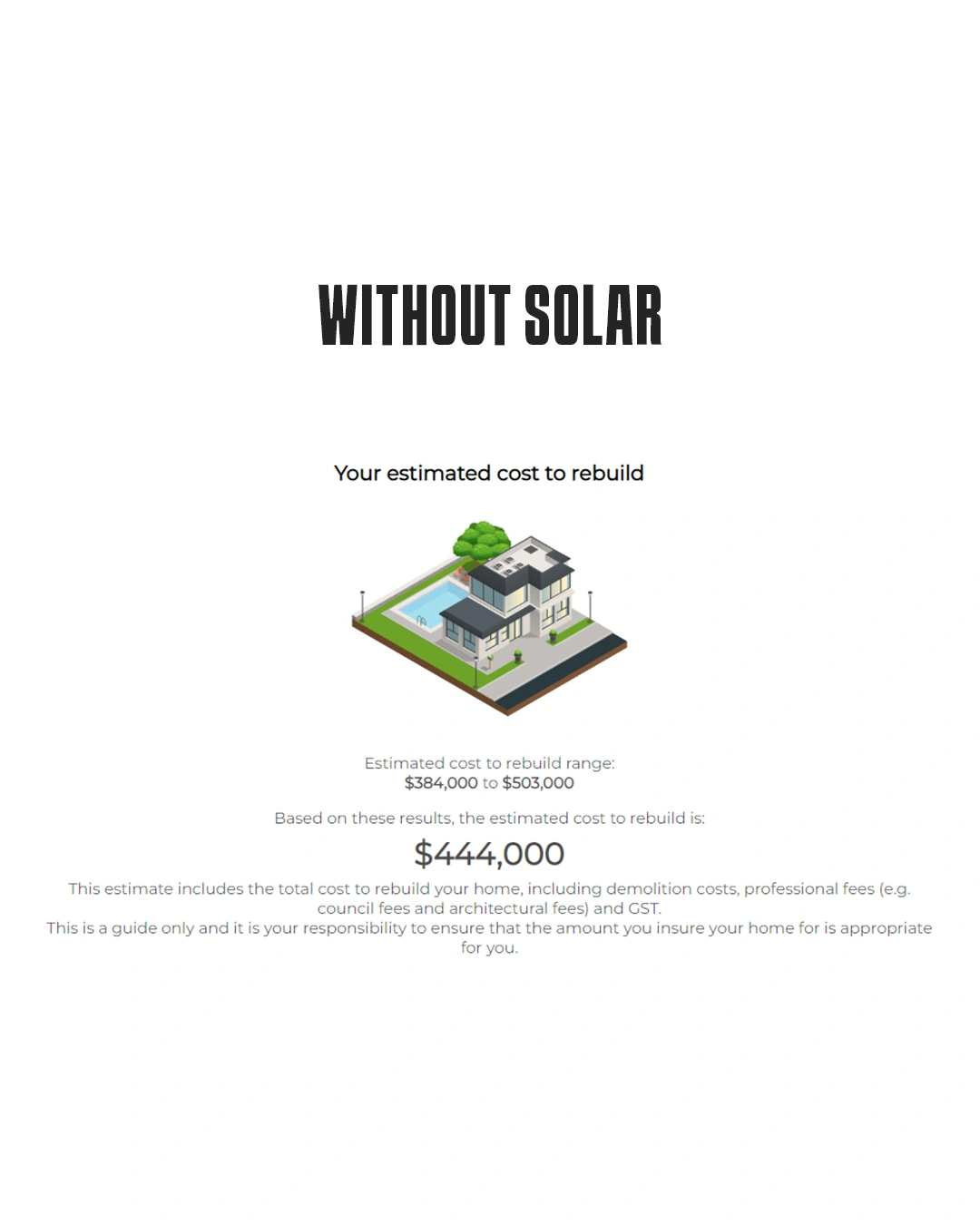
Using a few home insurance calculators, there are options to add a solar system to the total rebuild value. When answering with a yes to the question ‘does the property have any solar panels’ compared to the value without, the difference was about $10,000-$15,000 of a home value range of $394k - $518k. However, this doesn’t count the value of home battery storage.
The total premium increase for a typical solar and battery system is roughly $50 to $200 per year.
Choose your CEC-accredited installer: Choose a qualified, SAA-accredited solar installer to ensure proper compliance and maximum installation quality. Accreditation means your system qualifies for STCs, meets Australian installation standards, and is installed in a way that holds up to scrutiny if you ever need to make an insurance claim. Try to avoid companies that use subcontractors.
Keep your installation documentation:
Once your system is installed, your installer should provide a Certificate of Compliance, system layout documents, and warranty
paperwork for panels, inverter and battery. Store copies somewhere accessible — digital works fine. Your insurer will ask for some or
all of these in a claim, and having them on hand makes the process considerably smoother.
Update your coverage:
When installation is complete, contact your insurer, update your sum insured to reflect the full replacement value of the system, and
confirm in writing that solar panels and battery storage are covered under your building policy. A five-minute phone call protects a
significant investment.
Most insurers won't ask about installer accreditation when you take out or update your policy. The problem arises when you make a claim.
If a claim investigation determines that the installation didn't meet Australian standards, incorrect wiring, inadequate roof penetration sealing, non-compliant battery placement, missing safety disconnects, the insurer can treat that non-compliance as a contributing factor and reduce or reject the payout. The specific policy wording and the nature of the damage determines exactly how this plays out, but it's a genuine risk.
Beyond insurance, there's the STC rebate question. The federal solar rebate can only be processed by a SAA-accredited installer. A non-accredited installation means you miss out on the rebate entirely, in addition to carrying the insurance risk.
No, house insurers don’t typically cover solar and/or battery system failure. Instead, this should be covered under your installer’s workmanship warranty, or manufacturer's warranty to replace faulty components. This is why it's important you choose companies and brands that have years of recognition and that are financially stable to ensure they can honour warranties and claims.
For installation issues, your SAA-accredited installer should have workmanship/labour warranty which provides replacement and installation for faulty installations. For example, we offer 10 years’ labour warranty on solar and battery installations.
For issues where a system component fails, the manufacturer of the faulty component is responsible for sending out a replacement, where they may pay for the replacement labour depending on the manufacturer.
In situations where your panels have been installed, and a storm heavily damages your solar panels, you can make an insurance claim to cover the panel replacement costs if you have eligible coverage.
When installing a solar and/or energy storage system, your premium will most likely go up to accommodate the additional value to your home. However, considering the benefits of solar and battery storage, the benefits greatly outweigh the increased insurance costs.
Whilst you can get free quotes on insurance policies, we also provide free energy assessments and quotes to help you make the best decisions possible, and whether a solar and battery system is right for you.
The journey of bidirectional charging in Australia has hit a milestone with the recent approval of the new standard for vehicle-to-grid (V2G) charging for 2025.
Read moreFor cabins, homes, and sheds with limited or no access to grid energy, getting an off grid solar and battery storage system may be worth it in NSW in 2025.
Read moreEveryone has seen a solar installation a normal roof like tin or tiled roofs, but have you ever seen a solar installation a roof made of Brass? Well we did one...
Read moreWith the release of the new Clean Energy Council (CEC) H1 2024 report on solar and battery storage, it gives an idea of the upward path of Australia’s renewable energy adoption.
Read moreAmber & ARENA have started trials for Vehicle-to-grid technology in NSW, Australia to help develop standards and framework in V2G and Bidirectional charging.
Read moreCompare Tesla Powerwall 2 vs Powerwall 3 in Australia. See differences in capacity, power output, dimensions, specifications, pricing & solar compatibility.
Read moreExplore solar battery fire risks, hazards, and statistics, and if solar batteries are safe to install for homes in NSW, Australia. (Spoiler alert.. they are!)
Read moreThough bidirectional charging isn't available, vehicle-to-grid is already turning heads in Australia with its potential to change energy consumption and distribution.
Read moreExplore how Australia's energy is evolving with t like Microgrids, DER's, Virtual Power Plants, & Demand Response, for solar and battery systems.
Read moreLearn alternating and direct current, and the differences between AC vs. DC with real-life examples and diagrams of power flow and voltage in Australia.
Read moreEverything NSW businesses need to know about commercial battery storage - costs, benefits, peak shaving, backup power, and how to choose a system.
Read moreIn the new 2024 CEC report, they found that renewable contribution in the overall supply of energy in Australia, produced 40% of Australia’s total electrical supply.
Read moreSo you've invested in solar to reduce your electricity bills, but since then your bills are still high? Explore why your energy bills are still high even after solar.
Read moreLearn electricity tariffs like single-rate, controlled loads, and time-of-use tariffs where on and off peak pricing occurs through retailers like energy australia.
Read moreExplore the differences between single phase vs. three phase power, and how 1 phase and 3 phase electricity works with real-life examples in Australia.
Read moreIf your solar panels are dirty, explore easy ways to DIY clean your solar panels, or when to get your system cleaned by a professional solar cleaner in Australia.
Read moreBatteries store energy as chemical potential energy, released as electrical current once connected to a circuit. Learn how batteries store & release energy.
Read moreNow is the best time to invest in solar panels.. here are 4 reasons why Australians should invest in solar energy before it's time runs out for 2024.
Read moreExplore the National Electricity Market (the NEM), and how it interconnected 5 states with electricity distribution to balance demand and supply in Australia.
Read moreDiscover how agrivoltaics can benefit farms by combining agriculture and solar energy to increase sustainability and agricultural production in NSW.
Read moreThe energy required to heat hot water is quite high and for most Australian households. Here are some strategies on how to save on your hot water heating bill.
Read moreWhat's the best Solar EV Charger? Zappi or the Wattpilot? We have put together a side-by-side comparison, including the pro’s and con’s for both EV chargers.
Read moreWith booming solar adoption, Newcastle is quickly becoming a sustainable region with homes and businesses adoption the technology. What's happening?
Read moreDifferences between bidirectional Vehicle-to-Grid (V2G), Vehicle-to-Home (V2H), Vehicle-to-Load (V2L), and compatible chargers and EVs in Australia.
Read moreOur team attended the Electric Vehicle open day in Lake Macquarie hosted by Lake Macquarie City Council, and what a day! From all the fun events, to the informative aspects, everyone definitely got something out of the day.
Read moreRenewable News Articles
Sign up for new article updates - we don't spam.
We've invested in becoming fully-licenced and qualified installers to ensure Newcastle homes and businesses
get the best solar, battery, and electrical systems available. We want to assist Newcastle's renewable energy revolution with quality
installations for maximum customer satisfaction.
Certified solar system installers near you.
Get CEC-Approved Battery Installations.
Fully-licenced electricians in Newcastle.
Convenient EV charging stations for properties.
Leave a Comment