Hunter Valley's Leading Residential & Commercial Solar Installers

Hunter Valley's Leading Residential & Commercial Solar Installers
Posted 7 May
Want the latest in energy, solar, and savings?Subscribe to our newsletter – we don’t spam!
What is the difference between AC and DC? AC (alternating current) switches direction back and forth - 50 times a second in Australia - while DC (direct current) flows in one steady direction. Your wall sockets supply AC; your batteries, solar panels, phone, and laptop run on DC.
Understanding the difference between AC and DC current is more straightforward than it sounds, and it's increasingly relevant for
Australian homeowners and businesses exploring solar, battery storage, and EV charging. This guide explains what AC and DC are, how they
differ, real-world examples of each, and how they work together in modern energy systems.
Electricity powers almost everything we do, including the device you're reading this article on. Being a large part of our lives, electricity is an important aspect, but did you know not all electricity is the same?
Electricity can come in 2 forms, Direct Current (DC) and Alternating Current (AC), which determines the flow direction of the current. But what's the difference?
What is Alternating Current (AC)? AC refers to the dynamic direction where both positive and negatives are switched at intervals where electrons keep switching directions that change the flow of the electrical current - usually seen in home appliances.
What is Direct Current (DC)? DC is when the current is consistently flowing in the one direction, which is the form of power that is mainly seen in battery storage, solar energy, and devices like phones and laptops.
An electrical current is the flow of electric charge, commonly transferred by electrons passing through a conductor like a wire. This is measured in amperes (A) or 'amps'.
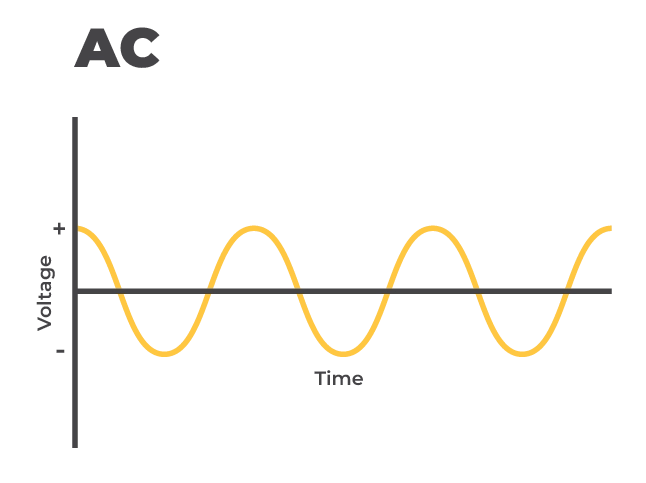
AC current or alternating current is when the flow reverses direction every second. In Australia, AC current runs at 230V, 50Hz, which means it's switching 50 times a second.
Being the more scalable solution, Nikola Tesla, and George Westinghouse innovated the AC current used for the primary method for electricity distribution as it can be stepped up to higher voltages and lowered again for general household consumption.
AC is now the universal standard for grid electricity.
Being the older one of the two, DC current or direct current flows in a single consistent direction and doesn't switch.
Thomas Edison pushed the boundaries of DC current in the late 19th century, as DC was easy to understand, however it had issues with scalability and transporting over long distances.
To transport over long distances, thick, high-capacity cabling was required to accommodate the high current which was expensive and unrealistic, especially over long distances.
To better understand what AC and DC is, let's use some real-life examples on what both AC and DC are used for and their differences.
In Australia, AC current (AC) is the standard for home appliances and grid electricity distribution, and is what the NEM's infrastructure is built on. The power distributed from the grid is AC, which the voltage can be stepped up or down using transformers.
Things like the grid, home appliances, outlets, industrial, equipment, and long-distance energy transmission all run on AC power.
DC current (DC) is what powers our batteries and electronic circuits, and is what powers solar energy and electrical transportation like electric vehicles (more on this later). Elements like phones, laptops, solar & battery systems, AA batteries, and EVs run on DC power.
A real-life example on AC vs. DC, could be the way we charge our phones. Back in the day, we used to get a charging brick included in the box which when plugged in, would invert the outlet's AC power to the phone's DC power. The heat occurs due to the efficiency losses that heat over longer charging periods.
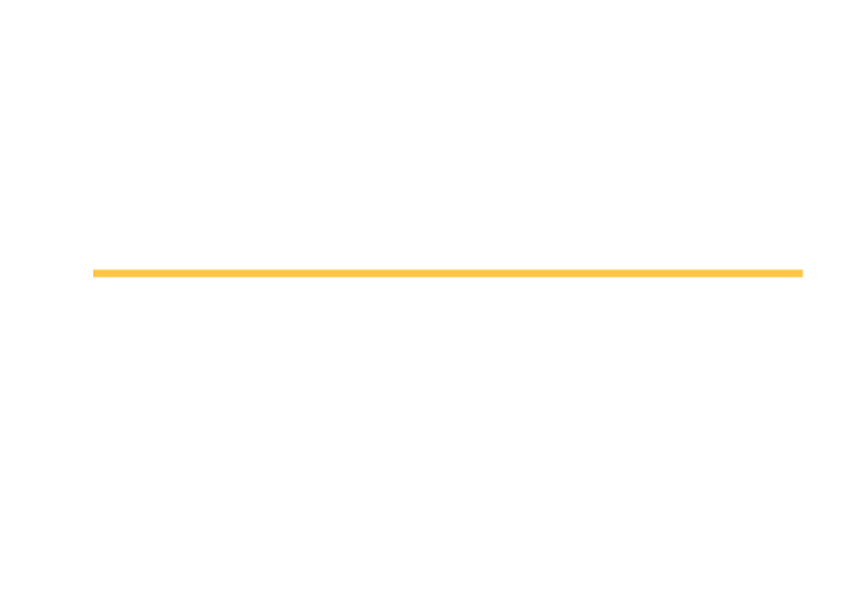
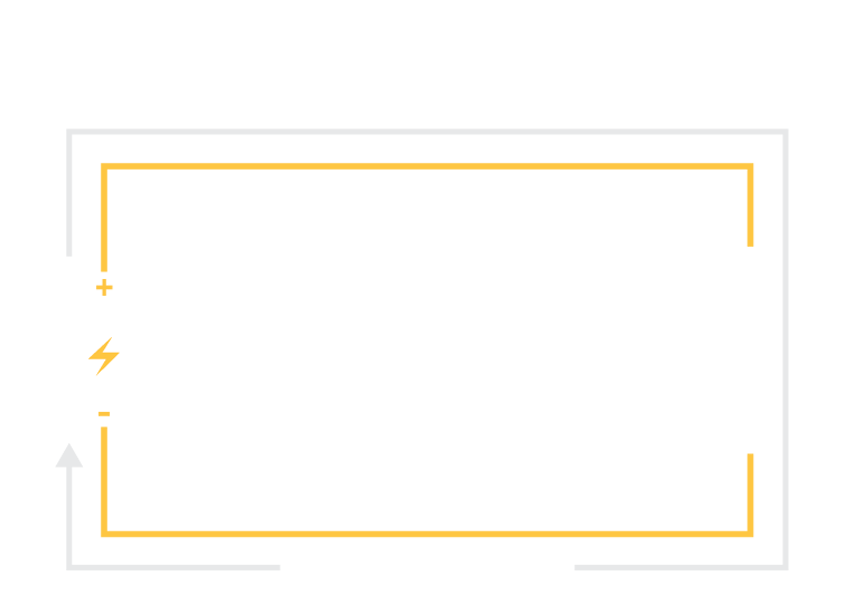
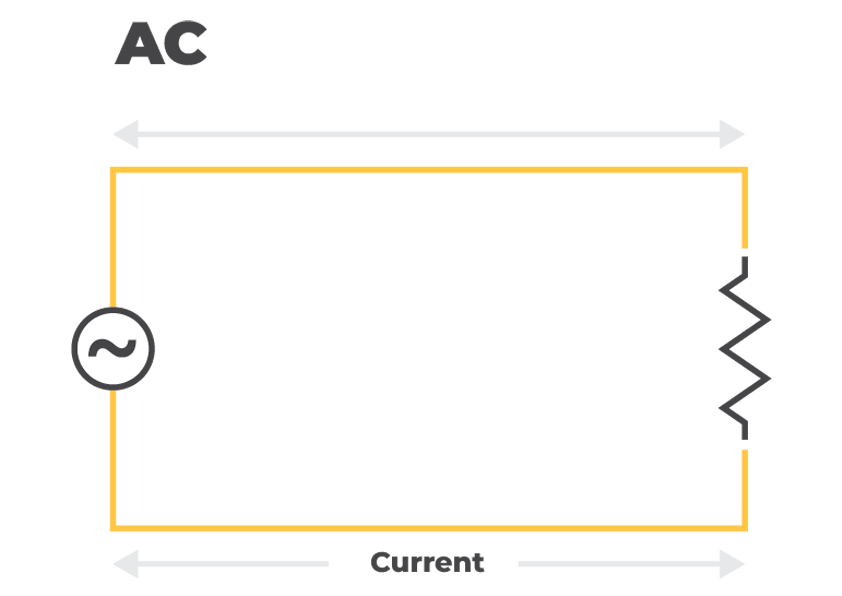
The main difference between Alternating current and Direct current is how the electrical current flows. AC is constantly switching from
positive to negative, whilst DC remains steady in one direction. Below are some example diagrams on how direct and alternating current
works.
Harder to change voltage —Unlike AC which uses simple transformers, DC requires more complex and expensive power electronics to step voltage up or down, which historically made it less practical for wide-scale grid distribution.
More difficult to interrupt — DC circuits are harder to break safely because there is no natural zero-crossing point (unlike AC's 50Hz cycle), requiring specialised switchgear and circuit breakers.
| Feature | AC (Alternating Current) | DC (Direct Current) |
| Direction of current | Reverses direction 50 times per second (50Hz) | Flows in one direction |
| Australian grid voltage | 230V at 50Hz | Varies by application |
| Varies by application | No | Yes (batteries) |
| Common sources | Power stations, grid, wall outlets | Batteries, solar panels, electronics |
| Voltage conversion | Easy (transformers) | Complex (power electronics) |
| Common uses | Household appliances, lighting, industrial equipment | Phones, laptops, solar storage, EVs |
| Examples | Kettle, air conditioner, power tools | Phone, laptop, AA battery, EV battery |
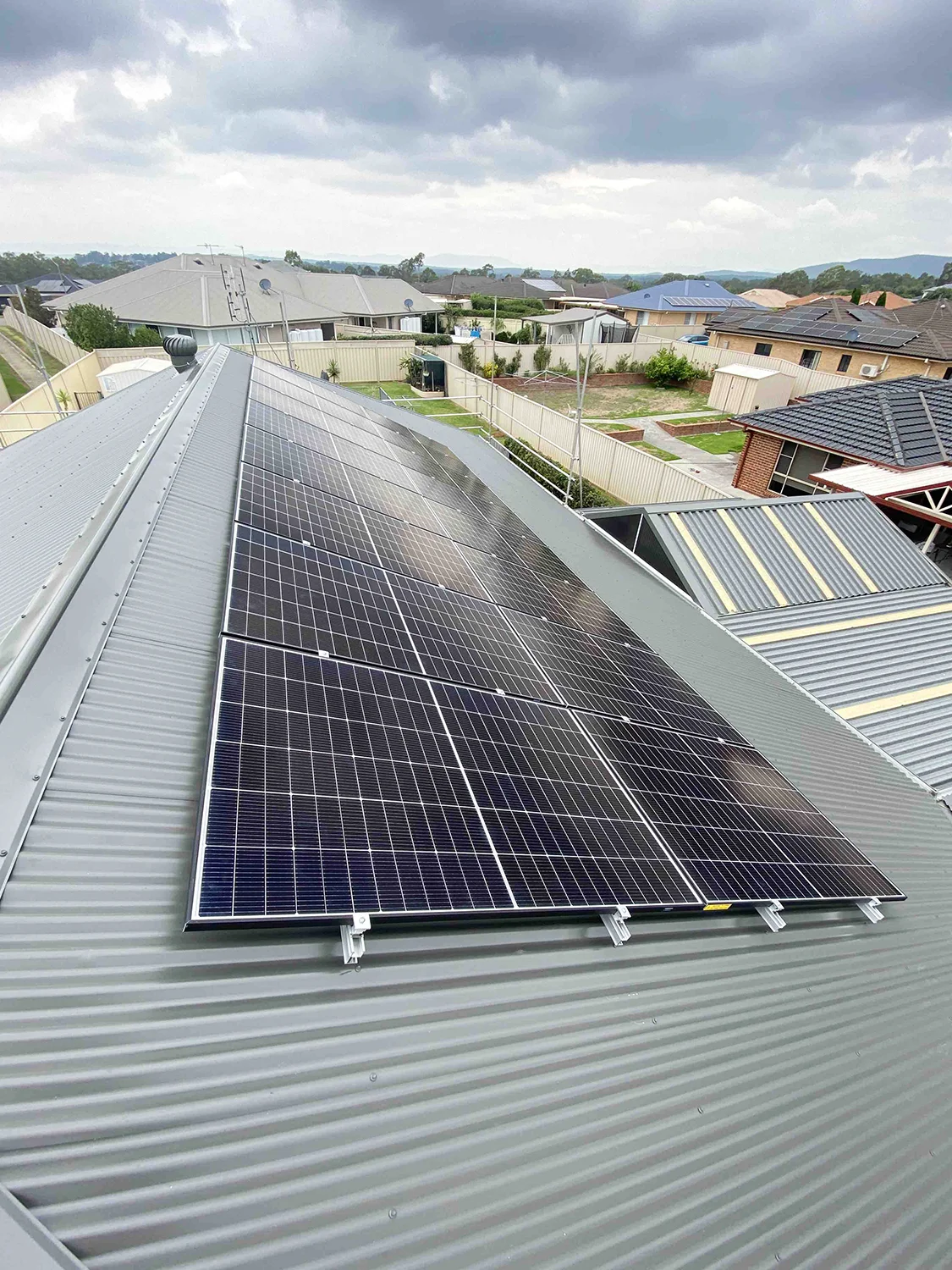
Using solar and battery systems as an example for AC and DC, the sun shines and generates DC power which is sent to the inverter to be converted to AC for general household usage and grid export.
Depending on if a battery is AC or DC-coupled, the battery may be responsible for its own power conversion or may rely on the hybrid inverter to convert the stored power.
AC and DC is an important part of solar and battery systems as each component generates and runs on different systems which requires inversion.
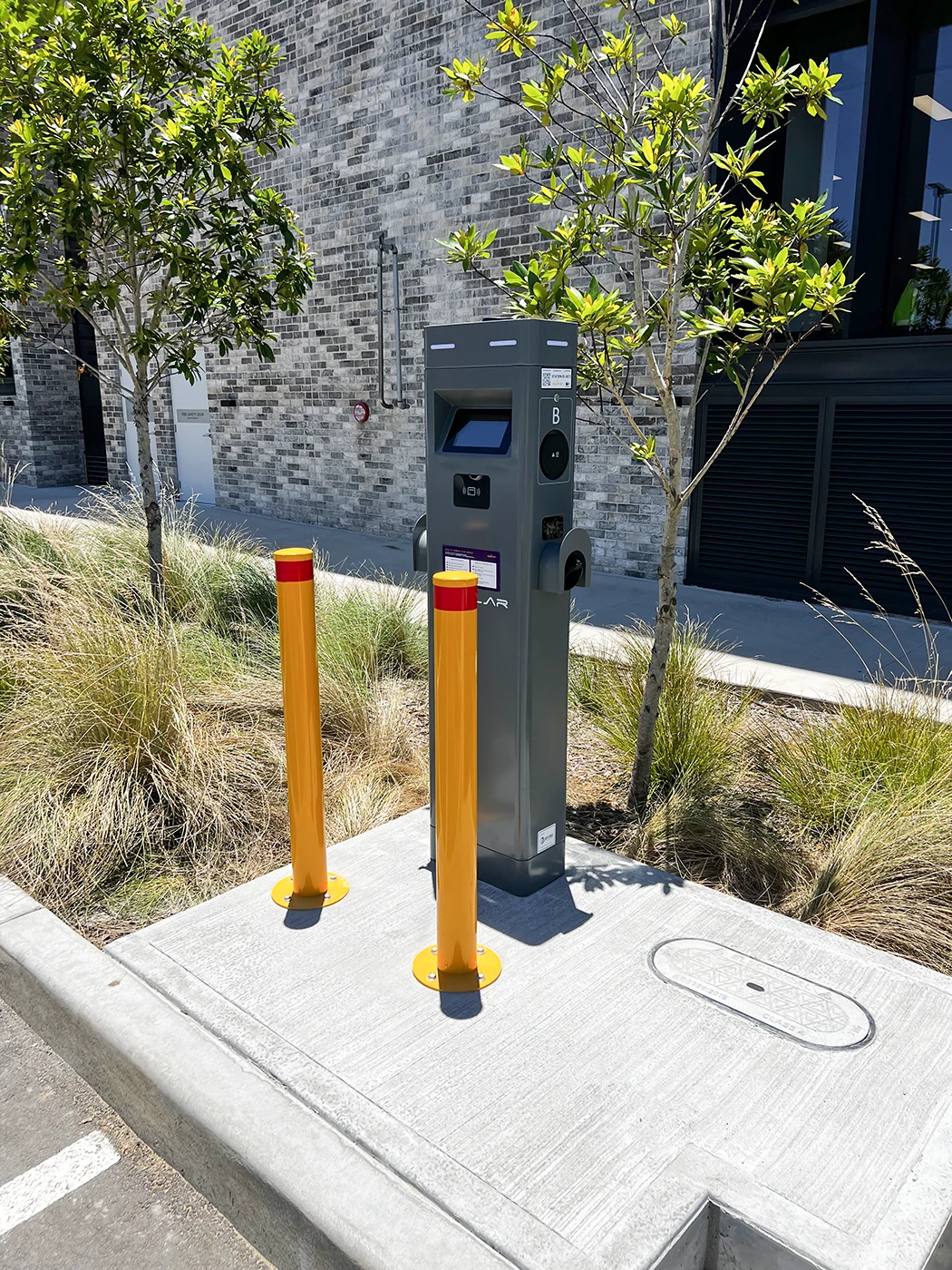
Let's use electric vehicle charging as an example as NSW's EV boom continues. The difference between AC vs. DC electric vehicle charging comes down to how the power is delivered to the EV.
Because the EV battery runs on DC, the energy that is being delivered will need to be or converted to DC power. When DC chargers are used, it alleviates the need to invert the energy before it enters the battery, enabling higher charging rates.
For AC chargers like the popular Tesla Wall Connector Gen 3, it can only deliver a certain amount of power as the charger delivers AC power to the EV which needs to be converted to the EVs required DC power using an onboard inverter.
Onboard EV inverters vary in speeds like how the Tesla Model 3 has an 11kW onboard inverter for AC charging. DC charging doesn't need conversion and can be charged as much faster rates like superchargers that can deliver up to 420kW of power.
Single and three phase specifically applies to alternating current and not direct current. In a three-phase system, there are 3 phases of AC current that is predominantly used in industrial and commercial settings where the delivery of high-power levels is required. It’s not incorrect to call DC ‘single-phase’ as it is technically one voltage waveform, but that can remain a discussion topic for another day.
Overall, both Alternating and Direct currents serve their purpose and continue to be the 'battle of the currents' throughout Australia. They aren't in competition, but serve specific purposes and compliment each other in the systems we use.
As we see more innovative energy technology come out over the next decade, it will be interesting where we head with our power generation, distribution, and consumption whether it be through AC or DC or continue to be through both for years to come.
Explore whether rooftop or ground mounted solar systems are better for homes, farms, and remote properties needing solar PV power in Australia.
Read moreThe journey of bidirectional charging in Australia has hit a milestone with the recent approval of the new standard for vehicle-to-grid (V2G) charging for 2025.
Read moreFor cabins, homes, and sheds with limited or no access to grid energy, getting an off grid solar and battery storage system may be worth it in NSW in 2025.
Read moreEveryone has seen a solar installation a normal roof like tin or tiled roofs, but have you ever seen a solar installation a roof made of Brass? Well we did one...
Read moreWith the release of the new Clean Energy Council (CEC) H1 2024 report on solar and battery storage, it gives an idea of the upward path of Australia’s renewable energy adoption.
Read moreAmber & ARENA have started trials for Vehicle-to-grid technology in NSW, Australia to help develop standards and framework in V2G and Bidirectional charging.
Read moreCompare Tesla Powerwall 2 vs Powerwall 3 in Australia. See differences in capacity, power output, dimensions, specifications, pricing & solar compatibility.
Read moreExplore solar battery fire risks, hazards, and statistics, and if solar batteries are safe to install for homes in NSW, Australia. (Spoiler alert.. they are!)
Read moreThough bidirectional charging isn't available, vehicle-to-grid is already turning heads in Australia with its potential to change energy consumption and distribution.
Read moreExplore how Australia's energy is evolving with t like Microgrids, DER's, Virtual Power Plants, & Demand Response, for solar and battery systems.
Read moreLearn alternating and direct current, and the differences between AC vs. DC with real-life examples and diagrams of power flow and voltage in Australia.
Read moreEverything NSW businesses need to know about commercial battery storage - costs, benefits, peak shaving, backup power, and how to choose a system.
Read moreIn the new 2024 CEC report, they found that renewable contribution in the overall supply of energy in Australia, produced 40% of Australia’s total electrical supply.
Read moreSo you've invested in solar to reduce your electricity bills, but since then your bills are still high? Explore why your energy bills are still high even after solar.
Read moreLearn electricity tariffs like single-rate, controlled loads, and time-of-use tariffs where on and off peak pricing occurs through retailers like energy australia.
Read moreExplore the differences between single phase vs. three phase power, and how 1 phase and 3 phase electricity works with real-life examples in Australia.
Read moreIf your solar panels are dirty, explore easy ways to DIY clean your solar panels, or when to get your system cleaned by a professional solar cleaner in Australia.
Read moreBatteries store energy as chemical potential energy, released as electrical current once connected to a circuit. Learn how batteries store & release energy.
Read moreNow is the best time to invest in solar panels.. here are 4 reasons why Australians should invest in solar energy before it's time runs out for 2024.
Read moreExplore the National Electricity Market (the NEM), and how it interconnected 5 states with electricity distribution to balance demand and supply in Australia.
Read moreDiscover how agrivoltaics can benefit farms by combining agriculture and solar energy to increase sustainability and agricultural production in NSW.
Read moreThe energy required to heat hot water is quite high and for most Australian households. Here are some strategies on how to save on your hot water heating bill.
Read moreWhat's the best Solar EV Charger? Zappi or the Wattpilot? We have put together a side-by-side comparison, including the pro’s and con’s for both EV chargers.
Read moreDifferences between bidirectional Vehicle-to-Grid (V2G), Vehicle-to-Home (V2H), Vehicle-to-Load (V2L), and compatible chargers and EVs in Australia.
Read moreOur team attended the Electric Vehicle open day in Lake Macquarie hosted by Lake Macquarie City Council, and what a day! From all the fun events, to the informative aspects, everyone definitely got something out of the day.
Read moreRenewable News Articles
Sign up for new article updates - we don't spam.
We've invested in becoming fully-licensed and qualified installers to ensure Newcastle homes and businesses
get the best solar, battery, and electrical systems available. We want to assist Newcastle's renewable energy revolution with quality
installations for maximum customer satisfaction.
Certified solar system installers near you.
Get CEC-Approved Battery Installations.
Fully-licensed electricians in Newcastle.
Convenient EV charging stations for properties.
Leave a Comment