Newcastle's Leading Residential & Commercial Solar Installers

Newcastle's Leading Residential & Commercial Solar Installers
Posted 29 Apr
Want the latest in energy, solar, and savings?Subscribe to our newsletter – we don’t spam!
Finding reliable information on solar and home insurance is harder than it should be — insurer PDS documents are often vague, and most articles either oversimplify or leave out the specifics that actually matter. This guide is based on direct contact with insurers, product disclosure statement research, and the questions we hear most often from homeowners before and after installation.
The short answers: Yes, solar panels and battery storage are generally covered under home building insurance in Australia as permanent fixtures. Yes, your premium will usually increase slightly - but only because your home is worth more, not because solar is considered high-risk. And yes, you should notify your insurer when you install, or you risk being underinsured on a claim.
Below: which insurers cover what, how much premiums change, what to tell your insurer, and what your installer's own insurance requirements are.
Generally yes, but the reason matters, and it's not what most people assume.
Home insurance premiums are based on what your home would cost to rebuild if it were completely destroyed. When you add solar panels and a battery system, you're adding genuine replacement value to that equation. A 10kW solar system with a quality battery can add $15,000 to $25,000 in replacement cost to your home. If your policy's sum insured hasn't been updated to reflect that, you're underinsured, and your premium needs to increase to cover the new figure properly.
What the increase is not: a risk loading. Insurers aren't charging more because they consider solar panels or home batteries dangerous additions. For a system installed by a CEC-accredited installer to Australian standards, the risk profile of the home doesn't meaningfully change from an underwriter's perspective. The premium goes up because you own more.
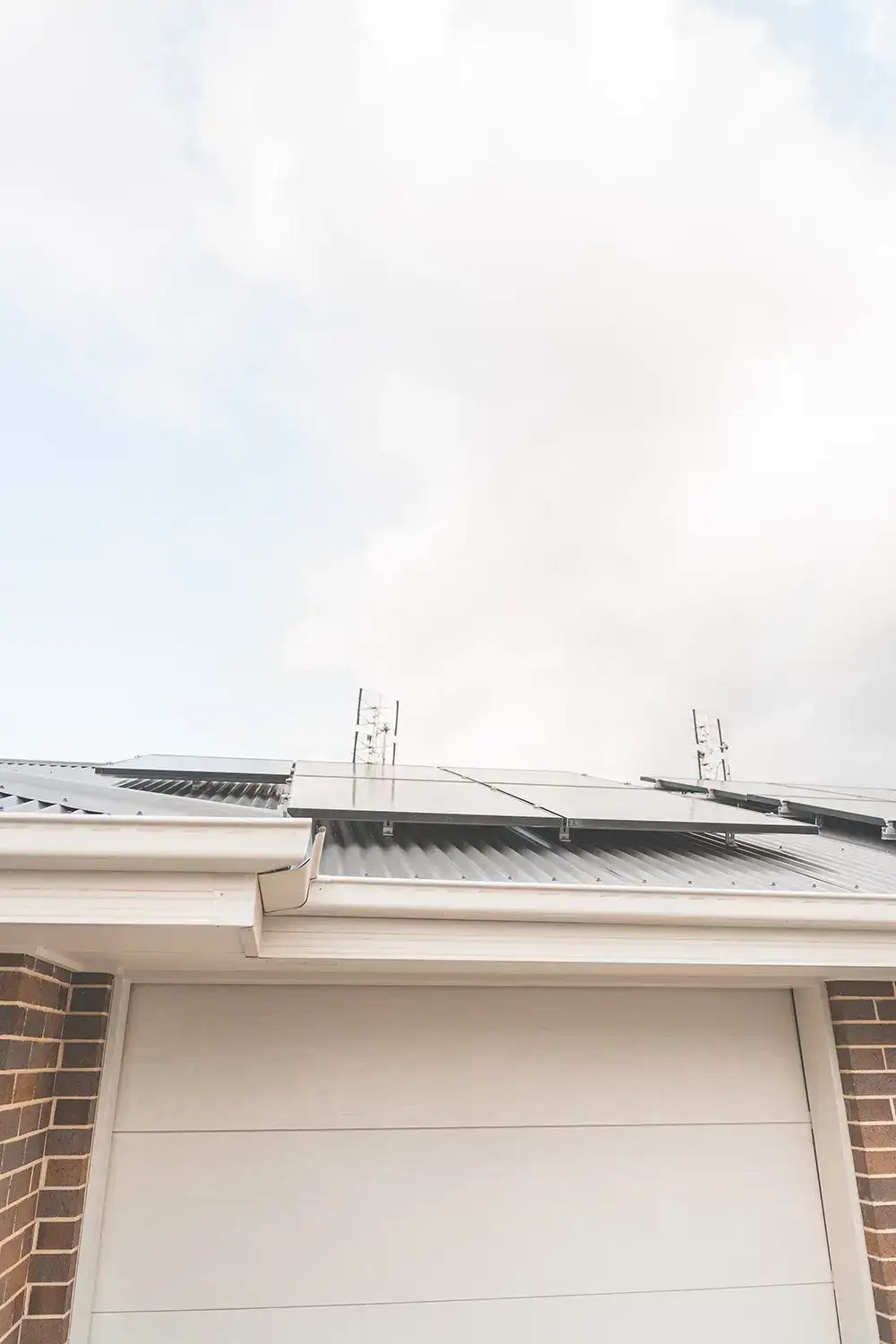
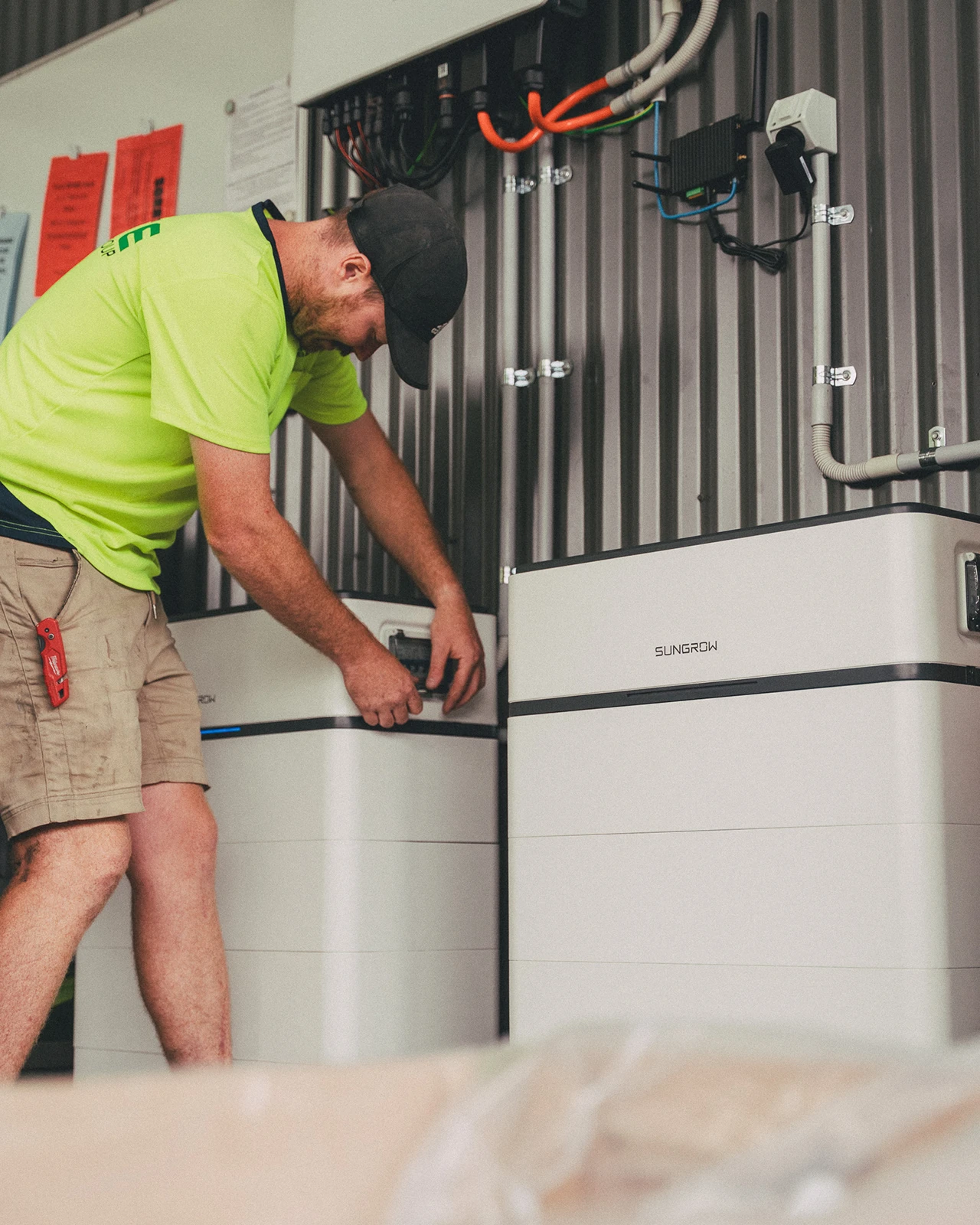
Solar panels, inverters and battery storage systems are generally treated as permanent fixtures of the home, which puts them under home building insurance rather than contents insurance. The distinction matters: if you tried to claim for storm damage to your panels under contents insurance, you'd be in the wrong category.
Most major Australian insurers do cover solar and battery systems as part of the building, but that coverage only pays out properly if your sum insured is set at the right figure. A policy that was set up before you installed solar, and never updated, is working from an outdated rebuild cost.
We contacted Budget Direct to ask directly: "Solar panels and accessories are covered under home building insurance. All you need to do is make sure that the home build sum insured amount is enough to cover the solar panels. You can add the solar panels value to your building cover amount if you happen to install them after you have secured your policy."
That's how most insurers approach it. The coverage is generally there, the gap is usually in the sum insured figure, not in whether the product is covered at all.
Yes, it's best to tell your insurer about a new solar and battery installation sooner rather than later.
Notifying your insurer isn't about asking permission. It's about making sure your policy reflects your home's current rebuild value from the day the system goes on. Most insurers treat solar as a material change to the property, which means you're required to disclose it under standard policy terms.
If your home is insured for $600,000 and you add a $20,000 solar and battery system without updating your policy, your insurer is holding the wrong rebuild figure. In a major claim, a total loss from fire, for example - insurers can apply proportional underinsurance reduction across the entire payout. The $20,000 omission can end up costing significantly more than $20,000 in the final settlement.
Based on current product disclosure statements, here is a comparison table of some home insurers and their coverage of solar and battery storage.
| Insurer | Solar Panels Covered | Battery Storage Covered | Notes |
|
Coles Home & Contents Insurance Policy
(PDS) |
Yes |
Yes |
Only covers breakage through entire panel thickness - not surface cracks. Specifically mentions energy storage. |
| Budget Direct (PDS) | Yes |
Yes |
Only covers breakage through entire panel thickness - not surface cracks. Specifically mentions energy storage. |
|
AAMI Home Building Insurance (PDS) |
Yes | Not specified |
AAMI's PDS lists solar as part of the buiding, however it is excluded from AAMI's excess-free glass benefit. |
| QBE Home Insurance (PDS) | Yes |
Not specified | 'Solar panels & equipment' are considered fixtures. |
| Youi Home Insurance (PDS) | Yes |
Not specified | Youi covers panels under home contents as an 'attached fixture that belongs to you'. |
| Suncorp Home & Contents Insurance (PDS) | Yes |
Not specified | Suncorp cover solar power under the 'what you've told us' section. Doesn't specify energy storage. |
|
Westpac Home & Contents Insurance (PDS) |
Yes |
Not specified |
Considers solar as a fixture and covers it. |
This table is a general guide based on publicly available information at time of publication. Individual policies, plan types and circumstances vary. Always read your Product Disclosure Statement and speak directly with your insurer to confirm coverage for your specific installation before proceeding.
Solar battery energy storage systems (BESS) are generally considered to be a fixed part of the home, meaning that they are typically covered under home building insurance policies. However this can vary depending on the insurer.
For example, Budget Direct defines ‘energy storage systems’ to be:
‘Any permanent device or system, such as batteries, cabinets, control systems, and their parts, that is both:
This does not include dams or other non-battery storage systems.’
In short, solar battery storage is not considered high-risk to insurers, as CEC-approved batteries undergo strict and thorough testing and compliance.
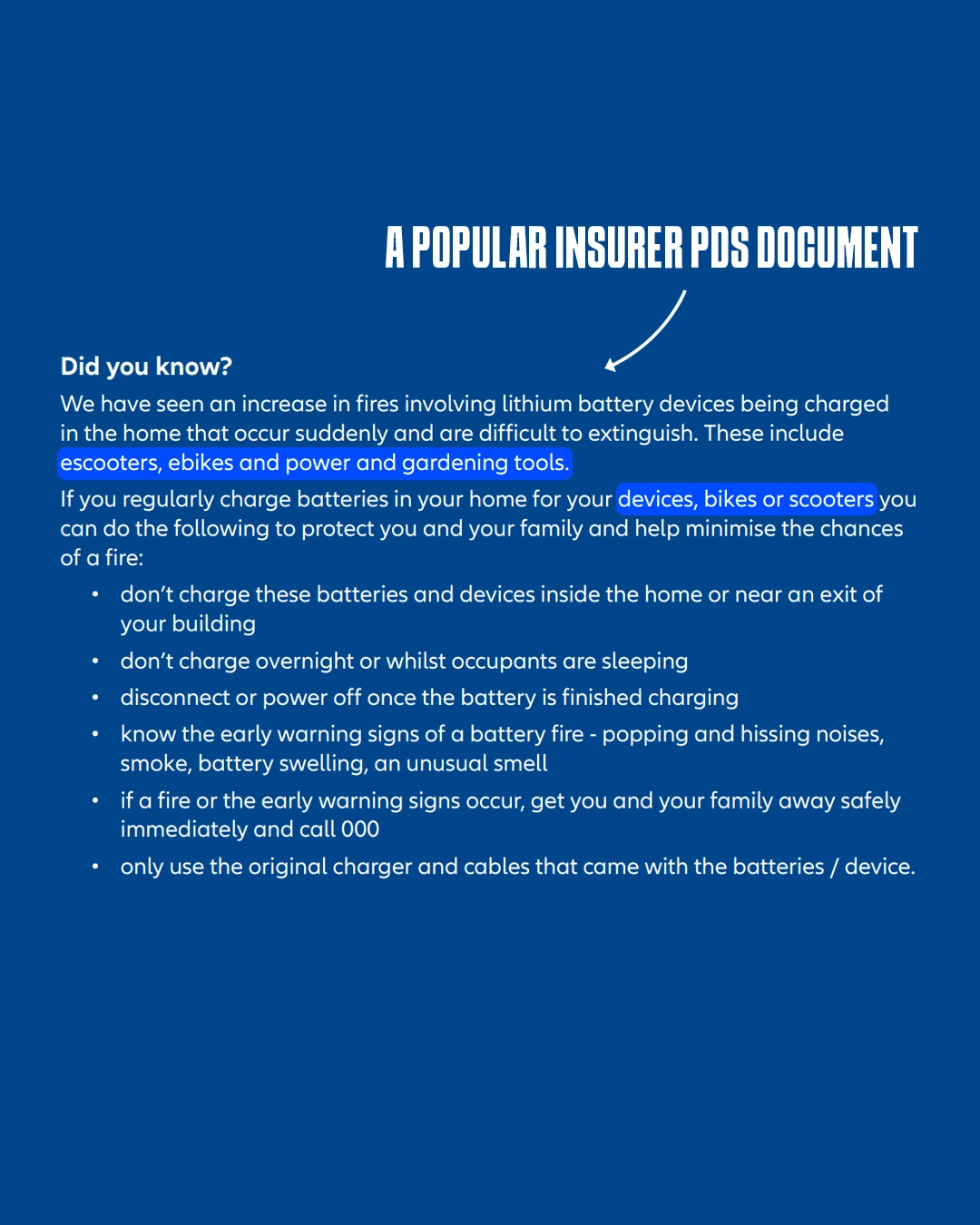
The confusion around this comes from insurer PDS documents that flag lithium batteries as a risk category. Some do, and the language can sound alarming. But when you look at what those references actually cover, they're almost always about small portable lithium devices like e-bikes, e-scooters, power tools, laptop batteries - not home battery energy storage systems.
Home BESS like the Tesla Powerwall, Sungrow SBR or BYD Battery-Box are designed from the ground up for permanent residential installation. They're manufactured to Australian standards (AS/NZS IEC 62619), include sophisticated Battery Management Systems that monitor cell temperature, state of charge and performance continuously, and sit behind multiple protection layers at both the hardware and software level. Fire & Rescue NSW recorded only 3 fires from residential battery systems across 57,000+ installed units in 2023 - an ignition rate of around 0.005%. That's not the risk profile of a dangerous home addition.
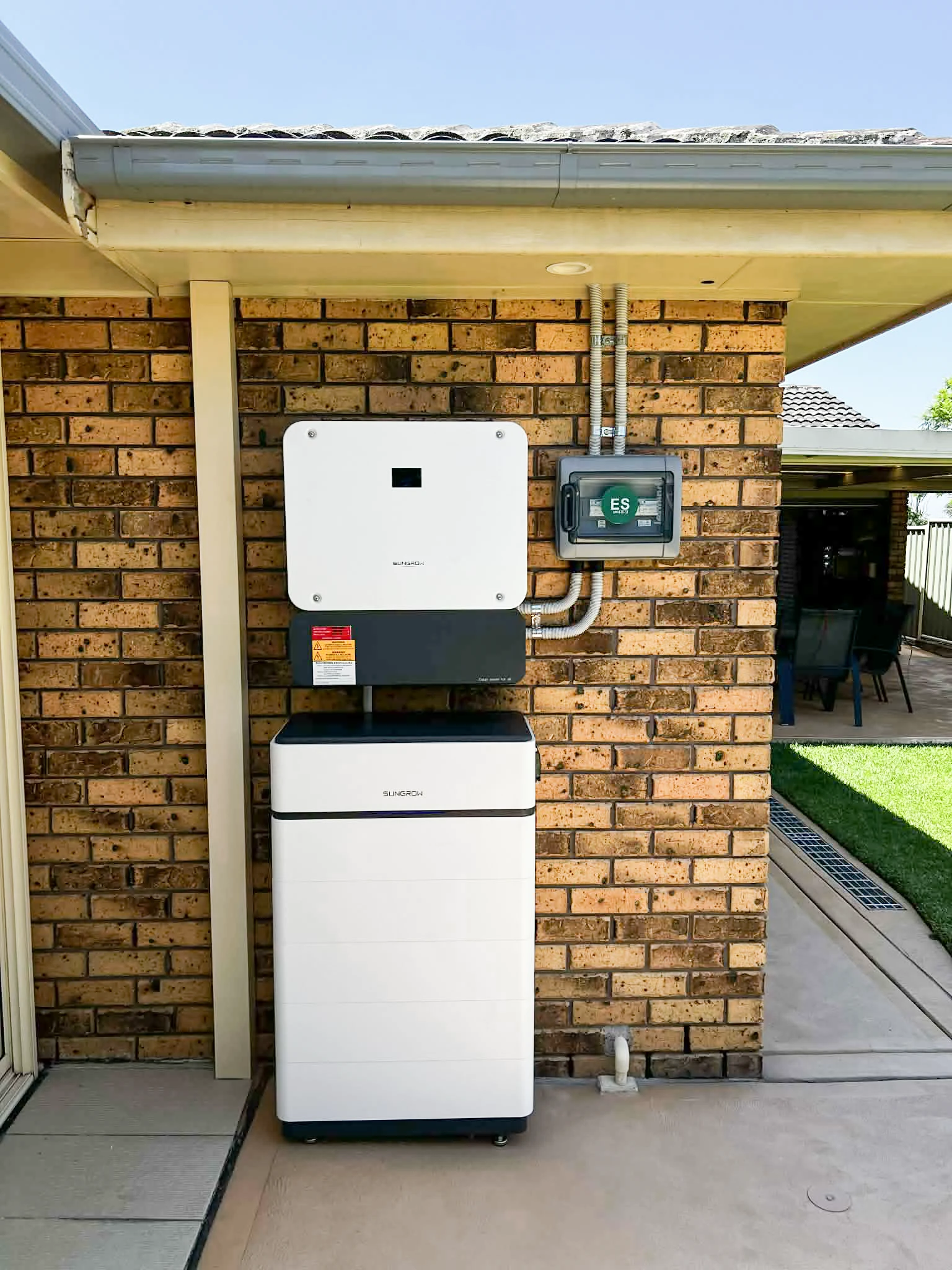
For most insurers, no. Both solar panels and battery storage are treated as permanent fixtures and fall under building insurance in the same way. The process for both is identical: notify your insurer, update your sum insured to include the replacement value, confirm coverage in writing.
The area where a distinction sometimes comes up is between batteries that are integrated as part of the solar inverter system and those installed as standalone units - particularly if the standalone unit is in a detached garage or outbuilding rather than attached to the main home structure. Coverage for outbuildings varies significantly between policies. If your battery is in a shed, garden structure, or detached garage, confirm explicitly with your insurer that it's covered under your policy rather than assuming it's included.
Battery degradation is another question that comes up. Home insurance doesn't cover gradual degradation in battery capacity which is a manufacturer warranty question, not an insurance one. Insurance covers sudden damage events: fire, storm, theft, accidental damage. If your battery loses capacity over time through normal use, that's covered by your product warranty (typically 10 years) rather than your home policy.
We conducted a sample quote to see how insurers determine the solar and battery value thinking that they may ask a few questions on home addition values, but they only referred to the ‘home rebuild cost’ and ‘contents replacement cost’.
Depending on the insurer and policy, your solar panels, inverter, and other components like energy storage should be included in the total home value to ensure it covered in the total insured sum amount.
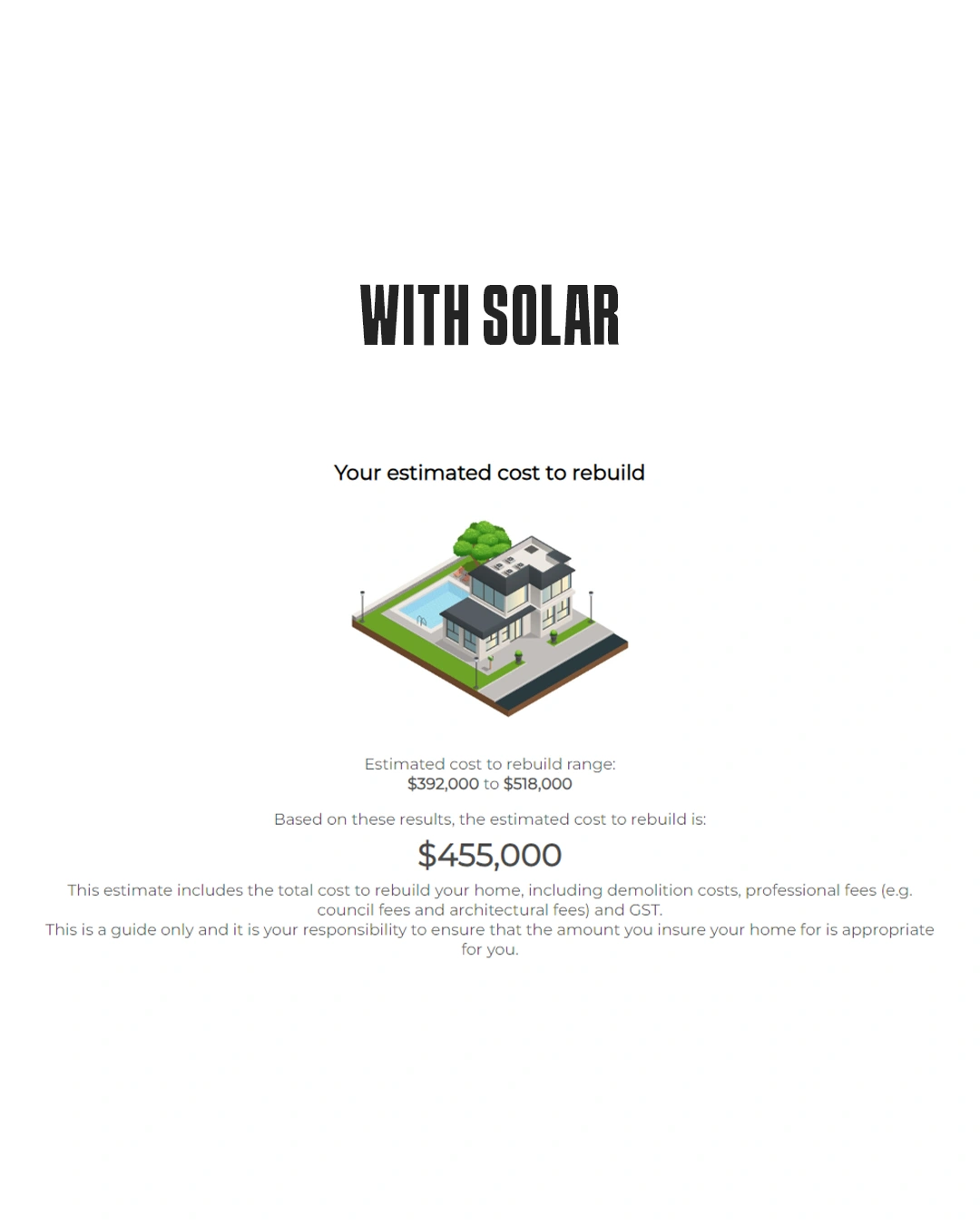
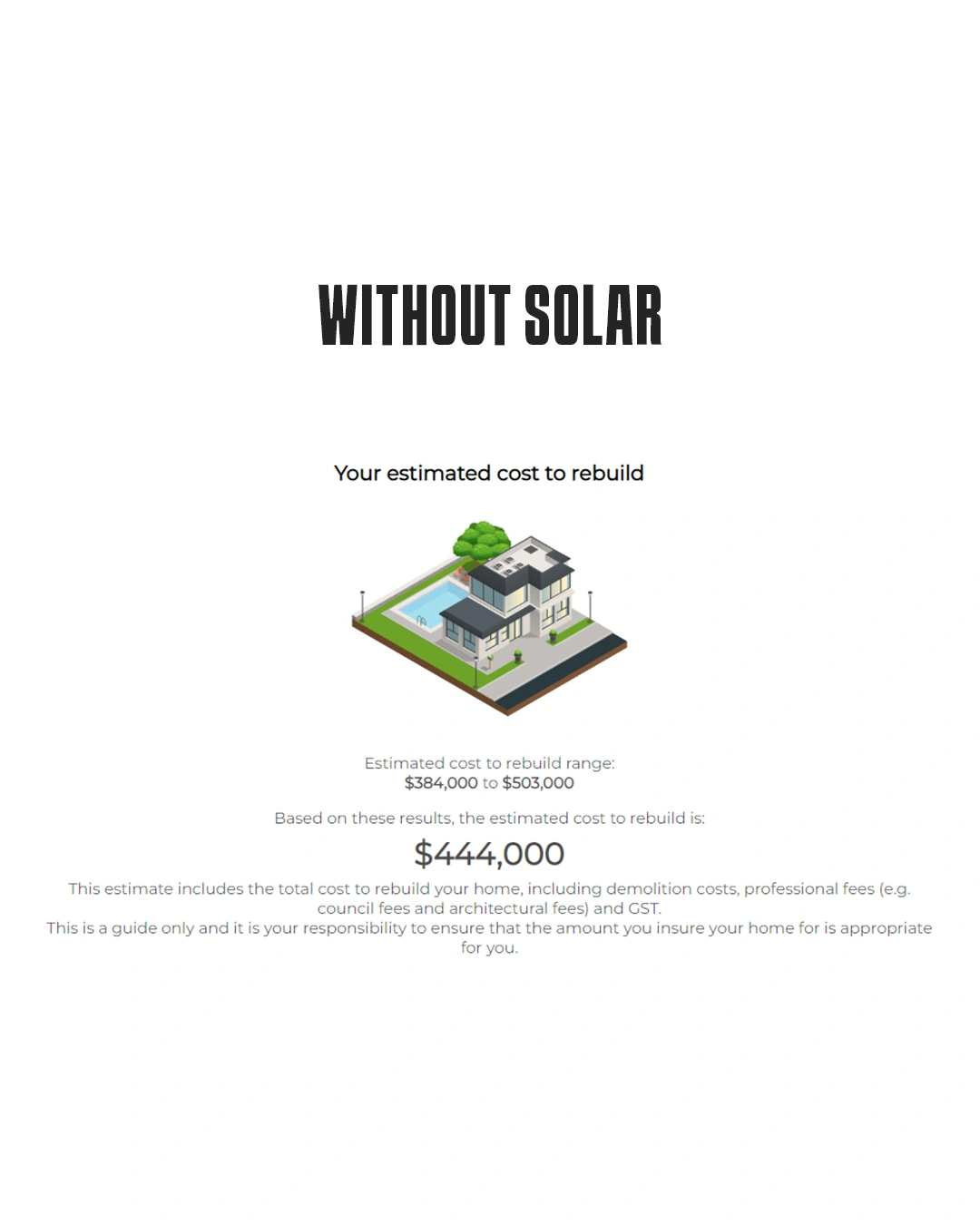
Using a few home insurance calculators, there are options to add a solar system to the total rebuild value. When answering with a yes to the question ‘does the property have any solar panels’ compared to the value without, the difference was about $10,000-$15,000 of a home value range of $394k - $518k. However, this doesn’t count the value of home battery storage.
The total premium increase for a typical solar and battery system is roughly $50 to $200 per year.
Choose your CEC-accredited installer: Choose a qualified, SAA-accredited solar installer to ensure proper compliance and maximum installation quality. Accreditation means your system qualifies for STCs, meets Australian installation standards, and is installed in a way that holds up to scrutiny if you ever need to make an insurance claim. Try to avoid companies that use subcontractors.
Keep your installation documentation:
Once your system is installed, your installer should provide a Certificate of Compliance, system layout documents, and warranty
paperwork for panels, inverter and battery. Store copies somewhere accessible — digital works fine. Your insurer will ask for some or
all of these in a claim, and having them on hand makes the process considerably smoother.
Update your coverage:
When installation is complete, contact your insurer, update your sum insured to reflect the full replacement value of the system, and
confirm in writing that solar panels and battery storage are covered under your building policy. A five-minute phone call protects a
significant investment.
Most insurers won't ask about installer accreditation when you take out or update your policy. The problem arises when you make a claim.
If a claim investigation determines that the installation didn't meet Australian standards, incorrect wiring, inadequate roof penetration sealing, non-compliant battery placement, missing safety disconnects, the insurer can treat that non-compliance as a contributing factor and reduce or reject the payout. The specific policy wording and the nature of the damage determines exactly how this plays out, but it's a genuine risk.
Beyond insurance, there's the STC rebate question. The federal solar rebate can only be processed by a SAA-accredited installer. A non-accredited installation means you miss out on the rebate entirely, in addition to carrying the insurance risk.
No, house insurers don’t typically cover solar and/or battery system failure. Instead, this should be covered under your installer’s workmanship warranty, or manufacturer's warranty to replace faulty components. This is why it's important you choose companies and brands that have years of recognition and that are financially stable to ensure they can honour warranties and claims.
For installation issues, your SAA-accredited installer should have workmanship/labour warranty which provides replacement and installation for faulty installations. For example, we offer 10 years’ labour warranty on solar and battery installations.
For issues where a system component fails, the manufacturer of the faulty component is responsible for sending out a replacement, where they may pay for the replacement labour depending on the manufacturer.
In situations where your panels have been installed, and a storm heavily damages your solar panels, you can make an insurance claim to cover the panel replacement costs if you have eligible coverage.
When installing a solar and/or energy storage system, your premium will most likely go up to accommodate the additional value to your home. However, considering the benefits of solar and battery storage, the benefits greatly outweigh the increased insurance costs.
Whilst you can get free quotes on insurance policies, we also provide free energy assessments and quotes to help you make the best decisions possible, and whether a solar and battery system is right for you.
Explore the recently changed VPP NSW rebate, & how the Peak Demand Reduction Scheme (PDRS) calculates rewards for joining a Virtual Power Plant.
Read moreAlready have a Powerwall 2? You can now add a Powerwall 3 alongside it. Supported configurations, limitations and how the rebates stack in 2026.
Read moreWhy does your solar generate less in winter? Explore real output figures, summer vs. winter differences, and the best month to use solar in Australia.
Read moreAll NSW homeowners need to know about the solar installation process - from first quote to first bill. 9 steps, real timeframes, & what to ask your installer.
Read moreAlready have solar? Decide whether to add a battery, expand your panels or replace your system, and which delivers the best return in 2026.
Read moreSupply charges, feed-in tariffs, controlled load, peak rates - we explain every line on your NSW electricity bill and show you where you can save more.
Read moreCompare retailer Solar Sharer plans, check eligibility & opt in. Origin, Amber, AGL, EnergyAustralia & more. 3 hours free power daily from 11am–2pm.
Read moreLearn how home electricity works in Australia, including circuits, switches, circuit breakers, RCDs and what happens during power outages.
Read moreIs solar & battery worth investing in for Australian homes? Explore 2026 costs, payback periods, disadvantages, and how the Solar Sharer offer affects it.
Read moreLearn about the May 1st Federal battery rebate changes in Australia and what they mean for home battery costs, solar savings, and discounts.
Read moreCompare Tesla Powerwall 3, Sungrow SBR & SBH, GoodWe ESA, Fronius Reserva, and BYD Battery-Box to find the best home battery for Australia.
Read moreExplore how Australia’s Q4 2025 solar and battery data highlights a major milestone: majority renewable contribution to daytime electricity demand.
Read moreHow rooftop solar helped NSW avoid blackouts during the 2026 heatwave, reducing grid stress & supporting record electricity demand across Newcastle.
Read moreExplore Elite Power Group's solar and battery installation statistics for 2025, and how we performed over this year of operation in Newcastle and Maitland.
Read moreCompare how Peak shaving reduces demand spikes; load shifting moves consumption to cheaper hours; demand response is grid-triggered.
Read moreExplore the difference between solar inverter types like grid-tied, hybrid, microinverters, and off-grid inverters for solar and battery systems in Australia.
Read moreExplore Australia's first CEC-approved bidirectional and vehicle-to-grid capable electric vehicle, the V2Grid Numbat, a 6.2kW V2G/H charger now ready.
Read moreEnergy capacity (kWh) is how much a battery stores. Power output (kW) is how fast it delivers. Covers nominal vs useable, SoC, DoD and cycles.
Read moreExplore the differences between AC and DC electric vehicle charging in Australia and how it affects the way you charge your EV, and the pros & cons.
Read moreConsidering a cheap solar system? Learn how low-quality, unreliable inverters and panels can lead to costly repairs, full replacements, and safety issues.
Read moreLearn the difference between volts, amps and watts, and learn electricity with simple explanations, formulas, real-world examples, and an easy calculator.
Read moreBattery supply chains are tight across Australia, with shipping delays leaving many installers out of stock and customers waiting longer. What's happening?
Read moreLearn how to avoid solar scams in NSW. Spot red flags & dodgy installer tactics and find reputable companies with great warranty & quality installations.
Read moreExplore why the delays in vehicle-to-grid and bidirectional chargers are happening, and how V2G faces regulatory and legislative development in Australia.
Read moreOver 56,000 solar batteries were sold in Q2, 2025, thanks to the Australian battery subsidy. Explore solar & battery uptake, growth trends, and what's next.
Read moreDiscover how to choose the right solar battery size for your home. Compare 10kWh, 15kWh, and 20kWh options to maximise savings, and solar in NSW.
Read moreVirtual Power Plants explained for Australian homeowners. What a VPP is, how it works, NSW program comparison and whether joining one is worth it.
Read moreExplore what solar hotspots are, how they can affect your panel performance & efficiency, & how bypass diodes can affect your cells & strings in Australia.
Read moreDiscover the best home EV chargers in Australia. Compare popular electric vehicle home charging stations, costs, and installations for Newcastle NSW.
Read moreLearn if your roof is suitable for solar panels and how roof materials like terracotta or tin, orientation, tilt, & shading can affect energy production and install.
Read morePower vs Energy in Australia: Difference Between Watts and Watt-Hours, kW vs kWh, with Diagrams, Calculations, and Home Appliance Examples.
Read moreExplore upcoming & available bidirectional V2G-capable chargers in Australia from V2Grid, RedEarth, Sigenergy, Enphase, Tesla, and Fronius EV charging.
Read moreCompare the difference between Sungrow's SBH and SBR battery storage vs. BYD Battery-Box and find what battery is better for homes or businesses in NSW.
Read moreThe NSW Government have announced that the NSW Battery Rebate (PDRS) will be suspended on June 30th, 2025, and will no longer be available.
Read moreAvoid the 9.7% NSW electricity bill increase with expert tips on reducing energy costs, optimising solar usage, and finding better energy plans in 2025.
Read moreExplore how you can use your EV battery via vehicle-to-load (V2L) as a backup energy source during blackouts to power your home appliances in Australia.
Read moreExplore Australia's Federal Government solar battery rebate subsidy like eligibility, approved batteries, requirements, and more about the upcoming incentive.
Read morePartnering with Elite Power Group, Maitland City Council have invested in more electric vehicle chargers in the Maitland area, supporting the uptake of EVs.
Read moreCompare home insurance policies and find out if solar and battery is covered and how installations affect costs, value, and included coverage in Australia.
Read moreShould solar owners get a home battery (ESS) or wait for vehicle-to-home (V2H) technology to use electric vehicle battery power to be available in Australia?
Read moreExplore the differences between AC and DC coupled solar battery storage and how it affects your solar system and inverters' configuration in Australia.
Read moreExplore if fleet or public electric vehicle charging is better for charging workplace and employee EVs for your business in Newcastle & the Hunter, NSW.
Read moreWith homes, Australian standards, and energy networks being ready for bidirectional charging, why the wait? Let's explore grid, EV, & charger developments.
Read moreThe differences between Tesla Powerwall 3 vs. Sungrow battery storage (SBH) capacity, warranty, and features, and which one is better in Australia.
Read moreComparing solar PV, solar hot water, & heat pump hot water systems for Australian homes. Which saves more, which costs less, and which is right for you.
Read moreWorking closely with the Newcastle City Council, we helped the development of Gregson Park Playspace with electrical infrastructure, lighting, and facilities.
Read moreA very strong storm passed through the Hunter, leaving over 100,000 homes without power. Here's how you can protect your home's energy with independence.
Read moreCompleting a commercial solar and electric vehicle charger installation, our Thornton neighbours can take full advantage of renewable electricity and charging.
Read moreElite Power Group installed a 2MW commercial solar installation for National Ceramic Industries Australia, totaling 4000 solar panels in Rutherford.
Read moreExplore various ways where homes and businesses can reduce electricity bills and maximise solar generation in Newcastle and the Hunter, NSW for 2026.
Read moreRenewable News Articles
Sign up for new article updates - we don't spam.
We've invested in becoming fully-licenced and qualified installers to ensure Newcastle homes and businesses
get the best solar, battery, and electrical systems available. We want to assist Newcastle's renewable energy revolution with quality
installations for maximum customer satisfaction.
Certified solar system installers near you.
Get CEC-Approved Battery Installations.
Fully-licenced electricians in Newcastle.
Convenient EV charging stations for properties.
Leave a Comment