Newcastle's Leading Residential & Commercial Solar Installers

Newcastle's Leading Residential & Commercial Solar Installers
Posted 14 Dec
Want the latest in energy, solar, and savings?Subscribe to our newsletter – we don’t spam!
Quick Answer: Batteries store energy as chemical potential energy, not kinetic energy. This stored energy is released as electrical current once the battery is connected to a circuit.
This article explains exactly how batteries store and release energy, what type of energy a battery contains, and how this applies to modern solar batteries and home energy storage systems in Australia.
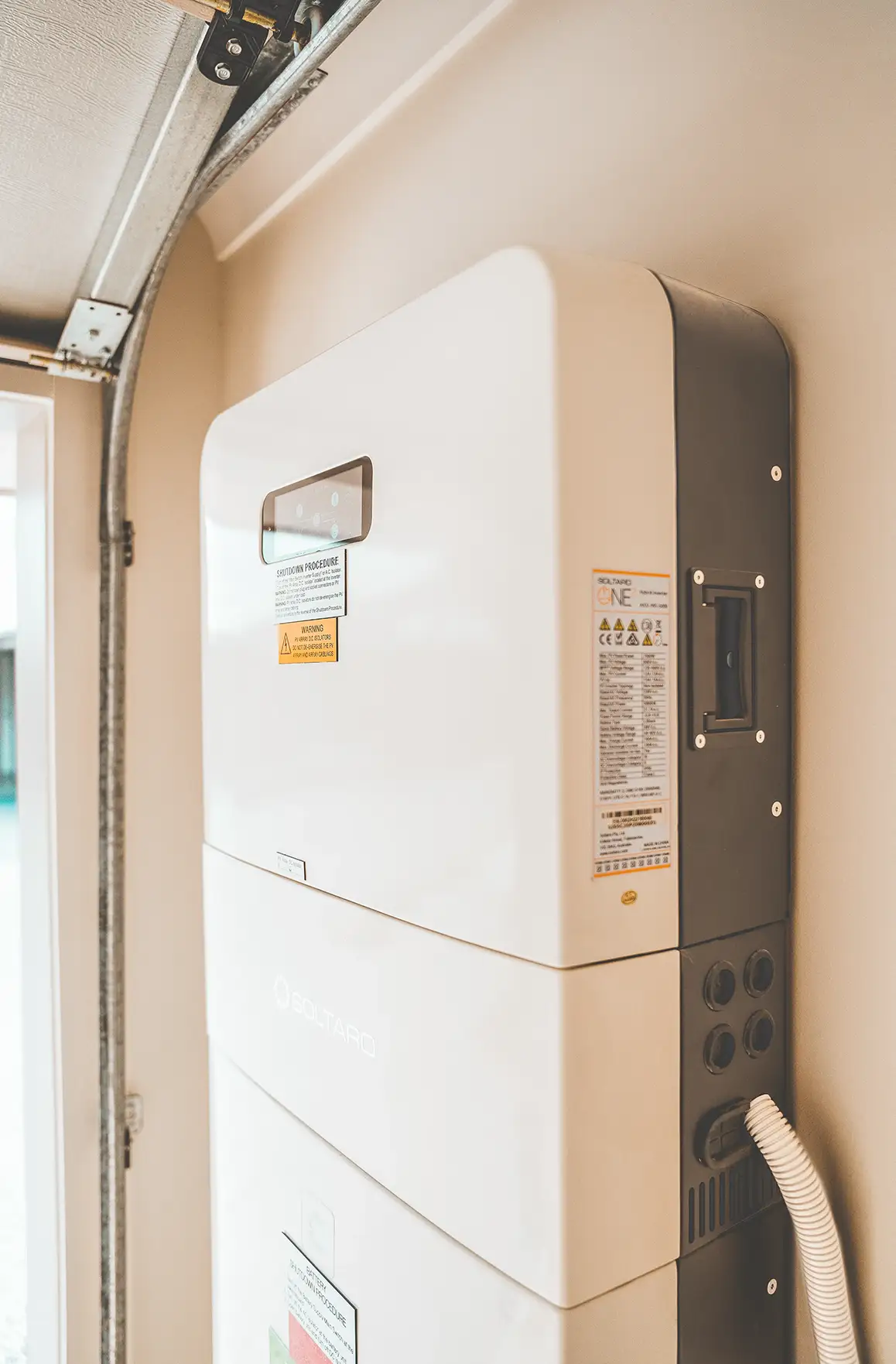
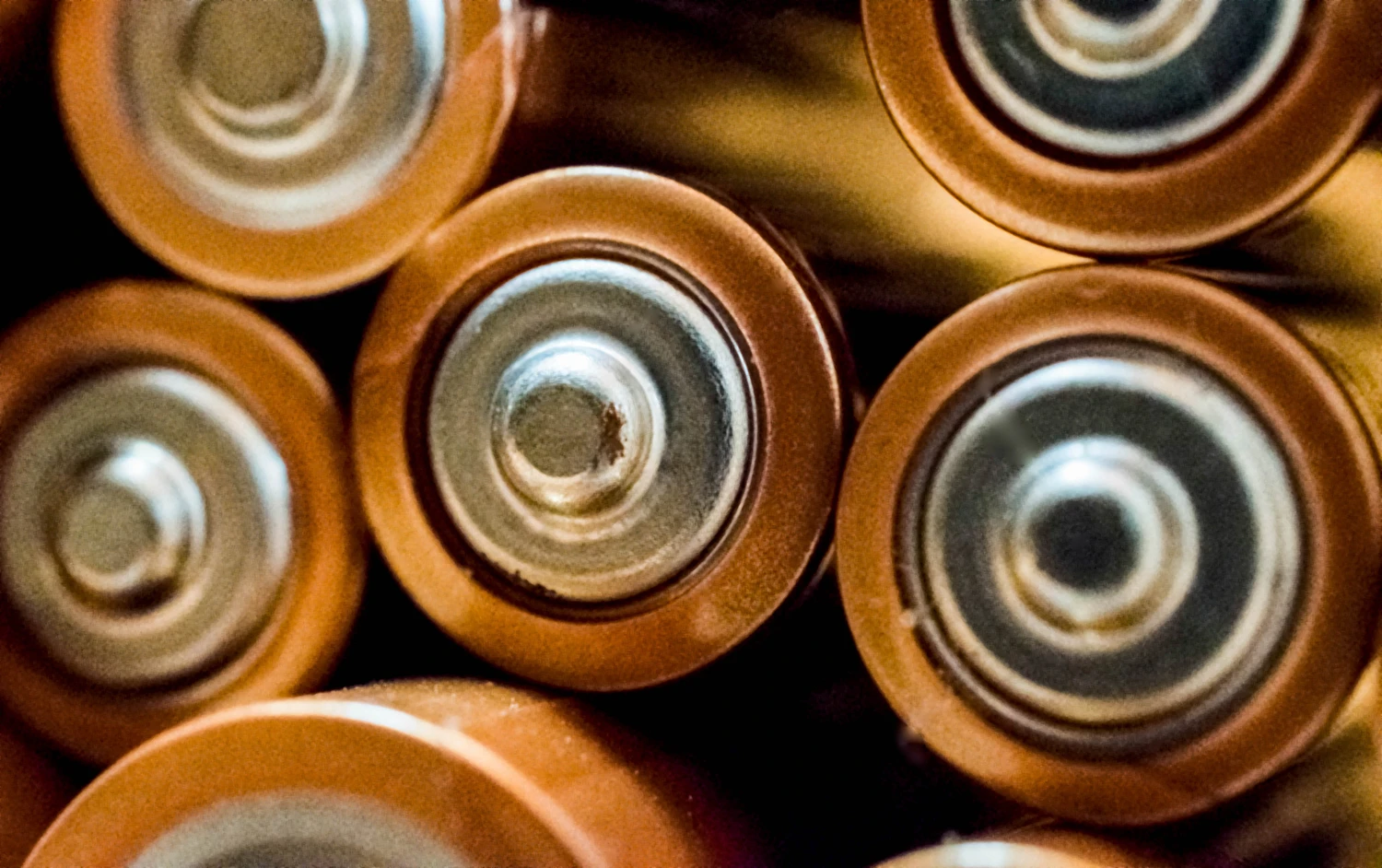
Batteries store energy in the form of chemical potential energy. When a battery is completely charged, chemical reactions happen inside the battery that create a difference in electrical potential between the positive and negative terminals. This energy is stored as a chemical reaction until the battery is connected to a circuit.
Once the battery is connected to a circuit, whether it be a simple AA or solar battery, a chemical reaction occurs and electrons begin moving where a current is produced.
A battery stores chemical potential energy. This is a form of potential energy — meaning it is energy that is stored and waiting to do work, rather than energy that is actively in motion (kinetic energy).
The chemical energy is held within the electrochemical reactions between the battery's anode, cathode, and electrolyte. When a circuit is completed — whether that's turning on a light, powering a phone, or a solar battery discharging into your home — that stored chemical potential energy is converted into electrical energy, which then flows as a current.
To directly answer the common question: a battery is an example of potential energy, specifically chemical potential energy. It is not kinetic energy.
A fully charged battery that is not connected to anything contains potential energy - specifically chemical potential energy. It only becomes kinetic energy once a circuit is completed and electrons begin to flow.
Solar batteries work on exactly the same principle as any other battery, just at a much larger scale. During the day, your solar panels generate DC electricity. Any excess energy not used by your home is sent to the battery, where it's stored as chemical potential energy inside the battery's cells.
In the evening, on cloudy days, or during a blackout, that stored chemical energy is converted back into electrical energy and released into your home as usable current. Solar batteries like the Tesla Powerwall, Sungrow SBR/SBH, and Fronius Reserva all rely on this same chemical-to-electrical conversion to power your home when the sun isn't shining.
Most modern batteries are Lithium Iron Phosphate (LFP or LiFePo4) which is a durable and safe battery chemistry, also used for its longevity and lower cost.
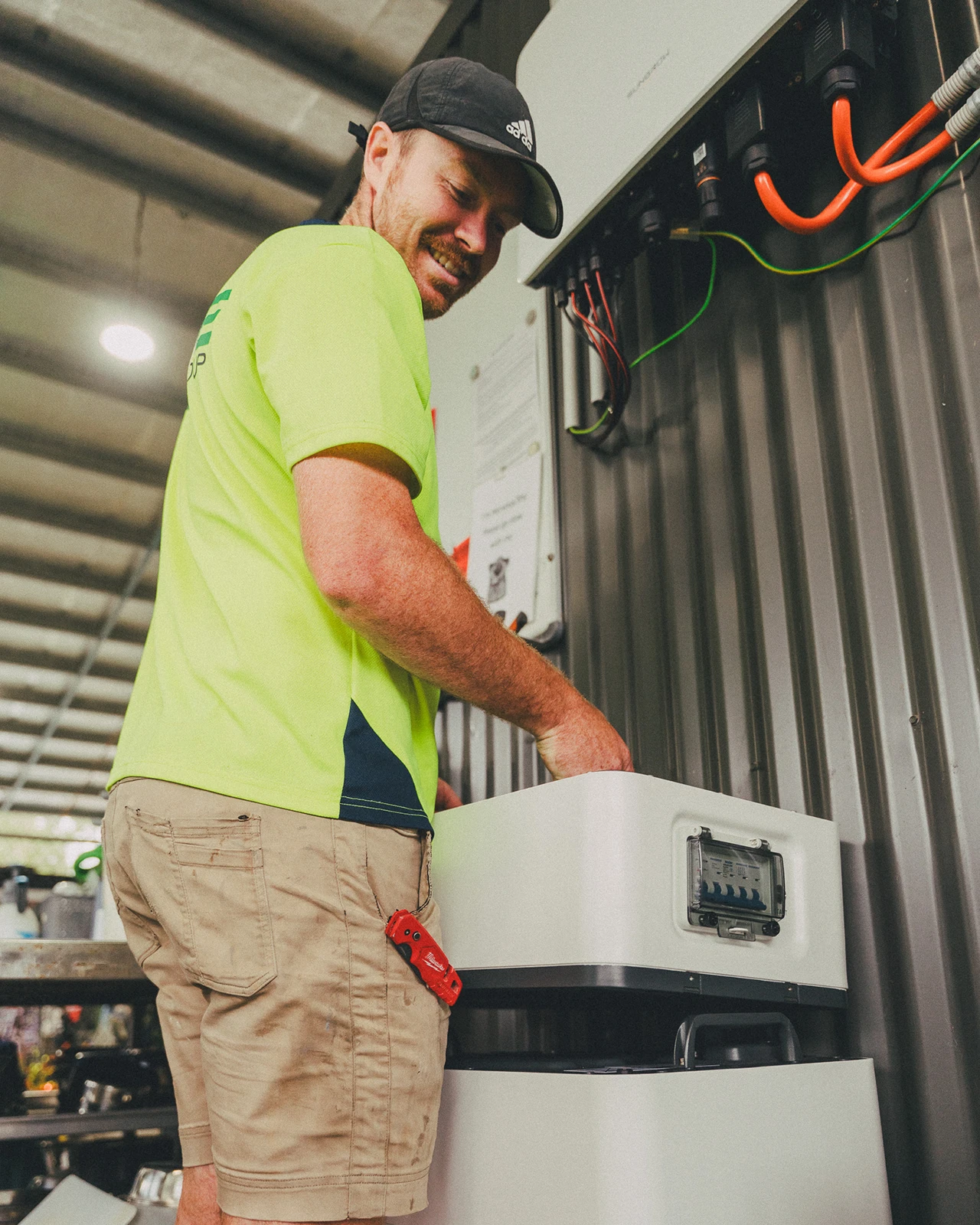
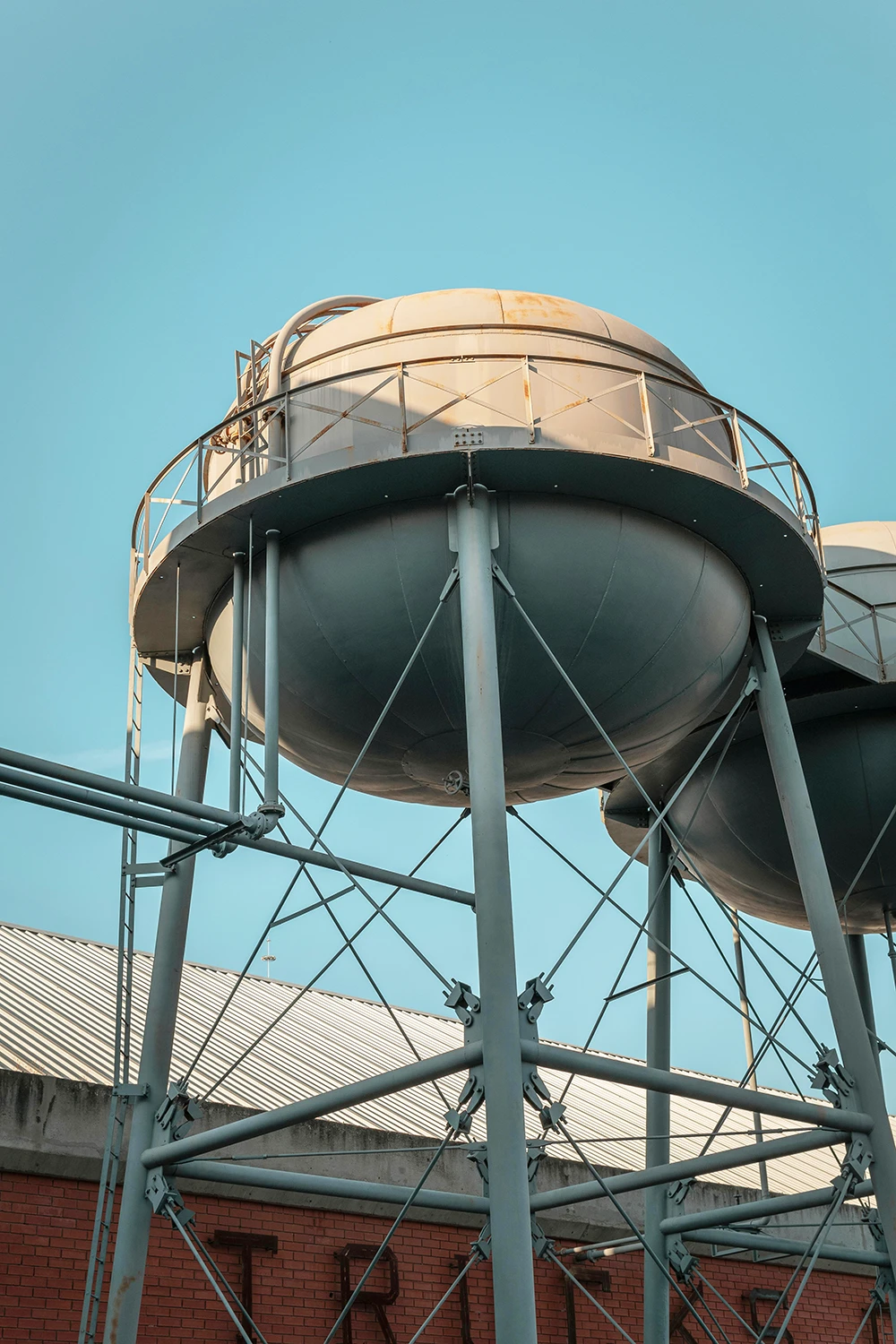
Take a rainwater tank at home connected via a hose to a garden sprinkler; the type that rotates to evenly water the lawn. If the rainwater
tank is full the sprinkler spins quite rapidly; less so as the tank empties. What is happening?
The answer is that the potential energy due to the height of the water in the tank is converted into work done, and kinetic energy
expended by the rotating water turbine. We say potential or static energy because while the tank is at rest and no water is flowing the
water has the potential to do work and expend energy
whilst it’s not actually doing any work.
When full the tank has, by virtue of the height if the water, greater potential to do work than when the level falls. The tank stores more potential energy when its full; less when empty.
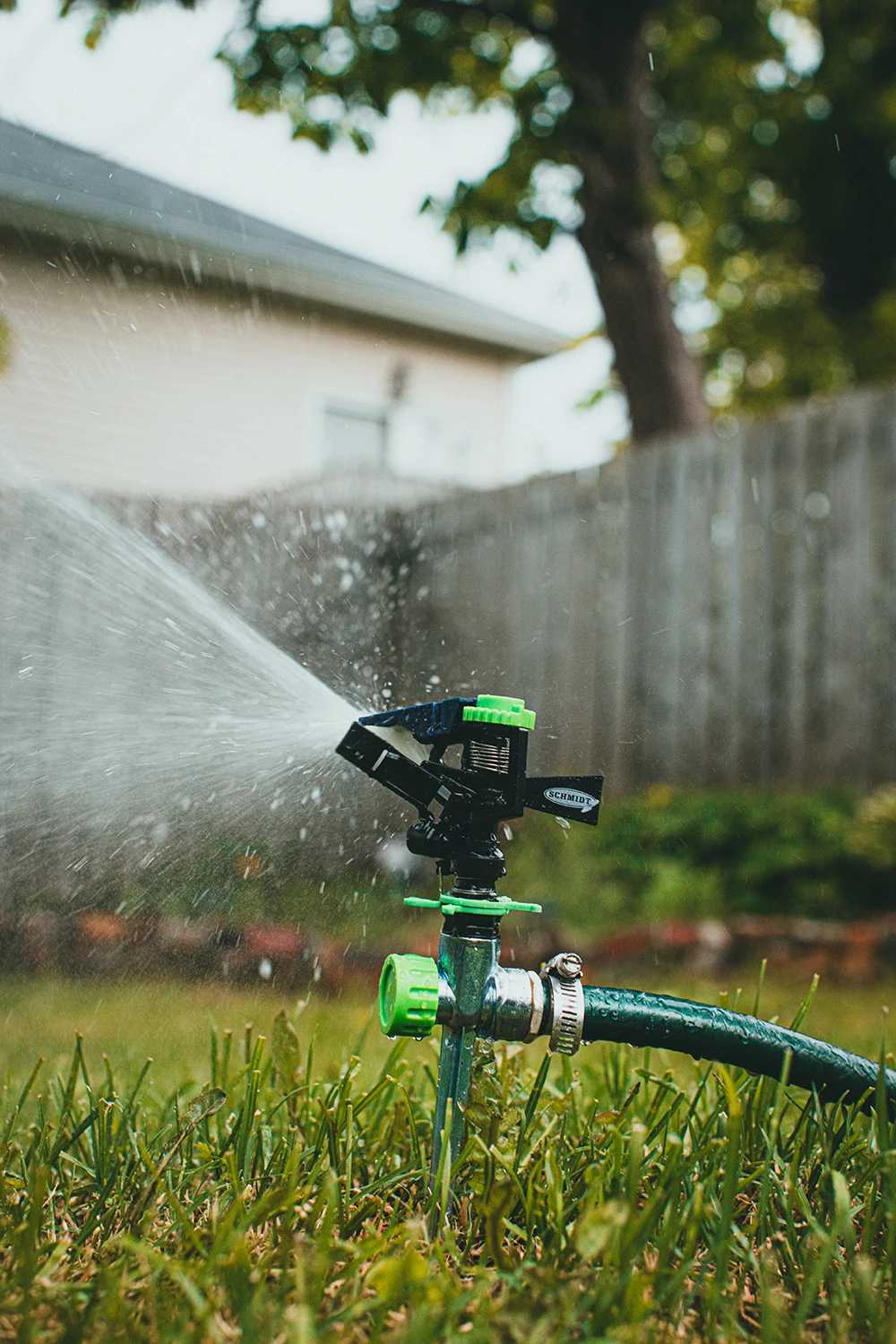
Kinetic energy is the energy of motion - it's what potential energy becomes once it is released and doing work. In the water tank example, kinetic energy is the spinning sprinkler. In a battery, kinetic energy is the flow of electrons through a circuit once the battery is connected. A battery at rest stores potential energy; a battery powering a device is producing kinetic energy in the form of electrical current.
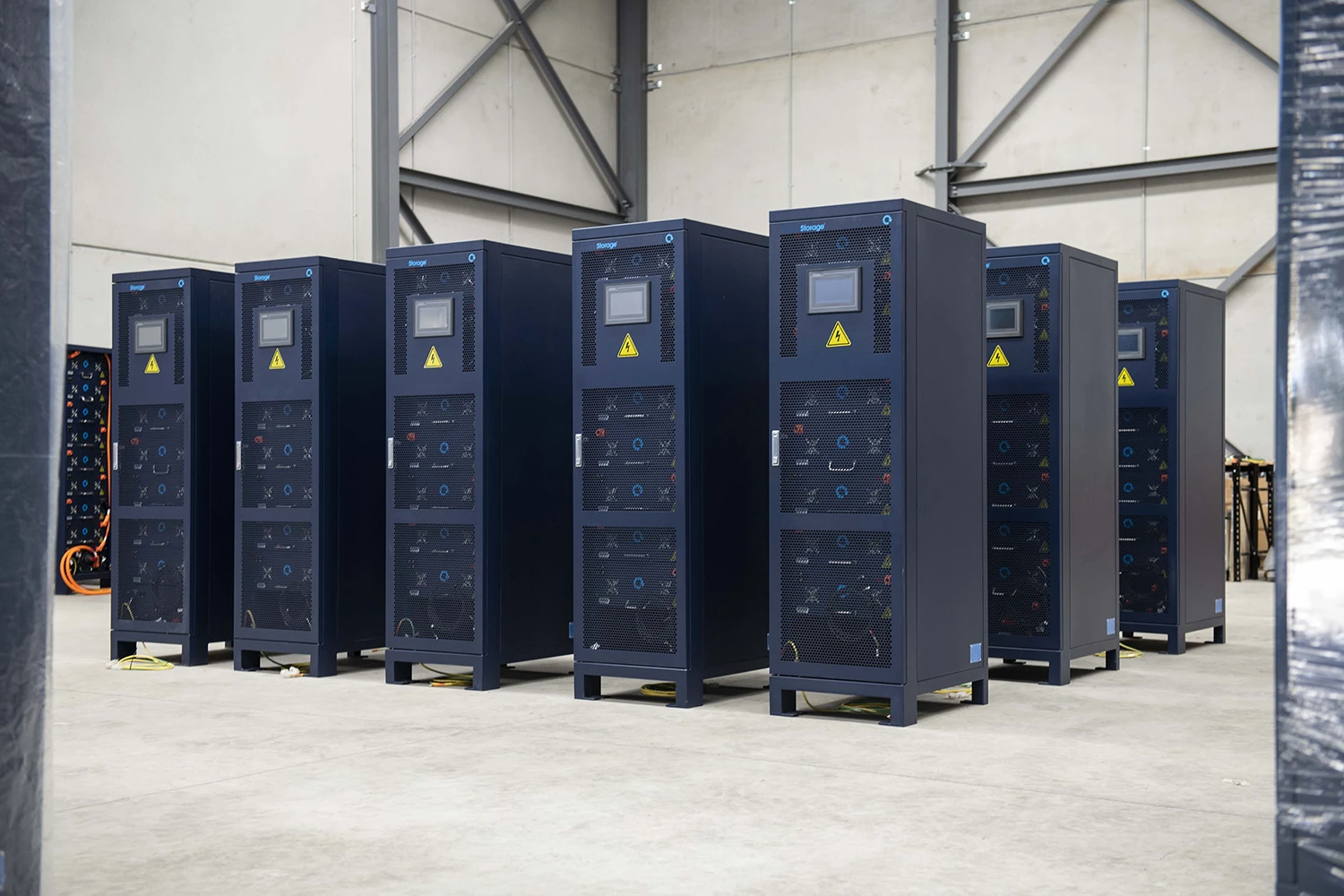
The first obvious one is a battery whereby chemical reactions, electrical energy is stored in the chemistry of the battery. Like with the water tank the energy is stored as potential energy or here as chemical potential energy; waiting in the battery to do work by forcing a flow of electrons through an outside element such as a light bulb for that potential energy to be converted electrical energy and then to light energy and heat energy in the light bulb.
Note that the light bulb doesn’t store energy, it dissipates energy and converts energy from one form to another; light and heat.
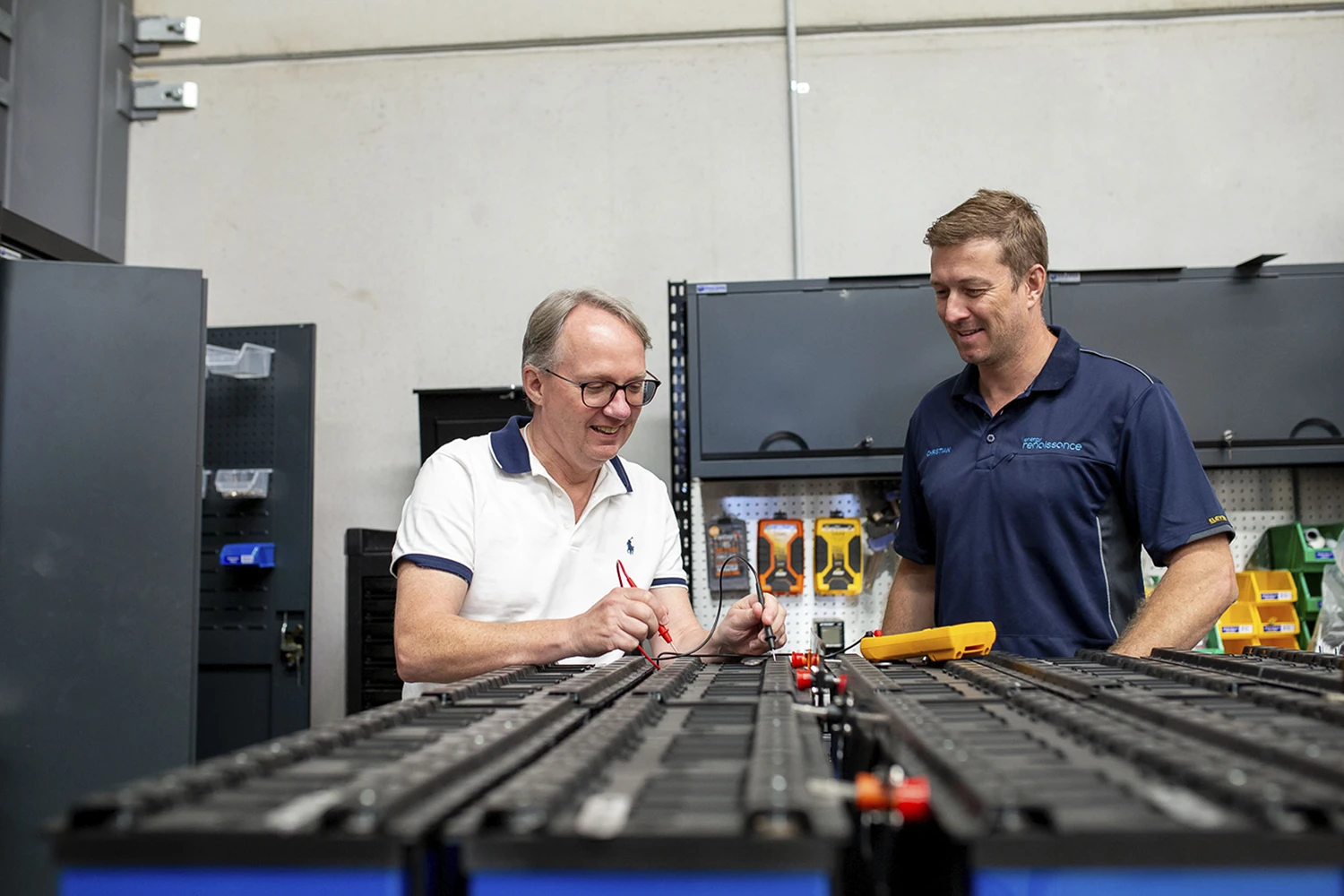
The word battery suggests an array or collection of things operating in concert. For example, we speak of a battery of cannons. In an electrical battery we are referring to more than one electrochemical cell connected, usually in series. The individual cell voltages accumulate to give us the total battery voltage. In the domestic renewables world battery nominal voltages range from 48 volts to over 500 volts.
In a lithium-ion cell the nominal or average voltage varies with the chemistry employed. 3.2 volts for lithium ferro phosphate and 3.7 volts for those cells containing nickel, manganese, cobalt. As the cell charges and discharges these voltages rise and fall. There are upper limits over which the cell’s life can be compromised and overheating may occur and lower voltages where permanent damage will occur.
In the battery manufacturing process, cells are chosen to have closely matched characteristics before being joined to form a battery. However, no matter how closely they are matched, during the charging phase individual cell voltages inevitably drift apart and this causes problems. Unchecked, some cells may rise to the dangerous overvoltage region and with some chemistries, catastrophic failure accompanied by fire.
Enter the electronic module attached to the battery called the Battery Management System (BMS). This device monitors each cell voltage, and
in some systems each cell temperature and should a cell start to deviate from the norm by more than several thousandths of a volt the BMS
switches a resistor across that cell to bleed energy from that cell until it equals the correct value. Because of the criticality of
managing cell overvoltage the reliability of the BMS is extremely important.
Self managed and managed batteries. A battery which manages itself without any outside intervention is called a self managed battery. Those
which have internal management supplemented by oversight from the connected inverter are called managed batteries. Today’s high voltage
batteries, those with nominal battery voltages above 48 volts, are exclusively managed batteries. Some, low voltage batteries are managed
batteries.
Images courtesy of Energy Renaissance and Pexels
See exactly what solar system size you need, from panel dimensions to 3kW-13.3kW+ pricing, based on your household size and daily usage in NSW.
Read moreExplore the recently changed VPP NSW rebate, & how the Peak Demand Reduction Scheme (PDRS) calculates rewards for joining a Virtual Power Plant.
Read moreAlready have a Powerwall 2? You can now add a Powerwall 3 alongside it. Supported configurations, limitations and how the rebates stack in 2026.
Read moreWhy does your solar generate less in winter? Explore real output figures, summer vs. winter differences, and the best month to use solar in Australia.
Read moreAll NSW homeowners need to know about the solar installation process - from first quote to first bill. 9 steps, real timeframes, & what to ask your installer.
Read moreAlready have solar? Decide whether to add a battery, expand your panels or replace your system, and which delivers the best return in 2026.
Read moreSupply charges, feed-in tariffs, controlled load, peak rates - we explain every line on your NSW electricity bill and show you where you can save more.
Read moreCompare retailer Solar Sharer plans, check eligibility & opt in. Origin, Amber, AGL, EnergyAustralia & more. 3 hours free power daily from 11am–2pm.
Read moreLearn how home electricity works in Australia, including circuits, switches, circuit breakers, RCDs and what happens during power outages.
Read moreIs solar & battery worth investing in for Australian homes? Explore 2026 costs, payback periods, disadvantages, and how the Solar Sharer offer affects it.
Read moreLearn about the May 1st Federal battery rebate changes in Australia and what they mean for home battery costs, solar savings, and discounts.
Read moreCompare Tesla Powerwall 3, Sungrow SBR & SBH, GoodWe ESA, Fronius Reserva, and BYD Battery-Box to find the best home battery for Australia.
Read moreExplore how Australia’s Q4 2025 solar and battery data highlights a major milestone: majority renewable contribution to daytime electricity demand.
Read moreHow rooftop solar helped NSW avoid blackouts during the 2026 heatwave, reducing grid stress & supporting record electricity demand across Newcastle.
Read moreExplore Elite Power Group's solar and battery installation statistics for 2025, and how we performed over this year of operation in Newcastle and Maitland.
Read moreCompare how Peak shaving reduces demand spikes; load shifting moves consumption to cheaper hours; demand response is grid-triggered.
Read moreExplore the difference between solar inverter types like grid-tied, hybrid, microinverters, and off-grid inverters for solar and battery systems in Australia.
Read moreExplore Australia's first CEC-approved bidirectional and vehicle-to-grid capable electric vehicle, the V2Grid Numbat, a 6.2kW V2G/H charger now ready.
Read moreEnergy capacity (kWh) is how much a battery stores. Power output (kW) is how fast it delivers. Covers nominal vs useable, SoC, DoD and cycles.
Read moreExplore the differences between AC and DC electric vehicle charging in Australia and how it affects the way you charge your EV, and the pros & cons.
Read moreConsidering a cheap solar system? Learn how low-quality, unreliable inverters and panels can lead to costly repairs, full replacements, and safety issues.
Read moreLearn the difference between volts, amps and watts, and learn electricity with simple explanations, formulas, real-world examples, and an easy calculator.
Read moreBattery supply chains are tight across Australia, with shipping delays leaving many installers out of stock and customers waiting longer. What's happening?
Read moreLearn how to avoid solar scams in NSW. Spot red flags & dodgy installer tactics and find reputable companies with great warranty & quality installations.
Read moreExplore why the delays in vehicle-to-grid and bidirectional chargers are happening, and how V2G faces regulatory and legislative development in Australia.
Read moreOver 56,000 solar batteries were sold in Q2, 2025, thanks to the Australian battery subsidy. Explore solar & battery uptake, growth trends, and what's next.
Read moreDiscover how to choose the right solar battery size for your home. Compare 10kWh, 15kWh, and 20kWh options to maximise savings, and solar in NSW.
Read moreVirtual Power Plants explained for Australian homeowners. What a VPP is, how it works, NSW program comparison and whether joining one is worth it.
Read moreExplore what solar hotspots are, how they can affect your panel performance & efficiency, & how bypass diodes can affect your cells & strings in Australia.
Read moreDiscover the best home EV chargers in Australia. Compare popular electric vehicle home charging stations, costs, and installations for Newcastle NSW.
Read moreLearn if your roof is suitable for solar panels and how roof materials like terracotta or tin, orientation, tilt, & shading can affect energy production and install.
Read morePower vs Energy in Australia: Difference Between Watts and Watt-Hours, kW vs kWh, with Diagrams, Calculations, and Home Appliance Examples.
Read moreExplore upcoming & available bidirectional V2G-capable chargers in Australia from V2Grid, RedEarth, Sigenergy, Enphase, Tesla, and Fronius EV charging.
Read moreCompare the difference between Sungrow's SBH and SBR battery storage vs. BYD Battery-Box and find what battery is better for homes or businesses in NSW.
Read moreThe NSW Government have announced that the NSW Battery Rebate (PDRS) will be suspended on June 30th, 2025, and will no longer be available.
Read moreAvoid the 9.7% NSW electricity bill increase with expert tips on reducing energy costs, optimising solar usage, and finding better energy plans in 2025.
Read moreExplore how you can use your EV battery via vehicle-to-load (V2L) as a backup energy source during blackouts to power your home appliances in Australia.
Read moreExplore Australia's Federal Government solar battery rebate subsidy like eligibility, approved batteries, requirements, and more about the upcoming incentive.
Read morePartnering with Elite Power Group, Maitland City Council have invested in more electric vehicle chargers in the Maitland area, supporting the uptake of EVs.
Read moreCompare home insurance policies and find out if solar and battery is covered and how installations affect costs, value, and included coverage in Australia.
Read moreShould solar owners get a home battery (ESS) or wait for vehicle-to-home (V2H) technology to use electric vehicle battery power to be available in Australia?
Read moreExplore the differences between AC and DC coupled solar battery storage and how it affects your solar system and inverters' configuration in Australia.
Read moreExplore if fleet or public electric vehicle charging is better for charging workplace and employee EVs for your business in Newcastle & the Hunter, NSW.
Read moreWith homes, Australian standards, and energy networks being ready for bidirectional charging, why the wait? Let's explore grid, EV, & charger developments.
Read moreThe differences between Tesla Powerwall 3 vs. Sungrow battery storage (SBH) capacity, warranty, and features, and which one is better in Australia.
Read moreComparing solar PV, solar hot water, & heat pump hot water systems for Australian homes. Which saves more, which costs less, and which is right for you.
Read moreWorking closely with the Newcastle City Council, we helped the development of Gregson Park Playspace with electrical infrastructure, lighting, and facilities.
Read moreA very strong storm passed through the Hunter, leaving over 100,000 homes without power. Here's how you can protect your home's energy with independence.
Read moreCompleting a commercial solar and electric vehicle charger installation, our Thornton neighbours can take full advantage of renewable electricity and charging.
Read moreElite Power Group installed a 2MW commercial solar installation for National Ceramic Industries Australia, totaling 4000 solar panels in Rutherford.
Read moreRenewable News Articles
Sign up for new article updates - we don't spam.
We've invested in becoming fully-licenced and qualified installers to ensure Newcastle homes and businesses
get the best solar, battery, and electrical systems available. We want to assist Newcastle's renewable energy revolution with quality
installations for maximum customer satisfaction.
Certified solar system installers near you.
Get CEC-Approved Battery Installations.
Fully-licenced electricians in Newcastle.
Convenient EV charging stations for properties.
Leave a Comment