Grid-Tied vs. Hybrid Inverters: Inverter Types Explained⚡Australia
Posted 8 Dec
Posted 8 Dec
Want the latest in energy, solar, and savings?Subscribe to our newsletter – we don’t spam!
When considering a solar or battery system, it is important to understand what inverter to look for, as it will have a large impact into how your system works, its efficiencies, backup features, and system current and future flexibility.
In Australia, solar systems consist of 3 main inverter types, grid-tied inverters, hybrid inverters, and microinverters. Each inverter has its advantages and disadvantages, so let’s break it down.
Australian homes and businesses consist of a broad range of different solar and battery systems, all with different setups, configurations,
and components. In Australia, we use a combination of grid-tied, hybrid, and microinverters.
Normal Grid-tied or ‘traditional’ inverters are the most common inverter you’ll see in solar installations in NSW. They are designed to convert the DC power from solar systems to useable household AC electricity. Traditional grid-tied inverters cannot operate independently from the grid and are designed to shut down during grid outages to isolate from the grid (otherwise known as anti-islanding).
These are designed to be simple and cost-effective inverter solutions for both single and three-phase properties throughout Australia.
Stepping up from our traditional inverters, Hybrid inverters add the element of battery management where they are designed to control both your solar and battery energy in real-time in the same unit to maximise efficiency.
Being essential for DC-coupled battery system installations, hybrid solar inverters enable backup solutions for both single and three-phase properties, making it perfect for brand-new solar systems for the ultimate futureproofed inversion solution.
Unlike the other two inverter types, microinverters are smaller and are generally attached right next to the solar panel array/s which
also convert the DC and AC. Microinverters are designed to improve system performance in shaded scenarios where one or a few panels are
under shade which can negatively
affect overall performance.
However, we believe microinverters are obsolete due to the advancements in technology in the panels themselves which reduce the need for
solar optimisers and microinverters.
As mentioned previously, grid-tied inverters are the most common inverters you’ll see around as they are designed to be the cost-effective, solar-only inverter solution. Why do normal inverters still exist?
Even though grid-tied inverters aren’t designed to have a battery connected, batteries can still be installed into solar systems with one through an AC-coupled installation. An AC-coupled battery installation is designed for owners that got a non-battery-ready inverter several years ago without the intention of getting a battery, but have since changed their mind.
Traditional grid-tied solar inverters can be both single and three-phase, depending on your property type, and aren’t really designed to provide backup power during grid outages which is a big selling point for most.
These normal inverters are called ‘grid-tied’ as they require constant grid connection to operate which makes them ineffective during grid outages.
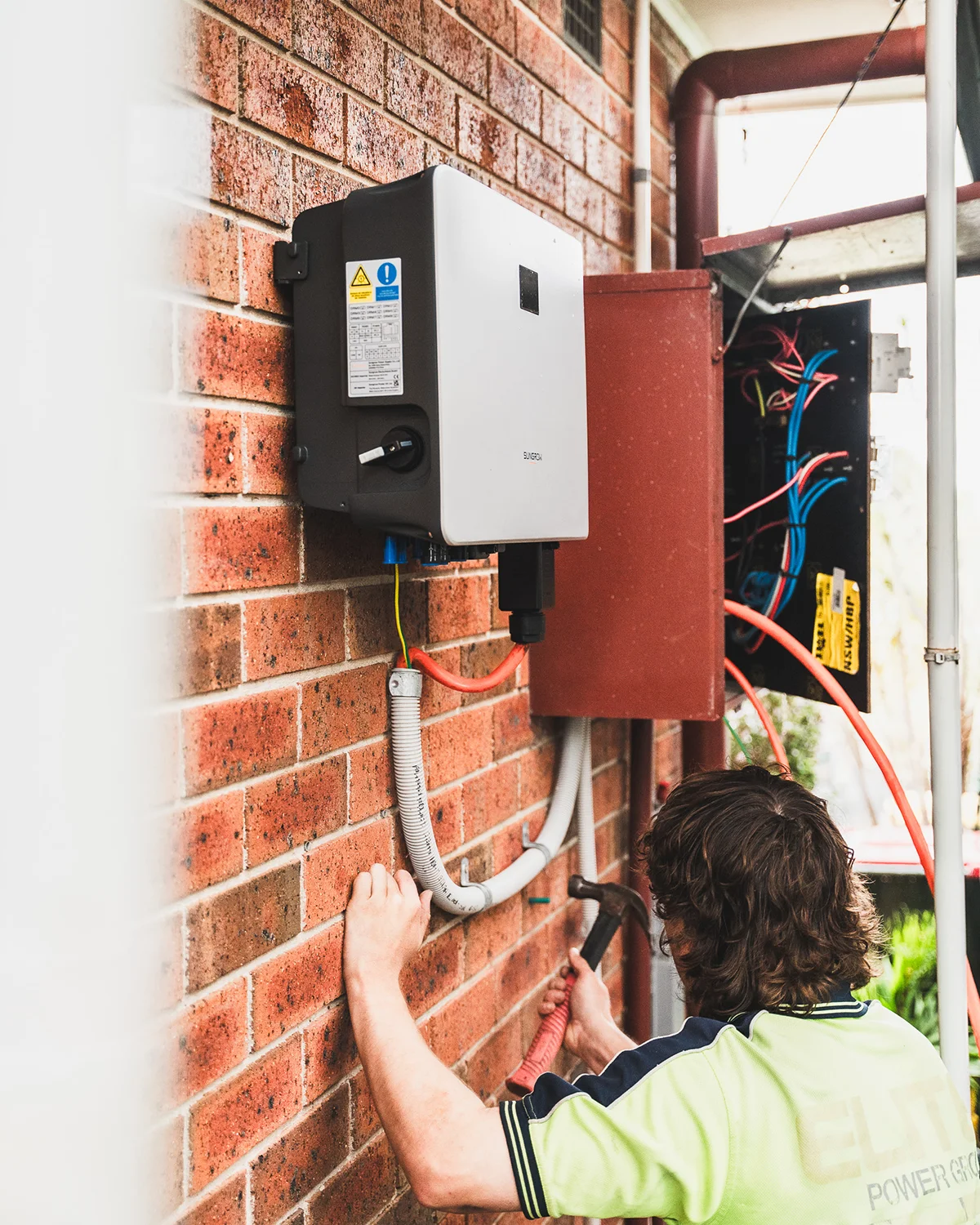
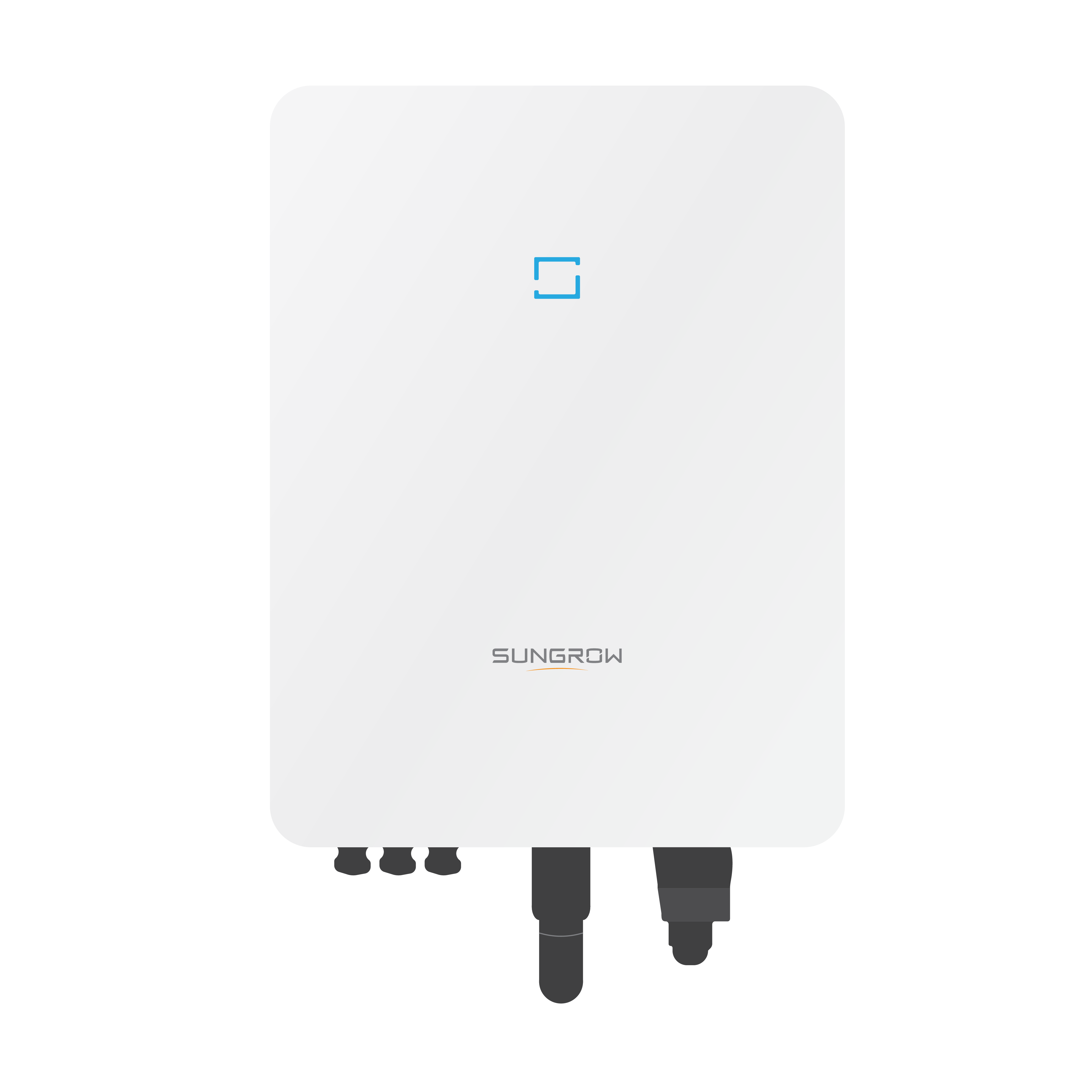
Image: Sungrow single-phase grid-tied inverter
As time progresses and more solar owners investigate battery storage, hybrid solar inverters become increasingly popular throughout Australia. Hybrid inverters can achieve the same as grid-tied inverters; however, they are also designed to directly manage compatible battery storage too and can be both AC and DC-coupled.
By managing both solar and battery storage in the one unit, you gain an integrated energy system that can communicate directly which unlocks features like software integration and high power output.
Hybrid solar inverters enable properties through Australia to backup circuits, and up to all three-phases for whole home backup. It also enables a much higher energy output, as the battery isn't limited by its built-in inverter.
Being mostly used in DC-coupled systems, Hybrid inverters minimise the number of conversions your energy has to endure on its journey for maximum efficiency.
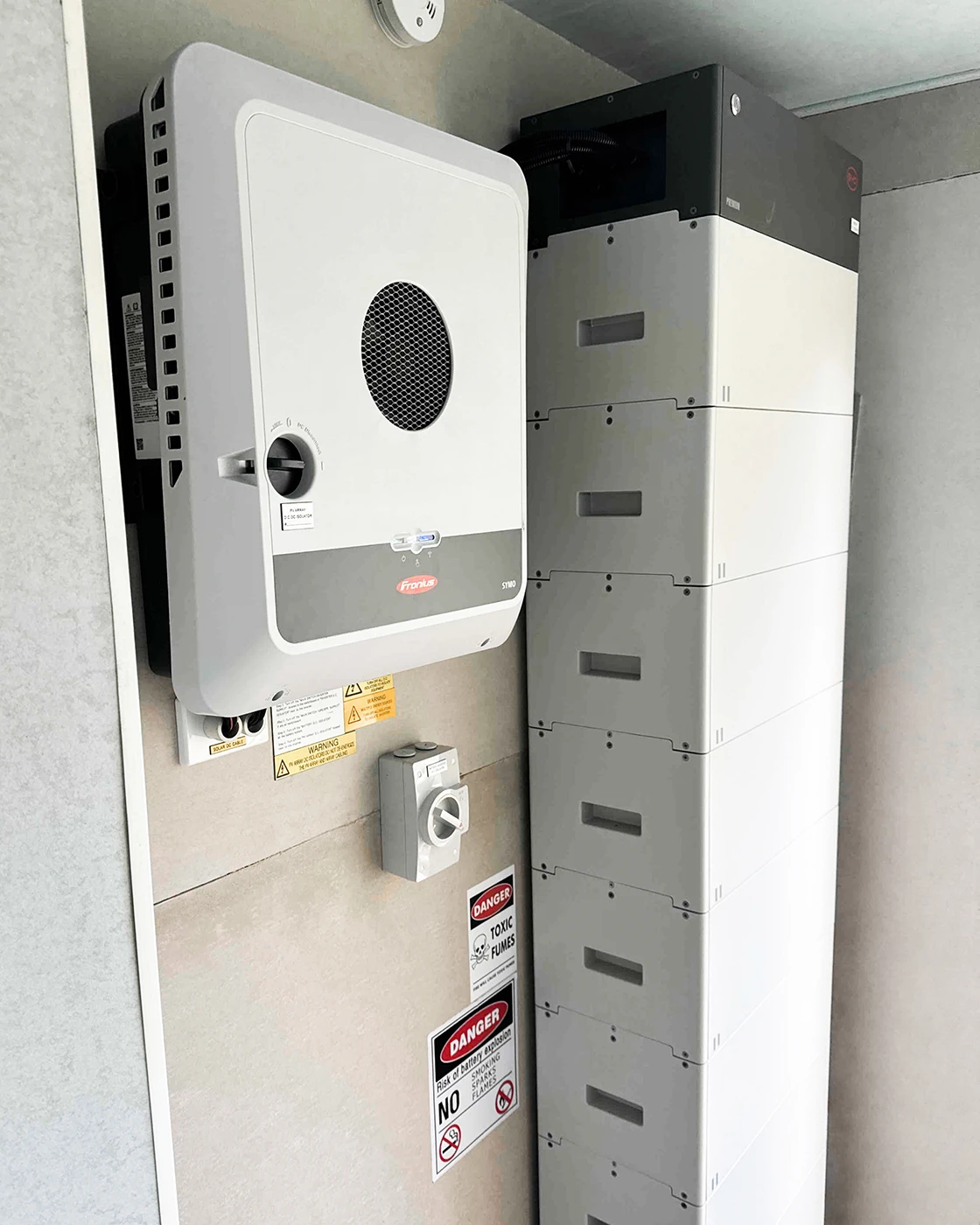
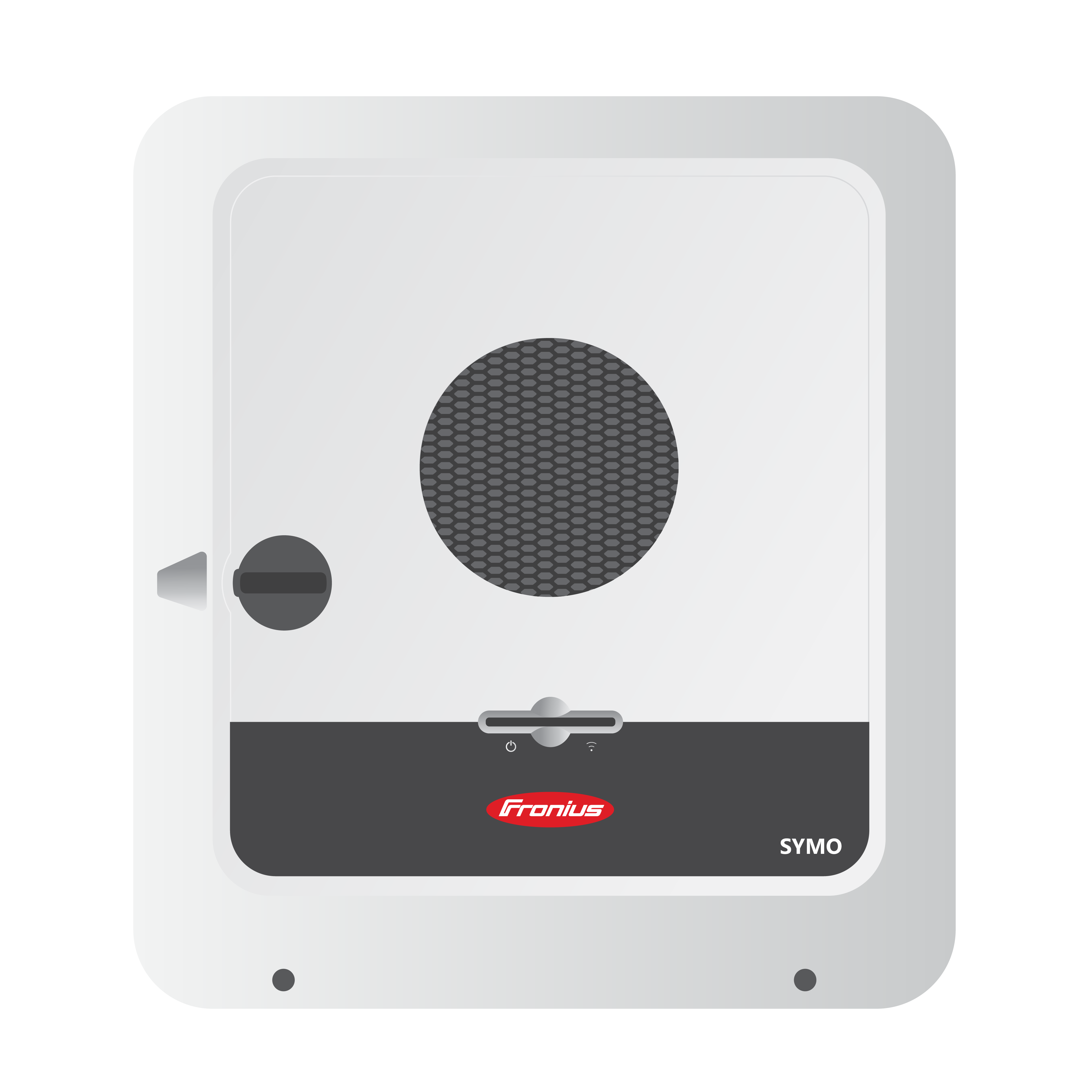
Image: Fronius GEN24 Hybrid inverter + BYD Battery-Box
Whilst not commonly installed by every solar company in Newcastle, solar microinverters do still make appearances for general solar system installations. In this configuration, each panel has its own small inverter that converts the DC solar energy to AC. Microinverters are designed for complex roof faces or shading to allow for continual performance when part of the solar system stopped or was minimised.
Microinverters are generally not used anymore by modern solar power installers as technologies in both central inverters and panels have superseded the need for power optimisers and microinverters.
Because not every inverter is created equal, not every model will be able to provide backup. Normal grid-tied inverters are only designed to convert PV energy and can’t provide any backup. An AC-coupled battery will continue to provide power; however, most grid-tied inverter will be shutdown during outages.
Hybrid and DC-coupled inverter systems provide better energy management between solar, battery, and the grid. The size of the hybrid inverter determines how much of your home can be backup up and powered during an outage.
Smaller inverters will only power a small partial home backup, potentially powering essentials like lighting and fridges. Larger three-phase hybrid inverters like Sungrow’s SH15/20/25T series can supply power for a whole-home backup for appliances like air-conditioning, ovens, and pool pumps at the same time.
Inverter sizes also affect the phase coverage. Single-phase hybrid inverters can only back up one phase which will be a limitation for full-home backup on three-phase properties.
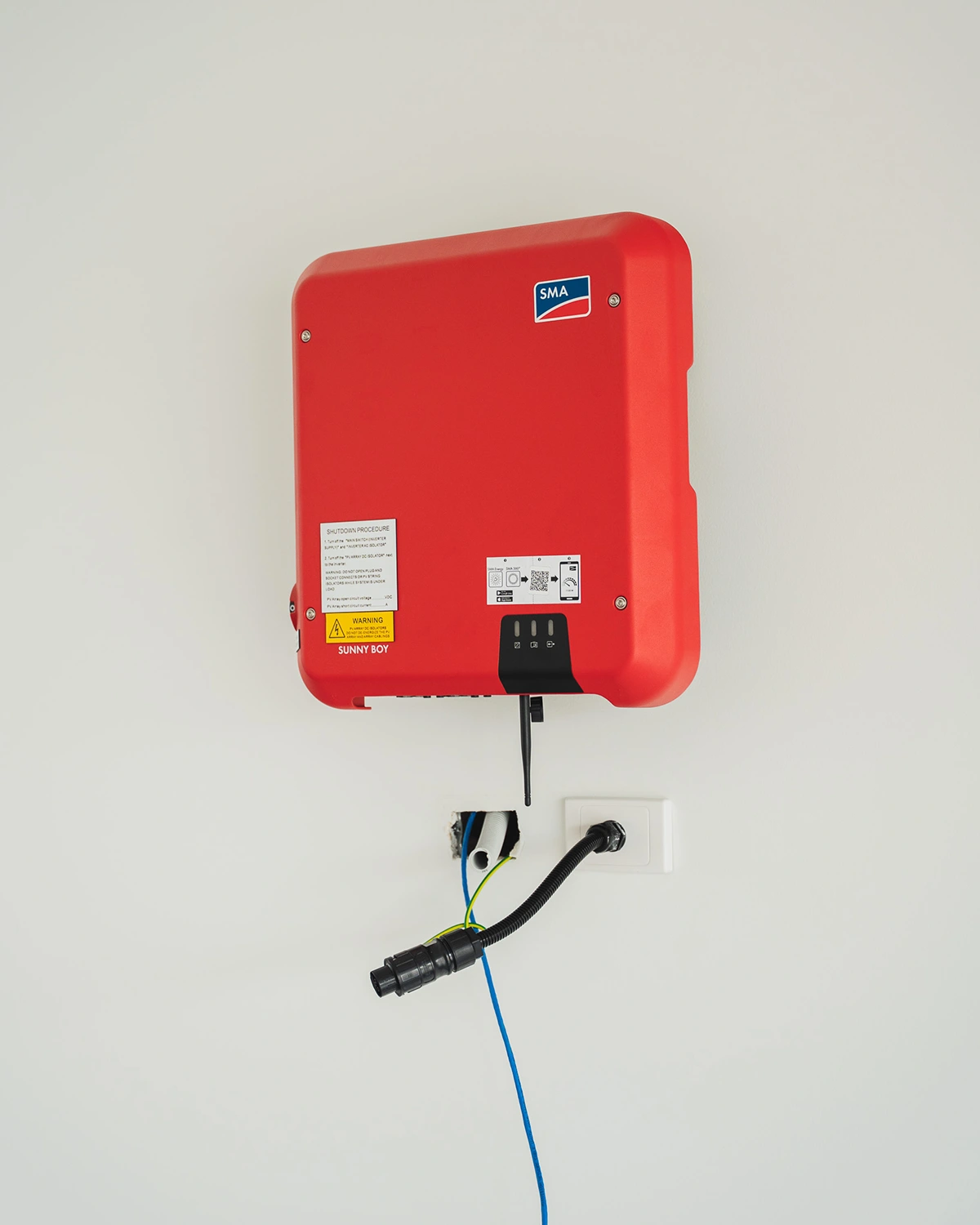
Image: SMA Sunny Boy single-phase grid-tied inverter
Single and three-phase requirements don't affect the decision between hybrid or grid-tied inverters.
A single or three-phase property will only indicate whether you need a single or three-phase inverter and doesn’t indicate whether to get a hybrid or other inverter type.
Depending on if your home or business is single or three-phase, it will alter your inverter options in either category as both grid-tied and hybrid inverters come in three-phase and single-phase options. The difference is essentially the amount of power the inverter can deliver.
Brands like Sungrow, GoodWe, and Fronius offer single and three-phase options for both their hybrid and grid-tied inverter models.
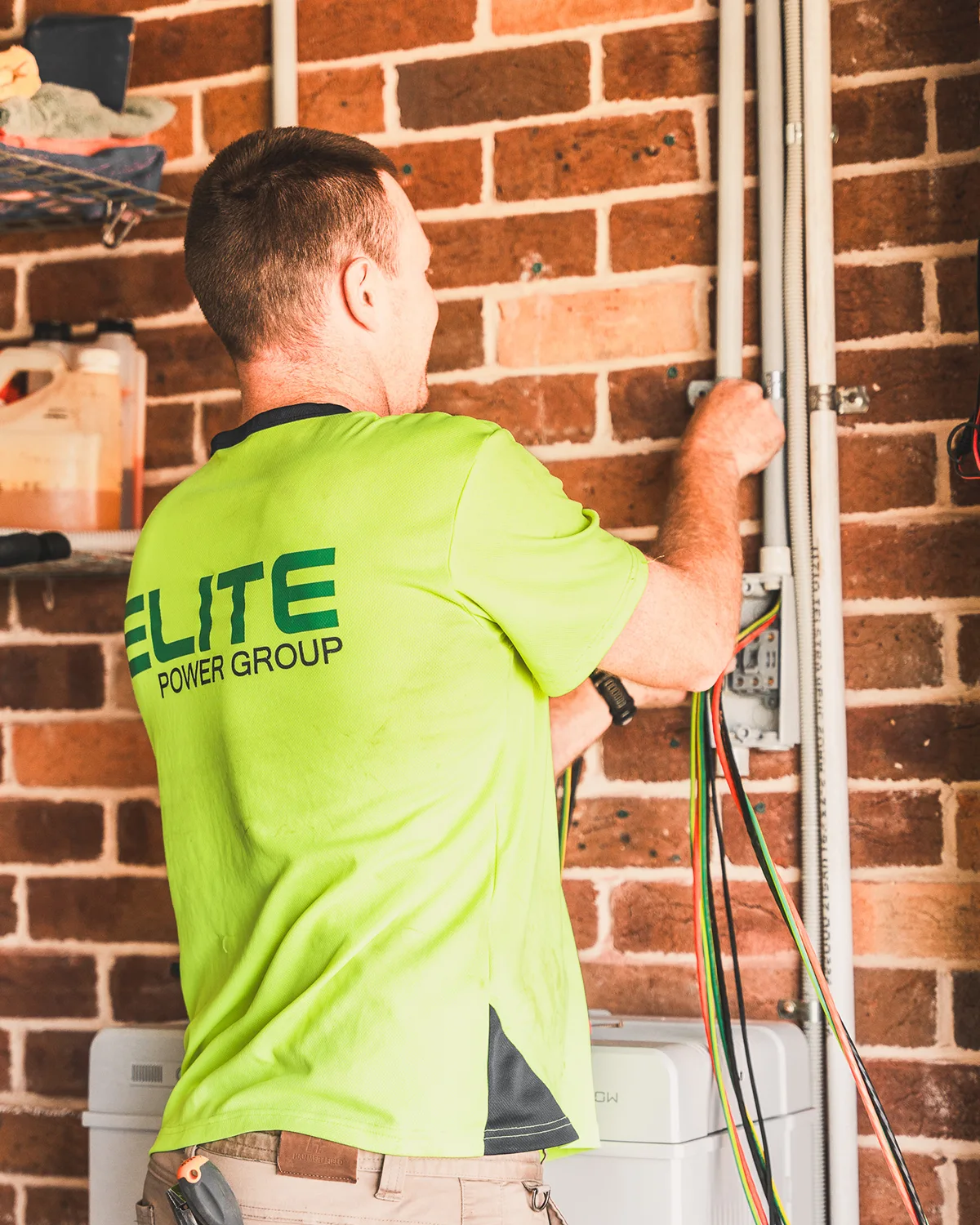
Image: Elite Power Group installing Sungrow battery & inverter
Hybrid inverters use a combination of both grid energy and solar & battery power for backup and exporting, where off-grid inverters run completely on local solar and battery storage, with the option of generator input depending on configuration.
Off-grid solar inverters like Selectronic’s SP-PRO multi-mode inverter are designed for remote applications without grid access but can’t be connected to a grid backup when available like hybrid inverters.
Hybrid inverters are preferred for a semi-independent system where the grid acts as a backup instead of diesel generators. Off-grid inverters are best for completely offline homes and businesses.
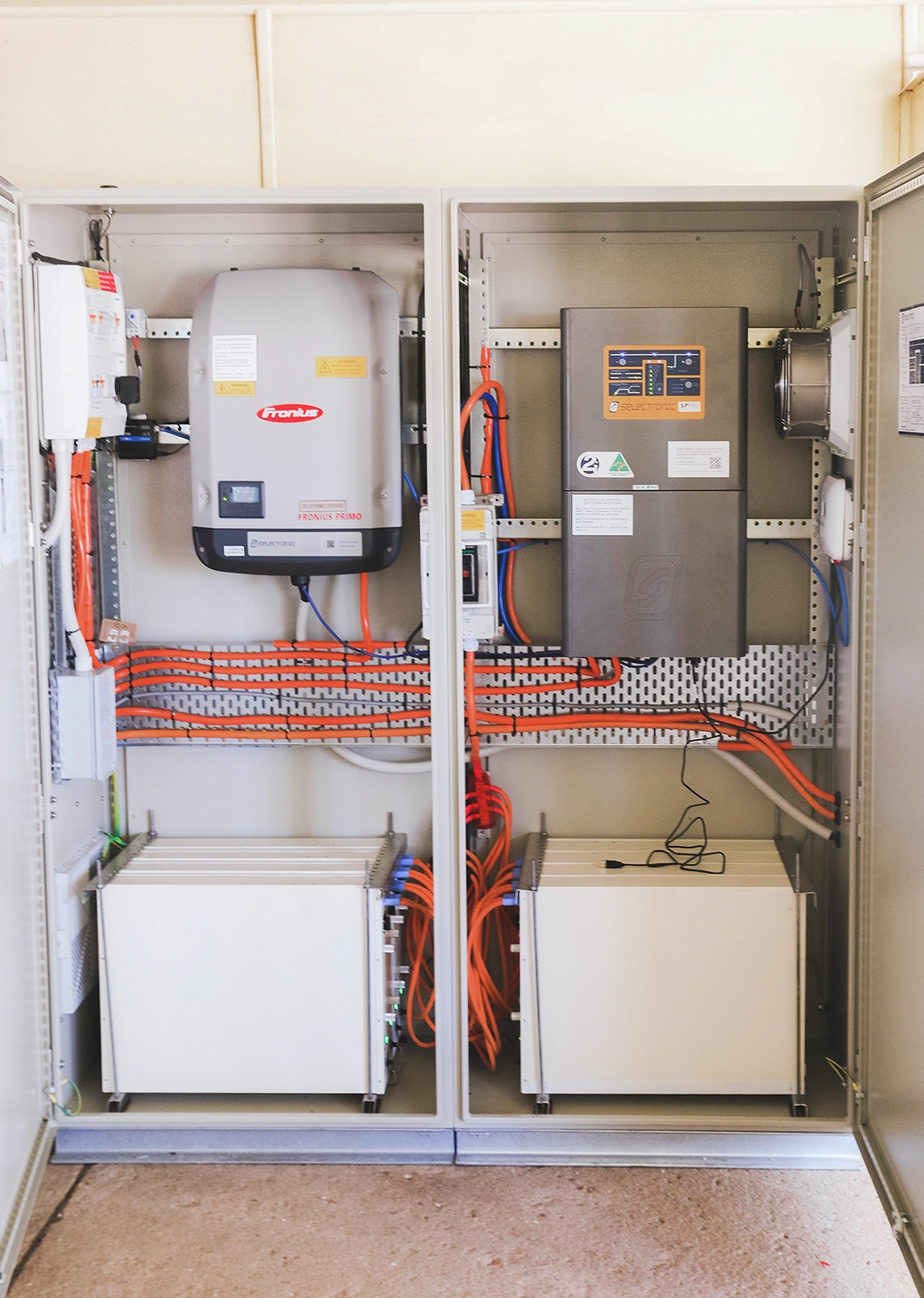
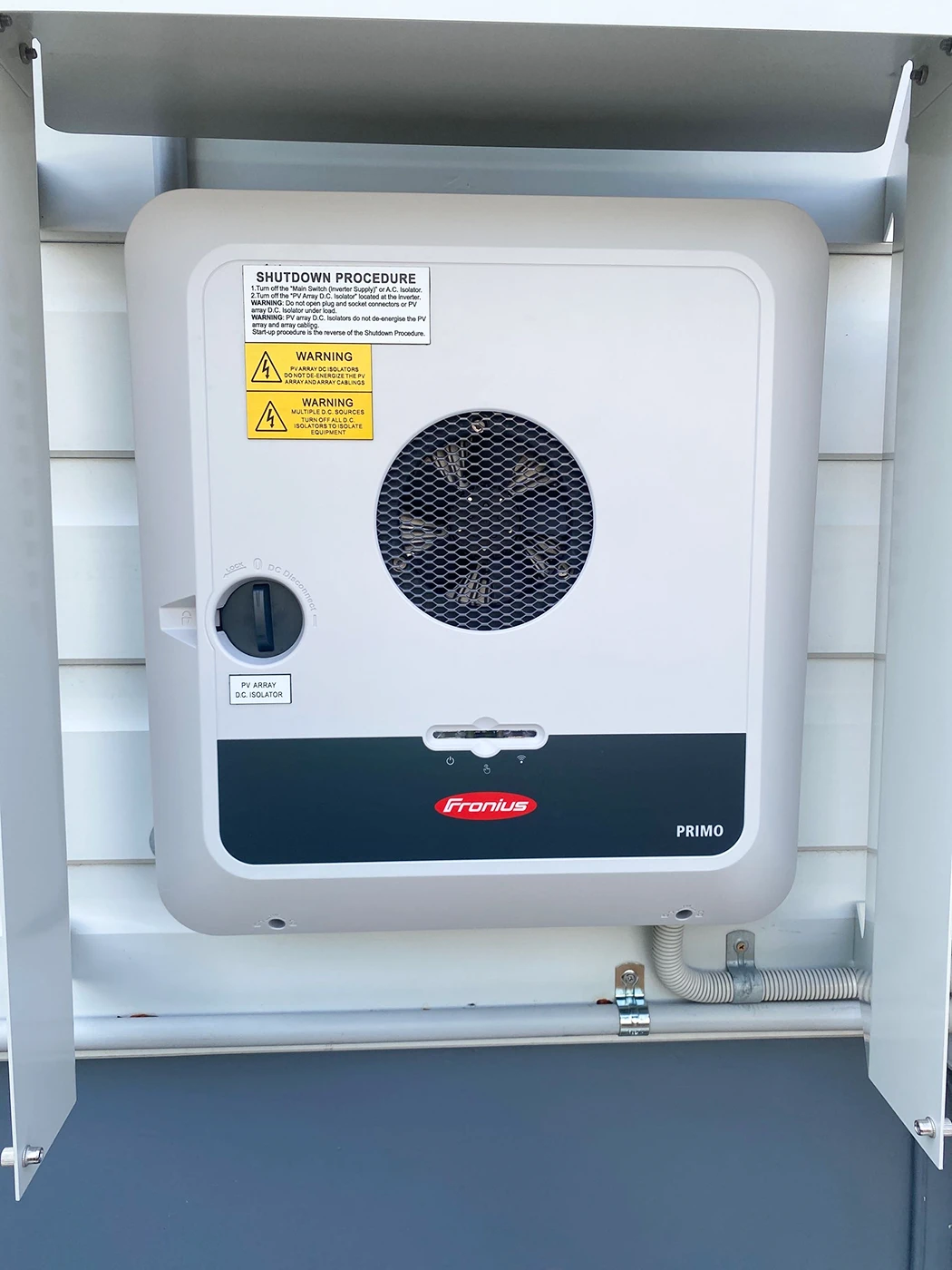
Image: Fronius Primo & Selectronic SP PRO + PowerPlus Battery modules
Whilst there are a large number of inverter manufacturers worldwide, as installers, we prefer to use a small selection of inverter brands to ensure quality and rely on strong reputations like Fronius & Sungrow.
Fronius offers a range of both grid-tied and hybrid inverter solutions for properties all throughout Australia. Their GEN24 series comes in both single and three-phase options that offer basic backup options, as well as their GEN24 Plus series that offers full backup options.
Sungrow also offer strong hybrid inverter solutions ranging from 3kW to 25kW. Like Fronius, Sungrow also offer whole and partial home backup power for their hybrid inverter solutions.
The main cost difference between a grid-tied inverter and hybrid inverter is around +$1000, depending on the models, features, and brands.
Because traditional grid-tied inverters have fewer features than their hybrid counterpart, they are generally the more cost-effective option and are more designed for solar-only systems.
Hybrid inverters on the other hand offer more features and futureproofing which is why they come in more expensive than grid-tied inverters. Whilst not as ‘cost-effective’, hybrid inverters enable homeowners to have future-ready features like direct battery integration which can be more valuable for some.
Image: Elite Power Group installing Sungrow battery & inverter
Overall, each inverter type serves its own purpose. Choosing between all the different types of solar inverters, in particular grid-tied and hybrid inverters, will really come down to your requirements and budget.
If you're in the Newcastle, Maitland, or Hunter region, and would like some free consultation around choosing the right solar inverter, we'd love to have a chat today.
Discover the latest news and articles throughout Newcastle, Maitland, and the Hunter region in NSW. Keep up-to-date with all that's happening in the solar and electrical industry.
Learn how home electricity works in Australia, including circuits, switches, circuit breakers, RCDs and what happens during power outages.
Read moreIs solar still worth it in Australia in 2026? Discover solar panel costs, payback periods, savings and whether adding a battery is worth it for homes.
Read moreLearn about the May 1st Federal battery rebate changes in Australia and what they mean for home battery costs, solar savings, and discounts.
Read moreCompare Tesla Powerwall 3, Sungrow SBR & SBH, GoodWe ESA, Fronius Reserva, and BYD Battery-Box to find the best home battery for Australia.
Read moreExplore how Australia’s Q4 2025 solar and battery data highlights a major milestone: majority renewable contribution to daytime electricity demand.
Read moreHow rooftop solar helped NSW avoid blackouts during the 2026 heatwave, reducing grid stress & supporting record electricity demand across Newcastle.
Read moreExplore Elite Power Group's solar and battery installation statistics for 2025, and how we performed over this year of operation in Newcastle and Maitland.
Read moreExplore the differences between peak shaving and load shifting and how it can maximise solar & battery, reduce your bills and grid reliance in Australia.
Read moreExplore the difference between solar inverter types like grid-tied, hybrid, microinverters, and off-grid inverters for solar and battery systems in Australia.
Read moreExplore Australia's first CEC-approved bidirectional and vehicle-to-grid capable electric vehicle, the V2Grid Numbat, a 6.2kW V2G/H charger now ready.
Read moreExplore how battery nominal & useable energy capacity is different to power output, and learn about state of charge, depth of discharge, and cycles.
Read moreExplore the differences between AC and DC electric vehicle charging in Australia and how it affects the way you charge your EV, and the pros & cons.
Read moreConsidering a cheap solar system? Learn how low-quality, unreliable inverters and panels can lead to costly repairs, full replacements, and safety issues.
Read moreVolts vs amps vs watts explained simply. Learn what current is and how watts are calculated using examples & easy conversions for electricity in Australia.
Read moreBattery supply chains are tight across Australia, with shipping delays leaving many installers out of stock and customers waiting longer. What's happening?
Read moreLearn how to avoid solar scams in NSW. Spot red flags & dodgy installer tactics and find reputable companies with great warranty & quality installations.
Read moreExplore the best solar system sizes & how many panels you need, the best Australian solar brands, and cost estimates for 6.6 & 10kW systems in NSW.
Read moreExplore why the delays in vehicle-to-grid and bidirectional chargers are happening, and how V2G faces regulatory and legislative development in Australia.
Read moreOver 56,000 solar batteries were sold in Q2, 2025, thanks to the Australian battery subsidy. Explore solar & battery uptake, growth trends, and what's next.
Read moreDiscover how to choose the right solar battery size for your home. Compare 10kWh, 15kWh, and 20kWh options to maximise savings, and solar in NSW.
Read moreExplore what Virtual Power Plants (VPP) are, if joining is worth it, and how NSW solar battery owners can earn rewards, FiTs & rebates in Australia.
Read moreExplore what solar hotspots are, how they can affect your panel performance & efficiency, & how bypass diodes can affect your cells & strings in Australia.
Read moreExplore the process of installing rooftop solar and battery storage systems in a step-by-step guide of 9 easy steps on how solar is installed in Australia.
Read moreDiscover the best home EV chargers in Australia. Compare popular electric vehicle home charging stations, costs, and installations for Newcastle NSW.
Read moreLearn if your roof is suitable for solar panels and how roof materials like terracotta or tin, orientation, tilt, & shading can affect energy production and install.
Read morePower vs Energy in Australia: Difference Between Watts and Watt-Hours, kW vs kWh, with Diagrams, Calculations, and Home Appliance Examples.
Read moreExplore upcoming & available bidirectional V2G-capable chargers in Australia from V2Grid, RedEarth, Sigenergy, Enphase, Tesla, and Fronius EV charging.
Read moreCompare the difference between Sungrow's SBH and SBR battery storage vs. BYD Battery-Box and find what battery is better for homes or businesses in NSW.
Read moreThe NSW Government have announced that the NSW Battery Rebate (PDRS) will be suspended on June 30th, 2025, and will no longer be available.
Read moreAvoid the 9.7% NSW electricity bill increase with expert tips on reducing energy costs, optimising solar usage, and finding better energy plans in 2025.
Read moreExplore how you can use your EV battery via vehicle-to-load (V2L) as a backup energy source during blackouts to power your home appliances in Australia.
Read moreExplore Australia's Federal Government solar battery rebate subsidy like eligibility, approved batteries, requirements, and more about the upcoming incentive.
Read morePartnering with Elite Power Group, Maitland City Council have invested in more electric vehicle chargers in the Maitland area, supporting the uptake of EVs.
Read moreDoes installing solar & batteries affect home insurance? Explore how solar & energy storage changes home insurance premiums in Australia, NSW in 2025.
Read moreShould solar owners get a home battery (ESS) or wait for vehicle-to-home (V2H) technology to use electric vehicle battery power to be available in Australia?
Read moreExplore available NSW solar rebates, subsidies, incentives, and financing programs to help you invest in solar power for your Newcastle home in 2025.
Read moreExplore the differences between AC and DC coupled solar battery storage and how it affects your solar system and inverters' configuration in Australia.
Read moreExplore if fleet or public electric vehicle charging is better for charging workplace and employee EVs for your business in Newcastle & the Hunter, NSW.
Read moreWith homes, Australian standards, and energy networks being ready for bidirectional charging, why the wait? Let's explore grid, EV, & charger developments.
Read moreThe differences between Tesla Powerwall 3 vs. Sungrow battery storage (SBH) capacity, warranty, and features, and which one is better in Australia.
Read moreExplore the differences and if hot water solar or solar PV systems are better, along with heat pumps and electric water heaters for home savings in Australia.
Read moreWorking closely with the Newcastle City Council, we helped the development of Gregson Park Playspace with electrical infrastructure, lighting, and facilities.
Read moreA very strong storm passed through the Hunter, leaving over 100,000 homes without power. Here's how you can protect your home's energy with independence.
Read moreAs 2025 comes to light, homes and businesses in NSW have access to a range of rebates and subsidies that allow for discounted installations of solar and battery solutions.
Read moreCompleting a commercial solar and electric vehicle charger installation, our Thornton neighbours can take full advantage of renewable electricity and charging.
Read moreElite Power Group installed a 2MW commercial solar installation for National Ceramic Industries Australia, totaling 4000 solar panels in Rutherford.
Read moreExplore various ways where homes and businesses can reduce electricity bills and maximise solar generation in Newcastle and the Hunter, NSW for 2025.
Read moreExplore whether rooftop or ground mounted solar systems are better for homes, farms, and remote properties needing solar PV power in Australia.
Read moreThe journey of bidirectional charging in Australia has hit a milestone with the recent approval of the new standard for vehicle-to-grid (V2G) charging for 2025.
Read moreExplore how daylight savings and seasonal changes during winter and summer can affect your solar panels performance and solar generation in NSW, Australia.
Read moreFor cabins, homes, and sheds with limited or no access to grid energy, getting an off grid solar and battery storage system may be worth it in NSW in 2025.
Read moreEveryone has seen a solar installation a normal roof like tin or tiled roofs, but have you ever seen a solar installation a roof made of Brass? Well we did one...
Read moreWith the release of the new Clean Energy Council (CEC) H1 2024 report on solar and battery storage, it gives an idea of the upward path of Australia’s renewable energy adoption.
Read moreAmber & ARENA have started trials for Vehicle-to-grid technology in NSW, Australia to help develop standards and framework in V2G and Bidirectional charging.
Read moreExplore the differences between Tesla Powerwall 2 vs. Tesla Powerwall 3 solar battery storage specs, pricing, and features in Australia for homes.
Read moreExplore solar battery fire risks, hazards, and statistics, and if solar batteries are safe to install for homes in NSW, Australia. (Spoiler alert.. they are!)
Read moreInvesting in your solar system has many opportunities, but should you replace your panels, upgrade with more solar, or add battery storage to your home?
Read moreThough bidirectional charging isn't available, vehicle-to-grid is already turning heads in Australia with its potential to change energy consumption and distribution.
Read moreExplore how Australia's energy is evolving with t like Microgrids, DER's, Virtual Power Plants, & Demand Response, for solar and battery systems.
Read moreLearn alternating and direct current, and the differences between AC vs. DC with real-life examples and diagrams of power flow and voltage in Australia.
Read moreDiscover how commercial solar battery storage can benefits businesses in NSW, with benefits like maximising solar, reducing operational costs, and more!
Read moreIn the new 2024 CEC report, they found that renewable contribution in the overall supply of energy in Australia, produced 40% of Australia’s total electrical supply.
Read moreSo you've invested in solar to reduce your electricity bills, but since then your bills are still high? Explore why your energy bills are still high even after solar.
Read moreExplore electricity tariffs and how time-of-use energy plans rely on peak, shoulder, and off-peak times, as well as single-rate & demand tariffs in Australia.
Read moreExplore the differences between single phase vs. three phase power, and how 1 phase and 3 phase electricity works with real-life examples in Australia.
Read moreIf your solar panels are dirty, explore easy ways to DIY clean your solar panels, or when to get your system cleaned by a professional solar cleaner in Australia.
Read moreHow do solar batteries work? Some might believe that they use magic, but let's walk through how they work in simple terms to help you better understand battery storage.
Read moreNow is the best time to invest in solar panels.. here are 4 reasons why Australians should invest in solar energy before it's time runs out for 2024.
Read moreExplore the National Electricity Market (the NEM), and how it interconnected 5 states with electricity distribution to balance demand and supply in Australia.
Read moreDiscover how agrivoltaics can benefit farms by combining agriculture and solar energy to increase sustainability and agricultural production in NSW.
Read moreThe energy required to heat hot water is quite high and for most Australian households. Here are some strategies on how to save on your hot water heating bill.
Read moreSo you bought an electric vehicle, but what's the best way to charge it? Discover how to prepare your home for an EV charger station and what to do in NSW.
Read moreExplore the latest battery storage rebates for home solar energy storage in Australia. Will there be a rebate? If so, when and how will the scheme work?
What's the best Solar EV Charger? Zappi or the Wattpilot? We have put together a side-by-side comparison, including the pro’s and con’s for both EV chargers.
Read moreWith booming solar adoption, Newcastle is quickly becoming a sustainable region with homes and businesses adoption the technology. What's happening?
Read moreDifferences between bidirectional Vehicle-to-Grid (V2G), Vehicle-to-Home (V2H), Vehicle-to-Load (V2L), and compatible chargers and EVs in Australia.
Read moreOur team attended the Electric Vehicle open day in Lake Macquarie hosted by Lake Macquarie City Council, and what a day! From all the fun events, to the informative aspects, everyone definitely got something out of the day.
Read more
Renewable News Articles
We've invested in becoming fully-licenced and qualified installers to ensure Newcastle homes and businesses
get the best systems and installations possible. We want to assist Newcastle's renewable energy revolution with quality systems.
Certified solar system installers near you.
Get CEC-Approved Battery Installations.
Fully-licenced electricians in Newcastle.
Convenient EV charging stations for properties.
Leave a Comment