Newcastle's Leading Residential & Commercial Solar Installers
Newcastle's Leading Residential & Commercial Solar Installers
Posted 8 Dec
Want the latest in energy, solar, and savings?Subscribe to our newsletter – we don’t spam!
When considering a solar or battery system, it is important to understand what inverter to look for, as it will have a large impact into how your system works, its efficiencies, backup features, and system current and future flexibility.
Quick answer: There are three main solar inverter types used in Australian homes: string inverters (most common, lowest cost), hybrid inverters (battery-ready, increasingly the default for new installs), and microinverters (best for complex roofs). For most new Australian solar installations in 2026, a hybrid inverter is the recommended starting point - even if you're not adding a battery yet, because adding one later without a hybrid inverter means replacing hardware.
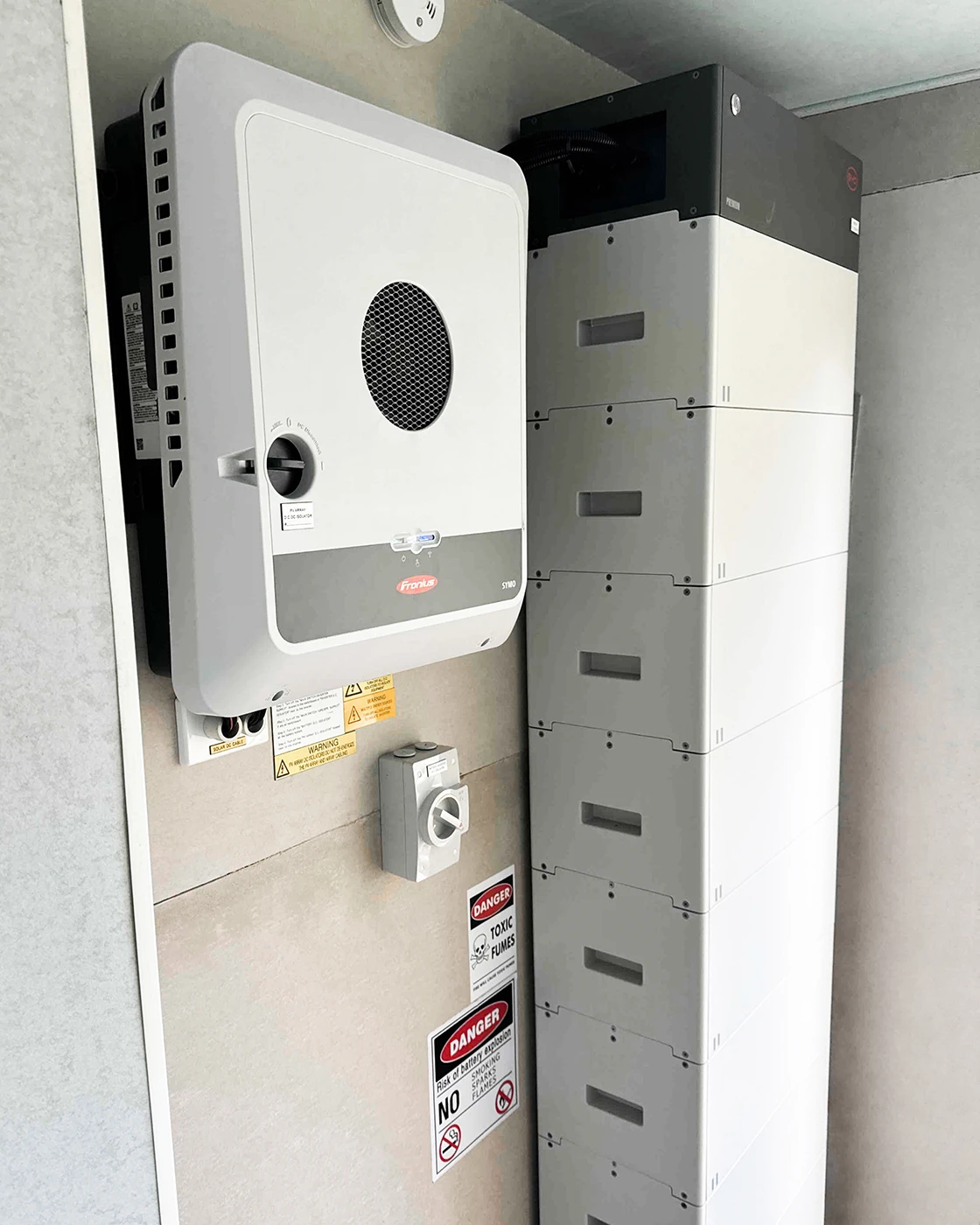
Image: Fronius GEN24 Hybrid inverter + BYD Battery-Box
A hybrid inverter - sometimes called a multi-mode inverter or battery-ready inverter, is a solar inverter that can manage solar panels, a home battery, and the grid connection simultaneously from a single unit.
Traditional string inverters convert solar DC power to AC power and export surplus to the grid. That is all they do. A hybrid inverter does the same thing, but also:
The key practical difference is the battery connection. A hybrid inverter has a dedicated DC battery port, meaning the battery connects directly to the inverter rather than through a separate battery inverter. This DC-coupling is more efficient than AC-coupling a battery to a standard string inverter.
Hybrid inverter meaning in plain terms: one box that handles solar, battery, and grid — rather than two separate boxes (solar inverter + battery inverter) or a string inverter that has no battery management at all.
This is the most common question for homeowners choosing a new solar system.
A standard string inverter converts solar power to AC electricity for home use and grid export. It does this one job reliably and cost-effectively. It cannot manage a battery directly. If you later add battery storage to a string-inverter system, you need either an AC-coupled battery (like Tesla Powerwall 3 or GoodWe ESA, which have their own built-in inverters) or you replace the string inverter with a hybrid.
A hybrid inverter does everything a string inverter does, plus manages battery storage through a DC connection. It costs more upfront for the inverter component - but avoids the cost and complication of a second inverter if you add batteries later.
|
String Inverter |
Hybrid Inverter |
|
| Battery Compatibility |
AC-coupled only |
AC & DC-coupled options |
| Backup Power | No | Yes (with compatible battery) |
| Upfront Cost | Lower |
Higher |
| Best for |
Solar-only systems with no plans of getting a battery | Solar systems with a battery or plans of getting one |
| Monitoring |
Good |
More indepth (manages the whole system) |
| Common brands |
Fronius Primo, Sungrow SG series | Fronius GEN24, Sungrow SH series |
For most new Australian installations in 2026, we recommend a hybrid inverter. The price difference has narrowed considerably, battery
prices have fallen, the Federal
Battery Rebate
is available, and specifying a hybrid now avoids a hardware replacement later if you change your mind.
A string inverter (also called a grid-tied inverter or on-grid inverter), is the most common solar inverter type in Australia. It connects a series ("string") of solar panels to a single central inverter, which converts DC solar power to AC electricity for household use and grid export.
String inverters are simple, cost-effective, and well-supported. They do have one meaningful limitation: they require constant grid connection to operate. If the grid goes down, a standard string inverter shuts itself down automatically (anti-islanding protection) to protect linespeople working on the network. This means no solar power during outages, even if the sun is shining.
For straightforward rooftops with good north-facing aspects and minimal shading, a quality string inverter from Fronius, Sungrow or GoodWe is a solid choice for solar-only systems where battery storage is not planned.
A microinverter is a small inverter mounted directly on, or integrated into, each individual solar panel, rather than a single central unit for the whole system.
The key advantage is panel-level independence. On a standard string inverter system, if one panel is shaded, bird-dropped, or underperforming, it reduces the output of the entire string. With microinverters, each panel operates independently. One shaded panel does not drag down the rest.
Microinverters also enable panel-level monitoring, where you can see the output of each individual panel rather than just the whole system total. This makes fault detection faster and more precise.
The trade-offs: microinverters cost more than string systems (roughly $1,000-$2,000 additional on a typical residential system), and servicing requires roof access rather than a simple wall-mounted unit. They are also not natively battery-compatible in the same way hybrid inverters are - Enphase's IQ Battery works with Enphase microinverters, but pairing with other battery brands requires AC coupling.
When they don't: straightforward north-facing roofs with minimal shading, where a quality string or hybrid inverter is simpler and cheaper.
An off-grid inverter (also called a standalone inverter) is designed for properties with no grid connection at all. Rather than synchronising with the grid, an off-grid inverter operates as its own power system, managing solar input, battery storage, and household loads independently.
Off-grid inverters are fundamentally different from hybrid inverters despite occasional confusion between the two:
Hybrid inverters are grid-connected systems that can also operate in backup/island mode when the grid goes down. They cannot be used for a true off-grid installation without grid infrastructure present.
Off-grid inverters are standalone systems designed for remote properties. They can manage complex multi-source setups (solar + battery + generator backup) and are rated for much heavier load management. Selectronic's SP PRO is the most widely used off-grid inverter for Australian residential and commercial off-grid applications.
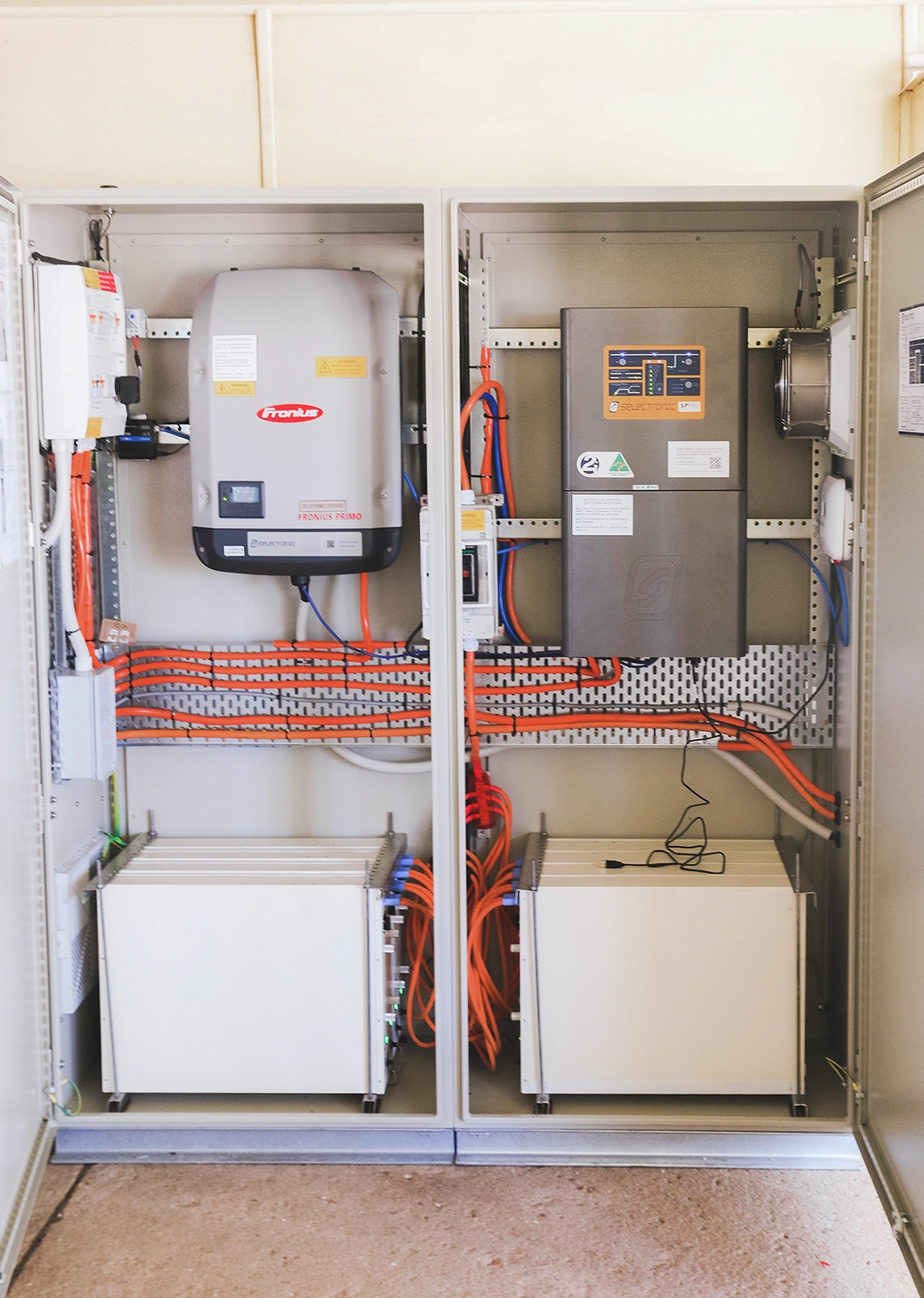
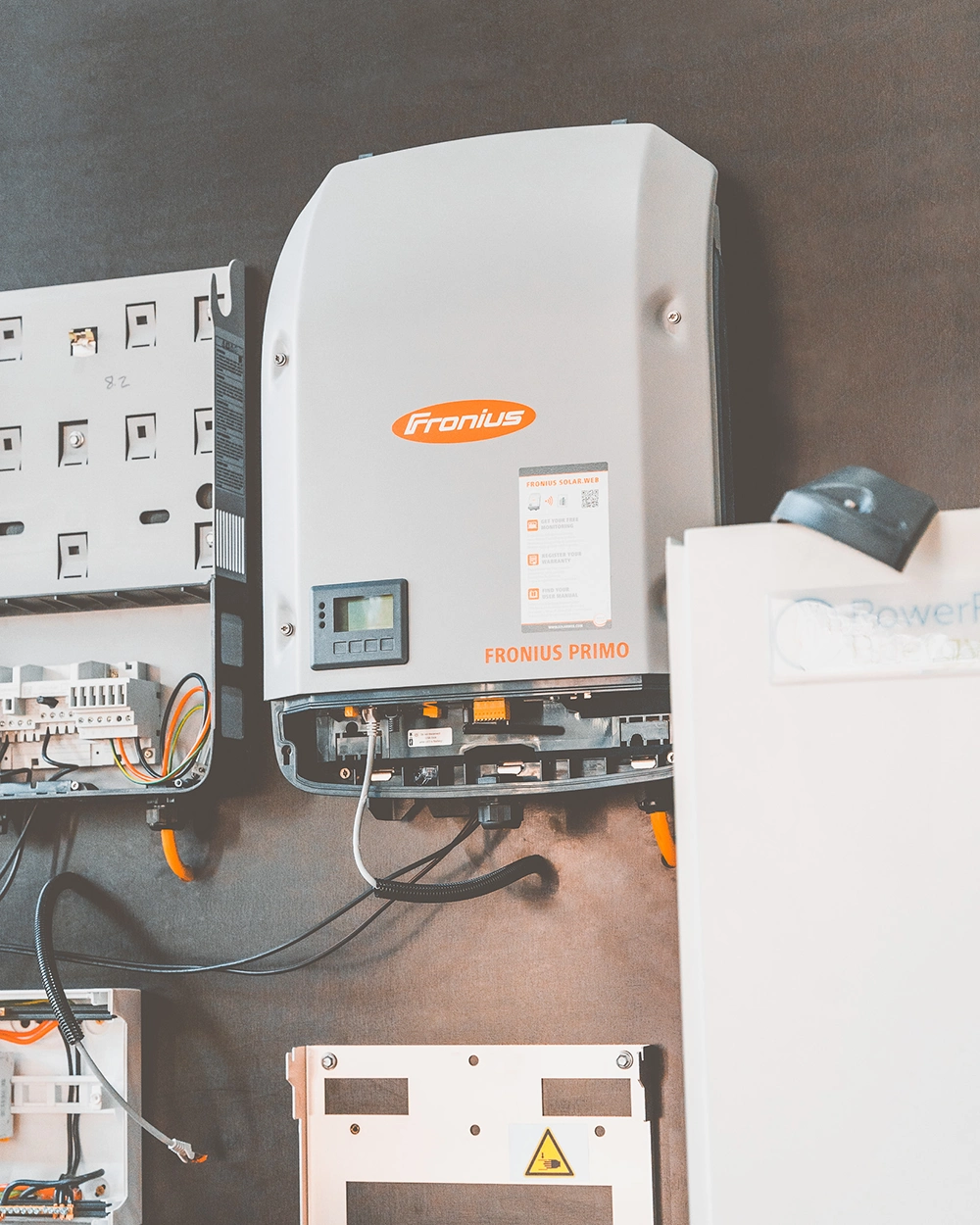
Image: Fronius Primo & Selectronic SP PRO + PowerPlus Battery
Because not every inverter is created equal, not every model will be able to provide backup. Normal grid-tied inverters are only designed to convert PV energy and can’t provide any backup. An AC-coupled battery will continue to provide power; however, most grid-tied inverter will be shutdown during outages.
Hybrid and DC-coupled inverter systems provide better energy management between solar, battery, and the grid. The size of the hybrid inverter determines how much of your home can be backup up and powered during an outage.
Smaller inverters will only power a small partial home backup, potentially powering essentials like lighting and fridges. Larger three-phase hybrid inverters like Sungrow’s SH15/20/25T series can supply power for a whole-home backup for appliances like air-conditioning, ovens, and pool pumps at the same time.
Inverter sizes also affect the phase coverage. Single-phase hybrid inverters can only back up one phase which will be a limitation for full-home backup on three-phase properties.
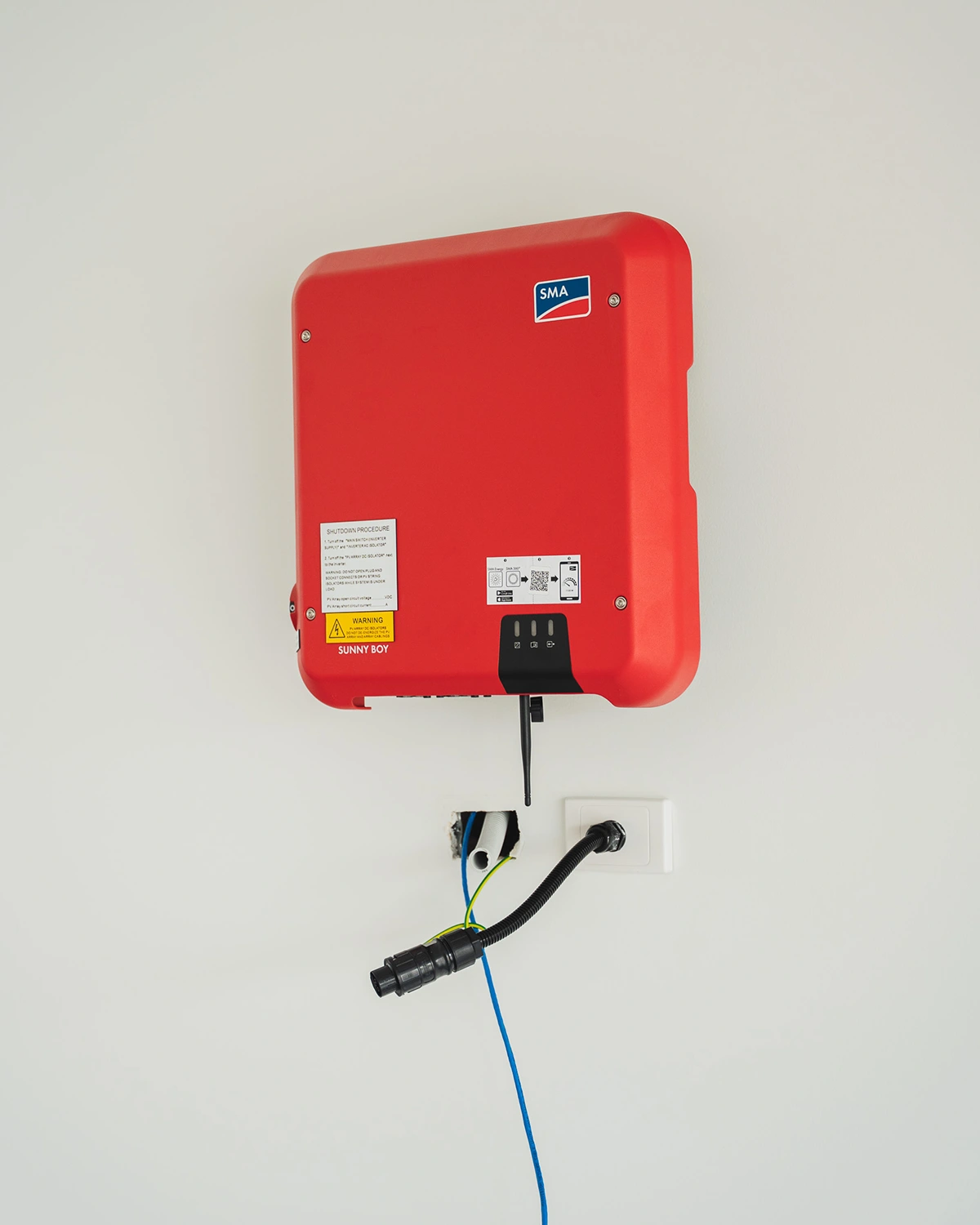
Image: SMA Sunny Boy single-phase grid-tied inverter
Single and three-phase requirements don't affect the decision between hybrid or grid-tied inverters.
A single or three-phase property will only indicate whether you need a single or three-phase inverter and doesn’t indicate whether to get a hybrid or other inverter type.
Depending on if your home or business is single or three-phase, it will alter your inverter options in either category as both grid-tied and hybrid inverters come in three-phase and single-phase options. The difference is essentially the amount of power the inverter can deliver.
Brands like Sungrow, GoodWe, and Fronius offer single and three-phase options for both their hybrid and grid-tied inverter models.
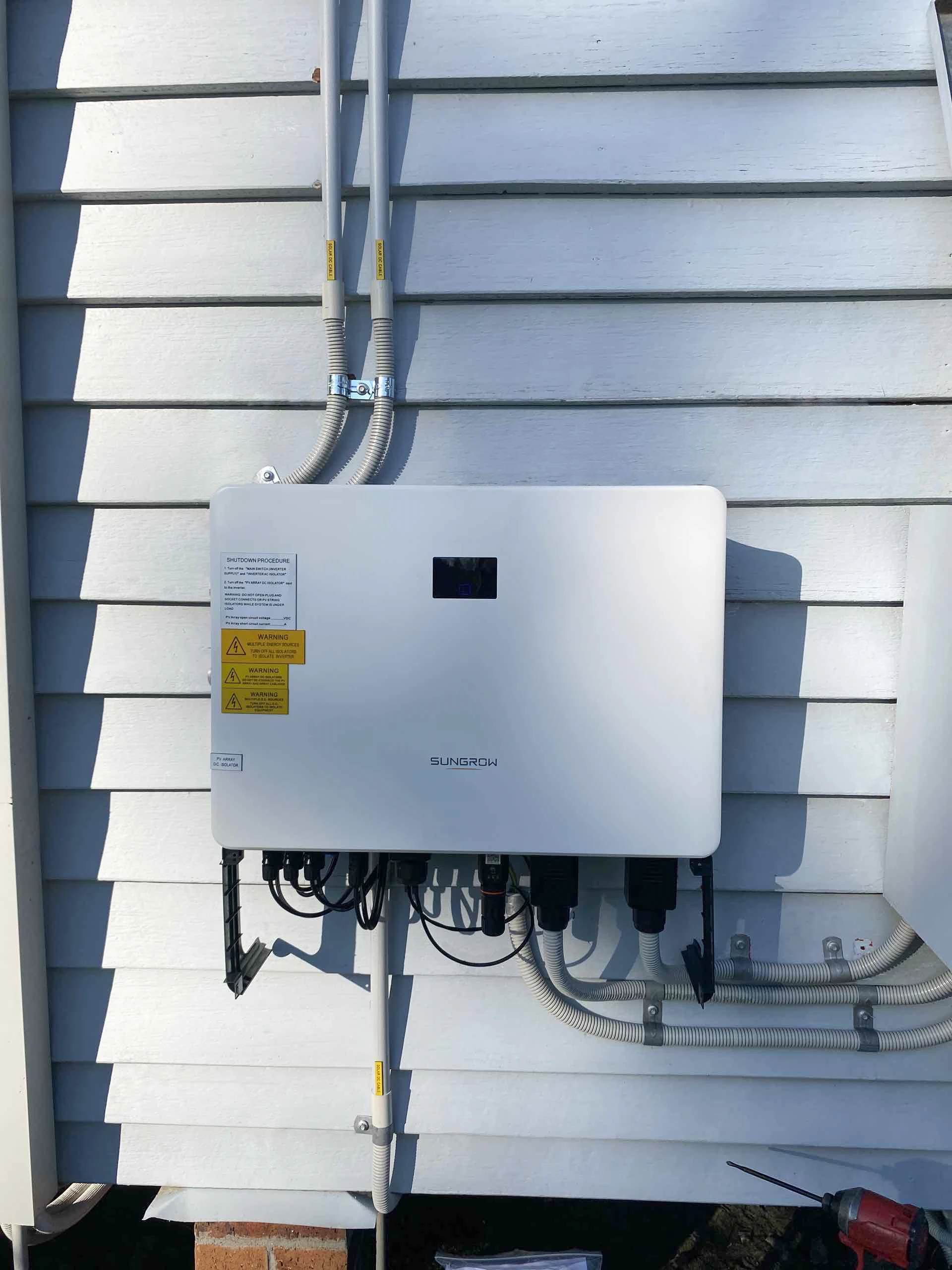
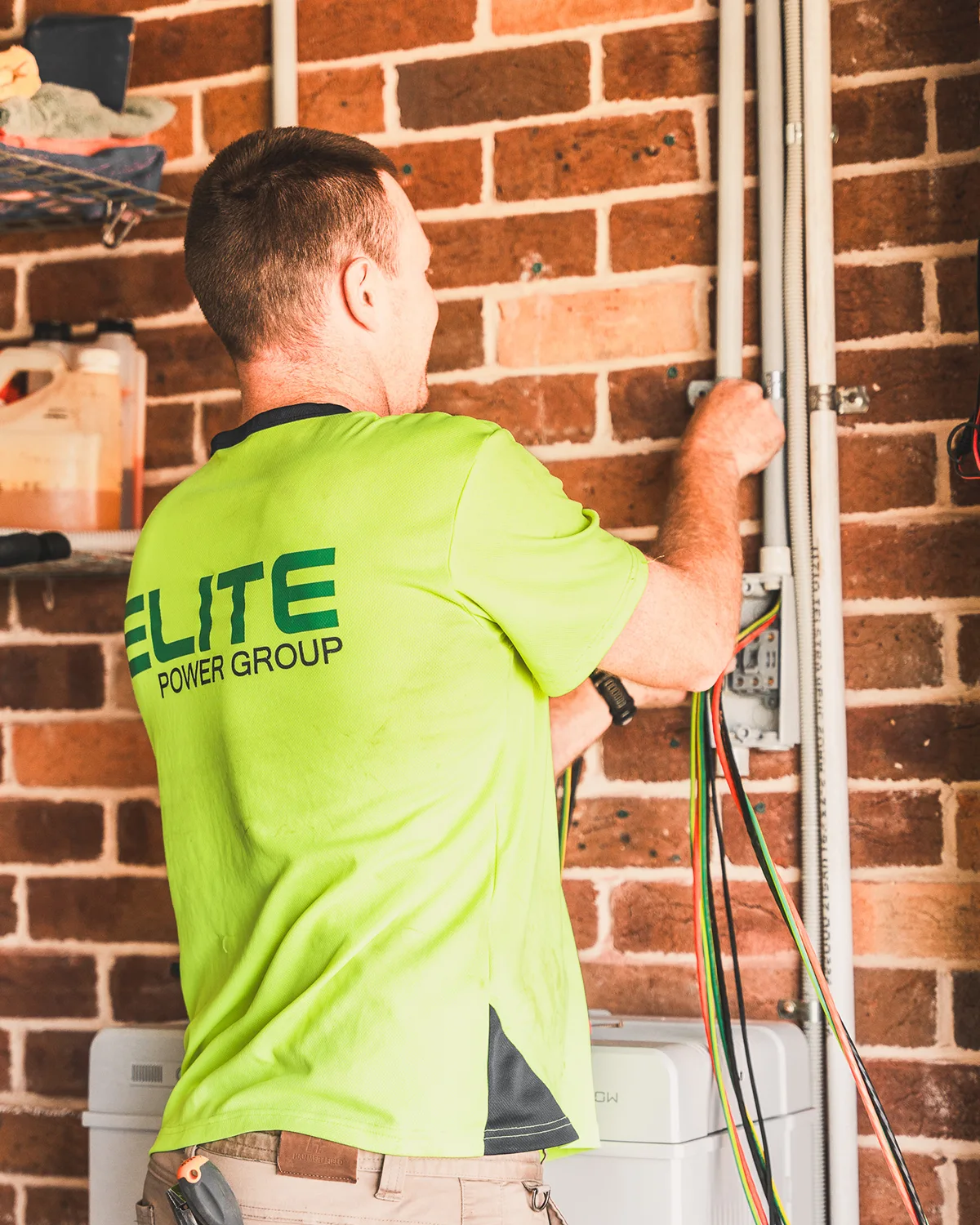
Image: Elite Power Group installing Sungrow battery & inverter
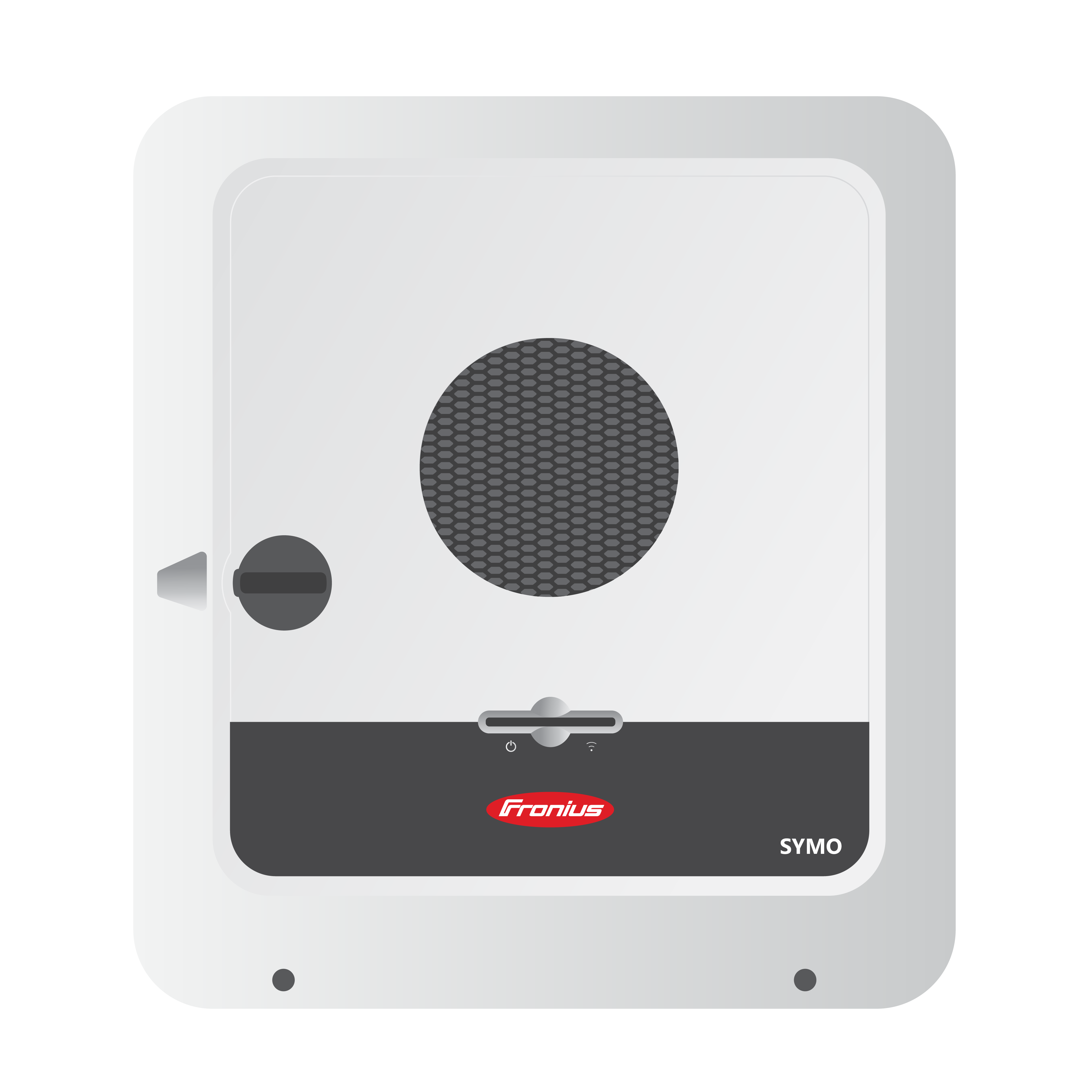
Whilst there are a large number of inverter manufacturers worldwide, as installers, we prefer to use a small selection of inverter brands to ensure quality and rely on strong reputations like Fronius & Sungrow.
Fronius offers a range of both grid-tied and hybrid inverter solutions for properties all throughout Australia. Their GEN24 series comes in both single and three-phase options that offer basic backup options, as well as their GEN24 Plus series that offers full backup options.
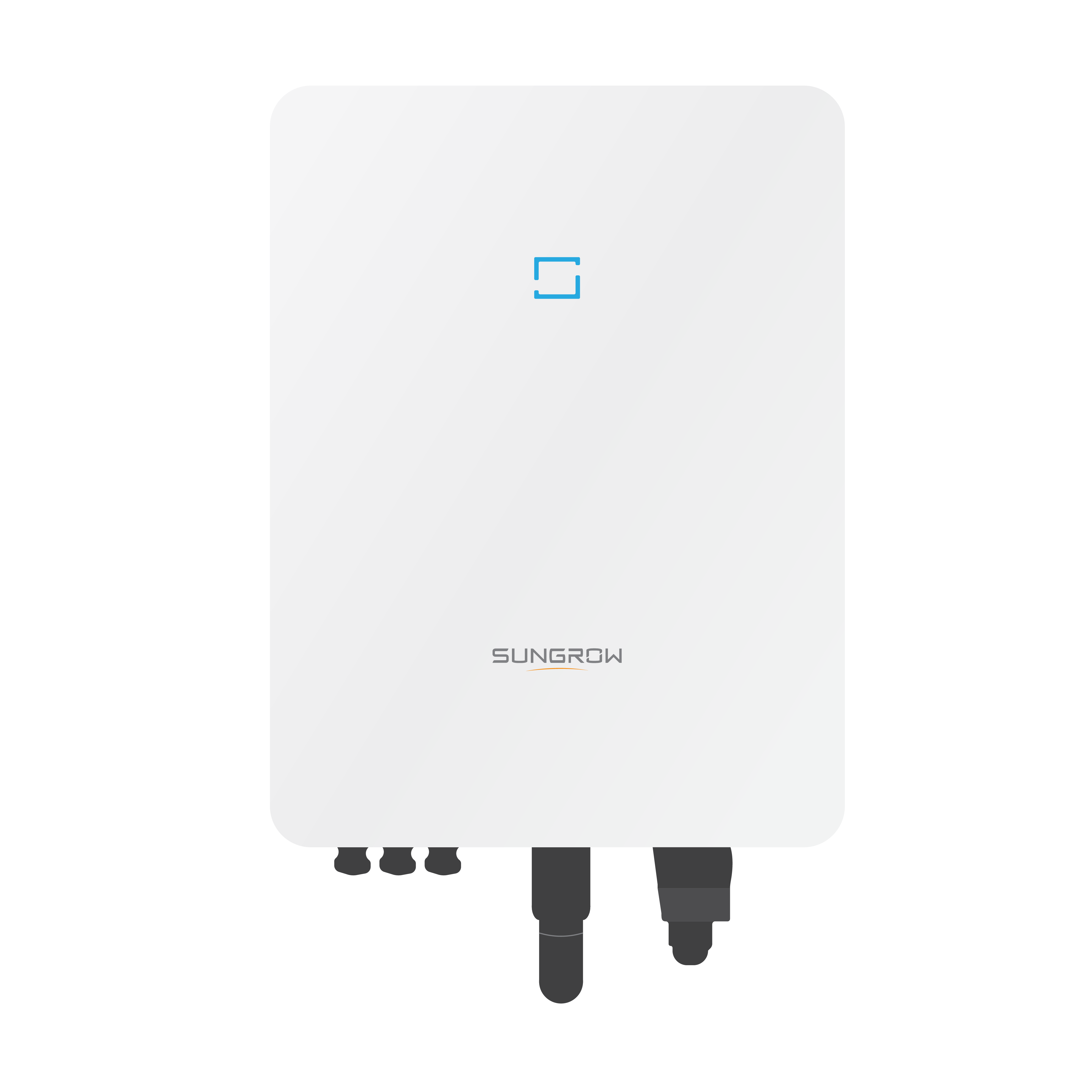
Sungrow also offer strong hybrid inverter solutions ranging from 3kW to 25kW. Like Fronius, Sungrow also offer whole and partial home backup power for their hybrid inverter solutions.
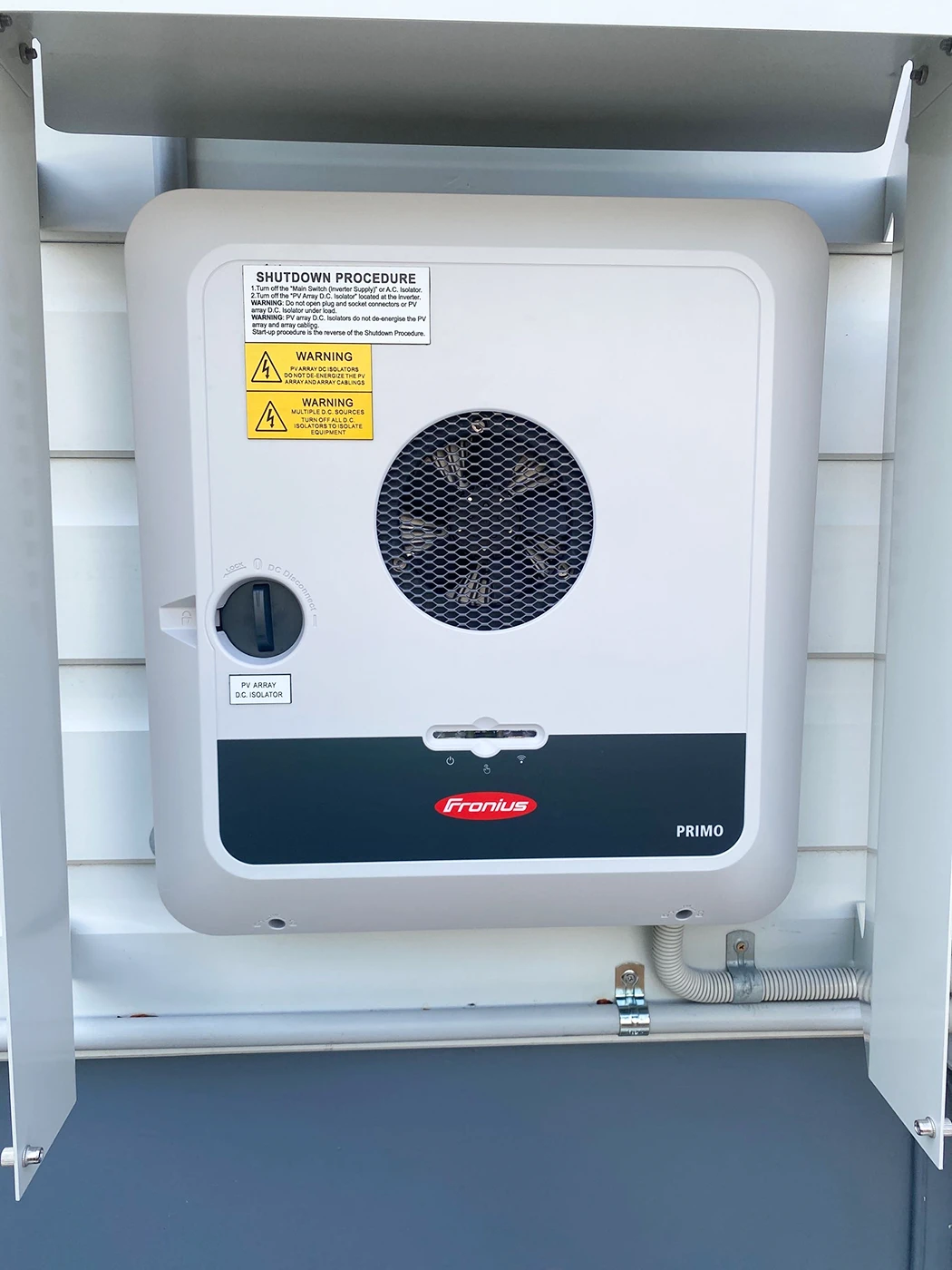
The main cost difference between a grid-tied inverter and hybrid inverter is around +$1000, depending on the models, features, and brands.
Because traditional grid-tied inverters have fewer features than their hybrid counterpart, they are generally the more cost-effective option and are more designed for solar-only systems.
Hybrid inverters on the other hand offer more features and futureproofing which is why they come in more expensive than grid-tied inverters. Whilst not as ‘cost-effective’, hybrid inverters enable homeowners to have future-ready features like direct battery integration which can be more valuable for some.
Image: Elite Power Group installing Sungrow battery & inverter
Overall, each inverter type serves its own purpose. Choosing between all the different types of solar inverters, in particular grid-tied and hybrid inverters, will really come down to your requirements and budget.
If you're in the Newcastle, Maitland, or Hunter region, and would like some free consultation around choosing the right solar inverter, we'd love to have a chat today.
Discover the latest news and articles throughout Newcastle, Maitland, and the Hunter region in NSW. Keep up-to-date with all that's happening in the solar and electrical industry.
The journey of bidirectional charging in Australia has hit a milestone with the recent approval of the new standard for vehicle-to-grid (V2G) charging for 2025.
Read moreFor cabins, homes, and sheds with limited or no access to grid energy, getting an off grid solar and battery storage system may be worth it in NSW in 2025.
Read moreEveryone has seen a solar installation a normal roof like tin or tiled roofs, but have you ever seen a solar installation a roof made of Brass? Well we did one...
Read moreWith the release of the new Clean Energy Council (CEC) H1 2024 report on solar and battery storage, it gives an idea of the upward path of Australia’s renewable energy adoption.
Read moreAmber & ARENA have started trials for Vehicle-to-grid technology in NSW, Australia to help develop standards and framework in V2G and Bidirectional charging.
Read moreCompare Tesla Powerwall 2 vs Powerwall 3 in Australia. See differences in capacity, power output, dimensions, specifications, pricing & solar compatibility.
Read moreExplore solar battery fire risks, hazards, and statistics, and if solar batteries are safe to install for homes in NSW, Australia. (Spoiler alert.. they are!)
Read moreThough bidirectional charging isn't available, vehicle-to-grid is already turning heads in Australia with its potential to change energy consumption and distribution.
Read moreExplore how Australia's energy is evolving with t like Microgrids, DER's, Virtual Power Plants, & Demand Response, for solar and battery systems.
Read moreLearn alternating and direct current, and the differences between AC vs. DC with real-life examples and diagrams of power flow and voltage in Australia.
Read moreEverything NSW businesses need to know about commercial battery storage - costs, benefits, peak shaving, backup power, and how to choose a system.
Read moreIn the new 2024 CEC report, they found that renewable contribution in the overall supply of energy in Australia, produced 40% of Australia’s total electrical supply.
Read moreSo you've invested in solar to reduce your electricity bills, but since then your bills are still high? Explore why your energy bills are still high even after solar.
Read moreLearn electricity tariffs like single-rate, controlled loads, and time-of-use tariffs where on and off peak pricing occurs through retailers like energy australia.
Read moreExplore the differences between single phase vs. three phase power, and how 1 phase and 3 phase electricity works with real-life examples in Australia.
Read moreIf your solar panels are dirty, explore easy ways to DIY clean your solar panels, or when to get your system cleaned by a professional solar cleaner in Australia.
Read moreBatteries store energy as chemical potential energy, released as electrical current once connected to a circuit. Learn how batteries store & release energy.
Read moreNow is the best time to invest in solar panels.. here are 4 reasons why Australians should invest in solar energy before it's time runs out for 2024.
Read moreExplore the National Electricity Market (the NEM), and how it interconnected 5 states with electricity distribution to balance demand and supply in Australia.
Read moreDiscover how agrivoltaics can benefit farms by combining agriculture and solar energy to increase sustainability and agricultural production in NSW.
Read moreThe energy required to heat hot water is quite high and for most Australian households. Here are some strategies on how to save on your hot water heating bill.
Read moreWhat's the best Solar EV Charger? Zappi or the Wattpilot? We have put together a side-by-side comparison, including the pro’s and con’s for both EV chargers.
Read moreWith booming solar adoption, Newcastle is quickly becoming a sustainable region with homes and businesses adoption the technology. What's happening?
Read moreDifferences between bidirectional Vehicle-to-Grid (V2G), Vehicle-to-Home (V2H), Vehicle-to-Load (V2L), and compatible chargers and EVs in Australia.
Read moreOur team attended the Electric Vehicle open day in Lake Macquarie hosted by Lake Macquarie City Council, and what a day! From all the fun events, to the informative aspects, everyone definitely got something out of the day.
Read more
Renewable News Articles
Sign up for new article updates - we don't spam.
We've invested in becoming fully-licenced and qualified installers to ensure Newcastle homes and businesses
get the best solar, battery, and electrical systems available. We want to assist Newcastle's renewable energy revolution with quality
installations for maximum customer satisfaction.
Certified solar system installers near you.
Get CEC-Approved Battery Installations.
Fully-licenced electricians in Newcastle.
Convenient EV charging stations for properties.
Leave a Comment