Hunter Valley's Leading Residential & Commercial Solar Installers

Hunter Valley's Leading Residential & Commercial Solar Installers
Posted 16 Jun
Want the latest in energy, solar, and savings?Subscribe to our newsletter – we don’t spam!
From July 1st, 2026, energy retailers will be required to offer at least one plan that includes a three-hour block of free electricity every day. In NSW, the free electricity window will be between 11am-2pm, enabling Australians to use up to 24kWh of free electricity under the Solar Sharer Offer (SSO).
Quick answer: When does the 3 hours of free electricity start? The Solar Sharer Offer started on 1 July 2026. It's available now to eligible households in New South Wales, South-East Queensland and South Australia. The free 3-hour window runs 11am–2pm in NSW and South-East QLD, and 12pm–3pm in South Australia, every day. You need a smart meter and you need to opt in with a participating retailer - the plan won't apply automatically.
The Australian Government have announced that the Solar Sharer Offer (SSO), a regulated energy offer that helps Australian properties access 3 hours of free energy in the middle of the day, will be available from July 1, 2026.
As a part of reforms to the Default Market Offer (DMO), which is changing how households that don’t or can’t shop around are protected. This is set to reinforce customer safeguards and empower households with more efficient and improved pricing.
From the start of July, energy retailers are required to offer at least one plan that includes a 3-hour period of completely free electricity every day. This will be capped at 24kWh which is deemed ‘reasonable’ usage.
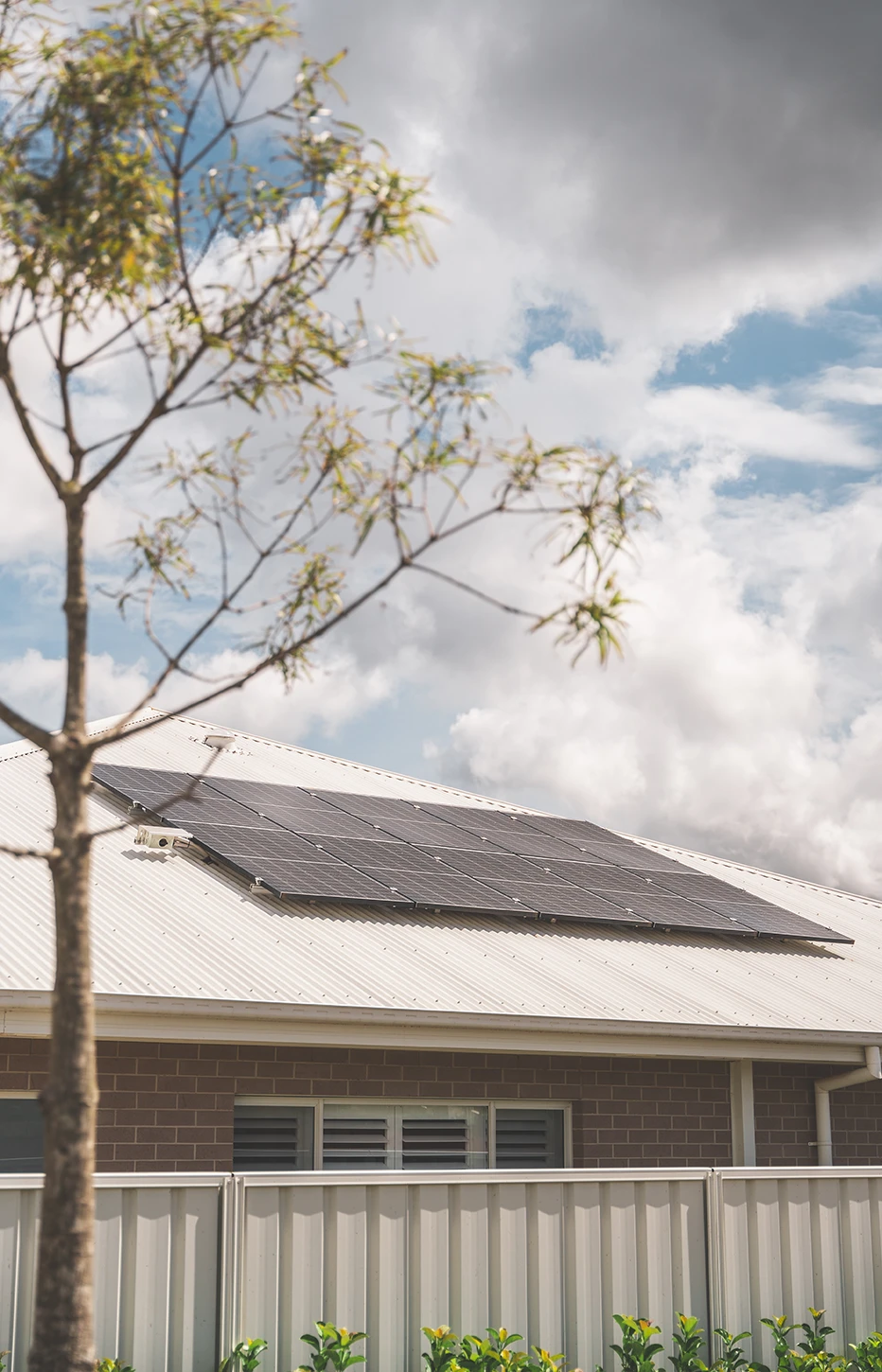
Every energy retailer with more than 1,000 customers in NSW, South Australia and South-East Queensland is required to offer at least one Solar Sharer plan from 1 July 2026. Because the Australian Energy Regulator (AER) sets the tariff structure, the free window and 24 kWh daily cap are identical across retailers - but the plan names, rates outside the free window, daily supply charges, and how you opt in vary. Here's how each major retailer's Solar Sharer plan compares.
| RETAILER |
PLAN NAME |
FREE WINDOW IN NSW | HOW TO OPT-IN |
| Origin Energy |
Origin Standing Solar Sharer |
11am-2pm |
Sign up on Origin's plans page |
| Energy Australia |
Standing Offer Solar Sharer | 11am-2pm | Contact EA - not currently available, rolling out through 2026. |
| Amber Electric |
Solar Sharer Standing Offer |
11am-2pm | Contact Amber |
| AGL |
Residential Solar Savers | 11am-2pm | Call AGL directly |
| Red Energy |
Solar Sharer Offer Plan |
11am-2pm |
Call Red
Energy
directly |
| Engie |
Solar Sharer Plan |
11am-2pm | Call Engie directly |
| Globird | ZEROHERO & FOUR4FREE plans |
11am-3pm |
Get a quote from Globird |
Note on rates outside the free window: All Solar Sharer plans are time-of-use standing offers, which means the rates outside
the free 3-hour window are typically higher than a standard flat tariff. This is how retailers recover the cost of the free period. The AER
is actively monitoring retailers who tried to inflate daily supply charges - some have seen fixed charges rise more than 85%
year-on-year. Always compare total annual cost against your current plan, not just the free window.
Courtesy of Lukas Kail on Pexels
Whilst it might feel a bit random that the Australian government is suddenly handing out free power, it’s essentially because Australia has done too well at becoming a solar superpower. With well over 4-million rooftop solar systems all feeding into the grid, daily electricity prices fall dramatically as energy supply surpasses demand.
In addition to the Cheaper Home Batteries program, which is designed to help absorb that daily solar generation, the Solar Sharer Offer will help incentivise customers to use power during the free energy periods – also referred to as ‘load shifting’.
Instead of running the majority of appliances during peak periods (5-9pm) which puts more demand stress on the grid, a cost-free period throughout the day enables Australian households to use appliances like dishwashers and EV chargers when solar is at its peak generation and reduce peak demand.
Most Australian households are based on a time-of-use (TOU) tariff/energy plan which works by charging you based on the time you use energy - cheaper during off-peak periods, and more expensive during peak periods which is around 5-9pm during summer.
The Solar Sharer Offer sits around when solar is at its maximum production, where grid electricity is at its cheapest and demand relatively low.
Whilst the 3 hours of free energy is valuable, your retailer may increase your peak period pricing which could eat into the savings from the free energy period.
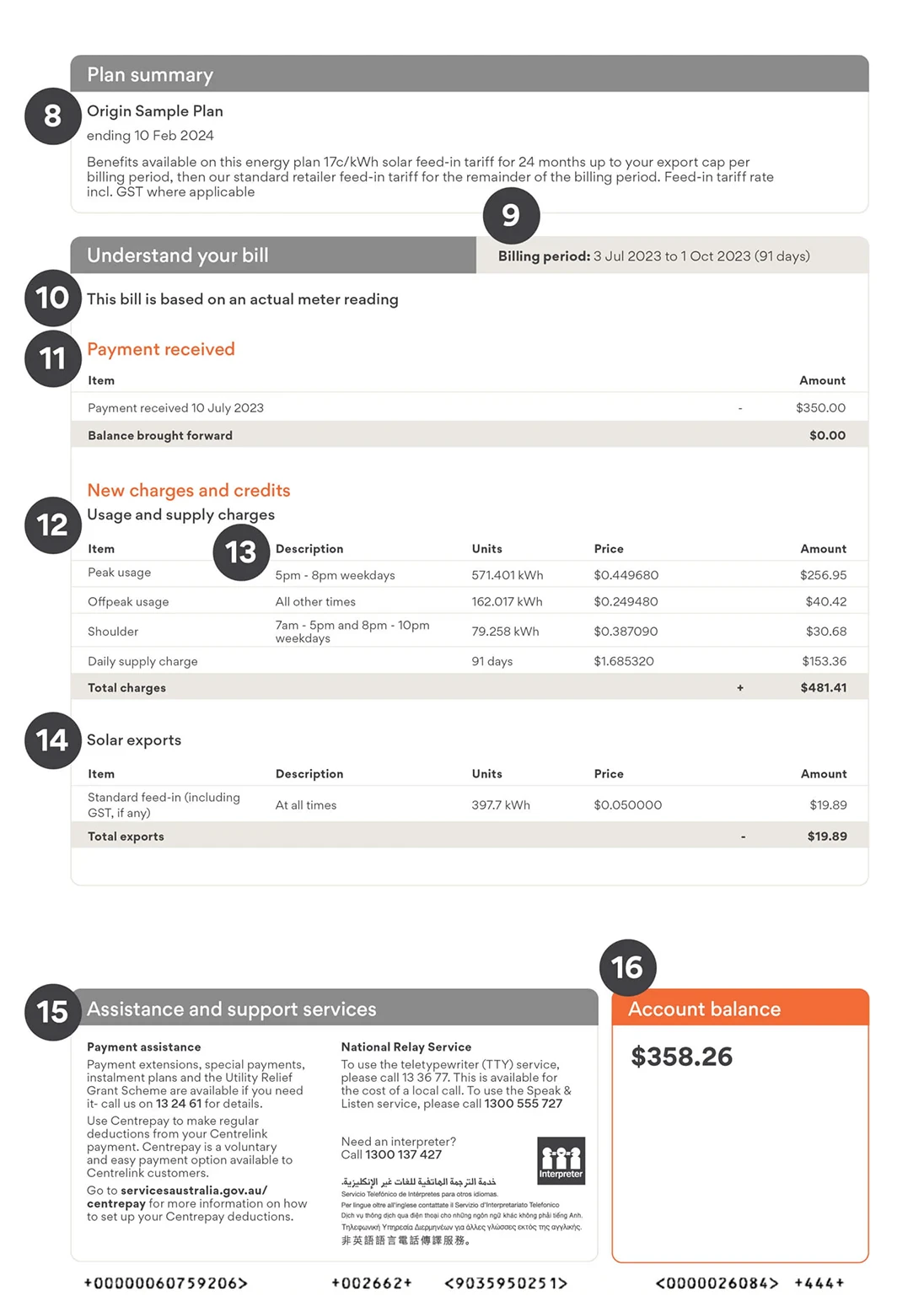
Courtesy of Origin

Courtesy of Sarah Chai on Pexels
The Solar Sharer Offer isn’t only for solar owners. For those who don’t or can’t have solar like renters and apartment owners, they’ll finally be able to take advantage of Australia’s solar boom. As long as you have a smart meter, you can jump on the energy hype train.
Homes with or without panels can delay using their dishwasher or washing machine to midday, charge their electric vehicle, all for no cost.
Whilst it might be an insignificant change for some, this could be a real gamechanger for those wanting to participate in solar’s benefits – without the whole ‘getting solar’ thing.
It’s likely that more non-solar owners will be asking “should we be looking at solar, or even a battery?”
If the grid is handing out three hours of FREE power, why would anyone still get solar and battery? It’s a reasonable thought process, but similar to asking why you should buy a car when buses exist run for free, solar and battery offer flexibility.
Let’s say you work throughout the day and get home at 5pm – at this point, you’ve long-missed the free electricity period entirely, and are likely to be higher than standard plans to offset what retailers give away for free at midday. This scheme works well for those who can consistently shift energy usage, but for most Australian families, this kind of routine just isn’t realistic.
Even the households that do embrace the free hours of electricity, you’ll still be relying on the grid when it matters most. Dinner, air-conditioning, and even lighting is where the bulk of your daily usage costs live, and the three free hours of electricity doesn’t help any of it.
The right sized solar system can extend that free generation window to more than 3 hours, and a home battery supercharges (pardon the pun) your solar generation by storing it for later instead of using expensive grid energy.

Courtesy of Dilan Ceviz on Pexels
Because every household is different, it’ll vary in the amount of and when energy is used which will affect the best setup. Here’s a quick
breakdown on what makes sense depending on your situation:
Working from Home or Being at Home During the Day: Solar Sharer Offer & optimise your appliance usage.
Shifting your heavy loads to the free window ill help chip away at your energy bill. If you want to go further, adding solar means you’re generating your own free power before and after the window.
You’re our all day and home in the evenings: Solar & Battery – As you’re not home during the day, you won’t be able to utilise the Solar Sharer Offer.
A rooftop solar and battery system would provide a lot of value - by the time you get home, you’re just running on the free energy you produced throughout the day.
You Rent or Don’t have Roof Access: Until now, renters and apartment owners have been largely blocked from joining the solar conversation, however, the Solar Sharer Offer changes that.
Combined with a battery, you’d be able to charge the battery up during free hours and discharge your battery during peak periods.
The Solar Sharer Offer is one of those rare government schemes that rewards good habits rather than just a one-off incentive. Whether you’ve got a full solar and battery system or no solar at all, there’s a way that you can improve the way your energy works.
By taking the time to plan when you use your power, there’s an opportunity for you to maximise your savings.
It used to be about installing solar and exporting it to the grid for rewards, however, now it’s about self-consumption and being energy independent. With battery storage, solar owners can generate, store, and consume their own power to be reliant on self-produced power instead of grid power. If a solar battery has been on your wish list, the potential benefits just got a whole lot more compelling.
Not sure which battery matches your solar system? Compare solar & battery size combinations, from 6.6kW to 13.3kW+, & find the right fit in Newcastle.
Read moreSee exactly what solar system size you need, from panel dimensions to 3kW-13.3kW+ pricing, based on your household size and daily usage in NSW.
Read moreExplore the recently changed VPP NSW rebate, & how the Peak Demand Reduction Scheme (PDRS) calculates rewards for joining a Virtual Power Plant.
Read moreAlready have a Powerwall 2? You can now add a Powerwall 3 alongside it. Supported configurations, limitations and how the rebates stack in 2026.
Read moreSee what a 6.6kW, 10kW and 13.3kW system generates each month in Newcastle and the Hunter, why summer beats winter, and how to use more of it.
Read moreAll NSW homeowners need to know about the solar installation process - from first quote to first bill. 9 steps, real timeframes, & what to ask your installer.
Read moreAlready have solar? Decide whether to add a battery, expand your panels or replace your system, and which delivers the best return in 2026.
Read moreSupply charges, feed-in tariffs, controlled load, peak rates - we explain every line on your NSW electricity bill and show you where you can save more.
Read moreCompare retailer Solar Sharer plans, check eligibility & opt in. Origin, Amber, AGL, EnergyAustralia & more. 3 hours free power daily from 11am–2pm.
Read moreLearn how home electricity works in Australia, including circuits, switches, circuit breakers, RCDs and what happens during power outages.
Read moreIs solar & battery worth investing in for Australian homes? Explore 2026 costs, payback periods, disadvantages, and how the Solar Sharer offer affects it.
Read moreLearn about the May 1st Federal battery rebate changes in Australia and what they mean for home battery costs, solar savings, and discounts.
Read moreCompare Tesla Powerwall 3, Sungrow SBR & SBH, GoodWe ESA, Fronius Reserva, and BYD Battery-Box to find the best home battery for Australia.
Read moreExplore how Australia’s Q4 2025 solar and battery data highlights a major milestone: majority renewable contribution to daytime electricity demand.
Read moreHow rooftop solar helped NSW avoid blackouts during the 2026 heatwave, reducing grid stress & supporting record electricity demand across Newcastle.
Read moreExplore Elite Power Group's solar and battery installation statistics for 2025, and how we performed over this year of operation in Newcastle and Maitland.
Read moreCompare how Peak shaving reduces demand spikes; load shifting moves consumption to cheaper hours; demand response is grid-triggered.
Read moreExplore the difference between solar inverter types like grid-tied, hybrid, microinverters, and off-grid inverters for solar and battery systems in Australia.
Read moreExplore Australia's first CEC-approved bidirectional and vehicle-to-grid capable electric vehicle, the V2Grid Numbat, a 6.2kW V2G/H charger now ready.
Read moreEnergy capacity (kWh) is how much a battery stores. Power output (kW) is how fast it delivers. Covers nominal vs useable, SoC, DoD and cycles.
Read moreExplore the differences between AC and DC electric vehicle charging in Australia and how it affects the way you charge your EV, and the pros & cons.
Read moreConsidering a cheap solar system? Learn how low-quality, unreliable inverters and panels can lead to costly repairs, full replacements, and safety issues.
Read moreLearn the difference between volts, amps and watts, and learn electricity with simple explanations, formulas, real-world examples, and an easy calculator.
Read moreBattery supply chains are tight across Australia, with shipping delays leaving many installers out of stock and customers waiting longer. What's happening?
Read moreLearn how to avoid solar scams in NSW. Spot red flags & dodgy installer tactics and find reputable companies with great warranty & quality installations.
Read moreExplore why the delays in vehicle-to-grid and bidirectional chargers are happening, and how V2G faces regulatory and legislative development in Australia.
Read moreOver 56,000 solar batteries were sold in Q2, 2025, thanks to the Australian battery subsidy. Explore solar & battery uptake, growth trends, and what's next.
Read moreDiscover how to choose the right solar battery size for your home. Compare 10kWh, 15kWh, and 20kWh options to maximise savings, and solar in NSW.
Read moreVirtual Power Plants explained for Australian homeowners. What a VPP is, how it works, NSW program comparison and whether joining one is worth it.
Read moreExplore what solar hotspots are, how they can affect your panel performance & efficiency, & how bypass diodes can affect your cells & strings in Australia.
Read moreDiscover the best home EV chargers in Australia. Compare popular electric vehicle home charging stations, costs, and installations for Newcastle NSW.
Read moreLearn if your roof is suitable for solar panels and how roof materials like terracotta or tin, orientation, tilt, & shading can affect energy production and install.
Read morePower vs Energy in Australia: Difference Between Watts and Watt-Hours, kW vs kWh, with Diagrams, Calculations, and Home Appliance Examples.
Read moreExplore upcoming & available bidirectional V2G-capable chargers in Australia from V2Grid, RedEarth, Sigenergy, Enphase, Tesla, and Fronius EV charging.
Read moreCompare the difference between Sungrow's SBH and SBR battery storage vs. BYD Battery-Box and find what battery is better for homes or businesses in NSW.
Read moreThe NSW Government have announced that the NSW Battery Rebate (PDRS) will be suspended on June 30th, 2025, and will no longer be available.
Read moreAvoid the 9.7% NSW electricity bill increase with expert tips on reducing energy costs, optimising solar usage, and finding better energy plans in 2025.
Read moreExplore how you can use your EV battery via vehicle-to-load (V2L) as a backup energy source during blackouts to power your home appliances in Australia.
Read moreExplore Australia's Federal Government solar battery rebate subsidy like eligibility, approved batteries, requirements, and more about the upcoming incentive.
Read morePartnering with Elite Power Group, Maitland City Council have invested in more electric vehicle chargers in the Maitland area, supporting the uptake of EVs.
Read moreCompare home insurance policies and find out if solar and battery is covered and how installations affect costs, value, and included coverage in Australia.
Read moreShould solar owners get a home battery (ESS) or wait for vehicle-to-home (V2H) technology to use electric vehicle battery power to be available in Australia?
Read moreExplore the differences between AC and DC coupled solar battery storage and how it affects your solar system and inverters' configuration in Australia.
Read moreExplore if fleet or public electric vehicle charging is better for charging workplace and employee EVs for your business in Newcastle & the Hunter, NSW.
Read moreWith homes, Australian standards, and energy networks being ready for bidirectional charging, why the wait? Let's explore grid, EV, & charger developments.
Read moreThe differences between Tesla Powerwall 3 vs. Sungrow battery storage (SBH) capacity, warranty, and features, and which one is better in Australia.
Read moreComparing solar PV, solar hot water, & heat pump hot water systems for Australian homes. Which saves more, which costs less, and which is right for you.
Read moreWorking closely with the Newcastle City Council, we helped the development of Gregson Park Playspace with electrical infrastructure, lighting, and facilities.
Read moreA very strong storm passed through the Hunter, leaving over 100,000 homes without power. Here's how you can protect your home's energy with independence.
Read moreElite Power Group installed a 2MW commercial solar installation for National Ceramic Industries Australia, totaling 4000 solar panels in Rutherford.
Read moreRenewable News Articles
Sign up for new article updates - we don't spam.
We've invested in becoming fully-licensed and qualified installers to ensure homes and businesses get
the best solar, battery, and electrical systems available.
Certified solar system installers near you.
Get SAA-Approved Battery Installations.
Fully-licensed electricians Near You.
Convenient EV charging stations for properties.
Leave a Comment