Newcastle's Leading Residential & Commercial Solar Installers

Newcastle's Leading Residential & Commercial Solar Installers
Posted 3 Sep
Want the latest in energy, solar, and savings?Subscribe to our newsletter – we don’t spam!
When looking into solar system sizing and battery storage capacity separately, you’ve probably asked yourself the frequent question – “which battery goes with what solar system?”. Let’s breakdown how solar and battery sizes pair up in the real world and what battery storage brands are compatible with what solar systems.
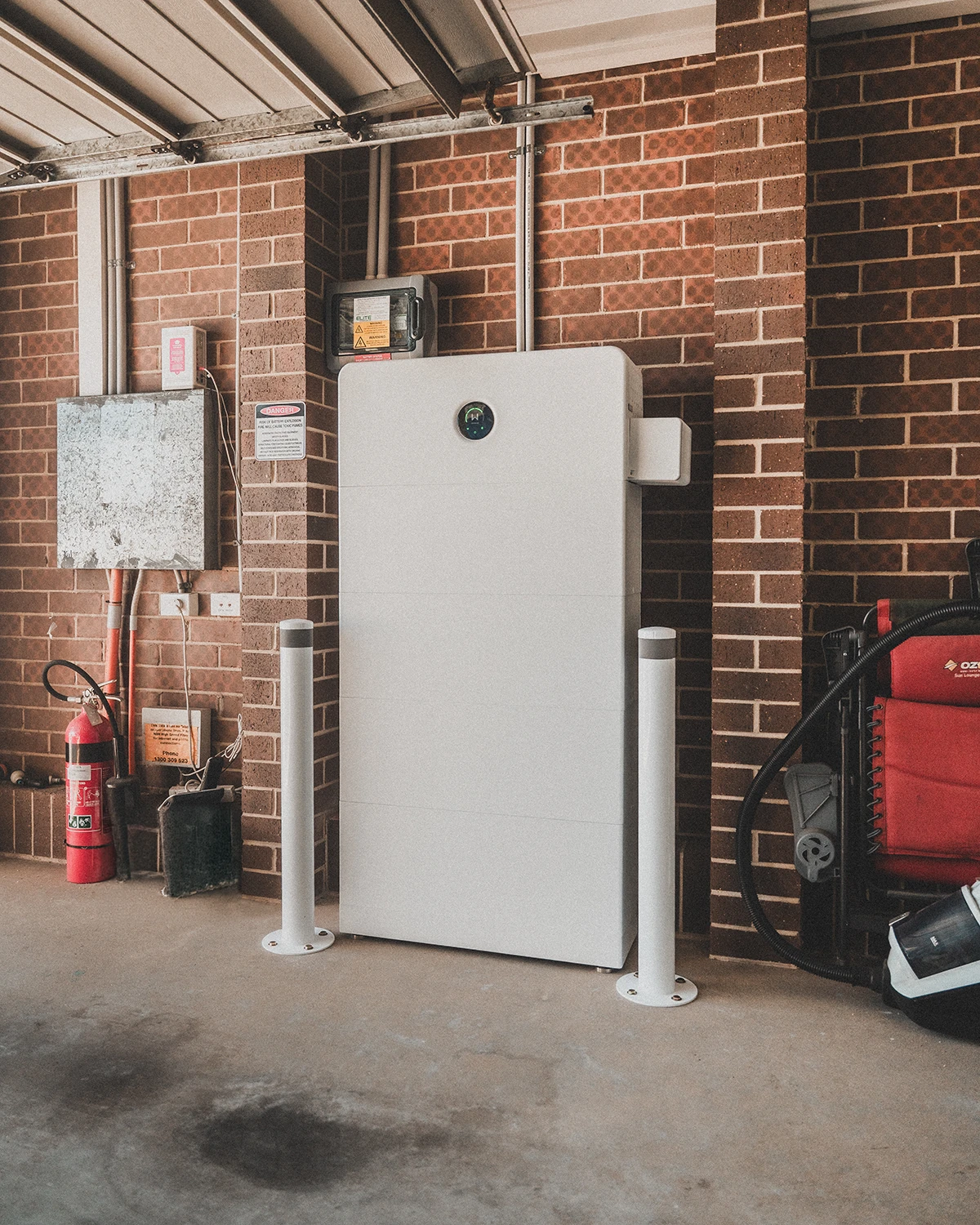
Every household throughout Newcastle & Maitland has its own energy consumption habits and requirements which determine the right sized solar system or battery capacity.
When installing both solar and battery as a package, a bigger solar system won’t always need a bigger battery, and a bigger battery doesn’t always perform better with more solar. Both solar and battery systems are connected by one thing: how much surplus solar energy you produce during the day to cover your home’s energy usage.
A 6.6kW solar system on a home that uses more of its power during the evening will generate a good amount of excess solar power, but when pairing it with a large battery like 30kWh often means that the battery won’t fully charge resulting in unused capacity that you’ve paid for.
Going the other way, having a larger solar system like 13.3kW paired with a small battery means that you’ll be generating far more than the battery can store, where the excess is fed into the grid for cheap. Both system combinations would be inefficient and more expensive than it would need to be.
In general, there are preset solar and battery packages that can suit most homes, based on Newcastle’s usage patterns. Here are common solar and battery system sizes that suit real-world homes across NSW:
|
6.6kW Solar + 10kWh Battery: Suits smaller homes with reduced evening energy consumption. The 6.6kW solar system generates a good amount of solar energy, which is enough to fill a 10kWh battery on most sunny days with minimal excess production. |
8kW Solar + 13-16kWh Battery: Around the average system sizes over the Newcastle and Hunter areas for households. The larger solar production can support the increased capacity throughout the year without it being out of balance. |
|
10kW Solar + 16-20kWh Battery: Designed for larger households with more people and usage, supporting day, evening, and night usage. Can also support EV charging and higher-consumption appliances like air-conditioning. |
13.3kW Solar + 20kWh Battery: Typically suits larger households with increase consumption habits, suiting those who want maximum energy independence, or those looking to futureproof their property’s electrification. |
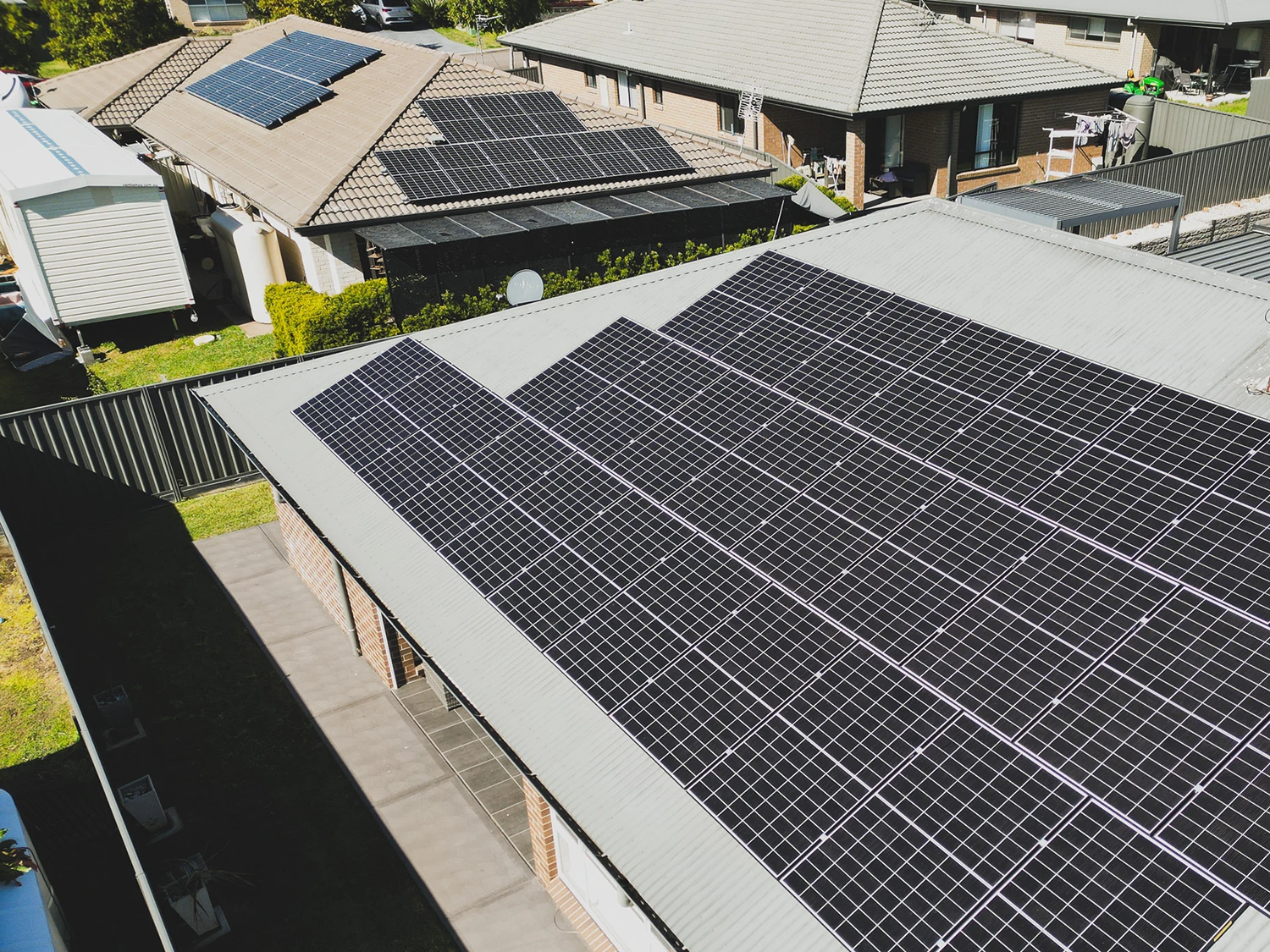
The combinations previously mentioned are typical household sizes which are usually tailored to the home’s energy consumption habits and requirements.
If you’re wanting more detail on how solar system sizing works, panel counts, roof requirements and system costs by size, our Solar System Size Guide covers that well. Sizing a battery can be difficult for those who are new to the world of energy storage, so we’ve also made a dedicated Battery Sizing Guide with explainers around capacity, usage goals, futureproofing, and the best kWh range for homes.
A properly sized solar and battery system should benefit you without sending significant amounts back into the grid for little return.
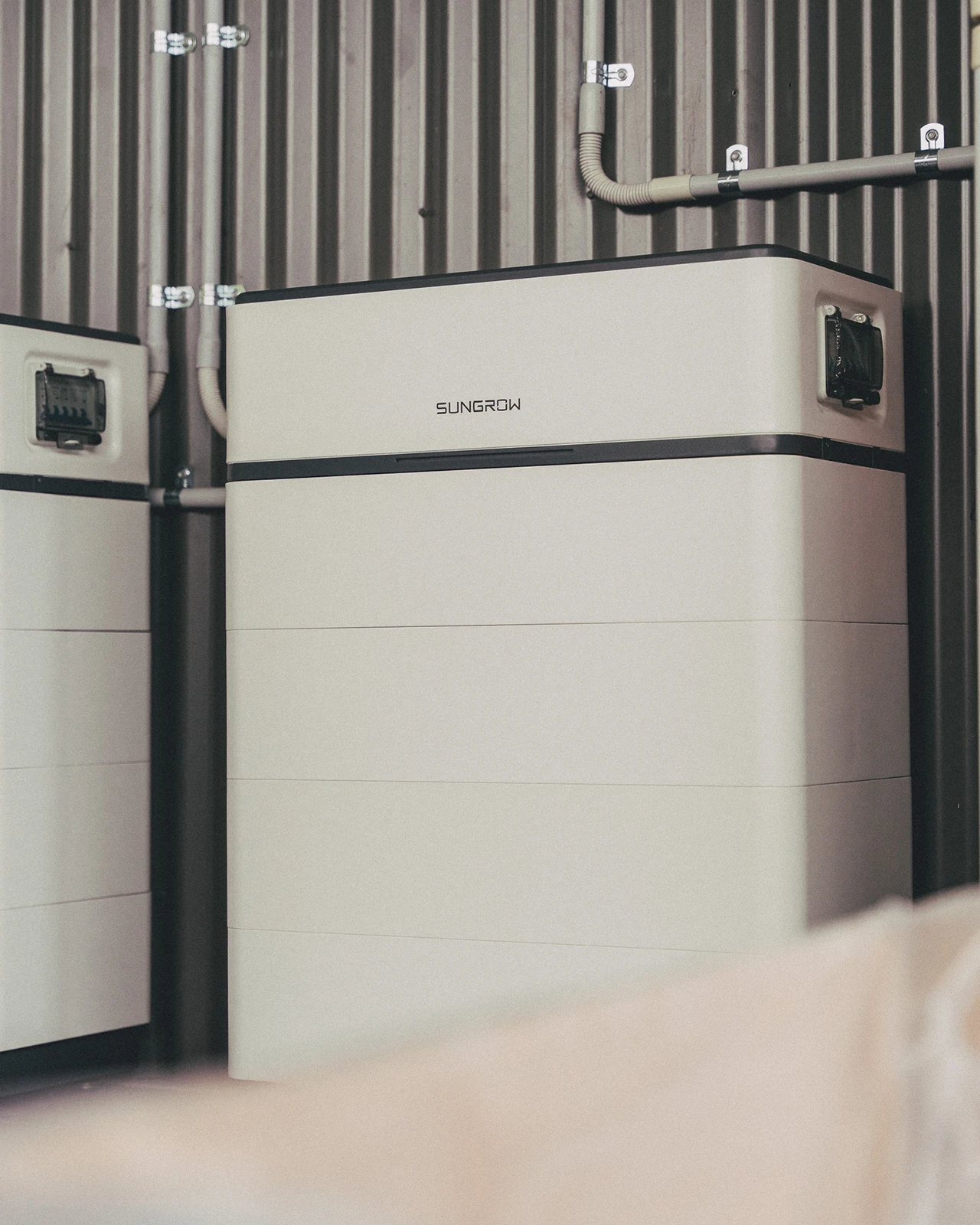
When comparing system sizes, it’s tempting to think bigger is always better when looking into solar power and energy storage, but solar and battery both tackle different problems which won’t always get solved with expansions.
More solar capacity increases how much electricity you can generate. If your daytime usage is growing with appliance additions like EVs, heat pumps, and home expansions, your existing solar system may not be able to keep up with demand. This is when a solar-only upgrade would be beneficial - to keep your home’s demand met with renewable energy.
A bigger battery upgrade increases the amount of renewable energy you can consume later. It’s the right call if your solar produces more electricity than you consume. By storing it, you can avoid using costly peak demand grid power.
For those comparing whether it’s better to upgrade or replace solar, or add a battery, check out our detailed guide.
Sizing a solar and battery system for off-grid properties is a little different as that system is typically the sole source of energy for the home.
Where a typical solar system is sized to meet general demand, an off-grid solar system is designed to exceed the average amount to ensure the property still has electricity if they surpass their 1–3-day average kWh, even if there’s multiple days of bad weather.
Finding the right off-grid solar and battery system really comes down to the specific property’s energy needs as many remote homes will need to power various appliances, as well as the desired backup days required.
Households throughout the Hunter region consume around 15-18kWh per day, an 8kW off-grid solar system paired with a 35-40kWh battery would be enough to sustain around two days of backup power during events of reduced sunlight.
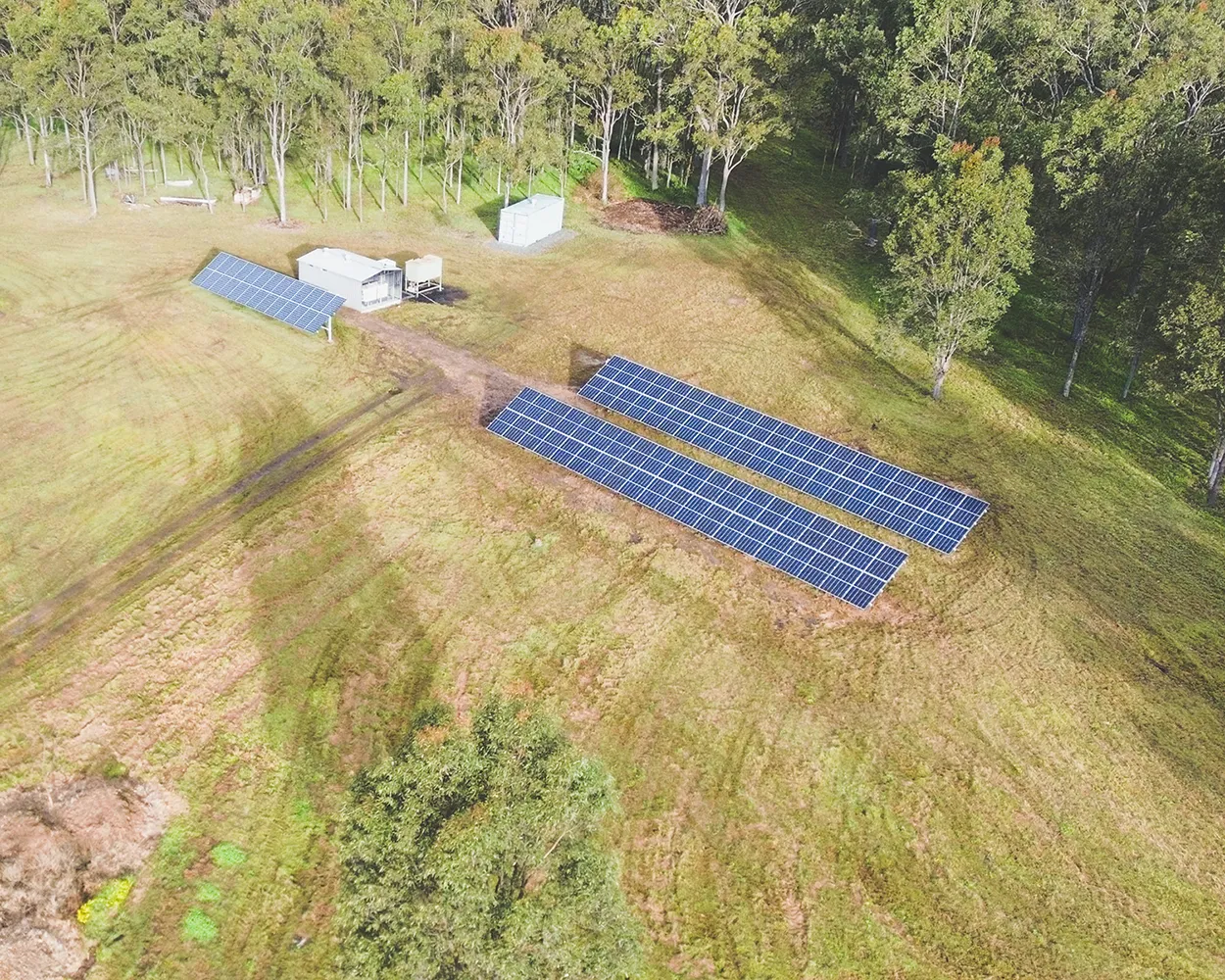
Chasing the biggest solar and battery package isn't always the right option, it's all about matching your system to how YOU use your electricity and when. Whichever direction fits your situation, getting the right combination right the first time means you can maximise your benefits and payback times.
The journey of bidirectional charging in Australia has hit a milestone with the recent approval of the new standard for vehicle-to-grid (V2G) charging for 2025.
Read moreFor cabins, homes, and sheds with limited or no access to grid energy, getting an off grid solar and battery storage system may be worth it in NSW in 2025.
Read moreEveryone has seen a solar installation a normal roof like tin or tiled roofs, but have you ever seen a solar installation a roof made of Brass? Well we did one...
Read moreWith the release of the new Clean Energy Council (CEC) H1 2024 report on solar and battery storage, it gives an idea of the upward path of Australia’s renewable energy adoption.
Read moreAmber & ARENA have started trials for Vehicle-to-grid technology in NSW, Australia to help develop standards and framework in V2G and Bidirectional charging.
Read moreCompare Tesla Powerwall 2 vs Powerwall 3 in Australia. See differences in capacity, power output, dimensions, specifications, pricing & solar compatibility.
Read moreExplore solar battery fire risks, hazards, and statistics, and if solar batteries are safe to install for homes in NSW, Australia. (Spoiler alert.. they are!)
Read moreThough bidirectional charging isn't available, vehicle-to-grid is already turning heads in Australia with its potential to change energy consumption and distribution.
Read moreExplore how Australia's energy is evolving with t like Microgrids, DER's, Virtual Power Plants, & Demand Response, for solar and battery systems.
Read moreLearn alternating and direct current, and the differences between AC vs. DC with real-life examples and diagrams of power flow and voltage in Australia.
Read moreEverything NSW businesses need to know about commercial battery storage - costs, benefits, peak shaving, backup power, and how to choose a system.
Read moreIn the new 2024 CEC report, they found that renewable contribution in the overall supply of energy in Australia, produced 40% of Australia’s total electrical supply.
Read moreSo you've invested in solar to reduce your electricity bills, but since then your bills are still high? Explore why your energy bills are still high even after solar.
Read moreLearn electricity tariffs like single-rate, controlled loads, and time-of-use tariffs where on and off peak pricing occurs through retailers like energy australia.
Read moreExplore the differences between single phase vs. three phase power, and how 1 phase and 3 phase electricity works with real-life examples in Australia.
Read moreIf your solar panels are dirty, explore easy ways to DIY clean your solar panels, or when to get your system cleaned by a professional solar cleaner in Australia.
Read moreBatteries store energy as chemical potential energy, released as electrical current once connected to a circuit. Learn how batteries store & release energy.
Read moreNow is the best time to invest in solar panels.. here are 4 reasons why Australians should invest in solar energy before it's time runs out for 2024.
Read moreExplore the National Electricity Market (the NEM), and how it interconnected 5 states with electricity distribution to balance demand and supply in Australia.
Read moreDiscover how agrivoltaics can benefit farms by combining agriculture and solar energy to increase sustainability and agricultural production in NSW.
Read moreThe energy required to heat hot water is quite high and for most Australian households. Here are some strategies on how to save on your hot water heating bill.
Read moreWhat's the best Solar EV Charger? Zappi or the Wattpilot? We have put together a side-by-side comparison, including the pro’s and con’s for both EV chargers.
Read moreWith booming solar adoption, Newcastle is quickly becoming a sustainable region with homes and businesses adoption the technology. What's happening?
Read moreDifferences between bidirectional Vehicle-to-Grid (V2G), Vehicle-to-Home (V2H), Vehicle-to-Load (V2L), and compatible chargers and EVs in Australia.
Read moreOur team attended the Electric Vehicle open day in Lake Macquarie hosted by Lake Macquarie City Council, and what a day! From all the fun events, to the informative aspects, everyone definitely got something out of the day.
Read moreRenewable News Articles
Sign up for new article updates - we don't spam.
We've invested in becoming fully-licenced and qualified installers to ensure Newcastle homes and businesses
get the best solar, battery, and electrical systems available. We want to assist Newcastle's renewable energy revolution with quality
installations for maximum customer satisfaction.
Certified solar system installers near you.
Get CEC-Approved Battery Installations.
Fully-licenced electricians in Newcastle.
Convenient EV charging stations for properties.
Leave a Comment