Hunter Valley's Leading Residential & Commercial Solar Installers

Hunter Valley's Leading Residential & Commercial Solar Installers
Posted 14 Sep
Want the latest in energy, solar, and savings?Subscribe to our newsletter – we don’t spam!
The renewables rebate landscape in NSW has changed dramatically over the last few years, and has grown well beyond one rebate for each energy solution. There's a distinct incentive for homeowners, another for people with existing battery storage, and separate ones for apartment buildings and businesses.
This guide helps those find the right rebates and incentive that are made for you, from 0% interest-free loans, to the federal battery
subsidy, let's explore which one you're eligible for, and how they fi t together to help you maximise your savings.
| Program | What it's for | Who it's for | Status |
|---|---|---|---|
| Federal | |||
| Small-scale Renewable Energy Scheme (SRES) | Solar | Homes & most businesses | Available Reducing to 2030 · expanding to 1MW for commercial from Oct 2026 |
| Cheaper Home Batteries Program› | Battery | Homes & businesses | Available Discount reducing to 2030 |
| NSW State · Peak Demand Reduction Scheme | |||
| BESS1 — Home & Small Business | Battery / VPP incentive | Homeowners & small business | Available |
| BESS2 — Existing Battery | VPP / demand response | Owners of an existing battery | Available |
| BESS3 — Apartment Buildings | Battery / VPP incentive | Strata buildings, 4+ dwellings | Available |
| BESS4 — Small & Medium Business | Battery / VPP incentive | SME sites | Available |
| BESS5 — Commercial & Industrial | Battery / VPP incentive | Large commercial & industrial | Available |
| Other | |||
| NSW Home Energy Saver Loan› | Solar, battery & other upgrades | Eligible NSW households | Available 0% interest, no fees |
| Feed-in Tariffs | Solar & battery export | Anyone exporting to the grid | Available Ongoing |
Jump straight to the section that matches your property.
The main federal battery incentive for homes and businesses, discounting the upfront cost of an eligible battery based on its usable
capacity. The discount is tiered by size and steps down every January and July on the way to 2030.
Not a rebate, but it changes what any of these cost upfront: a 0% interest, no-fee loan from the NSW Government, covering solar, battery, EV
charging and other eligible upgrades from $2,000 to $15,000 over terms up to 10 years.
What used to be described as "the NSW VPP Incentive", one incentive for one type of household battery - is now five separate
activities under the state's Peak Demand Reduction Scheme (PDRS), each built around a different kind of property. They're referred to as
BESS1 through BESS5.
The direct successor to the old NSW VPP Incentive for most homeowners. The battery just needs to be aggregator-capable, signing up to an
actual VPP arrangement is optional and can earn further ongoing payments on top. NSW doesn't publish a fixed dollar figure for this
incentive; the amount depends on your battery's capacity (up to the 28kWh cap) and which provider and contract you choose, so it's worth
comparing offers before committing.
For a battery installed before these incentives existed, joining demand response now. Requires a formal 12-month VPP or aggregator contract
and pays at a lower rate than BESS1 with a shorter certificate life. BESS1 and BESS2 aren't stacked on the same battery - it's one
pathway or the other, depending on whether the battery is new or already installed.
Built for Class 2 apartment buildings with four or more dwellings, covering shared battery systems with a higher rate available if paired
with new solar within a set window. If you're managing or developing a multi-dwelling building in the Hunter, get in touch and we can walk
you through whether it stacks up for your building.
For small and medium business sites, with new solar required alongside the battery. The system needs to be connected to and controllable by a
demand response aggregator, and can only be claimed once per site.
The same idea scaled up further for larger commercial and industrial operations, with the incentive calculated on the first 10MWh. If you're
running a site with meaningful energy demand, this is worth a proper conversation with our commercial team, since the numbers change a lot
with scale.
WHICH OF THESE INCENTIVES APPLIES TO YOU?
Cheaper Home Batteries Program
NSW Home Energy Saver Loan
NSW STATE INCENTIVES: THE PEAK DEMAND REDUCTION SCHEME
BESS1 — Home & Small Business
2–28kWhNo VPP contract required
BESS2 — Existing Battery
Up to 28kWhVPP contract required
BESS3 — Apartment & Strata Buildings
20–200kWh4+ dwellings
BESS4 — Small & Medium Business
20–200kWhNew solar required
BESS5 — Commercial & Industrial
200kWh–30MWhNew solar required
What most people don't realise is that there are still valuable solar rebates and incentives designed to help people like you get discounted solar systems and further invest in the energy you produce.
Below is a rundown of the current solar rebates and incentives available through solar
installers in Newcastle.
(Open)
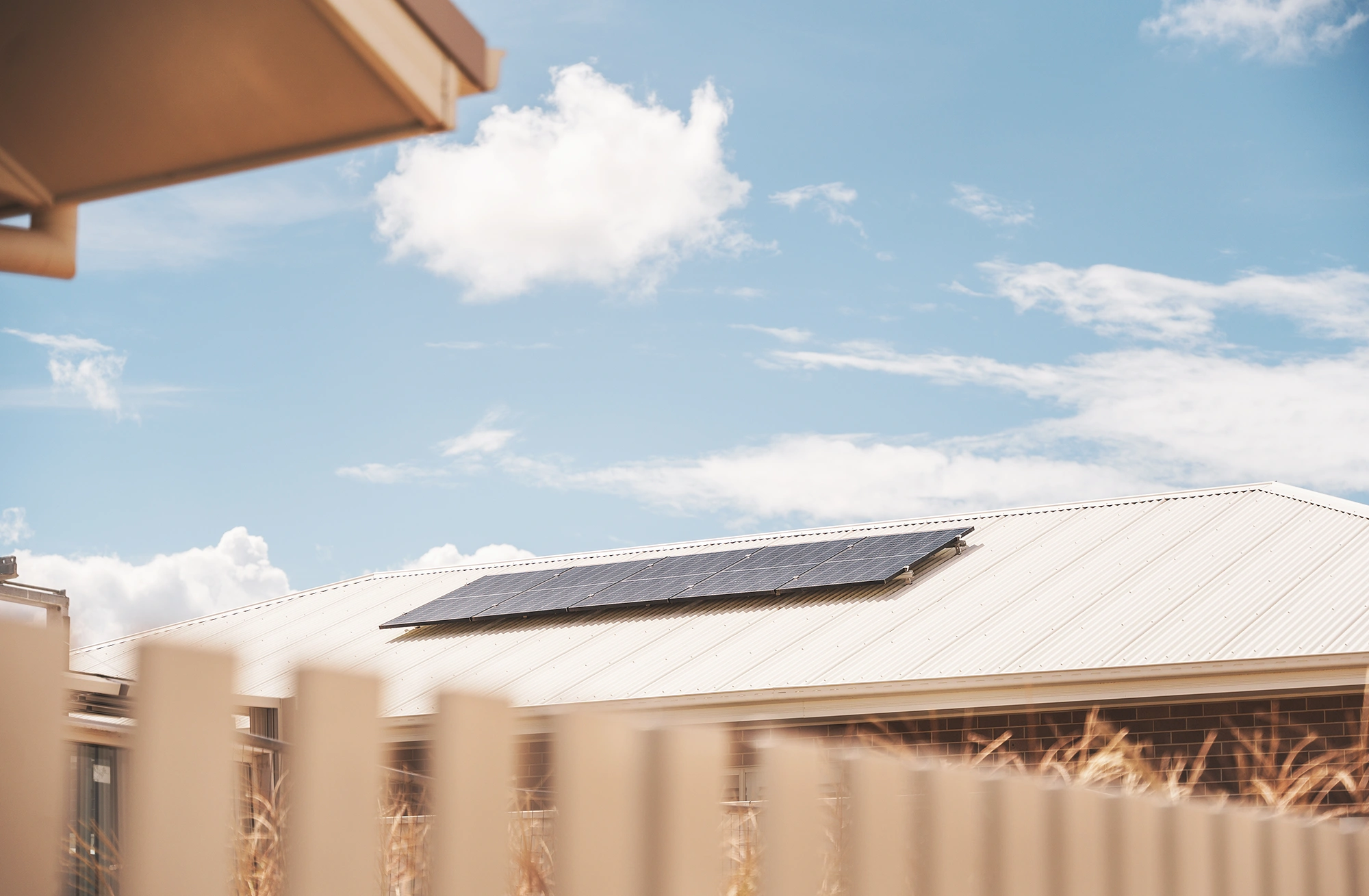
As the primary subsidy (technically not a rebate) for solar power in NSW, the Small-Scale Renewable Energy Scheme (SRES) is an incentive that encourages investments of both homes and businesses to install rooftop solar up to 100 kW that is less than 250 MWh per year, as well as solar water heaters and air sourced heat pumps.
The SRES is still available in 2026, but its benefits keep shrinking every year on the way to the scheme's scheduled end in 2030. The number of Small-scale Technology Certificates (STCs) your system earns is based on a "deeming period" that drops by one year every 1 January, so a system installed today generates fewer STCs than the same system would have a year or two ago. This means the amount you can save from investing in a system reduces every year - all the more reason to install sooner rather than later. Note this scheme does not include a rebate for battery storage on its own (see the Cheaper Home Batteries Program below for that).
(Open)
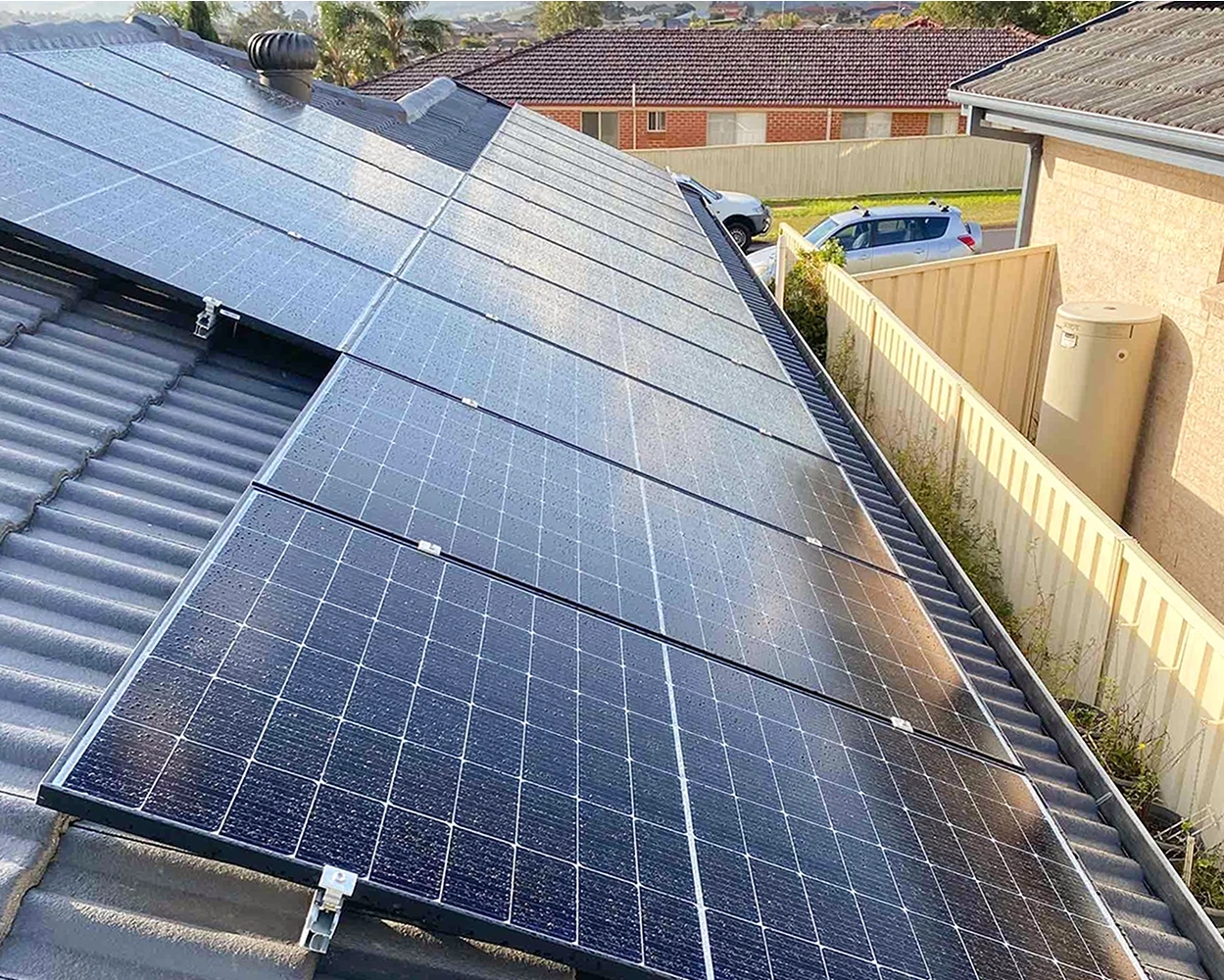
A feed-in-tariff is essentially a reward provided by your energy provider for feeding your excess solar energy back into the grid.
IPART's benchmark for the 2026-27 financial year has the flat, all-day feed-in-tariff sitting between 3.4 and 6.5 cents per kWh - down again from 4.8 to 7.3 cents in 2025-26, as more rooftop solar pushes daytime wholesale prices lower. The upside is that time-of-use plans now pay far more for evening exports, with benchmark peak rates of roughly 17 to 19 cents per kWh with Ausgrid and Endeavour Energy, and up to around 33 cents per kWh with Essential Energy. A battery that lets you shift your export until the evening peak, or a VPP that's paid to discharge at those times, is increasingly where the real value is.
.webp "Solar panel cells close up")
(Closed)
The more well-known solar rebates like the Solar Swap and Low-income household rebates are no longer available. The Low-Income Household rebate allowed eligible homes to get a free 3 kW solar system installed to help reduce electricity bills.
This was designed to allow homes to save on their electricity bills up to $600 a year, and was funded under a fixed term in the NSW Government’s COVID-19 economic stimulus package. The trial has since closed and been formally evaluated by the NSW Government.
The Solar Swap rebate has also ended, which allowed households who were eligible for the Low-Income rebate to exchange their rebate for a free 3 kW solar system. Neither program is accepting new applicants in 2026.
Homes and businesses can still get discounts on solar battery storage in 2026, though the mix of federal and
state incentives has changed. Here's what's actually available right now.
(Open)
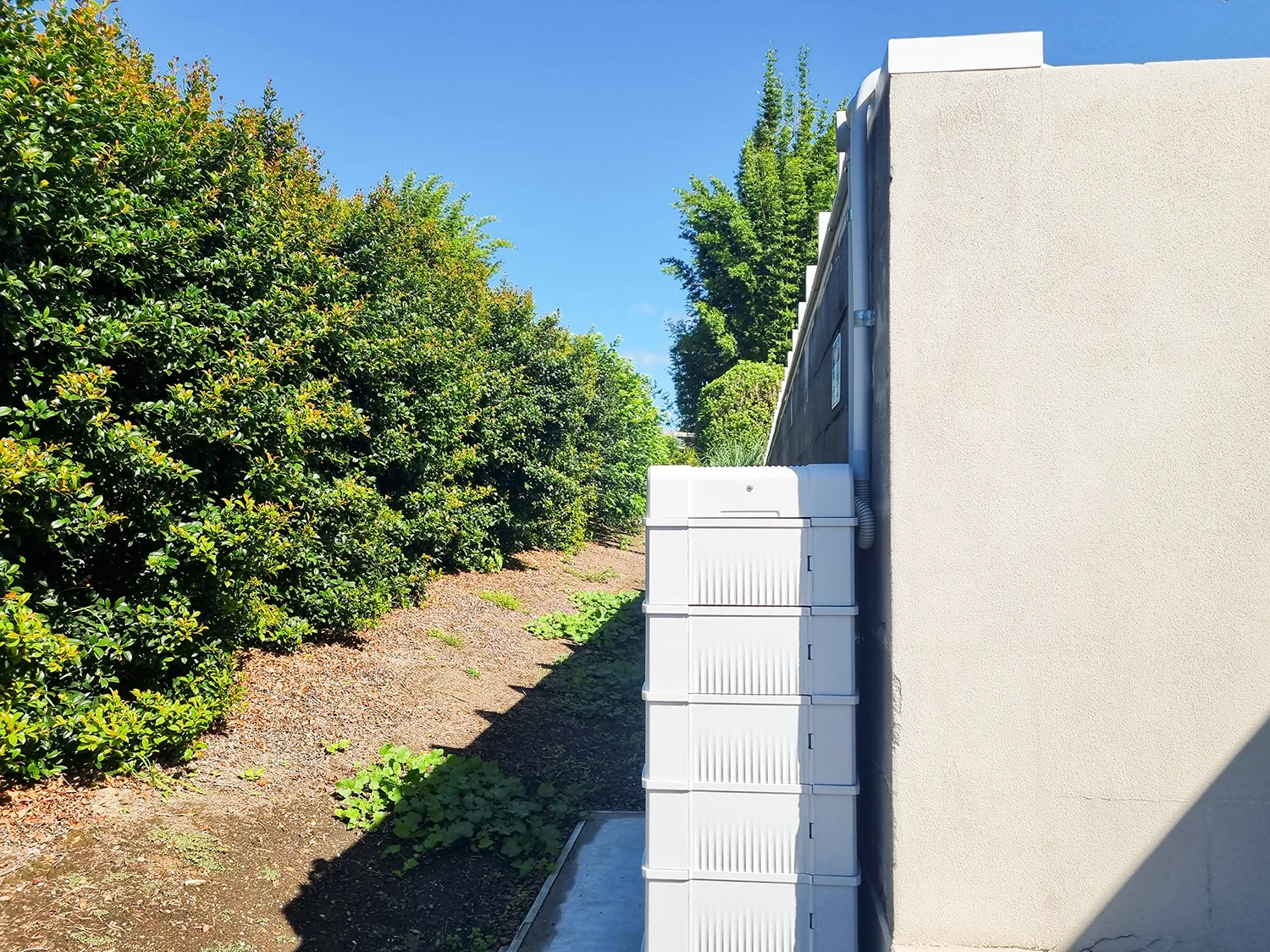
Since launching on July 1st 2025, the Federal Government's Cheaper Home Batteries Program has become the main battery rebate for homes and businesses across Newcastle, Maitland, and the Hunter. It works like the solar STC scheme: the discount is applied to your invoice up front by your accredited retailer, calculated from your battery's usable capacity, an STC "factor," and the current STC price (generally trading between $38 and $39, under a $40 government cap).
From 1 May 2026, the rebate rules changed: the STC factor now steps down twice a year instead of once, and larger batteries earn a smaller share of the incentive (the first 14 kWh of usable capacity is rebated in full, the next 14 kWh at a reduced rate, and any usable capacity above 28 kWh up to the 50 kWh cap at a much lower rate again). In practice, a typical 10 kWh battery now attracts a rebate of roughly $2,500-$2,600, down from around $3,200 before May 2026 - still a meaningful saving, but smaller than it was, and it will keep shrinking every 1 January and 1 July on the way to 2030.
In addition to solar battery rebates, NSW battery-owners can also take advantage of available Virtual Power
Plants (VPP) rebates and incentives to help reduce the overall cost of investing in energy storage. Here are the available VPP rebates in
NSW:
(Open)
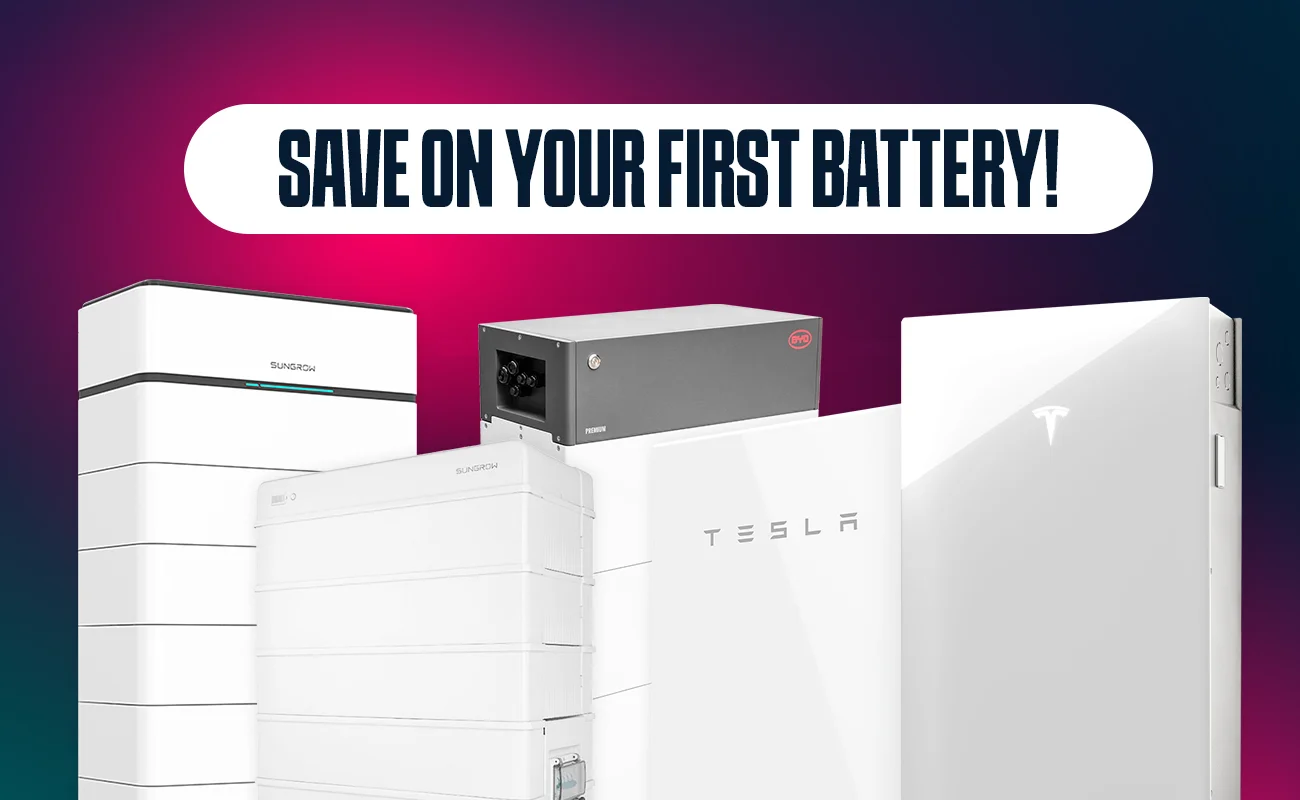
Formerly known as the state-wide home battery subsidy, the Peak
Demand Reduction Scheme now serves as an incentive for primarily home VPPs and commercial and STRATA buildings.
Which providers offer the NSW VPP Incentive? The NSW VPP Incentive isn't something you apply for directly through the government, you sign your battery up with a participating retailer or VPP operator, and they handle the certificate side of things through an Accredited Certificate Provider. A number of retailers and specialist VPP-only operators run eligible programs in NSW, including Amber Electric among others, though the exact list of participating providers and their offers changes fairly often, so it's worth checking directly with a few before you sign up.
As time goes on, old rebates and subsidies phase out, and new ones come in to replace them - 2026 has already brought a reshuffle, with the federal Cheaper Home Batteries Program stepping in as the main battery incentive and NSW's own battery rebate shifting toward the VPP Incentive instead. There's still a good opportunity for most households to take advantage of not just one rebate, but a combination of them, all designed to encourage investment in your own energy.
Still need help? We help business and homeowners find their ideal energy solutions and maximise existing rebates and incentives.
See exactly what solar system size you need, from panel dimensions to 3kW-13.3kW+ pricing, based on your household size and daily usage in NSW.
Read moreExplore the recently changed VPP NSW rebate, & how the Peak Demand Reduction Scheme (PDRS) calculates rewards for joining a Virtual Power Plant.
Read moreAlready have a Powerwall 2? You can now add a Powerwall 3 alongside it. Supported configurations, limitations and how the rebates stack in 2026.
Read moreSee what a 6.6kW, 10kW and 13.3kW system generates each month in Newcastle and the Hunter, why summer beats winter, and how to use more of it.
Read moreAll NSW homeowners need to know about the solar installation process - from first quote to first bill. 9 steps, real timeframes, & what to ask your installer.
Read moreAlready have solar? Decide whether to add a battery, expand your panels or replace your system, and which delivers the best return in 2026.
Read moreSupply charges, feed-in tariffs, controlled load, peak rates - we explain every line on your NSW electricity bill and show you where you can save more.
Read moreCompare retailer Solar Sharer plans, check eligibility & opt in. Origin, Amber, AGL, EnergyAustralia & more. 3 hours free power daily from 11am–2pm.
Read moreLearn how home electricity works in Australia, including circuits, switches, circuit breakers, RCDs and what happens during power outages.
Read moreIs solar & battery worth investing in for Australian homes? Explore 2026 costs, payback periods, disadvantages, and how the Solar Sharer offer affects it.
Read moreLearn about the May 1st Federal battery rebate changes in Australia and what they mean for home battery costs, solar savings, and discounts.
Read moreCompare Tesla Powerwall 3, Sungrow SBR & SBH, GoodWe ESA, Fronius Reserva, and BYD Battery-Box to find the best home battery for Australia.
Read moreExplore how Australia’s Q4 2025 solar and battery data highlights a major milestone: majority renewable contribution to daytime electricity demand.
Read moreHow rooftop solar helped NSW avoid blackouts during the 2026 heatwave, reducing grid stress & supporting record electricity demand across Newcastle.
Read moreExplore Elite Power Group's solar and battery installation statistics for 2025, and how we performed over this year of operation in Newcastle and Maitland.
Read moreCompare how Peak shaving reduces demand spikes; load shifting moves consumption to cheaper hours; demand response is grid-triggered.
Read moreExplore the difference between solar inverter types like grid-tied, hybrid, microinverters, and off-grid inverters for solar and battery systems in Australia.
Read moreExplore Australia's first CEC-approved bidirectional and vehicle-to-grid capable electric vehicle, the V2Grid Numbat, a 6.2kW V2G/H charger now ready.
Read moreEnergy capacity (kWh) is how much a battery stores. Power output (kW) is how fast it delivers. Covers nominal vs useable, SoC, DoD and cycles.
Read moreExplore the differences between AC and DC electric vehicle charging in Australia and how it affects the way you charge your EV, and the pros & cons.
Read moreConsidering a cheap solar system? Learn how low-quality, unreliable inverters and panels can lead to costly repairs, full replacements, and safety issues.
Read moreLearn the difference between volts, amps and watts, and learn electricity with simple explanations, formulas, real-world examples, and an easy calculator.
Read moreBattery supply chains are tight across Australia, with shipping delays leaving many installers out of stock and customers waiting longer. What's happening?
Read moreLearn how to avoid solar scams in NSW. Spot red flags & dodgy installer tactics and find reputable companies with great warranty & quality installations.
Read moreExplore why the delays in vehicle-to-grid and bidirectional chargers are happening, and how V2G faces regulatory and legislative development in Australia.
Read moreOver 56,000 solar batteries were sold in Q2, 2025, thanks to the Australian battery subsidy. Explore solar & battery uptake, growth trends, and what's next.
Read moreDiscover how to choose the right solar battery size for your home. Compare 10kWh, 15kWh, and 20kWh options to maximise savings, and solar in NSW.
Read moreVirtual Power Plants explained for Australian homeowners. What a VPP is, how it works, NSW program comparison and whether joining one is worth it.
Read moreExplore what solar hotspots are, how they can affect your panel performance & efficiency, & how bypass diodes can affect your cells & strings in Australia.
Read moreDiscover the best home EV chargers in Australia. Compare popular electric vehicle home charging stations, costs, and installations for Newcastle NSW.
Read moreLearn if your roof is suitable for solar panels and how roof materials like terracotta or tin, orientation, tilt, & shading can affect energy production and install.
Read morePower vs Energy in Australia: Difference Between Watts and Watt-Hours, kW vs kWh, with Diagrams, Calculations, and Home Appliance Examples.
Read moreExplore upcoming & available bidirectional V2G-capable chargers in Australia from V2Grid, RedEarth, Sigenergy, Enphase, Tesla, and Fronius EV charging.
Read moreCompare the difference between Sungrow's SBH and SBR battery storage vs. BYD Battery-Box and find what battery is better for homes or businesses in NSW.
Read moreThe NSW Government have announced that the NSW Battery Rebate (PDRS) will be suspended on June 30th, 2025, and will no longer be available.
Read moreAvoid the 9.7% NSW electricity bill increase with expert tips on reducing energy costs, optimising solar usage, and finding better energy plans in 2025.
Read moreExplore how you can use your EV battery via vehicle-to-load (V2L) as a backup energy source during blackouts to power your home appliances in Australia.
Read moreExplore Australia's Federal Government solar battery rebate subsidy like eligibility, approved batteries, requirements, and more about the upcoming incentive.
Read morePartnering with Elite Power Group, Maitland City Council have invested in more electric vehicle chargers in the Maitland area, supporting the uptake of EVs.
Read moreCompare home insurance policies and find out if solar and battery is covered and how installations affect costs, value, and included coverage in Australia.
Read moreShould solar owners get a home battery (ESS) or wait for vehicle-to-home (V2H) technology to use electric vehicle battery power to be available in Australia?
Read moreExplore the differences between AC and DC coupled solar battery storage and how it affects your solar system and inverters' configuration in Australia.
Read moreExplore if fleet or public electric vehicle charging is better for charging workplace and employee EVs for your business in Newcastle & the Hunter, NSW.
Read moreWith homes, Australian standards, and energy networks being ready for bidirectional charging, why the wait? Let's explore grid, EV, & charger developments.
Read moreThe differences between Tesla Powerwall 3 vs. Sungrow battery storage (SBH) capacity, warranty, and features, and which one is better in Australia.
Read moreComparing solar PV, solar hot water, & heat pump hot water systems for Australian homes. Which saves more, which costs less, and which is right for you.
Read moreWorking closely with the Newcastle City Council, we helped the development of Gregson Park Playspace with electrical infrastructure, lighting, and facilities.
Read moreA very strong storm passed through the Hunter, leaving over 100,000 homes without power. Here's how you can protect your home's energy with independence.
Read moreElite Power Group installed a 2MW commercial solar installation for National Ceramic Industries Australia, totaling 4000 solar panels in Rutherford.
Read moreExplore various ways where homes and businesses can reduce electricity bills and maximise solar generation in Newcastle and the Hunter, NSW for 2026.
Read moreRenewable News Articles
Sign up for new article updates - we don't spam.
We've invested in becoming fully-licensed and qualified installers to ensure homes and businesses get
the best solar, battery, and electrical systems available.
Certified solar system installers near you.
Get SAA-Approved Battery Installations.
Fully-licensed electricians Near You.
Convenient EV charging stations for properties.
Leave a Comment