Newcastle's Leading Residential & Commercial Solar Installers

Newcastle's Leading Residential & Commercial Solar Installers
Posted 3 Sep
Want the latest in energy, solar, and savings?Subscribe to our newsletter – we don’t spam!
When looking into solar system sizing and battery storage capacity separately, you’ve probably asked yourself the frequent question – “which battery goes with what solar system?”. Let’s breakdown how solar and battery sizes pair up in the real world and what battery storage brands are compatible with what solar systems.
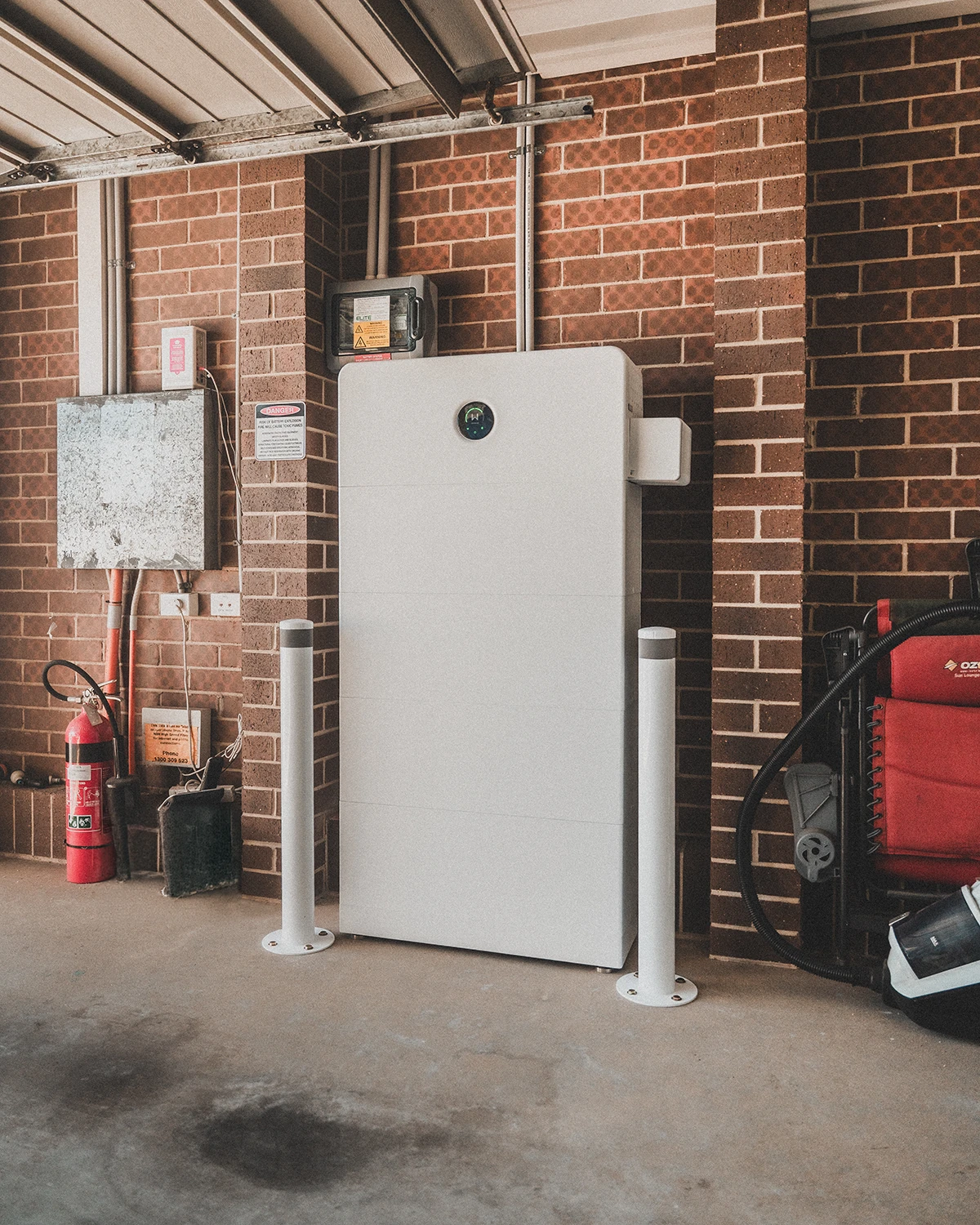
Every household throughout Newcastle & Maitland has its own energy consumption habits and requirements which determine the right sized solar system or battery capacity.
When installing both solar and battery as a package, a bigger solar system won’t always need a bigger battery, and a bigger battery doesn’t always perform better with more solar. Both solar and battery systems are connected by one thing: how much surplus solar energy you produce during the day to cover your home’s energy usage.
A 6.6kW solar system on a home that uses more of its power during the evening will generate a good amount of excess solar power, but when pairing it with a large battery like 30kWh often means that the battery won’t fully charge resulting in unused capacity that you’ve paid for.
Going the other way, having a larger solar system like 13.3kW paired with a small battery means that you’ll be generating far more than the battery can store, where the excess is fed into the grid for cheap. Both system combinations would be inefficient and more expensive than it would need to be.
In general, there are preset solar and battery packages that can suit most homes, based on Newcastle’s usage patterns. Here are common solar and battery system sizes that suit real-world homes across NSW:
|
6.6kW Solar + 10kWh Battery: Suits smaller homes with reduced evening energy consumption. The 6.6kW solar system generates a good amount of solar energy, which is enough to fill a 10kWh battery on most sunny days with minimal excess production. |
8kW Solar + 13-16kWh Battery: Around the average system sizes over the Newcastle and Hunter areas for households. The larger solar production can support the increased capacity throughout the year without it being out of balance. |
|
10kW Solar + 16-20kWh Battery: Designed for larger households with more people and usage, supporting day, evening, and night usage. Can also support EV charging and higher-consumption appliances like air-conditioning. |
13.3kW Solar + 20kWh Battery: Typically suits larger households with increase consumption habits, suiting those who want maximum energy independence, or those looking to futureproof their property’s electrification. |
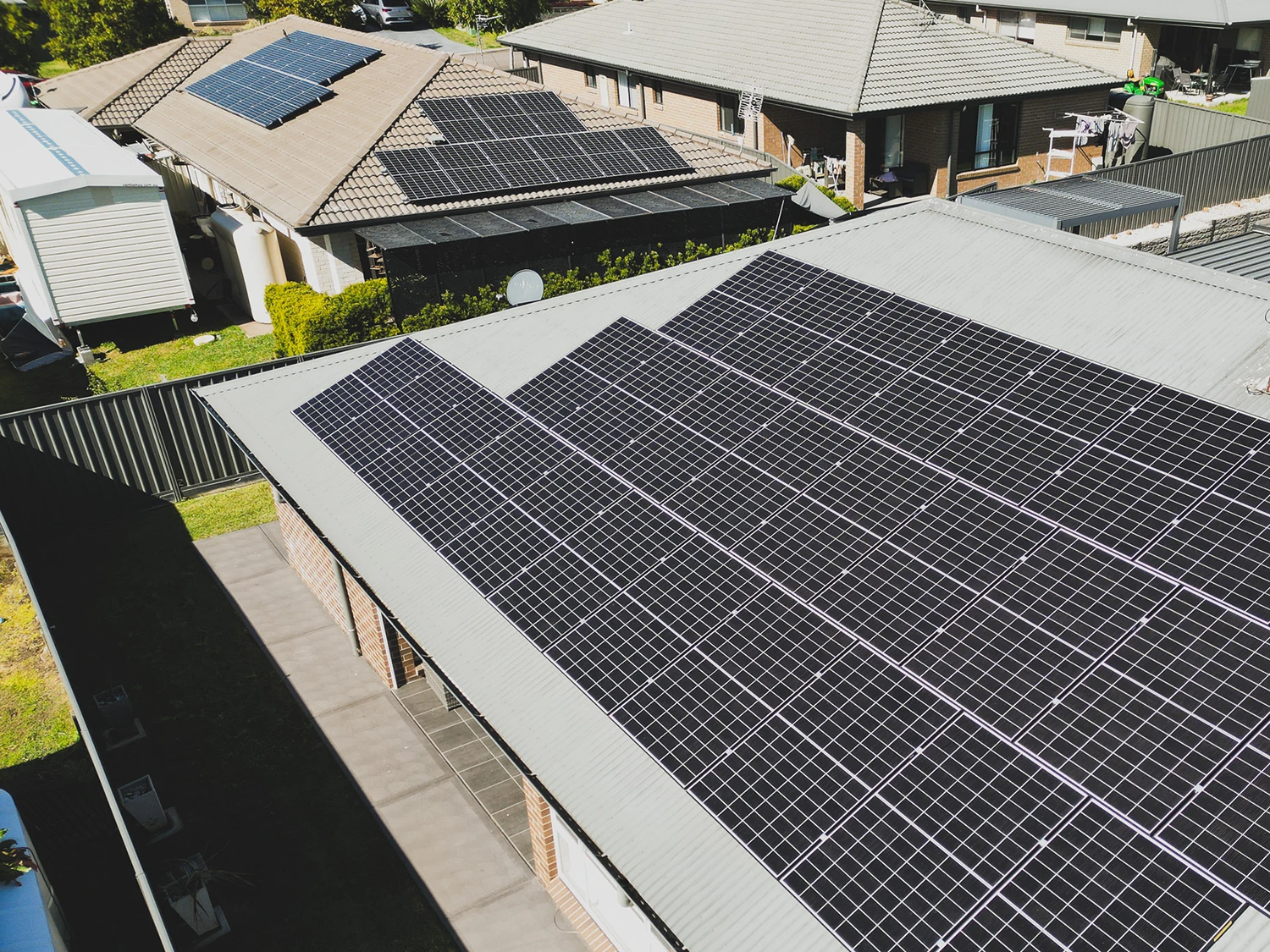
The combinations previously mentioned are typical household sizes which are usually tailored to the home’s energy consumption habits and requirements.
If you’re wanting more detail on how solar system sizing works, panel counts, roof requirements and system costs by size, our Solar System Size Guide covers that well. Sizing a battery can be difficult for those who are new to the world of energy storage, so we’ve also made a dedicated Battery Sizing Guide with explainers around capacity, usage goals, futureproofing, and the best kWh range for homes.
A properly sized solar and battery system should benefit you without sending significant amounts back into the grid for little return.
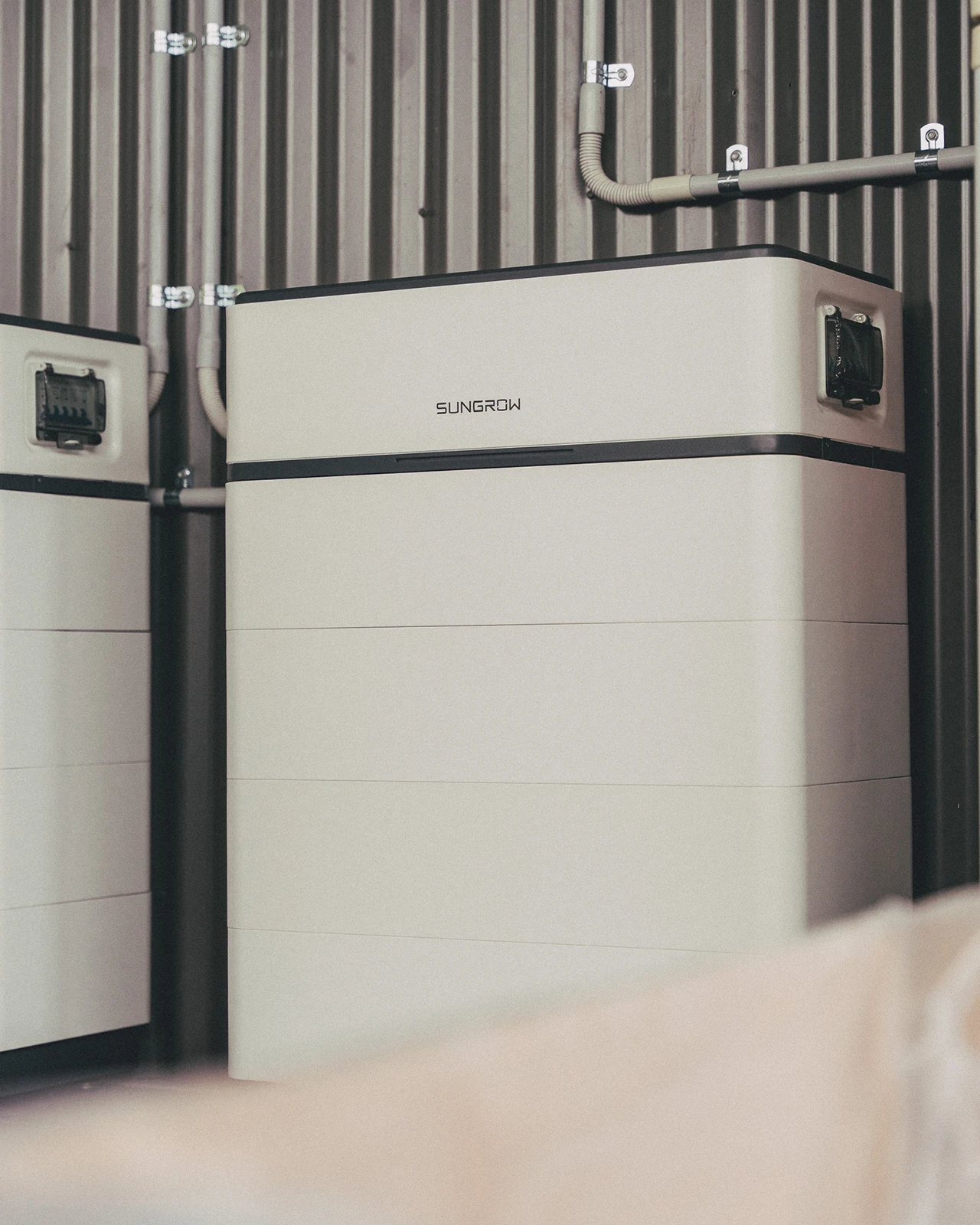
When comparing system sizes, it’s tempting to think bigger is always better when looking into solar power and energy storage, but solar and battery both tackle different problems which won’t always get solved with expansions.
More solar capacity increases how much electricity you can generate. If your daytime usage is growing with appliance additions like EVs, heat pumps, and home expansions, your existing solar system may not be able to keep up with demand. This is when a solar-only upgrade would be beneficial - to keep your home’s demand met with renewable energy.
A bigger battery upgrade increases the amount of renewable energy you can consume later. It’s the right call if your solar produces more electricity than you consume. By storing it, you can avoid using costly peak demand grid power.
For those comparing whether it’s better to upgrade or replace solar, or add a battery, check out our detailed guide.
Sizing a solar and battery system for off-grid properties is a little different as that system is typically the sole source of energy for the home.
Where a typical solar system is sized to meet general demand, an off-grid solar system is designed to exceed the average amount to ensure the property still has electricity if they surpass their 1–3-day average kWh, even if there’s multiple days of bad weather.
Finding the right off-grid solar and battery system really comes down to the specific property’s energy needs as many remote homes will need to power various appliances, as well as the desired backup days required.
Households throughout the Hunter region consume around 15-18kWh per day, an 8kW off-grid solar system paired with a 35-40kWh battery would be enough to sustain around two days of backup power during events of reduced sunlight.
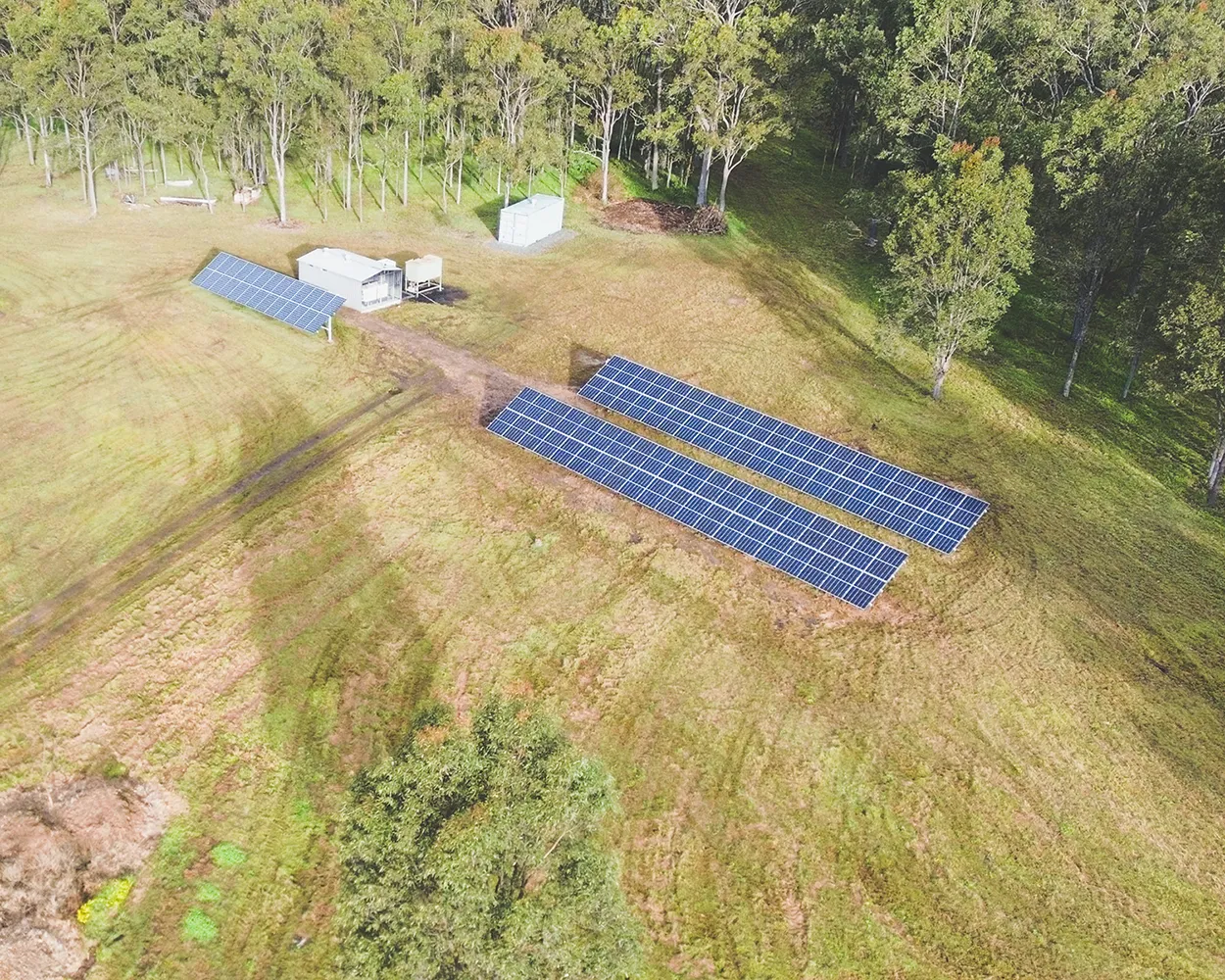
Chasing the biggest solar and battery package isn't always the right option, it's all about matching your system to how YOU use your electricity and when. Whichever direction fits your situation, getting the right combination right the first time means you can maximise your benefits and payback times.
Explore the recently changed VPP NSW rebate, & how the Peak Demand Reduction Scheme (PDRS) calculates rewards for joining a Virtual Power Plant.
Read moreAlready have a Powerwall 2? You can now add a Powerwall 3 alongside it. Supported configurations, limitations and how the rebates stack in 2026.
Read moreWhy does your solar generate less in winter? Explore real output figures, summer vs. winter differences, and the best month to use solar in Australia.
Read moreAll NSW homeowners need to know about the solar installation process - from first quote to first bill. 9 steps, real timeframes, & what to ask your installer.
Read moreAlready have solar? Decide whether to add a battery, expand your panels or replace your system, and which delivers the best return in 2026.
Read moreSupply charges, feed-in tariffs, controlled load, peak rates - we explain every line on your NSW electricity bill and show you where you can save more.
Read moreCompare retailer Solar Sharer plans, check eligibility & opt in. Origin, Amber, AGL, EnergyAustralia & more. 3 hours free power daily from 11am–2pm.
Read moreLearn how home electricity works in Australia, including circuits, switches, circuit breakers, RCDs and what happens during power outages.
Read moreIs solar & battery worth investing in for Australian homes? Explore 2026 costs, payback periods, disadvantages, and how the Solar Sharer offer affects it.
Read moreLearn about the May 1st Federal battery rebate changes in Australia and what they mean for home battery costs, solar savings, and discounts.
Read moreCompare Tesla Powerwall 3, Sungrow SBR & SBH, GoodWe ESA, Fronius Reserva, and BYD Battery-Box to find the best home battery for Australia.
Read moreExplore how Australia’s Q4 2025 solar and battery data highlights a major milestone: majority renewable contribution to daytime electricity demand.
Read moreHow rooftop solar helped NSW avoid blackouts during the 2026 heatwave, reducing grid stress & supporting record electricity demand across Newcastle.
Read moreExplore Elite Power Group's solar and battery installation statistics for 2025, and how we performed over this year of operation in Newcastle and Maitland.
Read moreCompare how Peak shaving reduces demand spikes; load shifting moves consumption to cheaper hours; demand response is grid-triggered.
Read moreExplore the difference between solar inverter types like grid-tied, hybrid, microinverters, and off-grid inverters for solar and battery systems in Australia.
Read moreExplore Australia's first CEC-approved bidirectional and vehicle-to-grid capable electric vehicle, the V2Grid Numbat, a 6.2kW V2G/H charger now ready.
Read moreEnergy capacity (kWh) is how much a battery stores. Power output (kW) is how fast it delivers. Covers nominal vs useable, SoC, DoD and cycles.
Read moreExplore the differences between AC and DC electric vehicle charging in Australia and how it affects the way you charge your EV, and the pros & cons.
Read moreConsidering a cheap solar system? Learn how low-quality, unreliable inverters and panels can lead to costly repairs, full replacements, and safety issues.
Read moreLearn the difference between volts, amps and watts, and learn electricity with simple explanations, formulas, real-world examples, and an easy calculator.
Read moreBattery supply chains are tight across Australia, with shipping delays leaving many installers out of stock and customers waiting longer. What's happening?
Read moreLearn how to avoid solar scams in NSW. Spot red flags & dodgy installer tactics and find reputable companies with great warranty & quality installations.
Read moreExplore why the delays in vehicle-to-grid and bidirectional chargers are happening, and how V2G faces regulatory and legislative development in Australia.
Read moreOver 56,000 solar batteries were sold in Q2, 2025, thanks to the Australian battery subsidy. Explore solar & battery uptake, growth trends, and what's next.
Read moreDiscover how to choose the right solar battery size for your home. Compare 10kWh, 15kWh, and 20kWh options to maximise savings, and solar in NSW.
Read moreVirtual Power Plants explained for Australian homeowners. What a VPP is, how it works, NSW program comparison and whether joining one is worth it.
Read moreExplore what solar hotspots are, how they can affect your panel performance & efficiency, & how bypass diodes can affect your cells & strings in Australia.
Read moreDiscover the best home EV chargers in Australia. Compare popular electric vehicle home charging stations, costs, and installations for Newcastle NSW.
Read moreLearn if your roof is suitable for solar panels and how roof materials like terracotta or tin, orientation, tilt, & shading can affect energy production and install.
Read morePower vs Energy in Australia: Difference Between Watts and Watt-Hours, kW vs kWh, with Diagrams, Calculations, and Home Appliance Examples.
Read moreExplore upcoming & available bidirectional V2G-capable chargers in Australia from V2Grid, RedEarth, Sigenergy, Enphase, Tesla, and Fronius EV charging.
Read moreCompare the difference between Sungrow's SBH and SBR battery storage vs. BYD Battery-Box and find what battery is better for homes or businesses in NSW.
Read moreThe NSW Government have announced that the NSW Battery Rebate (PDRS) will be suspended on June 30th, 2025, and will no longer be available.
Read moreAvoid the 9.7% NSW electricity bill increase with expert tips on reducing energy costs, optimising solar usage, and finding better energy plans in 2025.
Read moreExplore how you can use your EV battery via vehicle-to-load (V2L) as a backup energy source during blackouts to power your home appliances in Australia.
Read moreExplore Australia's Federal Government solar battery rebate subsidy like eligibility, approved batteries, requirements, and more about the upcoming incentive.
Read morePartnering with Elite Power Group, Maitland City Council have invested in more electric vehicle chargers in the Maitland area, supporting the uptake of EVs.
Read moreCompare home insurance policies and find out if solar and battery is covered and how installations affect costs, value, and included coverage in Australia.
Read moreShould solar owners get a home battery (ESS) or wait for vehicle-to-home (V2H) technology to use electric vehicle battery power to be available in Australia?
Read moreExplore the differences between AC and DC coupled solar battery storage and how it affects your solar system and inverters' configuration in Australia.
Read moreExplore if fleet or public electric vehicle charging is better for charging workplace and employee EVs for your business in Newcastle & the Hunter, NSW.
Read moreWith homes, Australian standards, and energy networks being ready for bidirectional charging, why the wait? Let's explore grid, EV, & charger developments.
Read moreThe differences between Tesla Powerwall 3 vs. Sungrow battery storage (SBH) capacity, warranty, and features, and which one is better in Australia.
Read moreComparing solar PV, solar hot water, & heat pump hot water systems for Australian homes. Which saves more, which costs less, and which is right for you.
Read moreWorking closely with the Newcastle City Council, we helped the development of Gregson Park Playspace with electrical infrastructure, lighting, and facilities.
Read moreA very strong storm passed through the Hunter, leaving over 100,000 homes without power. Here's how you can protect your home's energy with independence.
Read moreCompleting a commercial solar and electric vehicle charger installation, our Thornton neighbours can take full advantage of renewable electricity and charging.
Read moreElite Power Group installed a 2MW commercial solar installation for National Ceramic Industries Australia, totaling 4000 solar panels in Rutherford.
Read moreExplore various ways where homes and businesses can reduce electricity bills and maximise solar generation in Newcastle and the Hunter, NSW for 2026.
Read moreRenewable News Articles
Sign up for new article updates - we don't spam.
We've invested in becoming fully-licenced and qualified installers to ensure Newcastle homes and businesses
get the best solar, battery, and electrical systems available. We want to assist Newcastle's renewable energy revolution with quality
installations for maximum customer satisfaction.
Certified solar system installers near you.
Get CEC-Approved Battery Installations.
Fully-licenced electricians in Newcastle.
Convenient EV charging stations for properties.
Leave a Comment