Newcastle's Leading Residential & Commercial Solar Installers

Newcastle's Leading Residential & Commercial Solar Installers
Posted 19 Mar
Want the latest in energy, solar, and savings?Subscribe to our newsletter – we don’t spam!
Finding the right battery for your property is already hard enough with hundreds of brands to choose from, let alone technical aspects like 'AC-coupling' and 'DC-coupling'? What does that even mean?
The good news is that it is much easier to understand than it sounds. Let's explore battery coupling, and how your solar system and configuration will determine how you use your energy.
Quick answer: AC-coupled batteries connect via your switchboard and work with any existing solar inverter — making them the go-to for retrofits. DC-coupled batteries connect directly through a hybrid inverter for better efficiency, and are the preferred choice for new solar-plus-battery installations. The right answer depends on whether you already have solar and what inverter you have.
The batttery terms coupled & coupling are simply another way of saying connected.
AC coupling and DC coupling refers to the way a battery is connected to a new or existing solar system, which both serve different purposes.
A solar system generates DC electricity which needs to be converted to AC electricity to be used in a home. Depending if your battery is AC or DC-coupled, it will determine how many electricity conversions there are before you use it.
What does AC-Coupled mean? AC-coupling is when a battery is connected after the inverter as it has its own built-in inverter. AC-coupled batteries are generally used for retrofitting to existing systems.
What is a DC-Coupled battery system? DC-coupled solar batteries are when the battery is directly connected to a hybrid inverter which manages both the solar and battery. This is the ideal choice for new system installations.
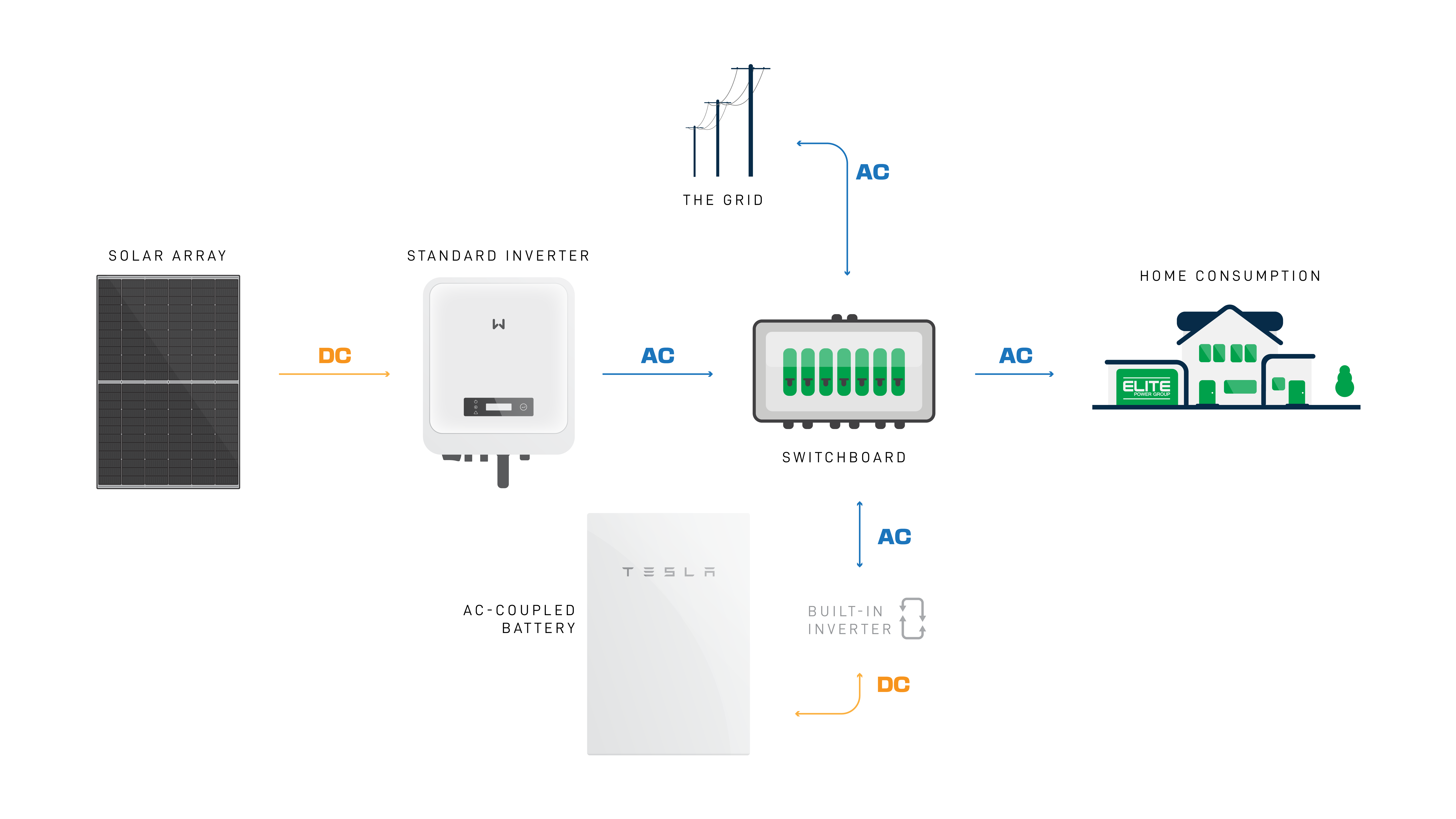
Using this AC-coupled battery diagram, you can see that the solar and inverter system is separate to the battery. In this arrangement, the AC-coupled battery is retrofitted to the existing system, and looks after its own DC and AC energy conversion with the built-in inverter.
Because the AC-coupled battery has its own built-in inverter, this removes the requirement for a hybrid
inverter
which enables broader compatibility and accessibility for existing system owners.
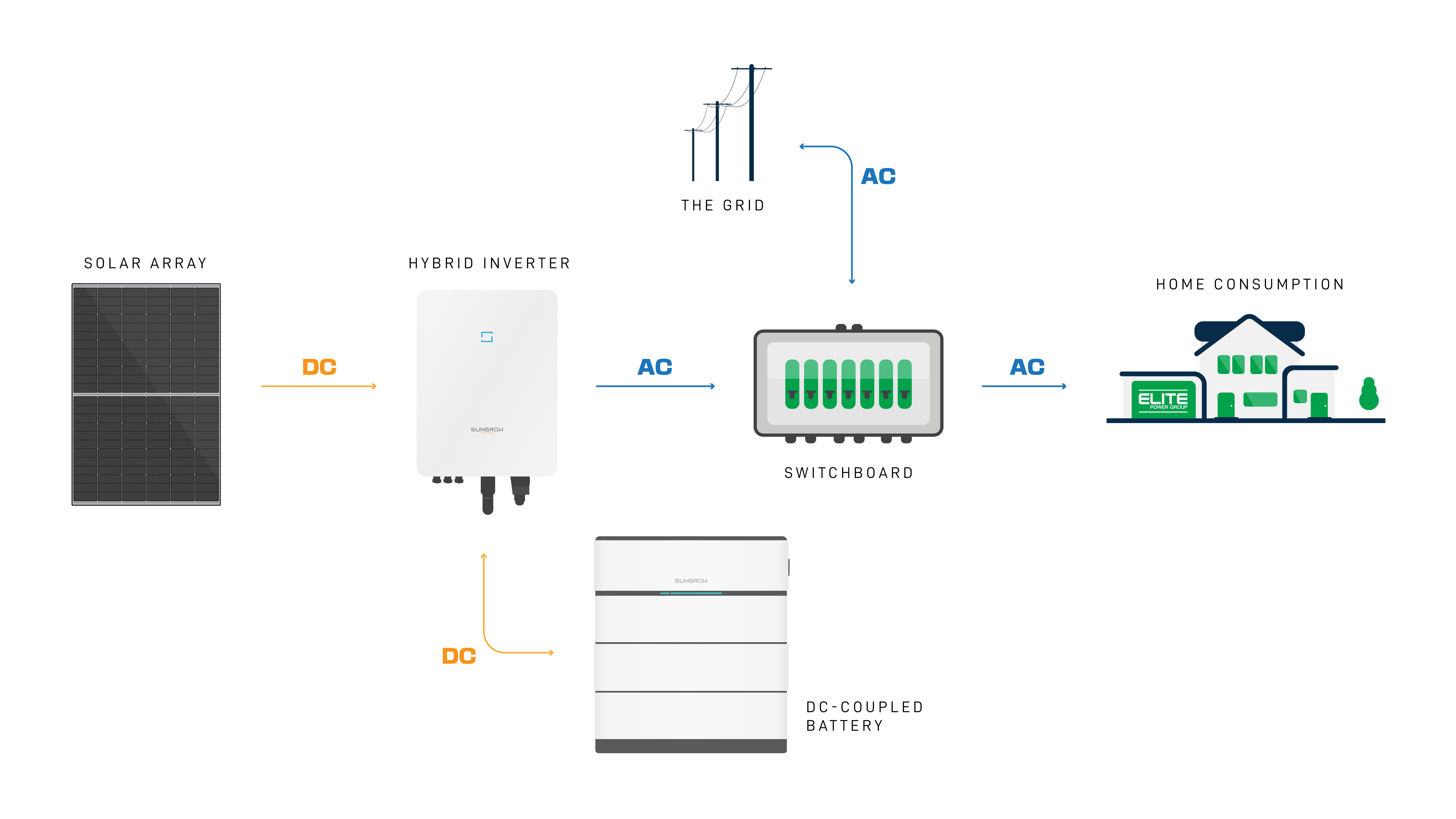
Unlike an AC-coupled system, a DC-coupled system is directly integrated with a compatible, battery-ready hybrid inverter which essentially looks after managing the battery and solar generation in one unit.
The hybrid DC-coupled battery system is configurable and customisable to either send the DC energy straight to the battery, or convert the DC power into AC for home appliances or feeding to the AC grid. Because of the reduced amount of conversions, it also increases efficiency.
|
|
AC-COUPLED
|
DC-COUPLED |
|
How it connects |
Via AC switchboard, independent of solar inverter | Direct DC connection via hybrid inverter |
|
Number of Conversions |
3 (DC to AC to DC to AC) | 1 (DC to AC at point of use) |
|
Round-trip efficiency |
90-94% |
96-98% |
|
Retrofits to existing systems |
Works with most inverters |
Only compatible with hybrid inverters |
| Best for |
Retrofitting to existing solar systems | Newer solar & battery systems |
|
Advantages |
|
|
|
Disadvantages |
|
|
The coupling type of a battery is determined by its inverter architecture - whether it has its own built-in inverter (AC-coupled) or connects directly to a compatible hybrid inverter (DC-coupled). The table below covers the main home battery brands available in Australia and how they connect.
| BATTERY |
COUPLING |
BUILT-IN INVERTER |
BEST FOR |
| Tesla Powerwall 2 | AC-coupled |
Yes |
Retrofitting to most existing solar systems |
| Tesla Powerwall 3 |
AC (retrofita) & DC-coupled (all-in-one) | Yes + Built-in Solar Inverter |
New Installs for retrofits - most flexible option |
| GoodWe ESA |
AC & DC-Coupled |
Yes, built-in solar inverter module |
Adding high-capacity storage to existing systems |
| Sungrow SBH / SBR |
AC & DC-Coupled | No built-in inverter |
New Sungrow-based inverter systems |
| Fronius Reserva |
DC-Coupled | No built-in inverter | Fronius-based solar inverter systems |
| BYD Battery-Box |
DC-Coupled | No built-in inverter | BYD-based solar inverter systems |
Tesla Powerwall 3 is neither in the traditional sense - it is an all-in-one system with its own built-in solar inverter. This makes it different from both classic AC-coupled and DC-coupled configurations.
Here is how each Powerwall generation works:
Tesla Powerwall 2: AC-coupled. It has its own built-in battery inverter and connects at the AC switchboard level, independently of the solar inverter. Works with any existing solar setup regardless of brand. This is the classic AC-coupled battery.
Tesla Powerwall 3: All-in-one. It includes a built-in solar inverter as well as the battery inverter. It connects directly to the solar panels (DC input) as well as the grid. In a new installation, it replaces the need for a separate solar inverter entirely. When retrofitting to an existing system, it can AC-couple at the switchboard like Powerwall 2. So Powerwall 3 can operate as either depending on installation configuration.
The practical implication: if you are adding Powerwall 3 to an existing solar system, it connects AC-coupled via the switchboard and your existing inverter stays in place. If you are installing solar and Powerwall 3 together from scratch, it acts as the all-in-one inverter and the DC coupling question is largely bypassed.
DC-coupled systems are more efficient, with round-trip efficiency of 96–98% compared to 90–94% for AC-coupled systems. The difference comes down to energy conversions - DC-coupled requires one conversion, AC-coupled requires three.
Because DC-coupled energy storage requires fewer conversions between AC and DC, it means that more energy can be utilised and available for immediate consumption.
Every time electricity is inverted from AC to DC and the other way around, around 1-5% of power is lost to inefficiencies of the inversion process. This means that in an AC-coupled battery system, electricity is converted 3 times to allow for both storage and consumption, as opposed to the DC-coupled single conversion.
Even though DC-coupled systems are generally more efficiency, it is important to note that the conversion losses aren't significant
and won't really be noticeable.
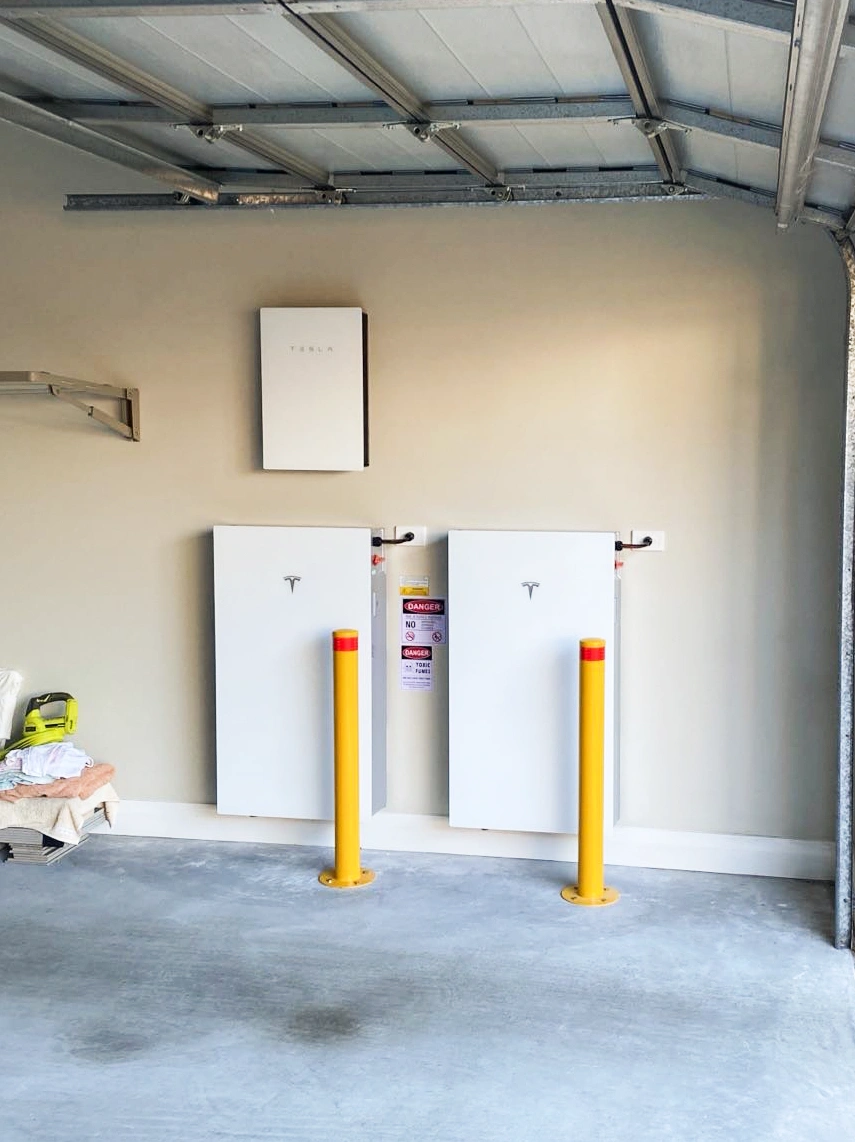
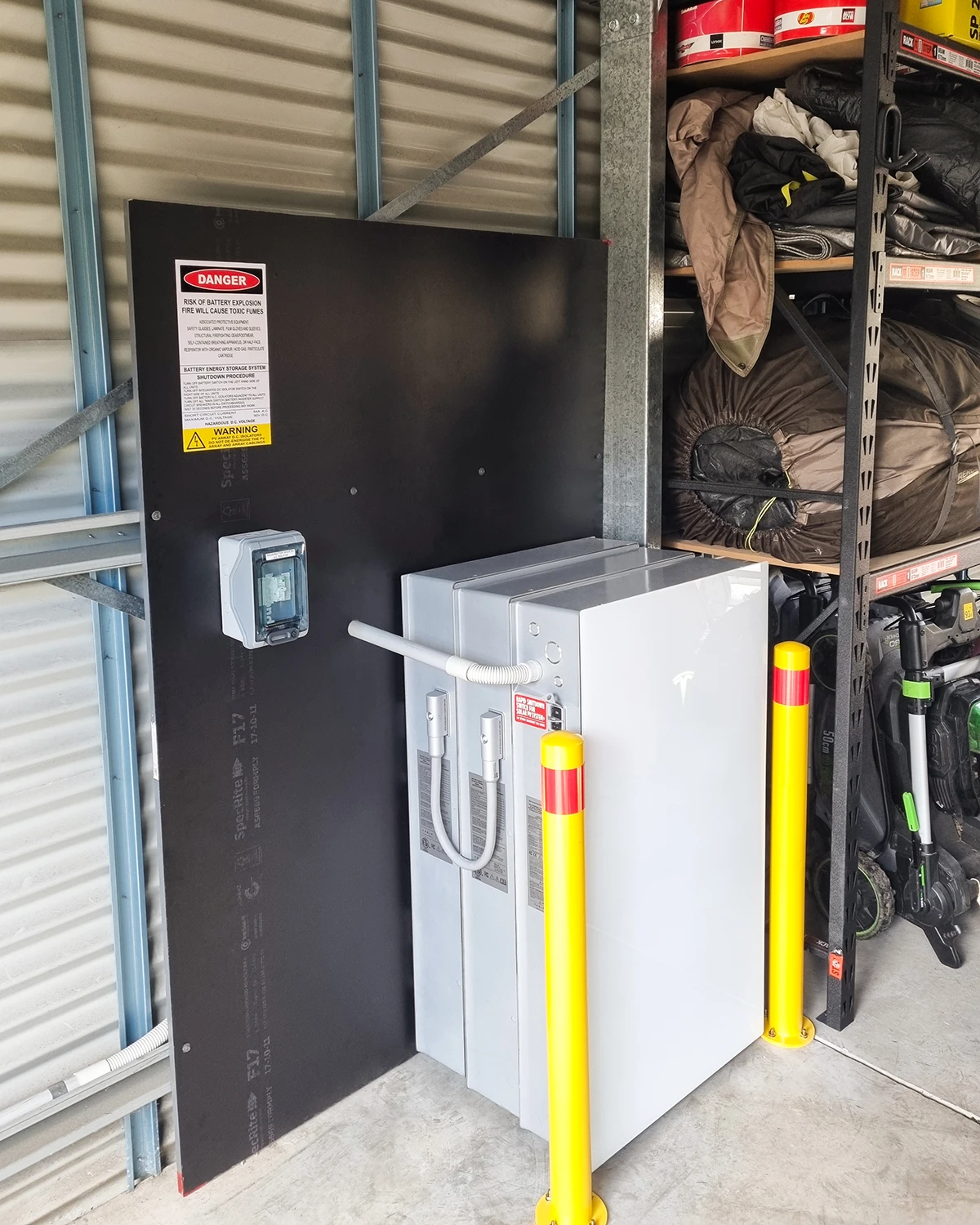
Image: Triple Tesla Powerwall 3 installation (DC-coupled).
If your home has existing solar without a hybrid solar inverter, an AC-coupled battery may be better suited for you. If you're installing an entirely new solar system, investing in a hybrid DC-coupled battery system is the way to go.
For homes with existing solar, it may be more cost-effective to retrofit an AC-coupled battery to your solar system.
For homes getting a new solar system, a DC-coupled system might make more sense for longevity and future compatibility.
If you’re looking at getting a battery for your property and are unsure whether an AC or DC-coupled battery would be better, we highly-recommend contacting your local solar battery installers to determine the right solution for you.
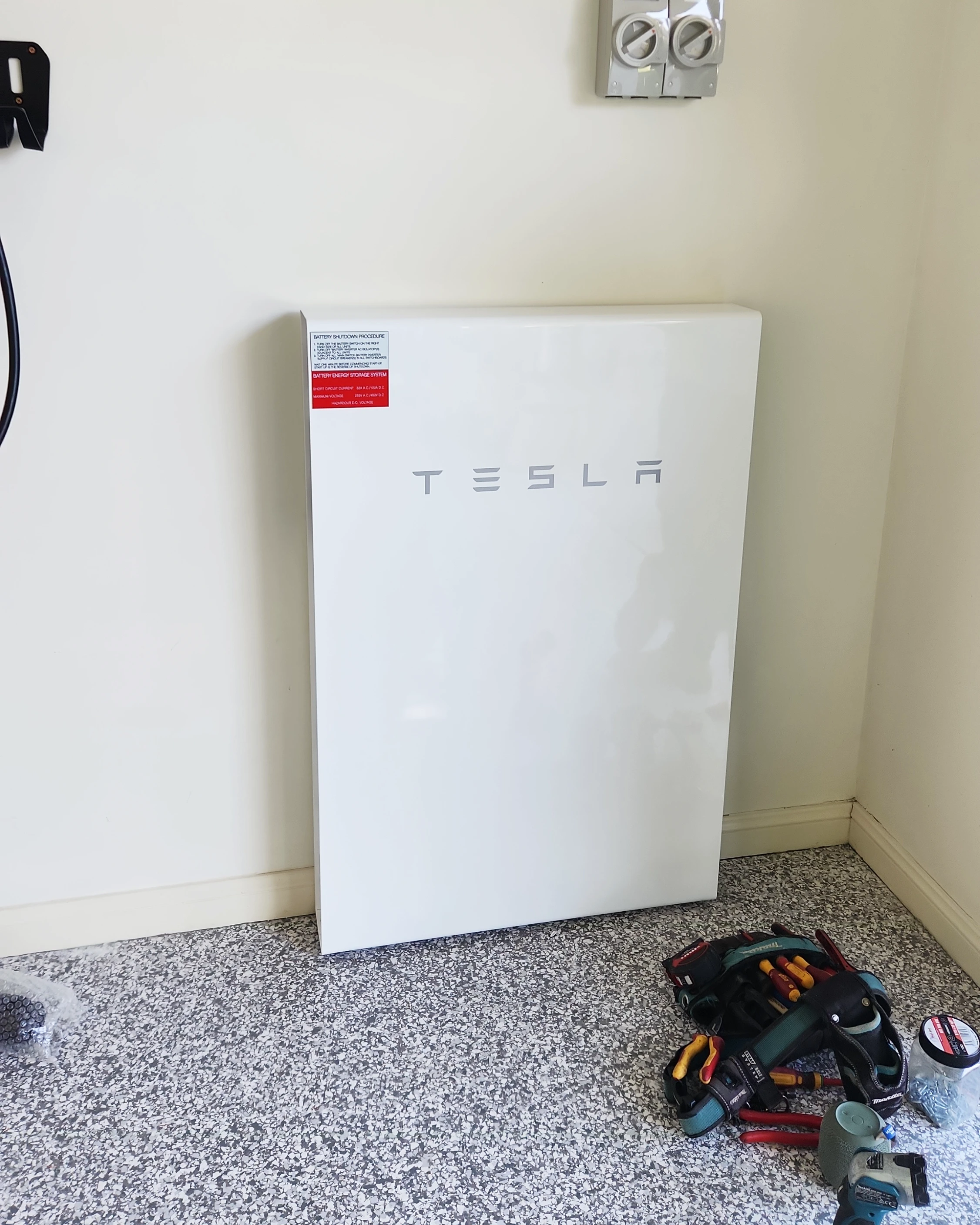
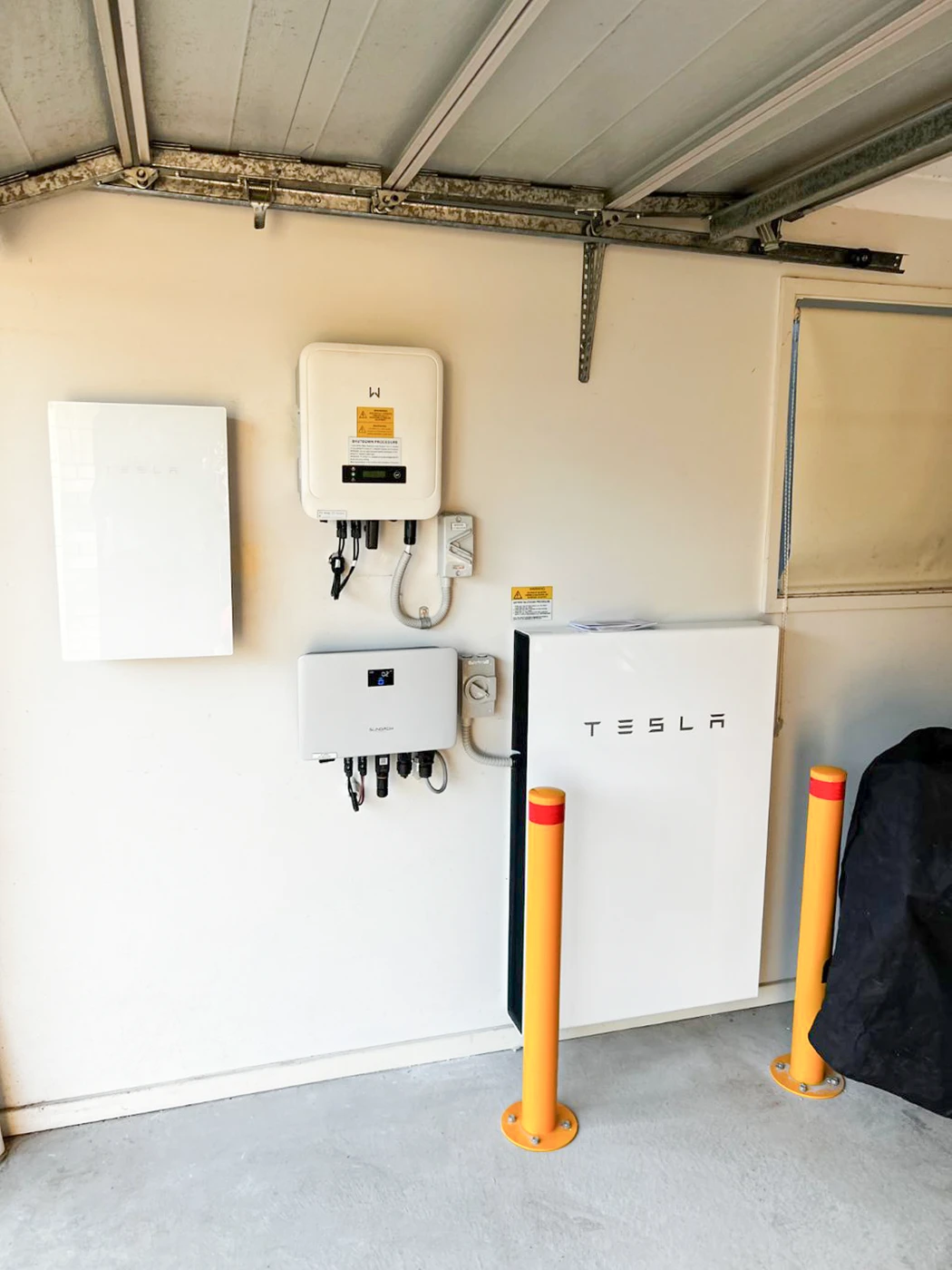
Image: AC-coupled Tesla Powerwall 2 installation. (Now discontinued)
With so many brands, models, capacity, and feature options, where in the world do you start in finding the best energy storage for your home? Well good news, it's not as difficult as it may seem. Whilst we have an article on determining the best battery for homes in Australia, here are some estimated capacity options.
Most homes will use a moderate amount of energy. For the average household where residents are working most of the day, a 13-15kWh battery should be sufficient in helping offset daily consumption.
For flexibility in energy capacity, a 16-20kWh battery will enable a little more excess energy to sell into the grid, and accelerate programs like Amber. It will also support homes with more residents and higher usage.
With higher investment budgets, those who want even more juice in their energy capacity can invest in anything from 20-40kWh+ of energy capacity to really take advantage of feed-in-tariffs and high consumption offsetting.
A grid-tied (or string) inverter converts DC power from your solar panels into AC electricity for household use and grid export. That is all it does. If the grid goes down, a grid-tied inverter shuts off automatically with no solar, no backup.
A hybrid inverter does everything a grid-tied inverter does, plus manages a DC-coupled battery in the same unit. It can draw from solar, the battery, or the grid simultaneously, and switch between them automatically - including during a grid outage. This is what makes hybrid inverters the standard recommendation for any installation where battery storage is planned now or in the future.
The trade-off is cost. Hybrid inverters are more expensive upfront, and battery compatibility. DC-coupled batteries must match the hybrid inverter brand. If you want to add storage to an existing grid-tied system without replacing the inverter, an AC-coupled battery is the practical alternative.
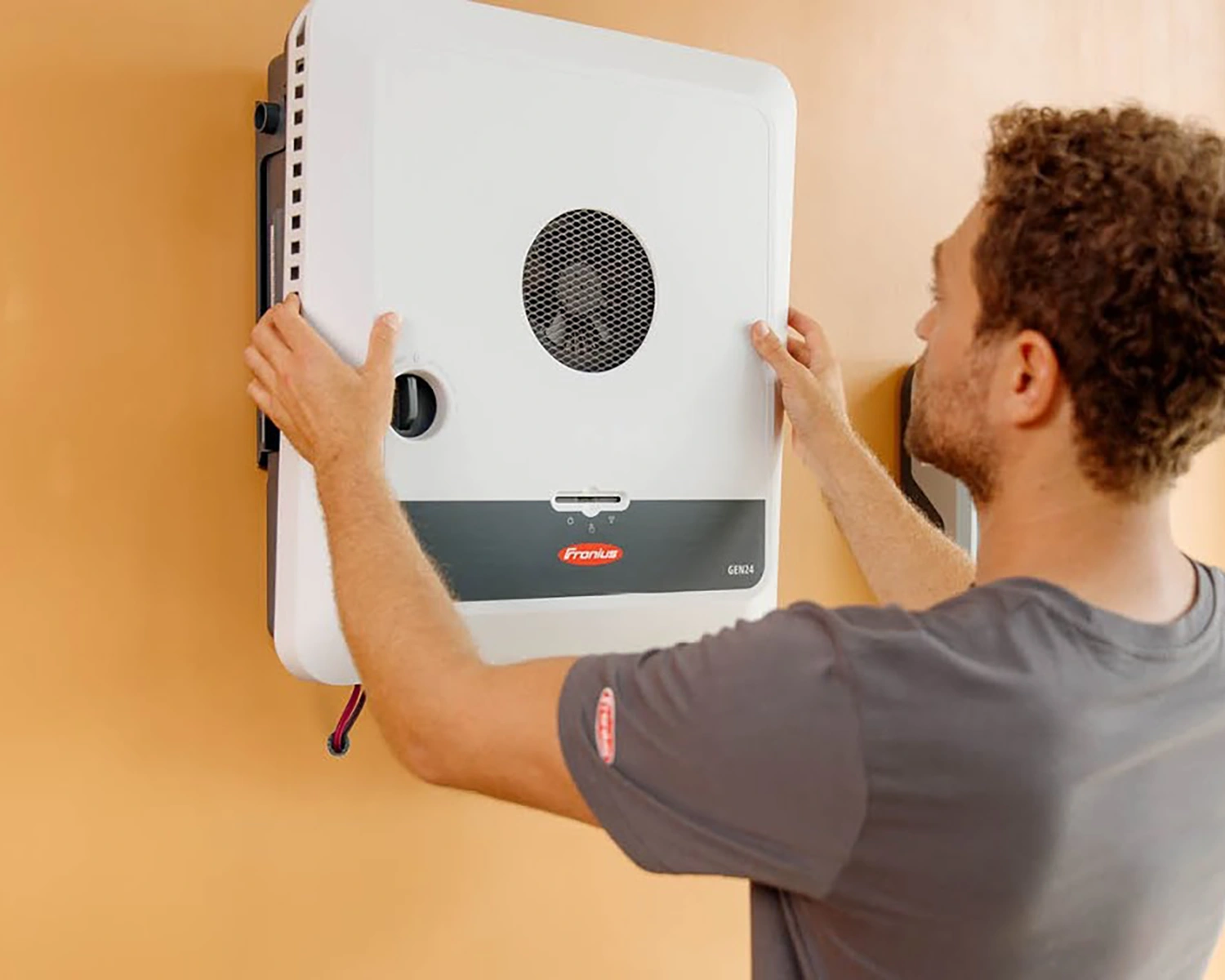
Image: Fronius GEN24 Hybrid Solar Inverter
For off-grid properties, DC-coupled battery storage is chosen because of seamless integration with off-grid solar inverters like Selectronic SP PRO's, which manages both solar and battery in the one unit.
Whilst it's not a dealbreaker, knowing you're getting the absolute most efficiency out of your solar system is always ideal, so DC-coupled battery systems are generally preferred by off-grid installers.
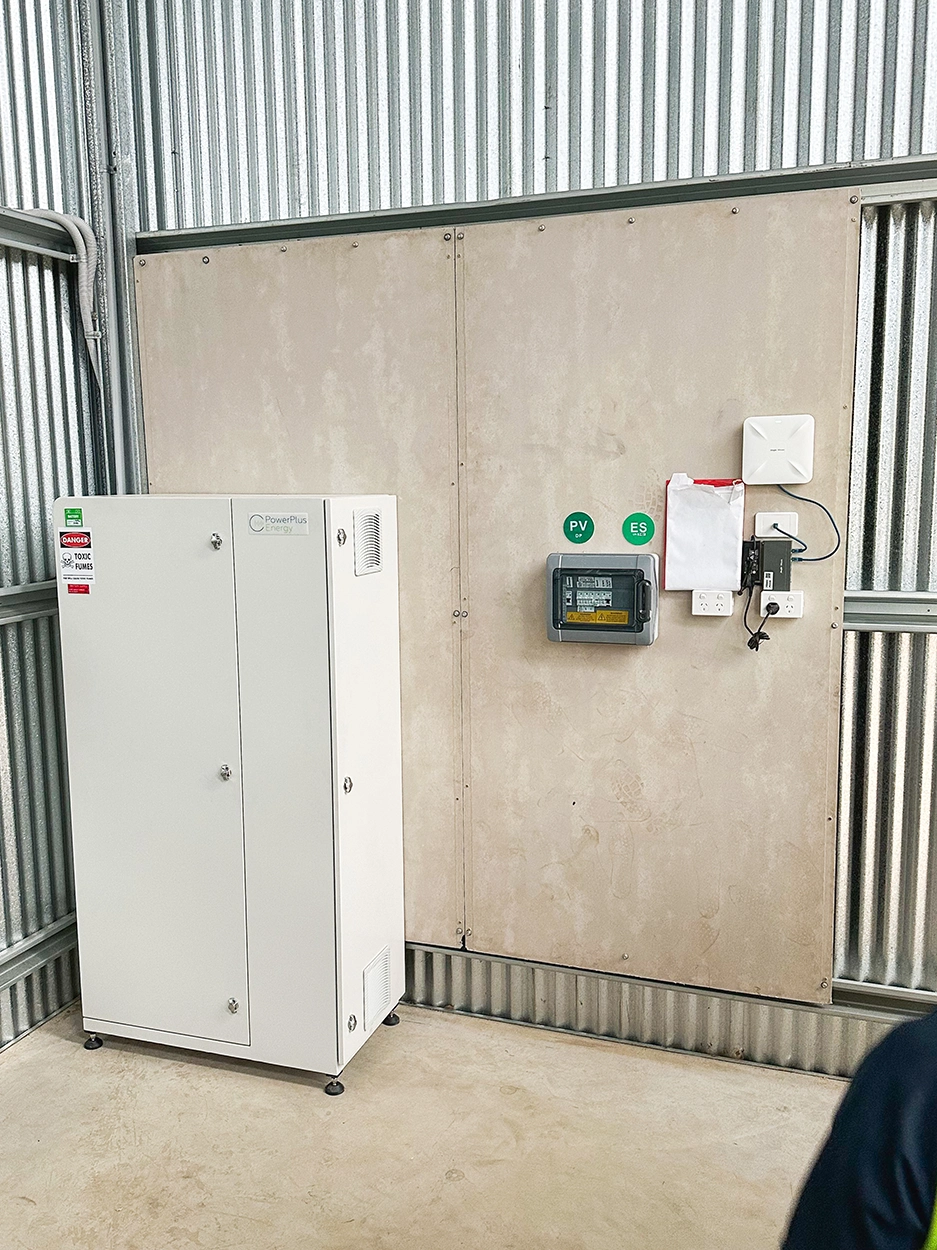
Image: Off-grid DC-Coupled PowerPlus Battery Cabinet
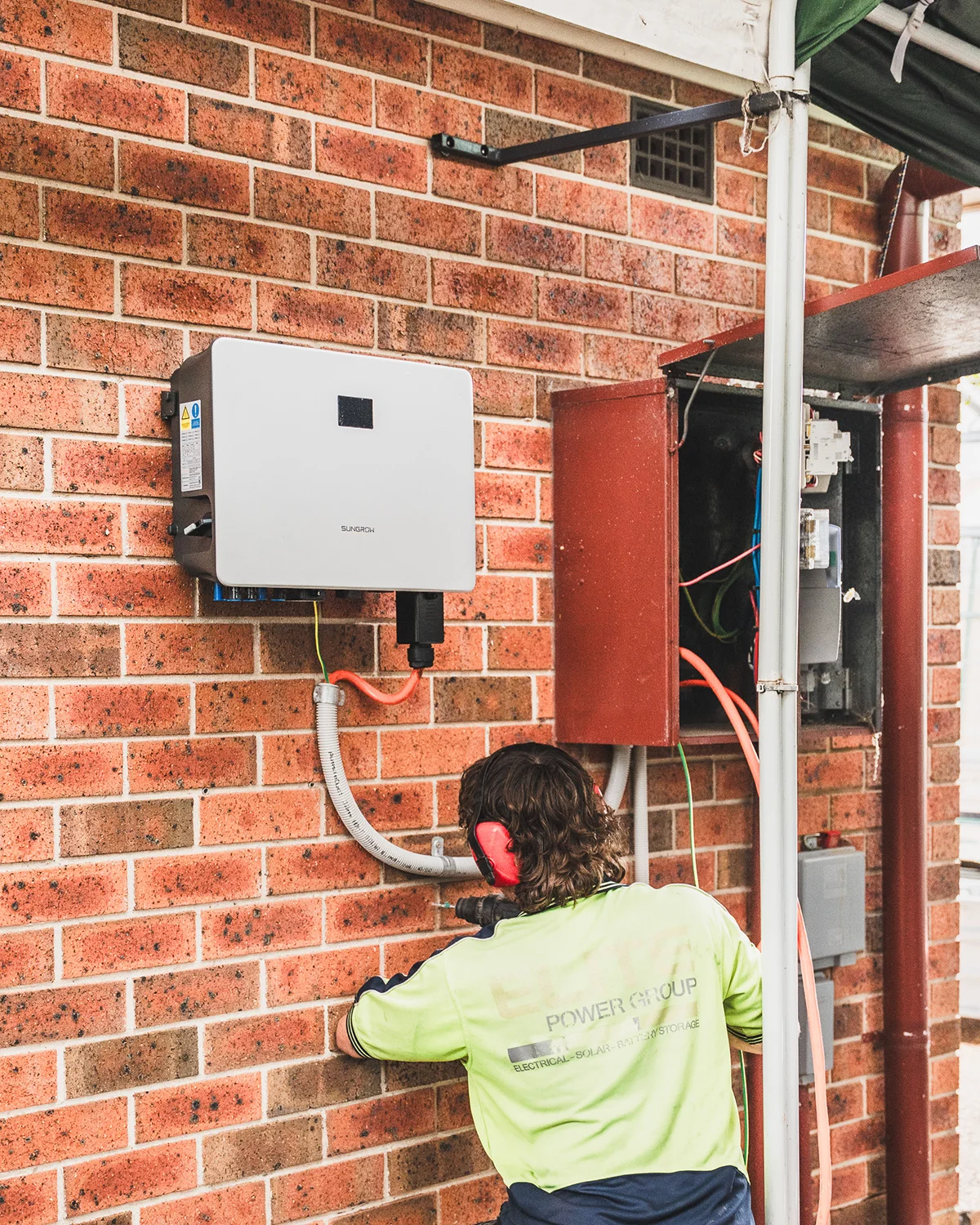
Your battery and inverter need to match your property's single-phase or three-phase electrical supply.
Most Australian homes run on single-phase supply. A single-phase hybrid inverter manages solar and battery across that single supply, which is sufficient for the majority of residential properties. Backup power during a grid outage is delivered on the same single phase.
Larger homes, most businesses, and properties with three-phase appliances (large ducted air conditioning, three-phase EV chargers, workshop equipment) run on three-phase supply. A three-phase hybrid inverter is required to manage solar and battery across all three phases and deliver proper backup capability across the whole property. Running a single-phase inverter on a three-phase property is possible but means backup power is limited to one phase only - a significant constraint for most homes.
Image: Single-phase Sungrow solar inverter installation.
Power output is how much electricity your battery can deliver at any moment. Measured in kW, this amount will depend on if your battery is AC or DC coupled.
For AC-coupled batteries, power output is set by the battery's own built-in inverter. Tesla Powerwall 3, for example, delivers up to 11.5kW of continuous output regardless of what solar inverter is installed alongside it, because it manages its own power conversion internally.
For DC-coupled batteries, power output is determined by the hybrid inverter, not the battery itself. A Sungrow SBH battery paired with a large Sungrow SH inverter can deliver higher output than the battery spec alone suggests, because the inverter controls how fast energy is drawn and converted.
Single-phase vs three-phase also matters here. On a single-phase property, the full rated output is available on one phase. On a three-phase property with a single-phase battery, that output is spread across all three phases - meaning each phase receives a third of the total. For homes with high three-phase loads (ducted systems, large appliances, EV charging), a three-phase inverter and battery configuration is recommended.
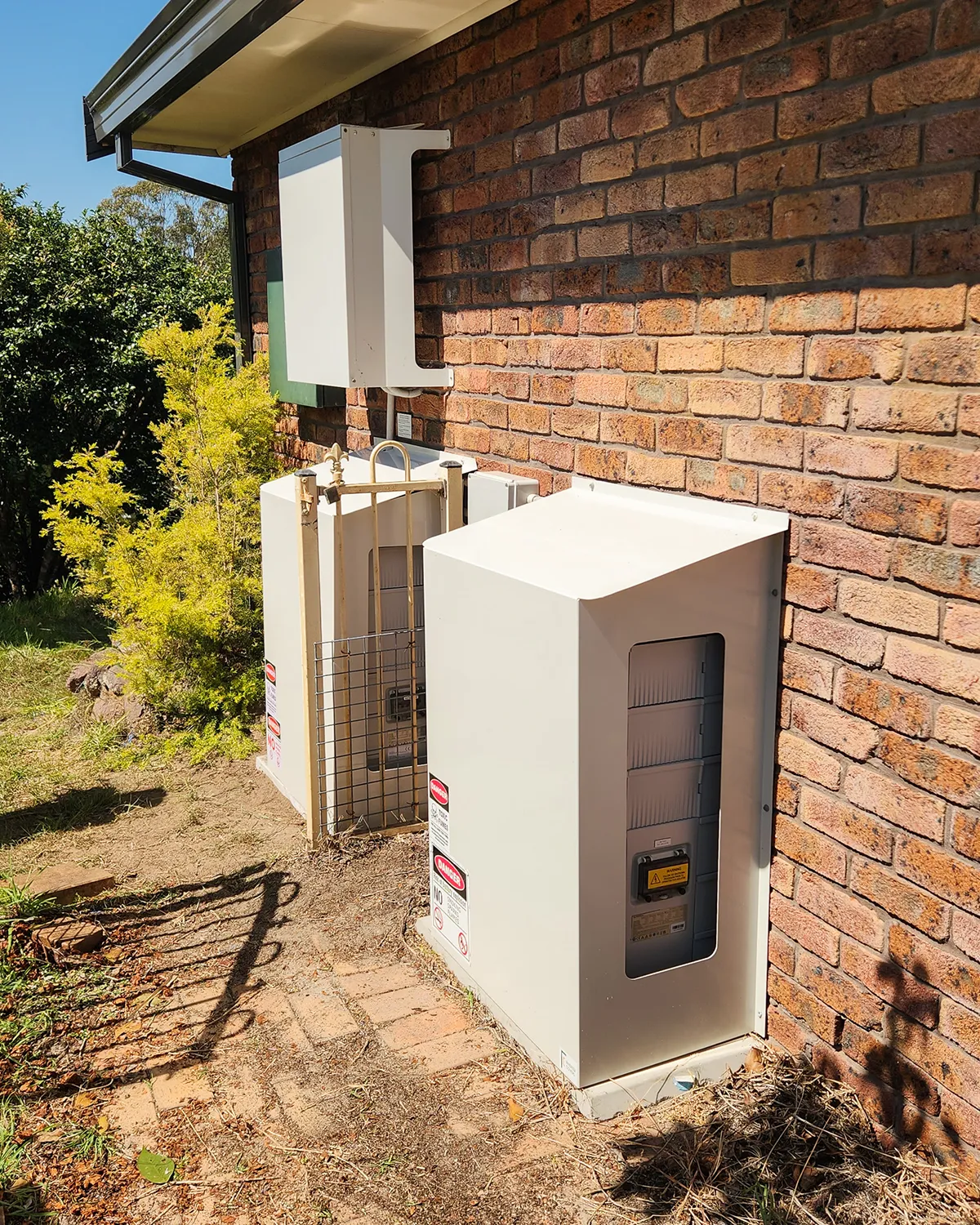
Image: Dual DC-Coupled Sungrow SBR Battery Storage
Whether you're an existing solar owner or someone who is looking into getting the right sized solar system installed, it is definitely recommended to research and determine whether a battery is a good investment for your energy.
Choosing from both DC and AC-coupled systems can both bring benefits to ensure you get a good return on your investment, as well as reliability and future upgrade capabilities.
If you're seriously considering what kind of battery to get, we offer free consultation and quoting for homes and businesses in the Newcastle and Maitland region, with SAA-approved solar and battery designers and installers here ready to help find the optimal, compliant energy system.
Explore the recently changed VPP NSW rebate, & how the Peak Demand Reduction Scheme (PDRS) calculates rewards for joining a Virtual Power Plant.
Read moreAlready have a Powerwall 2? You can now add a Powerwall 3 alongside it. Supported configurations, limitations and how the rebates stack in 2026.
Read moreWhy does your solar generate less in winter? Explore real output figures, summer vs. winter differences, and the best month to use solar in Australia.
Read moreAll NSW homeowners need to know about the solar installation process - from first quote to first bill. 9 steps, real timeframes, & what to ask your installer.
Read moreAlready have solar? Decide whether to add a battery, expand your panels or replace your system, and which delivers the best return in 2026.
Read moreSupply charges, feed-in tariffs, controlled load, peak rates - we explain every line on your NSW electricity bill and show you where you can save more.
Read moreCompare retailer Solar Sharer plans, check eligibility & opt in. Origin, Amber, AGL, EnergyAustralia & more. 3 hours free power daily from 11am–2pm.
Read moreLearn how home electricity works in Australia, including circuits, switches, circuit breakers, RCDs and what happens during power outages.
Read moreIs solar & battery worth investing in for Australian homes? Explore 2026 costs, payback periods, disadvantages, and how the Solar Sharer offer affects it.
Read moreLearn about the May 1st Federal battery rebate changes in Australia and what they mean for home battery costs, solar savings, and discounts.
Read moreCompare Tesla Powerwall 3, Sungrow SBR & SBH, GoodWe ESA, Fronius Reserva, and BYD Battery-Box to find the best home battery for Australia.
Read moreExplore how Australia’s Q4 2025 solar and battery data highlights a major milestone: majority renewable contribution to daytime electricity demand.
Read moreHow rooftop solar helped NSW avoid blackouts during the 2026 heatwave, reducing grid stress & supporting record electricity demand across Newcastle.
Read moreExplore Elite Power Group's solar and battery installation statistics for 2025, and how we performed over this year of operation in Newcastle and Maitland.
Read moreCompare how Peak shaving reduces demand spikes; load shifting moves consumption to cheaper hours; demand response is grid-triggered.
Read moreExplore the difference between solar inverter types like grid-tied, hybrid, microinverters, and off-grid inverters for solar and battery systems in Australia.
Read moreExplore Australia's first CEC-approved bidirectional and vehicle-to-grid capable electric vehicle, the V2Grid Numbat, a 6.2kW V2G/H charger now ready.
Read moreEnergy capacity (kWh) is how much a battery stores. Power output (kW) is how fast it delivers. Covers nominal vs useable, SoC, DoD and cycles.
Read moreExplore the differences between AC and DC electric vehicle charging in Australia and how it affects the way you charge your EV, and the pros & cons.
Read moreConsidering a cheap solar system? Learn how low-quality, unreliable inverters and panels can lead to costly repairs, full replacements, and safety issues.
Read moreLearn the difference between volts, amps and watts, and learn electricity with simple explanations, formulas, real-world examples, and an easy calculator.
Read moreBattery supply chains are tight across Australia, with shipping delays leaving many installers out of stock and customers waiting longer. What's happening?
Read moreLearn how to avoid solar scams in NSW. Spot red flags & dodgy installer tactics and find reputable companies with great warranty & quality installations.
Read moreExplore why the delays in vehicle-to-grid and bidirectional chargers are happening, and how V2G faces regulatory and legislative development in Australia.
Read moreOver 56,000 solar batteries were sold in Q2, 2025, thanks to the Australian battery subsidy. Explore solar & battery uptake, growth trends, and what's next.
Read moreDiscover how to choose the right solar battery size for your home. Compare 10kWh, 15kWh, and 20kWh options to maximise savings, and solar in NSW.
Read moreVirtual Power Plants explained for Australian homeowners. What a VPP is, how it works, NSW program comparison and whether joining one is worth it.
Read moreExplore what solar hotspots are, how they can affect your panel performance & efficiency, & how bypass diodes can affect your cells & strings in Australia.
Read moreDiscover the best home EV chargers in Australia. Compare popular electric vehicle home charging stations, costs, and installations for Newcastle NSW.
Read moreLearn if your roof is suitable for solar panels and how roof materials like terracotta or tin, orientation, tilt, & shading can affect energy production and install.
Read morePower vs Energy in Australia: Difference Between Watts and Watt-Hours, kW vs kWh, with Diagrams, Calculations, and Home Appliance Examples.
Read moreExplore upcoming & available bidirectional V2G-capable chargers in Australia from V2Grid, RedEarth, Sigenergy, Enphase, Tesla, and Fronius EV charging.
Read moreCompare the difference between Sungrow's SBH and SBR battery storage vs. BYD Battery-Box and find what battery is better for homes or businesses in NSW.
Read moreThe NSW Government have announced that the NSW Battery Rebate (PDRS) will be suspended on June 30th, 2025, and will no longer be available.
Read moreAvoid the 9.7% NSW electricity bill increase with expert tips on reducing energy costs, optimising solar usage, and finding better energy plans in 2025.
Read moreExplore how you can use your EV battery via vehicle-to-load (V2L) as a backup energy source during blackouts to power your home appliances in Australia.
Read moreExplore Australia's Federal Government solar battery rebate subsidy like eligibility, approved batteries, requirements, and more about the upcoming incentive.
Read morePartnering with Elite Power Group, Maitland City Council have invested in more electric vehicle chargers in the Maitland area, supporting the uptake of EVs.
Read moreCompare home insurance policies and find out if solar and battery is covered and how installations affect costs, value, and included coverage in Australia.
Read moreShould solar owners get a home battery (ESS) or wait for vehicle-to-home (V2H) technology to use electric vehicle battery power to be available in Australia?
Read moreExplore the differences between AC and DC coupled solar battery storage and how it affects your solar system and inverters' configuration in Australia.
Read moreExplore if fleet or public electric vehicle charging is better for charging workplace and employee EVs for your business in Newcastle & the Hunter, NSW.
Read moreWith homes, Australian standards, and energy networks being ready for bidirectional charging, why the wait? Let's explore grid, EV, & charger developments.
Read moreThe differences between Tesla Powerwall 3 vs. Sungrow battery storage (SBH) capacity, warranty, and features, and which one is better in Australia.
Read moreComparing solar PV, solar hot water, & heat pump hot water systems for Australian homes. Which saves more, which costs less, and which is right for you.
Read moreWorking closely with the Newcastle City Council, we helped the development of Gregson Park Playspace with electrical infrastructure, lighting, and facilities.
Read moreA very strong storm passed through the Hunter, leaving over 100,000 homes without power. Here's how you can protect your home's energy with independence.
Read moreCompleting a commercial solar and electric vehicle charger installation, our Thornton neighbours can take full advantage of renewable electricity and charging.
Read moreElite Power Group installed a 2MW commercial solar installation for National Ceramic Industries Australia, totaling 4000 solar panels in Rutherford.
Read moreExplore various ways where homes and businesses can reduce electricity bills and maximise solar generation in Newcastle and the Hunter, NSW for 2026.
Read more
Renewable News Articles
Sign up for new article updates - we don't spam.
We've invested in becoming fully-licenced and qualified installers to ensure Newcastle homes and businesses
get the best solar, battery, and electrical systems available. We want to assist Newcastle's renewable energy revolution with quality
installations for maximum customer satisfaction.
Certified solar system installers near you.
Get CEC-Approved Battery Installations.
Fully-licenced electricians in Newcastle.
Convenient EV charging stations for properties.
Leave a Comment